
vip@mingyuforklift.com
+86-0535-2090977

Introduction: Understanding the Utilev Platform
Utilev represents a strategic product line within the Hyster-Yale Materials Handling portfolio, positioned as a practical, no-frills solution for standard material handling applications. Manufactured with a focus on essential functionality and cost efficiency, Utilev diesel forklifts serve markets where premium features are secondary to reliable performance and straightforward operation. Models such as the UT15-35P series (1.5 to 3.5-ton capacity) and larger UT20-50P variants (2.0 to 5.0-ton capacity) deploy diesel powerplants from established engine manufacturers, typically Yanmar or Kubota Tier 4 Final / Stage V compliant engines.
Bringing a diesel Utilev forklift to operational status involves a systematic sequence of pre-operation inspections, startup procedures, warm-up protocols, and functional verification steps. This process ensures operator safety, equipment longevity, regulatory compliance, and optimal performance. Whether the forklift has been in overnight storage, extended shutdown, or routine maintenance, the pathway to operational readiness follows established protocols that this article examines in comprehensive technical detail.
Phase 1: Pre-Operation Visual Inspection
The journey to operational status begins before the operator enters the cab. A thorough visual inspection identifies potential issues that could compromise safety or performance.
Exterior Walk-Around Assessment
The operator should circumnavigate the forklift, examining all sides for visible damage, fluid leaks, or component displacement. Key inspection points include:
Mast and Carriage Assembly: Check for structural cracks, weld integrity, and proper alignment of the mast rails. Inspect lift chains for adequate lubrication, proper tension, and signs of wear or elongation. Chain anchor pins should be secure with retaining devices in place. The carriage backrest must be intact and properly mounted.
Forks and Attachments: Verify fork condition, checking for cracks, bends, or excessive heel wear. Forks should sit level when lowered and engage the carriage properly. Any attachments (side shifters, fork positioners, clamps) require inspection of mounting hardware, hydraulic connections, and structural integrity.
Overhead Guard and Cab: The overhead guard frame must be free of damage or unauthorized modifications. For enclosed cabs, inspect glass, wipers, mirrors, and door latches. Ensure the operator restraint system (seatbelt or lap bar) is functional.
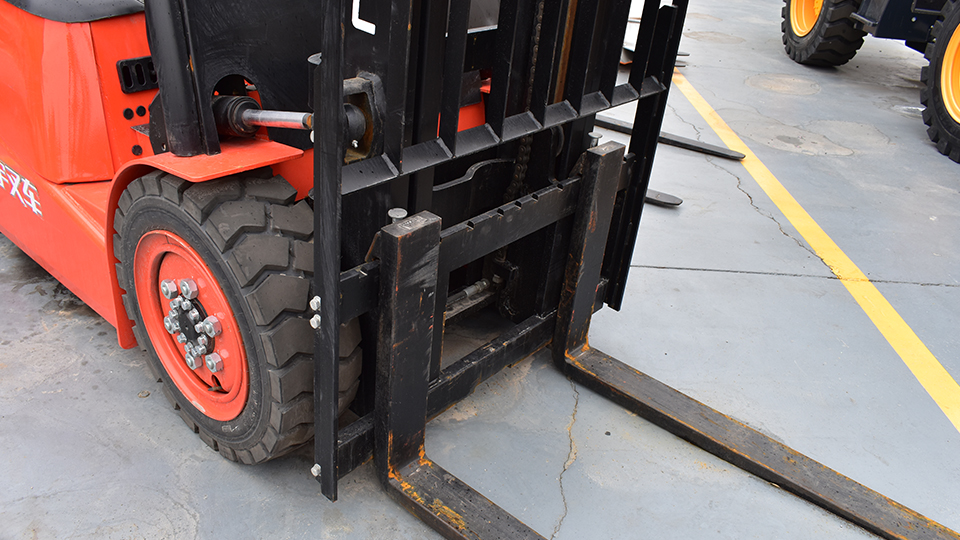
Counterweight and Rear Configuration: Confirm counterweight security and inspect rear tires, lights, and any rear-mounted components for damage.
Tires and Wheels: Pneumatic tires require pressure verification against manufacturer specifications (typically 7-10 bar / 100-145 psi for front tires, slightly lower for rears). Check for cuts, bulges, or tread separation. Solid tires should show even wear patterns without chunking or flat spots. Wheel nuts must be present and properly torqued.
Fluid Leak Inspection: Examine the ground beneath and around the forklift for evidence of hydraulic fluid, engine oil, coolant, or fuel leaks. Trace any observed leakage to its source before attempting startup.
Fluid Level Verification
Utilev diesel forklifts feature accessible fluid reservoirs requiring pre-operation verification:
Engine Oil: With the forklift on level ground and the engine cool or at operating temperature (depending on manufacturer specification), withdraw the dipstick, wipe clean, reinsert fully, and withdraw again. Oil level should register between the minimum and maximum marks. For Yanmar engines common in Utilev models, oil capacity ranges from 6-10 liters depending on engine displacement. Use the specified API CJ-4 or CK-4 grade diesel engine oil.
Coolant: The coolant reservoir (typically translucent plastic) should show level between minimum and maximum marks when cold. Never open a hot cooling system. Utilev models use ethylene glycol-based coolant meeting ASTM D3306 specifications. Low coolant levels indicate leakage or consumption requiring investigation.
Hydraulic Oil: The hydraulic reservoir sight glass or dipstick should indicate adequate oil level with the mast fully lowered. Hydraulic systems on 3-ton Utilev models hold approximately 45-55 liters; 5-ton models may require 60-80 liters. Use ISO VG 46 hydraulic oil meeting DIN 51524 Part 2 HLP specifications.
Fuel: Verify diesel fuel level through the gauge or tank sight glass. Ensure adequate fuel for the planned shift—budgeting 20-45 liters per 8-hour shift depending on model and duty cycle. The fuel cap must seal properly to prevent contamination.
Diesel Exhaust Fluid (DEF/AdBlue): Tier 4 Final / Stage V compliant Utilev models equipped with SCR aftertreatment require DEF level verification. The DEF tank (typically 15-25 liter capacity) should be adequately filled. Use only ISO 22241-compliant DEF with 32.5% urea concentration.
Battery and Electrical System
Battery Condition: Inspect terminals for corrosion, ensuring connections are tight. Check electrolyte levels in flooded batteries (if equipped), topping up with distilled water as needed. Battery voltage should register approximately 12.6V for a 12V system or 24.0V for 24V configurations when at rest.
Wiring Harness: Examine visible wiring for chafing, insulation damage, or loose connections. Pay particular attention to wiring near hot exhaust components or moving parts.
Phase 2: Operator Compartment Preparation
Before engaging the ignition, the operator must ensure the operating environment within the cab supports safe and effective control.
Seat and Controls Adjustment
Adjust the operator seat to permit full pedal depression with a slight knee bend. The seat suspension should be calibrated to operator weight according to manufacturer guidelines.
Position the steering wheel for comfortable reach with arms slightly bent when gripping at the 9 and 3 o'clock positions.
Verify all control levers (lift, tilt, side shift, auxiliary functions) move freely through their full range without binding or excessive play.
Confirm the parking brake engages and releases properly. Utilev models typically employ mechanical or hydraulic parking brakes; the indicator light should extinguish when released.
Instrument Panel Verification
With the ignition switch turned to the "ON" position (but engine not started), the instrument panel should illuminate and perform a self-test sequence:
Warning Lamps: All warning lamps should illuminate briefly during bulb check, then extinguish except for those indicating valid conditions (e.g., parking brake engaged, low fuel).
Engine Malfunction Indicator Lamp (MIL): Should illuminate during startup and extinguish after engine start if no diagnostic trouble codes are present. Persistent illumination indicates an engine system fault requiring service.
DEF Warning Systems: Low DEF level warnings should not be active. A critically low DEF condition may trigger engine derating or shutdown.
Hour Meter: Record the current hour meter reading for maintenance tracking and shift documentation.
Fuel Gauge: Confirms the visual inspection finding.
Phase 3: Engine Startup Sequence
Proper startup procedure protects engine components, ensures emissions system readiness, and establishes operational baseline parameters.
Cold Start Procedure (Engine at Ambient Temperature)
Pre-Lubrication: For extended shutdown periods or cold conditions, some operators cycle the ignition to the "ON" position for 10-15 seconds before cranking to allow the electric fuel pump to pressurize the system. This is particularly relevant for common rail fuel systems.
Clutch/Transmission Neutral: Ensure the transmission is in neutral and the parking brake is engaged. For automatic transmission models, verify the direction control lever is in neutral.
Cranking: Turn the ignition to "START" and release immediately when the engine fires. Cranking duration should not exceed 15 seconds; if the engine fails to start, wait 60 seconds for starter motor cooling before retrying. Extended cranking may indicate fuel system issues, low battery charge, or cold-start difficulties.
Initial Idle: Allow the engine to idle at 800-1,000 RPM without load for 3-5 minutes. This period enables oil pressure establishment, coolant circulation, and initial warming of engine components and hydraulic fluid.
Cold Weather Considerations (Below 0°C / 32°F)
Engine Block Heater: For operation in sub-zero temperatures, connect the engine block heater (if equipped) 2-4 hours before startup. This reduces cold-start wear and improves combustion efficiency.
Glow Plug Operation: Modern diesel engines utilize glow plugs for cold-start assistance. The glow plug indicator lamp (typically coil-shaped) illuminates during pre-heating and extinguishes when cranking is permissible. Do not crank while the lamp is illuminated—wait for the control system to indicate readiness.
Starting Aids: In extreme cold (-15°C and below), manufacturer-approved starting aids (ether injection systems or intake air heaters) may be necessary. Never use unauthorized starting fluids, as uncontrolled combustion can damage pistons, rings, and connecting rods.
Hydraulic System Warm-Up: Cold hydraulic fluid exhibits elevated viscosity, increasing pump workload and potentially triggering relief valve operation. Extended idle with periodic hydraulic function cycling (without load) warms the fluid to operational viscosity.
Hot Start Procedure
For engines that have operated within the past hour and remain near operating temperature, the startup sequence simplifies:
Verify neutral transmission and engaged parking brake
Crank the engine (typically starts immediately without glow plug assistance)
Allow 30-60 seconds of idle before engaging hydraulics or transmission
Proceed to functional verification
Phase 4: Post-Start System Verification
With the engine running, systematic verification of critical systems confirms operational readiness.
Engine Parameter Monitoring
During the warm-up idle period, monitor instrument panel indicators:
Oil Pressure: Should register within the normal range (typically 2.5-5.0 bar / 36-72 psi at idle, higher at operating RPM) within 5-10 seconds of startup. Low or absent oil pressure indicates immediate shutdown and investigation.
Coolant Temperature: Begins rising from ambient toward the normal operating range (80-95°C / 176-203°F). Operation under load should not commence until the temperature gauge moves off the cold stop.
Battery/Alternator Voltage: Should register 13.5-14.5V for 12V systems or 27-29V for 24V systems, indicating proper alternator charging.
Air Restriction Indicator: If equipped, should show green or within acceptable range. A red indication signals clogged intake air filtration requiring service.
Hydraulic System Verification
With the engine at warm idle:
Lift Function: Raise the forks slowly to 1-2 meters, observing smooth operation without hesitation, jerking, or abnormal noise. Lower the forks, verifying controlled descent without drifting.
Tilt Function: Cycle the mast tilt forward and backward through full range. Operation should be smooth with no hydraulic chatter or binding.
Side Shift (if equipped): Verify lateral fork movement in both directions.
Auxiliary Functions: Test any additional hydraulic functions (fork positioners, attachments) for proper operation.
Leak Inspection: With the hydraulic system pressurized, reinspect hose connections, cylinder rod seals, and valve blocks for leakage.
Steering and Brake Verification
Steering: With the engine running, cycle the steering wheel lock-to-lock. Power steering assist should provide smooth, responsive operation without binding or excessive free play. Check for unusual noise from the steering pump.
Service Brakes: With the forklift stationary, depress the brake pedal. It should provide firm resistance without excessive travel. The pedal should not sink under sustained pressure (indicating hydraulic leak in brake system).
Parking Brake: Release the parking brake and verify the indicator extinguishes. Re-engage and confirm positive holding capability on a slight incline (if safely testable).
Transmission and Drive Verification
Directional Control: Select forward and reverse gears without load, verifying smooth engagement and proper indicator illumination.
Inch/Clutch Pedal: For manual transmission models, verify clutch disengagement and smooth gear selection. For automatic models, test inching control for precise maneuvering.
Drive Test: In a clear area, perform a brief forward and reverse movement, verifying smooth acceleration, proper directional response, and absence of unusual transmission noise.
Phase 5: Emissions System Readiness
Modern Tier 4 Final / Stage V compliant Utilev forklifts incorporate sophisticated emissions aftertreatment systems requiring specific operational considerations to achieve and maintain readiness.
Diesel Exhaust Fluid (DEF) System
The DEF tank must contain adequate fluid for the planned operation. Low DEF triggers warning lamps; critically low levels initiate engine power derating and eventual shutdown.
DEF freezes at -11°C (12°F). Frozen DEF is normal in cold climates and melts when the engine warms. Do not add additives to prevent freezing. Ensure the DEF tank and lines are from a reputable source and uncontaminated—DEF is sensitive to impurities that can crystallize and clog injectors.
Diesel Particulate Filter (DPF) Status
The DPF captures soot particles from exhaust. During normal operation, passive regeneration occurs when exhaust temperatures are sufficient to oxidize accumulated soot.
Active regeneration, triggered by the engine control module when soot loading exceeds thresholds, increases fuel consumption and exhaust temperature. An active regeneration indicator may illuminate during this process.
If the DPF regeneration warning illuminates, operate the forklift at sufficient load and RPM to enable regeneration completion. Persistent warnings indicate the need for service regeneration or DPF replacement.
Exhaust Gas Recirculation (EGR) and SCR
These systems operate automatically without operator intervention. However, persistent MIL illumination or emissions-related warnings require diagnostic attention to prevent operational restrictions.
Phase 6: Documentation and Operational Authorization
Formal documentation ensures accountability and regulatory compliance.
Pre-Operation Checklist Completion
Record the inspection results on the operator daily checklist, noting:
Hour meter reading at shift start
Fluid levels verified
Any defects or observations requiring attention
Operator identification and date/time
Defect Reporting
Any identified defects affecting safety or operational capability must be reported to supervision and maintenance personnel. Do not operate a forklift with:
Brake system deficiencies
Steering malfunctions
Hydraulic leaks creating slip hazards or functional impairment
Structural damage to mast, overhead guard, or carriage
Engine warning lamps indicating critical faults
Maintenance Escalation
Conditions requiring immediate maintenance attention include:
Engine oil pressure warnings
Coolant temperature exceeding normal range
Abnormal engine noise, vibration, or smoke
Transmission slippage or failure to engage
Hydraulic system failure or significant leakage
Phase 7: Operational Transition
With all systems verified and documentation complete, the forklift transitions to productive operation.
Load Engagement Protocol
Approach the load squarely with forks properly spaced for load dimensions
Verify load weight against rated capacity (refer to the capacity plate affixed to the forklift)
Engage the load fully, ensuring forks extend completely through the pallet or load base
Lift slightly, verify load stability, then back away from the stack
Lower the load to travel height (typically 15-20 cm / 6-8 inches above ground) before traveling
Operational Monitoring
Throughout the shift, the operator should remain attentive to:
Engine temperature gauge (avoid sustained high-load operation if overheating)
Warning lamps (address illuminated indicators promptly)
Unusual noises, vibrations, or odors
Hydraulic performance degradation
Shutdown and Securing
At shift end or extended breaks:
Park on level ground with the mast fully lowered
Engage the parking brake
Place transmission in neutral
Idle the engine for 2-3 minutes if operated under heavy load (allows turbocharger cooldown)
Turn ignition to "OFF" and remove the key
Complete the post-operation inspection checklist
Extended Shutdown Recovery
For Utilev forklifts subjected to extended shutdown (weeks to months), additional steps precede operational status:
Pre-Startup Extended Shutdown Protocol
Battery Maintenance: Charge or replace batteries showing voltage below 12.0V (12V system) or 24.0V (24V system). Clean terminals and apply protective coating.
Fluid Analysis: Engine oil and hydraulic fluid should be inspected for contamination, water intrusion, or degradation. Replace fluids exceeding service intervals or showing contamination.
Fuel System: Diesel fuel degrades over time. Inspect for algae growth (indicated by black slime in filters or tank) or water contamination. Replace fuel filters and treat fuel with biocide if contamination is present.
Tire Inspection: Check for flat spots on solid tires or pressure loss in pneumatic tires. Tires may require rotation or replacement if degraded.
Initial Startup: After extended shutdown, perform startup with extended warm-up (10-15 minutes) and conservative initial operation without load to verify all systems.
Troubleshooting Common Startup Issues
Engine Fails to Crank
Verify transmission neutral and parking brake engagement (safety interlocks)
Check battery voltage and connections
Inspect starter motor connections and fuses
For cold conditions, verify glow plug operation and battery capacity
Engine Cranks but Fails to Start
Verify adequate fuel in tank and fuel system priming
Check for air in fuel lines (indicated by clear fuel filter housing)
Inspect fuel filter condition and replace if clogged
Verify stop solenoid operation (prevents fuel delivery when engaged)
Engine Starts but Runs Rough or Smokes Excessively
Allow extended warm-up for cold conditions
Check air filter restriction
Verify fuel quality and absence of contamination
Inspect for diagnostic trouble codes indicating injector or EGR issues
Hydraulic Functions Inoperative or Sluggish
Verify adequate hydraulic oil level
Check for hydraulic filter blockage
Allow extended warm-up in cold conditions
Inspect for hydraulic pump drive failure
Conclusion: Systematic Readiness
Bringing a diesel Utilev forklift to operational status is not a single action but a systematic process encompassing visual inspection, fluid verification, controlled startup, system functional testing, emissions readiness confirmation, and documentation. This structured approach—typically requiring 10-15 minutes for routine daily startup—protects equipment investment, ensures operator safety, maintains regulatory compliance, and optimizes operational productivity.
The diesel Utilev platform, while positioned as a value-oriented solution, incorporates modern engine technology and emissions systems that demand attentive operation. Operators and fleet managers who adhere to established startup protocols and respond promptly to system warnings maximize equipment availability, minimize unplanned downtime, and achieve the operational reliability that defines productive material handling operations.
For specific model variations within the Utilev range, always consult the operator's manual and service documentation for model-specific procedures, fluid specifications, and maintenance intervals. The principles outlined in this article provide the foundational framework; precise execution requires reference to manufacturer documentation for the specific forklift serial number and configuration in service.
Name: selena
Mobile:+86-13176910558
Tel:+86-0535-2090977
Whatsapp:8613181602336
Email:vip@mingyuforklift.com
Add:Xiaqiu Town, Laizhou, Yantai City, Shandong Province, China
