
vip@mingyuforklift.com
+86-0535-2090977

## 1. Introduction
1.1 Opening: Launch announcement of the new electric counterbalance forklift; positioning for general intralogistics workflows
1.2 Industry context: Warehouses, distribution centers and manufacturing plants shifting away from diesel and lead-acid forklifts
1.3 Existing pain points in intralogistics: narrow aisle constraints, high battery downtime, noise and exhaust pollution, rising maintenance costs
1.4 Article scope: Core technical upgrades, performance testing, safety architecture, application matching and economic evaluation
1.5 Core thesis: This new counterbalance model is engineered to balance high throughput, operator comfort and low lifecycle cost for daily intralogistics operations
## 2. Intralogistics Requirements That Shape This New Forklift Design
2.1 Typical intralogistics working scenarios: raw material feeding, finished goods stacking, loading/unloading trucks, cross-zone pallet transfer
2.2 Key performance requirements from intralogistics operators: stable lifting, compact turning radius, continuous multi-shift operation, easy integration with warehouse schedules
2.3 Comparison of existing equipment limitations: lead-acid long charging hours, diesel emission restrictions, basic electric models lacking intelligent monitoring
2.4 Design priorities set by the R&D team: high efficiency, reliability, serviceability and operator safety
## 3. Core Powertrain & LFP Battery System
3.1 LiFePO4 battery pack configuration: rated voltage, capacity selection, modular structure
3.2 BMS functions: cell balancing, overcharge/over-discharge protection, temperature monitoring, SOC & SOH tracking
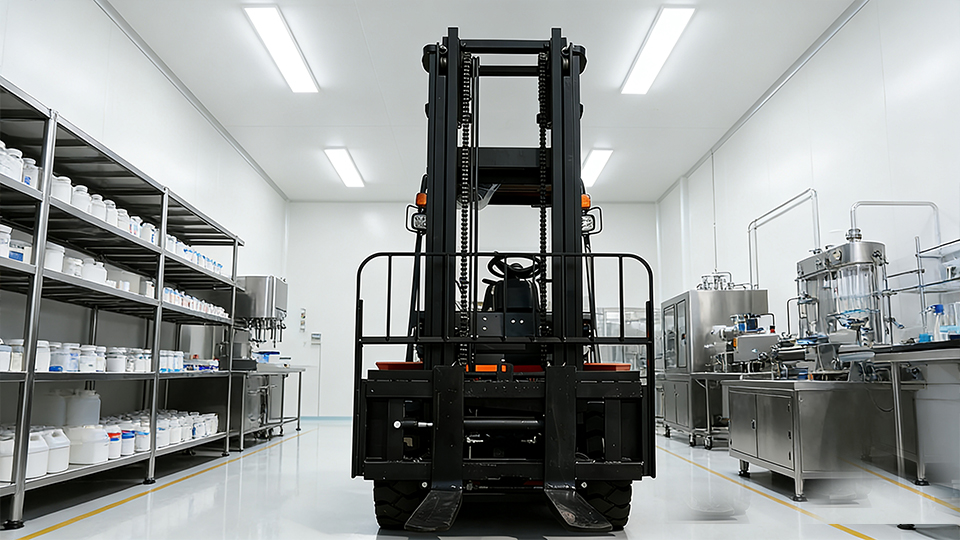
3.3 PMSM drive and hydraulic system: high-torque motor, efficient pump, adjustable speed response
3.4 Opportunity charging support: quick-charge compatibility for shift breaks, no battery swapping required
3.5 Thermal management design: passive cooling, sealed pack, performance stability in continuous working cycles
3.6 IP protection grade for battery and electrical components, dust and splash resistance for indoor warehouse environments
## 4. Chassis, Mast & Hydraulic Technical Optimizations
4.1 Counterweight and chassis layout: weight distribution for stable lifting, compact wheelbase for tight warehouse aisles
4.2 Mast options: two-stage / three-stage free lift mast, lifting height range, mast deflection control under rated load
4.3 Hydraulic refinement: low-noise hydraulic unit, smooth lifting and lowering, shock reduction when placing pallets
4.4 Tire selection: solid rubber tires for indoor concrete floors, low rolling resistance design
4.5 Load curve explanation: residual capacity at different lift heights and load centers
## 5. Integrated Safety & Operator Ergonomic System
5.1 Standard active safety features: speed limiting by lifting height, load weight indicator, anti-rollback on ramps
5.2 Operator protection: overhead guard, seat safety interlock, emergency power cut-off, horn and travel alarm
5.3 Ergonomic upgrades: adjustable suspension seat, small-angle steering wheel, easy-access control levers, clear instrument dashboard
5.4 Human-machine interface: real-time display of SOC, fault codes, operating hours, maintenance reminders
5.5 Optional add-ons: camera system, proximity warning, blue safety light for pedestrian zones in busy intralogistics areas
## 6. TCO, Test Data & Operational Comparison
6.1 Total Cost of Ownership model: energy cost, maintenance cost, downtime loss, battery service life
6.2 Factory bench and field test results: continuous running test, cycle lifting test, ramp performance test
6.3 Side-by-side comparison: new LFP electric counterbalance vs lead-acid electric vs diesel counterbalance forklift
6.4 Maintenance simplification: fewer wearable parts compared with combustion forklifts, modular components for fast repair
## 7. Deployment & Integration Into Intralogistics Workflows
7.1 Suitable industries: general manufacturing, food & beverage, e-commerce distribution, packaging, logistics warehouses
7.2 Fleet management option: optional cloud BMS platform for fleet tracking, usage statistics and remote diagnostics
7.3 Operator training requirements and pre-delivery inspection checklist
7.4 Compatibility with standard pallets, racking and dock levellers
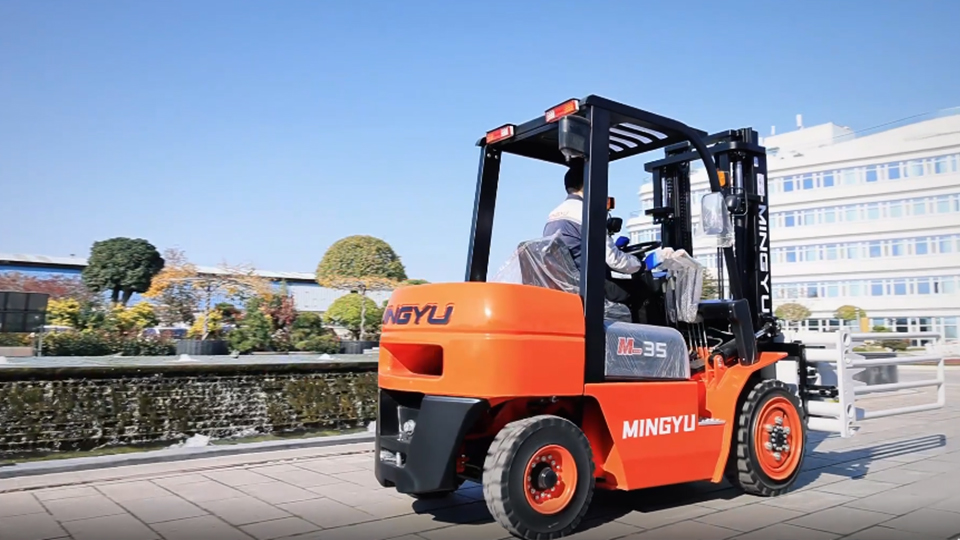
## 8. Conclusion & Product Roadmap
8.1 Recap of key technical strengths tailored for intralogistics
8.2 Future expansion: higher capacity variants, cold-storage version, AGV-ready autonomous upgrade kit
8.3 Closing value: the new electric counterbalance forklift helps intralogistics operators achieve cleaner, safer and more stable material handling
Name: selena
Mobile:+86-13176910558
Tel:+86-0535-2090977
Whatsapp:8613181602336
Email:vip@mingyuforklift.com
Add:Xiaqiu Town, Laizhou, Yantai City, Shandong Province, China