
vip@mingyuforklift.com
+86-0535-2090977

## 1. Introduction
1.1 Opening: Statistical snapshot of export growth for Chinese lithium-ion forklifts; major receiving regions (Latin America, Southeast Asia, Europe, Middle East)
1.2 Industry shift: Global fleet transition away from diesel and lead-acid forklifts
1.3 Buyer motivation: Not only low purchase price, but total cost, zero emission and flexible customisation
1.4 Article scope: supply chain strengths, regional demand drivers, technical adaptation, certification barriers, competition, risks and service gaps
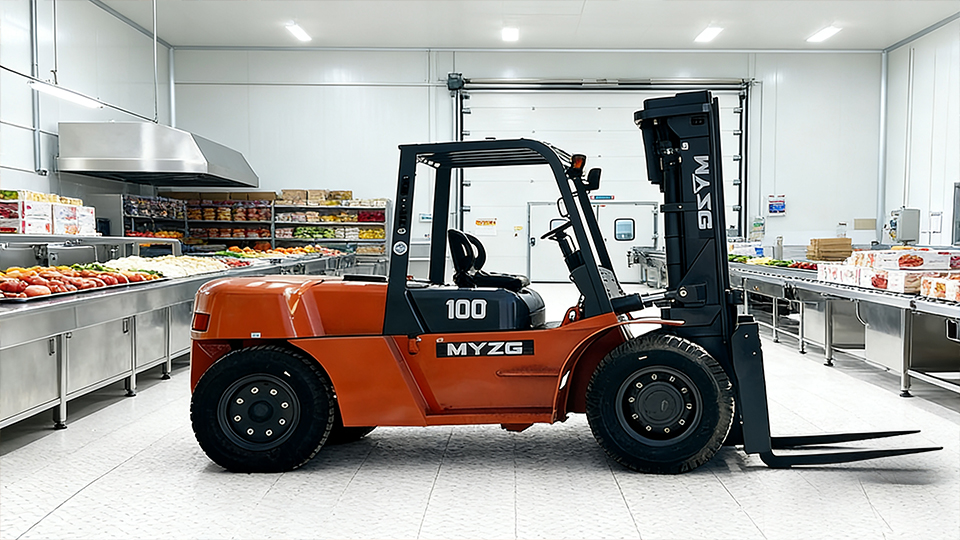
1.5 Thesis statement: China’s complete lithium battery industrial ecosystem is the core foundation behind rising overseas adoption, while compliance and local after-sales become the next competitive battlefield
## 2. Global Market Drivers Pushing Lithium Forklift Adoption
2.1 Emission & environmental regulations: low‑emission zones, diesel bans, carbon reduction targets
2.2 Operational economics: volatile diesel pricing, high lead‑acid maintenance labour cost, multi‑shift warehouse demand
2.3 Intralogistics upgrade: e‑commerce, cold chain, port and manufacturing warehouse expansion across emerging markets
2.4 Limitations of legacy equipment: lead‑acid watering, long charging downtime, acid spill hazards; diesel noise and exhaust
2.5 Buyer segmentation: distributors, end-user fleets, rental companies, second‑hand equipment traders
## 3. China’s Core Competitive Edge: Integrated Lithium Supply Chain
3.1 LFP battery supply advantage: domestic raw material, cell production, pack assembly and BMS development
3.2 Powertrain vertical integration: PMSM motor, controller, hydraulic and vehicle control systems
3.3 Flexible customisation capability: voltage tuning, thermal modification, mast configuration, branded dashboards
3.4 Production cycle and MOQ advantage compared with Western premium brands
3.5 Quality tier differentiation: entry standard models vs high-spec export versions for strict markets
## 4. Technical Adaptation for Diverse Overseas Operating Environments
4.1 Tropical high-temperature packages: BMS thermal derating, sealed electrical components, heat dissipation optimisation
4.2 Cold-climate lithium forklift solution: battery heating systems for low-temperature regions
4.3 Grid adaptation: wide-voltage chargers for unstable local power grids
4.4 Opportunity charging and fleet suitability for 2-shift / 3-shift warehouse operation
4.5 Load curve, mast options, solid tire and IP rating matching regional site conditions
4.6 Safety architecture: interlocks, overload protection, emergency cut-off and pedestrian warning systems
## 5. Cross-Border Compliance & Transport Technical Barriers
5.1 Battery transport rules: UN38.3, IMDG Class 9, SOC control before shipment, dangerous goods documentation
5.2 Destination country certification matrix: CE / Machinery Directive, EU Battery Regulation, UL, NOM, INMETRO
5.3 Common clearance pitfalls: incomplete test reports, incorrect battery marking, inconsistent technical datasheets
5.4 Pre-shipment inspection workflow: load test, function check, battery state management, labelling and container lashing
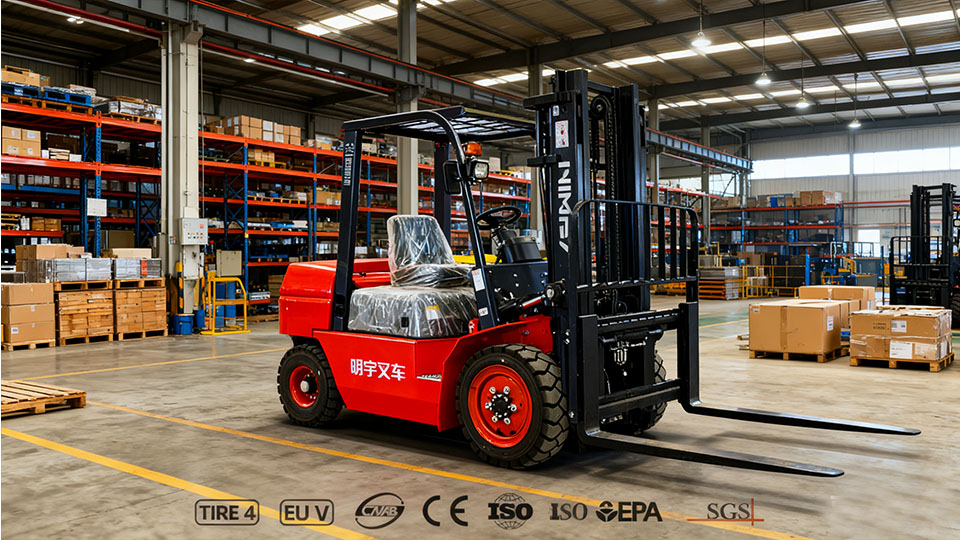
5.5 Documentation package required for distributors and end customers
## 6. TCO Benchmark & Buyer Decision Logic
6.5-year total cost comparison: Chinese lithium-ion forklift vs lead-acid electric vs diesel vs European premium lithium forklift
6.2 Cost breakdown: energy, maintenance, battery replacement, downtime, labour and compliance
6.3 ROI timeline analysis for warehouse fleets
6.4 Why rental companies increasingly select Chinese lithium forklifts for overseas fleets
## 7. Competitive Landscape, Risks & Market Challenges
7.1 Competitor map: European / US premium brands, local second-hand fleets, low-cost regional alternatives
7.2 Major risks: trade tariffs, changing battery regulations, carbon footprint reporting requirements
7.3 Weak points of Chinese exporters: inconsistent after-sales network, spare-part lead time, brand perception gap
7.4 Quality variability among different Chinese manufacturers and its impact on distributor trust
## 8. Market Penetration Strategy: From Product Export to Localised Service
8.1 Distributor enablement: local language service manuals, diagnostic tools, training kits
8.2 Regional spare parts hub strategy
8.3 Digital fleet monitoring via cloud BMS for remote fault diagnosis
8.4 Trade show and local demo site layout (Canton Fair, Bauma, CeMAT, regional logistics exhibitions)
## 9. Conclusion & Future Outlook
Recap of supply chain and technical advantages; forecast on continued lithium penetration. Long-term success will depend not only on hardware price, but on stable compliance, local service infrastructure and consistent product quality.
Name: selena
Mobile:+86-13176910558
Tel:+86-0535-2090977
Whatsapp:8613181602336
Email:vip@mingyuforklift.com
Add:Xiaqiu Town, Laizhou, Yantai City, Shandong Province, China