
vip@mingyuforklift.com
+86-0535-2090977

1. Executive Summary
Brief overview of the transition from time-based to condition-based maintenance in material handling
Key benefits: reduced downtime, lower total cost of ownership (TCO), extended asset life
Thesis statement: IoT sensors and data analytics are transforming forklift fleet management
2. Introduction: The Limitations of Scheduled Servicing (~200 words)
Traditional PM (Preventive Maintenance) intervals: fixed-hour or calendar-based schedules
Inherent inefficiencies: over-servicing low-use units, under-servicing high-use units
Hidden costs of unplanned failures in warehouse and manufacturing environments
The business case for a paradigm shift
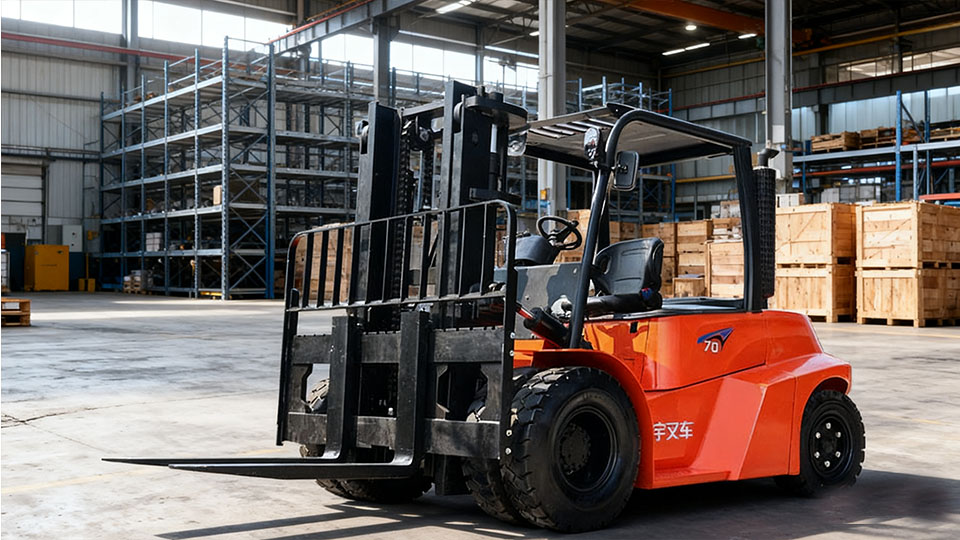
3. What Is Predictive Maintenance (PdM)?
Definition and distinction from preventive and reactive maintenance
Core technologies enabling PdM for forklifts:
IoT telematics and onboard sensors
Vibration analysis, thermal monitoring, hydraulic pressure sensors
Battery health monitoring (for electric forklifts)
Engine/electric motor performance telemetry
Data aggregation and cloud-based analytics platforms
4. Key Condition Monitoring Parameters
Mechanical systems: mast chain wear, fork alignment, brake pad thickness, tire degradation
Powertrain: engine oil analysis, coolant temperature, transmission stress, electric motor current draw
Hydraulics: pump efficiency, hose integrity, filter contamination levels
Battery systems (electric fleets): state of charge (SoC), state of health (SoH), thermal runaway detection
Operator behavior: impact detection, harsh braking, overload events as leading indicators
5. The Technology Stack: From Sensor to Insight
Edge computing vs. cloud analytics in forklift environments
Machine learning models for failure prediction: anomaly detection, regression-based RUL (Remaining Useful Life) estimation
Integration with fleet management software (FMS) and ERP/WMS systems
Alert workflows: maintenance ticketing, parts inventory triggers, technician dispatch
6. Operational and Financial Impact
Quantified benefits: reduction in unplanned downtime (typical benchmarks), parts cost savings, labor optimization
Safety improvements: fewer catastrophic failures, compliance with OSHA/LOLER inspection standards
Sustainability angle: optimized battery charging cycles, reduced hydraulic fluid waste, extended component life
7. Implementation Challenges and Considerations
Upfront capital investment and ROI timeline
Data quality and sensor calibration in harsh industrial environments
Cybersecurity risks in connected fleet assets
Change management: transitioning maintenance staff from wrench-turning to data interpretation
Legacy fleet retrofitting vs. OEM-integrated solutions
8. Case Example: A Warehouse Fleet Transition
Hypothetical or anonymized scenario: a mid-sized 3PL operator with 50+ forklifts
Before/after metrics: PM interval optimization, breakdown reduction, parts inventory carrying cost
Lessons learned during rollout
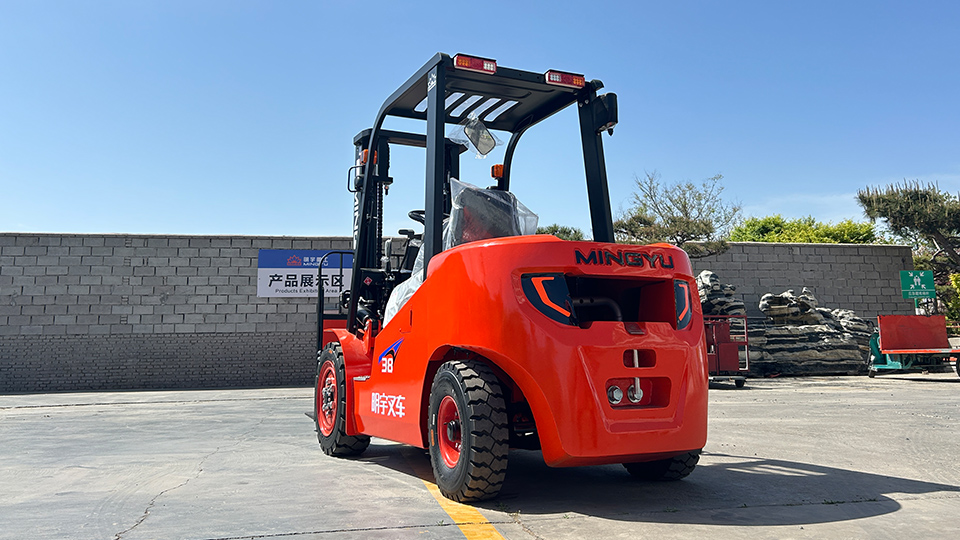
9. The Road Ahead: AI and Autonomous Integration
Digital twins for forklift fleets
Prescriptive maintenance: automated work order generation and dynamic scheduling
Convergence with AGV/AMR fleets: unified condition monitoring across manual and automated material handling
10. Conclusion
Recap of why predictive maintenance is becoming standard for forklift operations
Call to action for fleet managers to evaluate their maintenance maturity
Final thought: maintenance as a competitive advantage, not just a cost center
Name: selena
Mobile:+86-13176910558
Tel:+86-0535-2090977
Whatsapp:8613181602336
Email:vip@mingyuforklift.com
Add:Xiaqiu Town, Laizhou, Yantai City, Shandong Province, China
