
vip@mingyuforklift.com
+86-0535-2090977

Introduction
In the bustling environment of a modern warehouse, maintenance technicians often find themselves pulled between competing priorities: a downed conveyor belt, a malfunctioning barcode scanner, and a stacker with a flashing fault code. Under this pressure, it is all too easy to let the small, routine tasks slide in favor of the urgent, visible failures. Yet some of the most consequential maintenance activities are also the most easily overlooked—precisely because they do not announce themselves with alarms or error messages until catastrophic failure occurs.
Two such tasks stand out in the maintenance of electric stackers: mast chain lubrication and tire rotation. These are not glamorous procedures. They do not require specialized diagnostic equipment or advanced technical training. But they are among the most cost-effective investments a maintenance program can make, directly influencing safety, productivity, and the total cost of ownership. This article examines why these details are so frequently neglected, what the consequences of that neglect look like, and how to implement a disciplined, repeatable approach that ensures they are never skipped again.
Part I: Mast Chain Lubrication — The Hidden Lifeline
Understanding the Mast Chain System
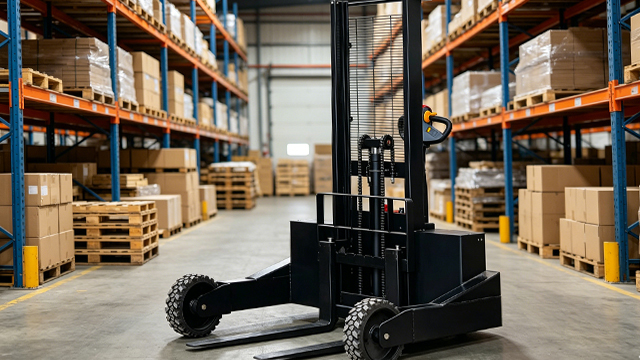
The lifting mechanism of an electric stacker relies on a system of roller chains—typically two parallel chains, one on each side of the mast—that transfer the force of the hydraulic cylinder to the fork carriage. These chains operate under immense tension, often lifting loads of 1,000 to 2,000 kilograms (2,200 to 4,400 pounds) to heights of 3 to 6 meters (10 to 20 feet). The chains run over sprockets at the top of the mast and are anchored at the base, cycling through extension and retraction with every lift and lower operation.
What makes chain lubrication so critical is the nature of the load itself. Unlike a conveyor chain moving boxes at constant speed, a stacker chain experiences shock loading at the start of every lift, vibration as the mast extends, and side loading when the operator maneuvers with a raised load. These dynamic forces accelerate wear in the pin-and-bushing joints, the very heart of the chain's flexibility and strength.
Why Chain Lubrication Is Overlooked
There are several reasons why chain lubrication falls through the cracks of even well-intentioned maintenance programs:
1. Out of Sight, Out of Mind
When the forks are at rest in their lowered position, the chains are largely hidden inside the mast channels. Technicians performing daily walk-around inspections may never see the chains at all unless they deliberately raise the mast to full extension. This visual invisibility creates a psychological blind spot.
2. The "It Still Works" Fallacy
A poorly lubricated chain will continue to function—until it doesn't. Unlike a flat tire or a dead battery, chain wear is gradual and silent. The operator may notice increased noise or a slight hesitation in lifting, but these symptoms are easily attributed to other causes or dismissed as normal aging. By the time a chain fails, the damage is already extensive.
3. Confusion About Lubricant Selection
Not all lubricants are suitable for mast chains. Some technicians reach for whatever grease is on hand—often a general-purpose lithium grease or even used motor oil. These choices can do more harm than good. General-purpose greases may not penetrate the tight clearances between pins and bushings, while used oil contains contaminants that accelerate abrasive wear.
4. Inadequate Access Procedures
Proper chain lubrication requires raising the mast to full height, securing it with a safety prop, and accessing both the inner and outer chain runs. This takes time—often 15 to 20 minutes per stacker—and requires that the machine be taken out of service. In a busy operation, this downtime feels like a luxury that cannot be afforded.
The Consequences of Neglected Chain Lubrication
When chain lubrication is deferred, the consequences unfold in a predictable sequence:
Stage 1: Increased Friction and Energy Consumption
Dry chains generate higher friction in every pin joint. The hydraulic pump must work harder to achieve the same lifting speed, increasing energy consumption and placing additional thermal load on the hydraulic system. Over months, this can measurably increase electricity costs and accelerate hydraulic oil degradation.
Stage 2: Elongation and Pitch Misalignment
As pins and bushings wear, the chain elongates beyond its original pitch. This causes the chain to ride unevenly on the sprocket teeth, producing a characteristic "climbing" noise and concentrating load on individual teeth. Sprocket wear accelerates, and the chain may begin to skip teeth under heavy load—a dangerous condition that can cause sudden load drops.
Stage 3: Corrosion and Cracking
In humid or corrosive environments, unlubricated chains are vulnerable to rust. Surface corrosion pits the metal, creating stress risers that propagate into fatigue cracks. A single cracked pin or plate can cascade into complete chain failure under load, with catastrophic potential if the failure occurs while the forks are raised.
Stage 4: Catastrophic Failure and Collateral Damage
A broken chain does not simply stop the lift—it releases the full potential energy of the raised load in an uncontrolled descent. The fork carriage crashes down, damaging the mast channels, the hydraulic cylinder, and any load or structure beneath it. The repair cost often exceeds the value of a complete chain replacement by a factor of five to ten.
Best Practices for Chain Lubrication
Frequency
For stackers in normal warehouse duty (8 hours per day, 5 days per week), chains should be lubricated every 50 to 100 operating hours, or approximately monthly. In heavy-duty or dirty environments, reduce this interval to every 25 to 50 hours. Always consult the manufacturer's specific recommendation, but treat it as a minimum, not a maximum.
Lubricant Selection
Use a high-penetration chain lubricant specifically formulated for industrial lifting chains. These products typically contain a solvent carrier that thins the lubricant for penetration into pin joints, then evaporates to leave a tenacious, high-viscosity film. Look for products with anti-wear additives (such as molybdenum disulfide or PTFE) and corrosion inhibitors. Avoid thick greases that sit on the surface without penetrating, and never use water-based or food-grade lubricants unless specifically required by your application.
Application Technique
Raise the mast to full extension and engage the mechanical safety prop or lock.
Clean the chains with a solvent-dampened cloth to remove old lubricant, dirt, and debris. Do not use a pressure washer, as water ingress into pin joints accelerates corrosion.
Apply lubricant to the inner surfaces of the chain links—the areas where pins and bushings articulate. This is where lubrication is actually needed. A thin, even coating on the outer plates is sufficient for corrosion protection.
Lower and raise the mast several times to distribute the lubricant through the full chain run.
Wipe away excess lubricant from the outer surfaces to prevent dirt adhesion.
Inspection During Lubrication
Each lubrication event is an opportunity for detailed chain inspection. Look for:
Elongation: Measure a 12-inch (305 mm) section of chain and compare it to the original pitch specification. Elongation beyond 3% indicates replacement is needed.
Plate cracking or distortion: Any crack, no matter how small, is grounds for immediate replacement.
Pin rotation or protrusion: Pins should be flush with the outer plates. Protruding pins indicate joint failure.
Sprocket wear: Check for hooked or pointed teeth, which indicate that the sprocket is worn and should be replaced along with the chain.
Part II: Tire Rotation — The Neglected Dimension of Wear Management
Understanding Stacker Tire Systems
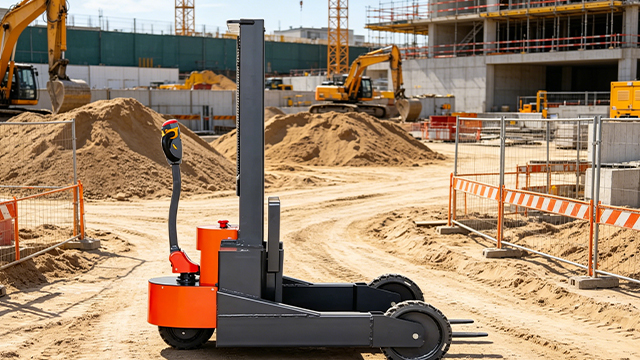
Electric stackers use a variety of tire configurations depending on their design and duty:
Drive tires: The powered wheel(s) that propel the stacker, typically located at the rear in walk-behind models or the front in ride-on models. These are usually made of polyurethane or rubber and may be either press-on or cushion designs.
Load wheels: The unpowered wheels beneath the fork carriage or base leg that support the weight of the load. These are typically smaller and often made of nylon, polyurethane, or phenolic resin.
Stabilizer wheels: Additional wheels on reach stackers or straddle stackers that provide lateral stability when the load is raised.
Unlike automotive tires, stacker tires do not inflate. They are solid or semi-solid compounds bonded to a steel or aluminum hub. This eliminates the risk of punctures but introduces a different wear dynamic: abrasive wear and material fatigue become the primary failure modes.
Why Tire Rotation Is Rarely Performed
Tire rotation is standard practice in automotive maintenance, yet it is almost unheard of in material handling. Several factors contribute to this neglect:
1. Perceived Immobility
Stacker tires are mounted on fixed axles with no provision for rotation. Unlike a car, where wheels can be swapped corner to corner, a stacker's drive tire is permanently associated with its drive motor, and load wheels are sized specifically for their position. This structural difference leads many technicians to assume that rotation is impossible.
2. Asymmetric Wear Acceptance
Uneven wear between drive and load wheels is often accepted as inevitable. The drive tire carries the motor's torque and experiences scrubbing during turns, while load wheels bear the concentrated weight of the raised load. Technicians may replace individual wheels as they wear rather than managing wear proactively.
3. Lack of Standardized Procedures
Manufacturer maintenance manuals rarely include tire rotation schedules or procedures. The omission is not because rotation is unimportant, but because the diversity of stacker designs makes universal recommendations difficult. This leaves maintenance managers to develop their own protocols—a task that often falls to the bottom of the priority list.
4. Cost Misconceptions
Some operators believe that tire rotation is not cost-effective because the labor to remove and reinstall wheels exceeds the value of extended tire life. This calculation ignores the secondary costs of uneven wear: increased vibration, accelerated bearing failure, and reduced traction that can lead to accidents.
The Consequences of Neglected Tire Management
Accelerated Replacement Costs
When one tire wears significantly faster than its counterparts, it drives a cycle of premature replacements. A drive tire that wears out in 2,000 hours because of poor rotation practices may have lasted 3,500 hours with proper management. Over a stacker's 10-year life, this can add thousands of dollars in unnecessary tire costs.
Structural and Component Damage
Uneven tire wear alters the stacker's geometry. A worn drive tire reduces ground clearance at the rear, changing the mast tilt angle and placing uneven stress on the hydraulic lift cylinder. Worn load wheels can cause the fork carriage to bind in the mast channels, accelerating wear in the rollers and chains.
Operator Fatigue and Safety
A stacker with uneven tires vibrates more during travel, increasing operator fatigue and reducing control precision. In extreme cases, a severely worn drive tire can lose traction on wet or contaminated floors, causing the stacker to slide during braking or direction changes—a significant safety hazard when carrying elevated loads.
Floor Damage
Worn or uneven tires concentrate the stacker's weight on smaller contact patches, increasing floor loading pressure. This accelerates damage to warehouse floors, creating trip hazards and increasing facility maintenance costs.
Best Practices for Tire Rotation and Management
Understanding Wear Patterns
Before developing a rotation strategy, analyze how your specific stacker model wears its tires:
Drive tires typically wear on the tread face from traction forces and on the shoulders from turning scrub.
Load wheels wear on the tread from load compression and on the hub bore from bearing friction.
Stabilizer wheels wear on the outer edge from lateral contact with rack uprights or floor edges.
Rotation Strategies
While true "rotation" in the automotive sense is not always possible, several strategies can balance wear:
For Dual-Wheel Configurations:
Some stackers use paired load wheels on each side. In these cases, swap the inner and outer wheels periodically to equalize wear. This is the closest equivalent to automotive rotation and should be performed every 500 to 1,000 operating hours.
For Single-Wheel Configurations:
Where rotation is structurally impossible, implement a tire matching program. When replacing a worn tire, measure the remaining tread on all other tires and replace them as a matched set if the disparity exceeds 5 mm (0.2 inches). This prevents the geometry distortions that cause binding and vibration.
For Mixed Fleets:
If you operate multiple stackers of the same model, consider a wheel exchange program. When one stacker's drive tire is worn, exchange it with a less-worn tire from a lower-utilization unit. This requires more logistical coordination but maximizes the value of your tire inventory.
Tire Inspection Protocol
Every 100 operating hours, perform a detailed tire inspection:
Measure tread depth at three points across the tire width and compare to the manufacturer's minimum specification.
Check for chunking, cracking, or delamination of the tire material from the hub.
Inspect the hub bore for ovality or wear that would cause wheel wobble.
Verify bearing condition by rotating the wheel and listening for grinding or feeling for roughness.
Check axle fasteners for proper torque; loose axles cause eccentric wear and are a common root cause of premature tire failure.
Alignment and Load Distribution
Uneven tire wear is often a symptom of deeper problems. If you observe rapid or asymmetric wear, investigate:
Axle alignment: A bent or misaligned axle causes the tire to run at an angle, scrubbing the tread.
Load centering: Operators habitually offset loads to one side of the forks, concentrating wear on the corresponding load wheels. Training can correct this.
Floor conditions: Debris, expansion joints, and damaged floor sections create impact loads that accelerate tire wear. Floor maintenance is tire maintenance.
Part III: Integrating the Overlooked into Your Maintenance Culture
The Psychology of Maintenance Neglect
Understanding why chain lubrication and tire rotation are overlooked requires acknowledging a fundamental truth about maintenance work: humans are biased toward tasks with immediate, visible feedback. A technician who replaces a blown fuse sees an immediate result—the stacker powers on. A technician who lubricates a chain sees no immediate change; the benefit accrues over months or years. This delayed gratification deficit is a powerful force that must be actively countered.
Building Accountability Through Checklists
The most effective countermeasure is a mandated, non-bypassable checklist that includes chain lubrication and tire inspection at defined intervals. The checklist should be:
Physical or digital, but never mental: Verbal confirmations and memory-based tracking are insufficient.
Signed and timestamped: Accountability requires attribution.
Audited randomly: Supervisors should periodically verify that completed checklists reflect actual work performed.
Leveraging Technology
Modern fleet management systems can automate maintenance reminders based on operating hours, calendar time, or fault code triggers. For stackers equipped with telematics, set automatic alerts for:
Chain lubrication due at 50-hour intervals
Tire inspection due at 100-hour intervals
Tire replacement predicted based on wear rate modeling
These systems remove the burden of memory from technicians and create an audit trail for compliance purposes.
Training and Operator Engagement
Operators are the first line of defense. A trained operator who hears a chain "singing" (a high-pitched whine indicating dry joints) or feels increased vibration from worn tires can report the issue before it becomes critical. Include chain and tire awareness in every operator training program, and establish a simple, no-penalty reporting system for maintenance concerns.
Measuring the Return on Investment
To justify the time invested in these overlooked tasks, track the metrics that matter:
Mean time between failures (MTBF) for mast and lifting systems
Tire replacement cost per 1,000 operating hours
Unplanned downtime hours attributable to mast or tire issues
Safety incidents involving load drops or loss of control
Organizations that implement disciplined chain lubrication and tire management typically see 20–40% reductions in these metrics within the first year.
Conclusion
Mast chain lubrication and tire rotation will never be the most exciting items on a maintenance technician's to-do list. They do not require advanced diagnostics, specialized tools, or heroic troubleshooting. But they are precisely the kind of humble, repetitive, easily deferred tasks that separate world-class maintenance programs from mediocre ones.
The stacker that receives diligent chain lubrication will lift smoothly and safely for years, its chains and sprockets wearing in harmony rather than in conflict. The stacker whose tires are managed proactively will roll efficiently, protect the warehouse floor, and spare its bearings and axles from the distortions of uneven wear. These are not dramatic transformations; they are the quiet, cumulative benefits of attention to detail.
In material handling, as in all industrial disciplines, the margin between acceptable and exceptional is measured not in the big decisions but in the small ones made consistently, shift after shift, year after year. Chain lubrication and tire rotation are two of those small decisions. Make them well, and your stackers—and your bottom line—will thank you.
Name: selena
Mobile:+86-13176910558
Tel:+86-0535-2090977
Whatsapp:8613181602336
Email:vip@mingyuforklift.com
Add:Xiaqiu Town, Laizhou, Yantai City, Shandong Province, China
