vip@mingyuforklift.com
+86-0535-2090977

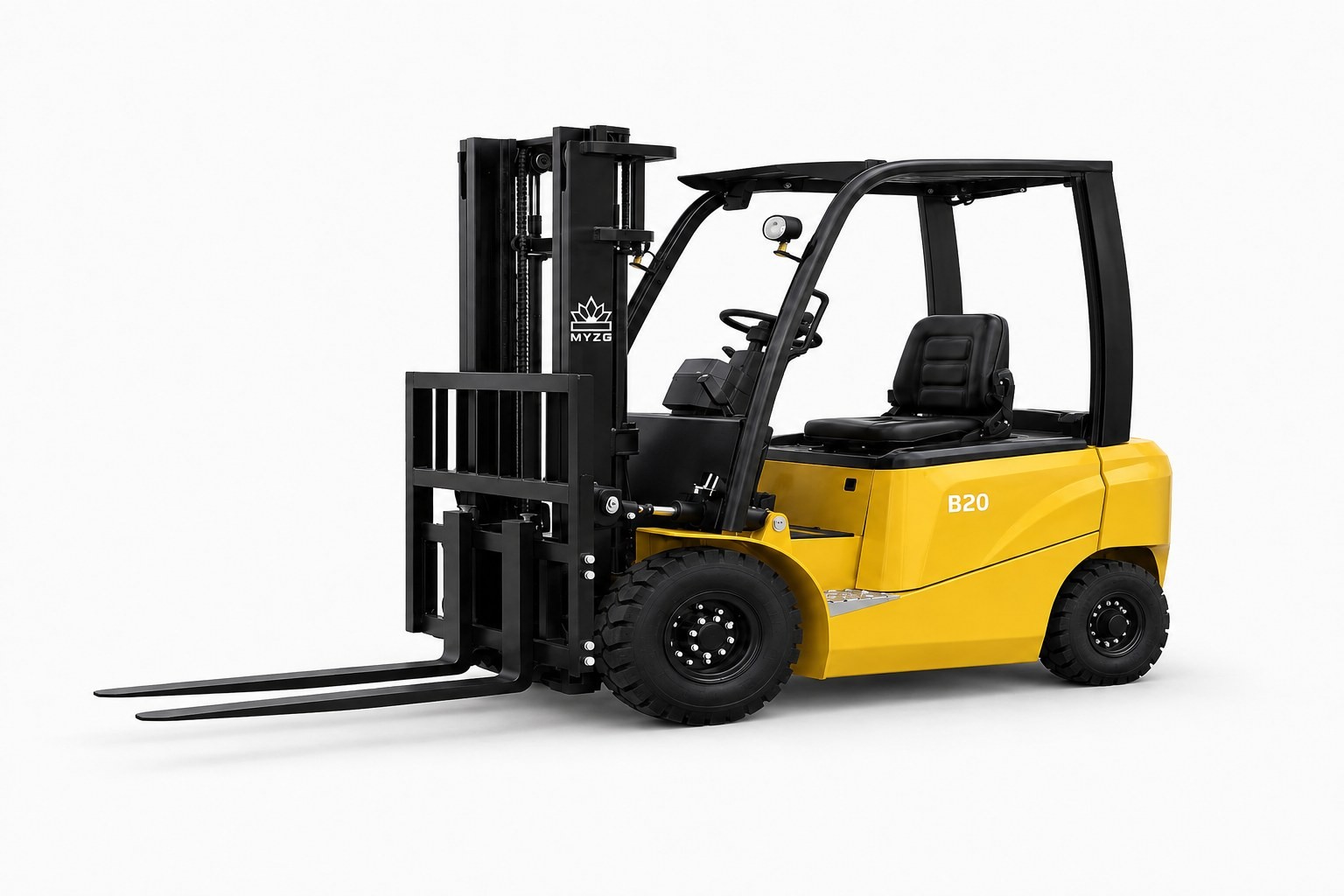
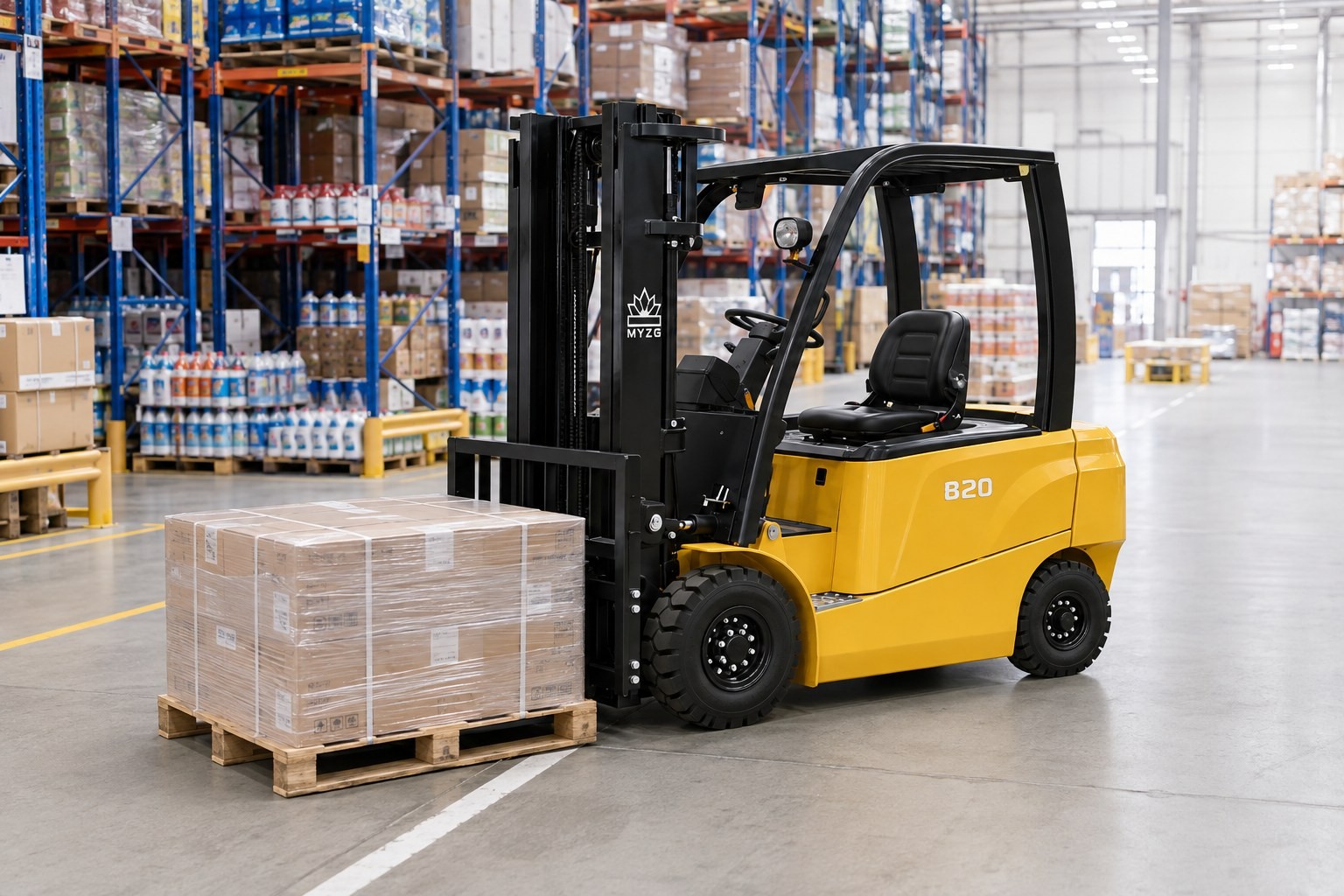
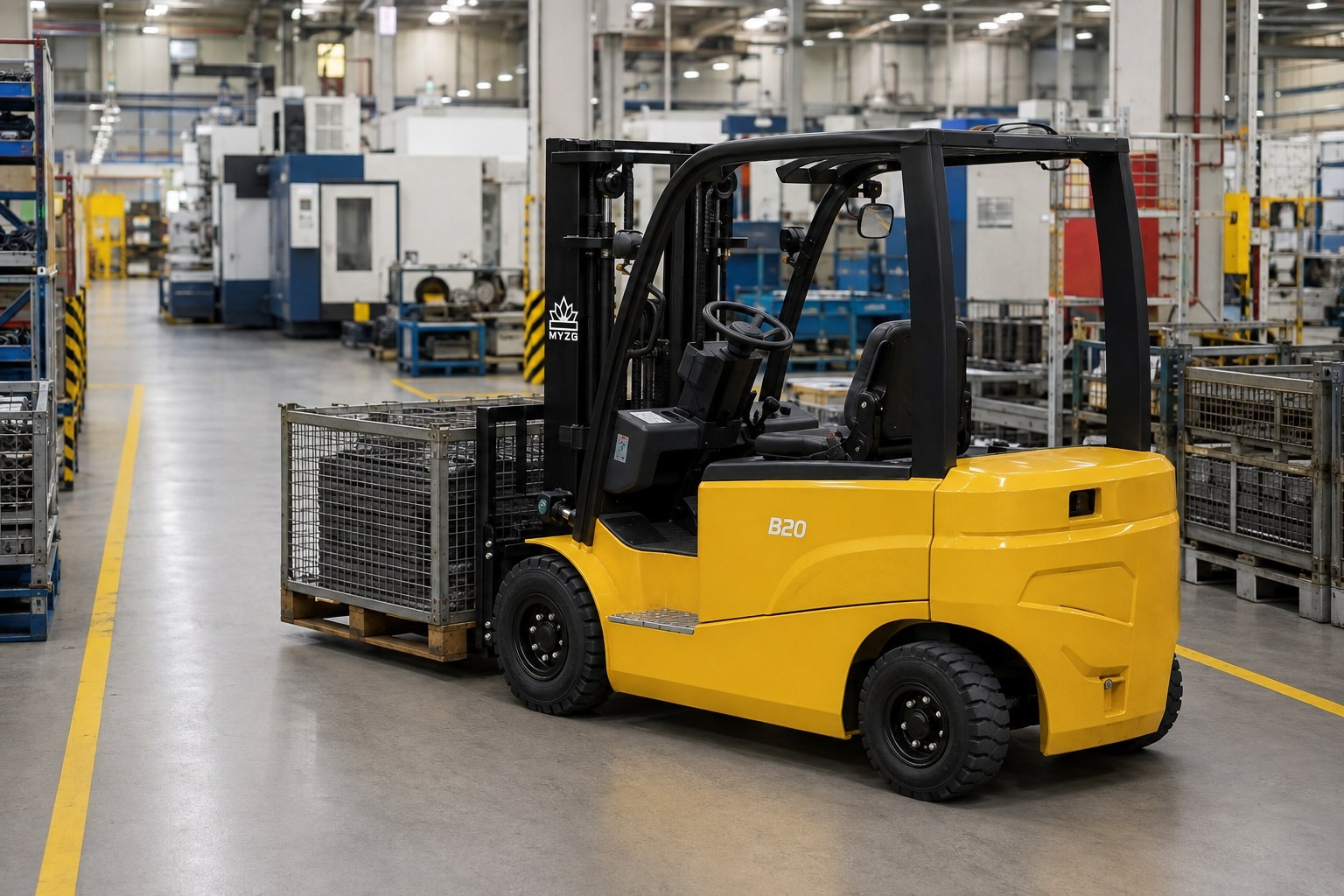
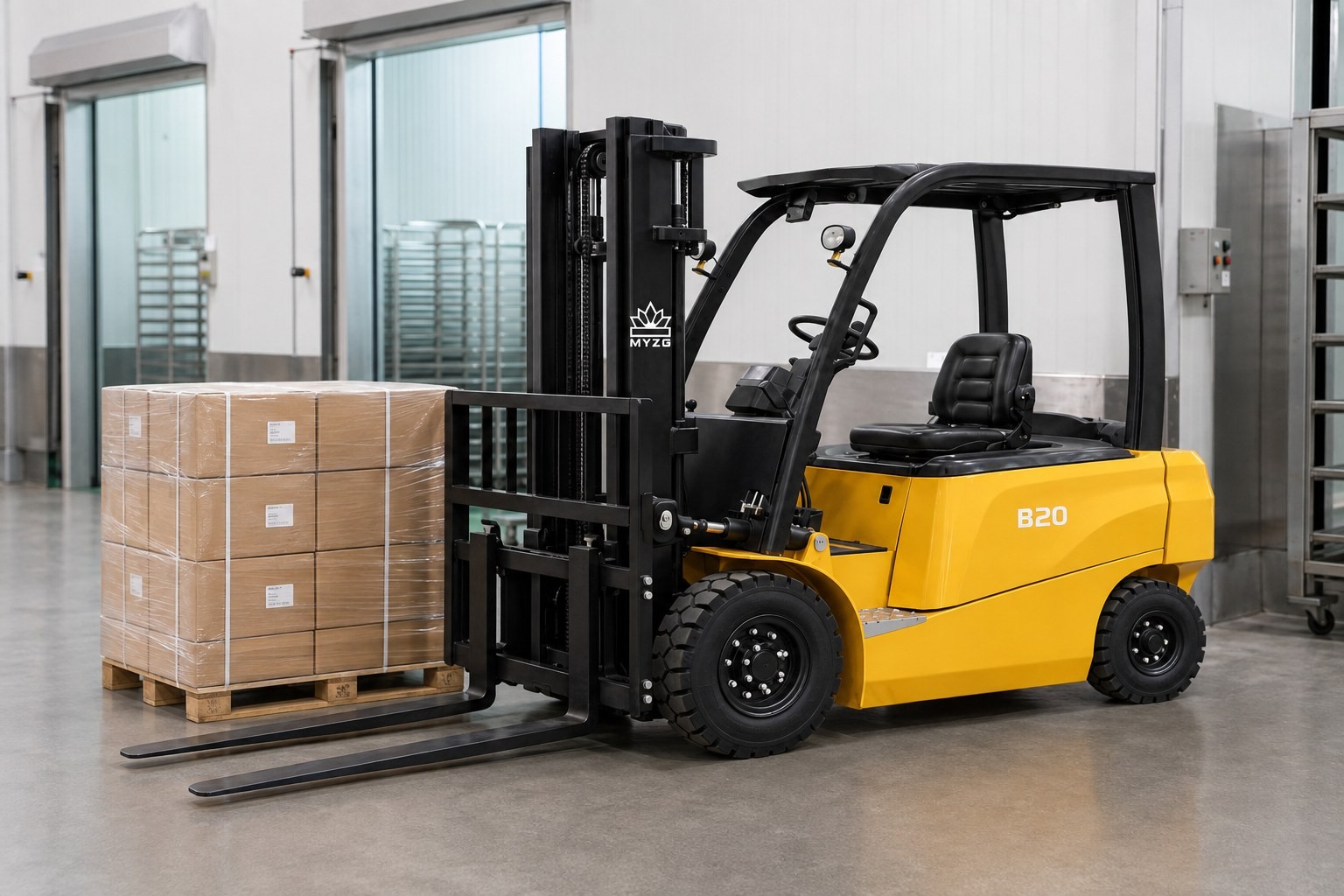
The ZGFORKLIFT / MYZG B20 is a compact lithium electric counterbalance forklift for buyers planning pallet movement in retail distribution, packaged-food dispatch, light manufacturing and mixed indoor logistics. Its nominal capacity is 2,000 kg, subject to the final load center, lift height, mast, attachment and ordered configuration. Shandong Zhuogong Machinery Equipment Co., Ltd. approaches the B20 as an application-matched solution: the truck, battery, charger, forks, tires, protection options and documents should be selected around the actual site rather than one headline specification.
Typical duties include receiving supplier pallets, replenishing reserve storage, transferring sealed cartons, staging store orders and supplying production lines. Lithium electric drive can remove tailpipe emissions at the point of operation and simplify routine battery care compared with systems that require watering. Actual runtime, charging time, travel speed, gradeability, dimensions and residual capacity vary with configuration, load, temperature and duty cycle. These items must be confirmed in a written quotation before purchase.
A practical forklift buying guide starts with measured information. Record the heaviest regular load, typical load, pallet dimensions, center of gravity and any unstable or offset load. Confirm maximum lift height, top-beam clearance, doorway height, aisle width, turning points, rack layout, dock plates, floor loading, thresholds, slopes and required free lift. Long pallets, tall loads and attachments move the effective load center and may reduce capacity at height. Buyers comparing alternatives can review the electric forklift category while keeping every quotation on an equivalent mast and attachment basis.
The shift profile is equally important. Note travel distance, lift frequency, peak receiving hours, breaks, opportunity-charging windows and the number of daily shifts. A short-shuttle operation and a long-travel distribution center can consume very different energy during the same clock time. Provide local voltage, frequency, plug type and charging-area conditions so the charger can be reviewed with the truck as one system.
In retail distribution, the B20 can support inbound unloading, reserve-storage put-away, order staging and outbound loading where loads remain within the approved capacity chart. Compact truck dimensions may help in busy staging zones, but safe clearance still depends on the aisle, pallet and turning geometry. Map pedestrian crossings, blind corners, emergency exits and dock edges. Establish marked routes, speed limits, lighting, mirrors and operator rules before commissioning. The All Products catalog provides adjacent equipment choices, and a pallet truck may be more efficient for lighter horizontal movements that do not require stacking.
Retail peaks often create short periods of intensive work followed by quieter charging windows. A buyer should model the busiest realistic day rather than an average day. Confirm whether the truck works only inside, crosses an outdoor apron, enters trailers or travels over dock plates. Rain, surface debris, ramp angles and temperature changes can affect tire choice, traction, protection and maintenance needs.
Packaged-food facilities need clean routes, controlled traffic and disciplined housekeeping. The B20 may support sealed-carton or packaged-goods movement when its ordered configuration is suitable for the environment. Provide minimum and maximum temperature, humidity, condensation risk, cleaning method, time inside chilled zones and the frequency of moving between warm and cool areas. A standard truck is not claimed to suit every cold-room, corrosive or wash-down application. Electrical protection, materials and maintenance intervals must be reviewed for the stated duty.
Keep the charging point outside unsuitable wet or food-handling zones unless local rules and the approved installation say otherwise. Separate pedestrian and vehicle flows, keep forks low in travel, inspect packaging stability and prevent damaged pallets from entering the route. Site managers can use the forklift FAQ and application guidance to structure questions before requesting a configured proposal.
For light manufacturing, common needs include moving incoming components, supplying work cells, transferring work in process and taking finished goods to dispatch. Document dust, metal chips, heat, oils, chemicals, uneven joints and outdoor exposure. Stillages, bins, drums, rolls and long components need specific load and attachment review. Never assume that nominal truck capacity alone approves a special load. Compare the full forklift product range if the site combines compact indoor work with heavier outdoor duties.
Line-side delivery benefits from repeatable routes and clear handover points. Agree which loads may be moved, where pallets may be staged and who controls mixed pedestrian areas. Check that racks, stillages and pallets are compatible with the selected forks. Attachments must be approved with the truck because they can change weight, load center, forward visibility and residual capacity.
For an accurate B20 proposal, send maximum and typical load weight; load dimensions and center; lift height; overhead clearance; aisle width; floor and ramp conditions; indoor-to-outdoor ratio; temperature range; daily hours and shifts; charging windows; local electrical supply; tire preference; fork dimensions; attachment needs; destination; language; quantity and target schedule. Photos can explain the route, but measured dimensions and a written duty profile remain essential.
A complete quotation should identify the mast, forks, attachment, battery, charger, tires, accessories, available documentation, packing method, delivery basis and after-sales scope. Compare suppliers on equivalent configurations instead of headline price or nominal capacity alone. Ask for the capacity information that applies to the quoted mast and attachment. Review parts and attachment resources when planning consumables, wear items and compatible options.
Treat the battery, charger and forklift as an approved system. Use the supplied charger and connector, protect cables from crushing or contamination, and provide a designated charging location that follows local electrical and fire requirements. Operators should understand normal indicators, warning messages and shutdown procedures. Travel distance, lifting frequency, load weight, ramps, temperature and driving style all affect energy use, so this page does not promise one universal runtime.
Daily checks should cover forks, fork locking, mast, chains, hoses, hydraulic leakage, tires, steering, brakes, horn, lights, warning devices, restraint, overhead guard, battery connector and charger cable. Damage, unusual noise or warning codes should be reported before the truck returns to service. Planned maintenance must follow the manual and reflect dust, moisture, temperature transitions, ramps and multi-shift intensity. Useful market and operating topics are also published in the industry news section.
Dealers need a repeatable method to qualify leads, configure trucks and support end users. Use an application sheet, verify dimensions, document the offered configuration and keep a delivery and handover record. Rental operators should define permitted loads, environments, charging responsibility and inspection frequency before each hire. Fleet buyers can compare common parts, charger compatibility, training needs and service access without assuming that every site should receive the same specification.
Shandong Zhuogong Machinery Equipment Co., Ltd. can review application information and export requirements during quotation. Company background is available on the About Us page. Where a buyer requests references, cooperation examples, performance figures or distributor arrangements, those details should be provided and verified directly for the relevant market; this page does not invent named cases or commercial results.
Compliance depends on the destination, intended use and exact ordered configuration. If CE documentation is required, ask which declarations, labels and technical documents apply to the quoted B20. Because the truck is electrically powered, engine-exhaust EPA requirements may not apply in the same manner as they do to an internal-combustion forklift, but the importer must confirm all rules covering the truck, lithium battery, charger, transport, workplace and local registration. No certification for every configuration or market is claimed here.
Export planning may include packing, loading method, battery transport information, manuals, labels, charger input, plug type, destination-language needs and spare-parts planning. Responsibilities, document scope and delivery terms should be written into the order. This approach protects both the buyer and supplier from assumptions and helps customs, installation and handover preparation proceed consistently.
Send the duty profile, load dimensions, lift height, site measurements, hours, charging windows, attachments, destination and documentation expectations. Shandong Zhuogong Machinery Equipment Co., Ltd. will review the information without treating unverified assumptions as confirmed specifications. Use the official contact page or email vip@mingyuforklift.com. Telephone: +86-0535-2090977. WhatsApp: +86 131 8160 2336. Address: Xiaqiu Town, Laizhou, Yantai City, Shandong Province, China.
Name: selena
Mobile:+86-13176910558
Tel:+86-0535-2090977
Whatsapp:8613181602336
Email:vip@mingyuforklift.com
Add:Xiaqiu Town, Laizhou, Yantai City, Shandong Province, China