
vip@mingyuforklift.com
+86-0535-2090977

Published: November 5, 2026
HTML Meta Description: Plan LPG forklift use for bakery and food distribution with cylinder controls, ventilation review, pallet quality and peak-shift staffing.
Keywords: LPG forklift bakery distribution, big shed logistics 2026, peak staffing warehouse, food ingredient pallet handling, LPG cylinder exchange safety, ventilated forklift zone, bakery dispatch operations, forklift fuel planning, ZGFORKLIFT, MYZG
The growth of large distribution buildings and seasonal staffing pressure have returned to logistics coverage as operators seek to use space and labor more effectively. Bakery and food-distribution sites have their own constraints: hygienic zones, temperature-controlled products, narrow dispatch windows and strict separation of packaging, ingredients and fuel. An LPG forklift may be considered for suitable ventilated zones and mixed indoor-outdoor work only after a site-specific emissions and ventilation review. It is not appropriate for every food facility, enclosed room or cold area.
Start with a documented task and route survey. Record the narrowest aisle and turn, doorway and gate width, overhead clearance, maximum gradient, dock edges and the worst surface condition. Measure real loads at their actual load centers, including long, offset or irregular items. Nameplate capacity is only a starting point; residual capacity at the required height and with the selected attachment determines practical application fit.
Recent warehouse reporting emphasizes space utilization, operating cost and flexible capacity. Bakery planners can apply that discussion to the movement between ingredient receiving, packaging supplies, finished goods and outbound routes. Avoid staging pallets in egress, refrigeration service areas or sanitation lanes to compensate for poor slotting. Document which zones permit combustion equipment, where cylinder exchange is allowed and who is trained to perform it. Establish a low-emission or electric-only policy wherever required. The wider property and capacity context is covered in the November 2026 logistics issue.
Review the CPCY120 LPG forklift as the first product reference, then confirm current specifications with the manufacturer.
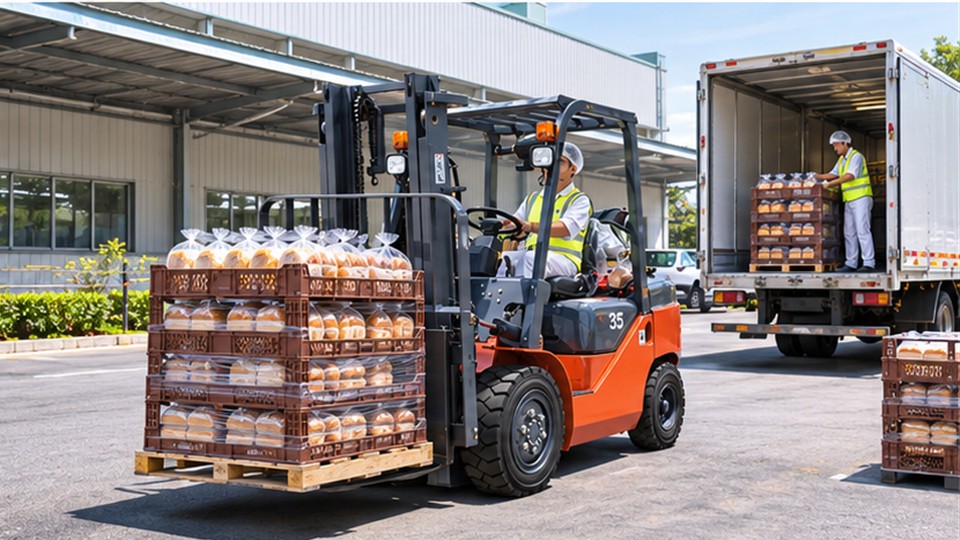
Map ingredient docks, dry storage, cooler entrances, packaging aisles, proofing and dispatch areas. Set maximum pallet dimensions, stack heights and route limits. Verify the forklift's rated capacity at actual load centres, especially for tall ingredient or finished-goods pallets. Review door clearance, floor condition, slope, cold-room transition, condensation, ventilation and emergency exits. Confirm LPG cylinder type, retention, shutoff, exchange area and inspection practice with the manufacturer and local authority. Select tyres and guards for the surface and shift pattern; do not use a standard configuration outside its approved environment.
Visibility and control deserve the same attention as capacity. Review the mast, carriage, tyres or wheels, lighting, mirrors or cameras, restraint, warning devices and speed management as one system. Dust, cold, heat, moisture and corrosion may require extra protection and shorter inspection intervals. Operators must see the travel path and place the load without leaving the protected operating position.
Compare the CPY35 LPG forklift for a second view of capacity, manoeuvrability, energy and service access.
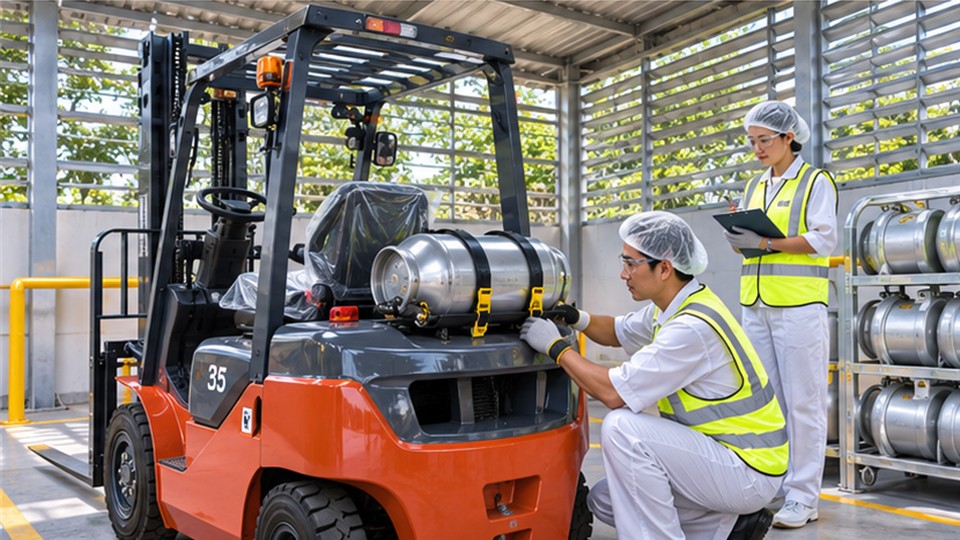
Keep LPG cylinders upright, secured and protected from impact. Exchange cylinders only in the designated ventilated area using trained personnel and the approved procedure; inspect connections and check for leaks as instructed. Keep ignition sources, smoke and hot work away from fuel handling. Maintain fire protection and emergency access. Separate pedestrians and food-handling staff from truck routes, use a spotter at cooler doors and keep loads low in transit. Do not operate combustion trucks in an enclosed or restricted area unless the site engineering review and regulations expressly allow it. Inspect tires, brakes, forks, mast, hydraulic hoses, restraint and warning devices each shift.
Create a written operating envelope for every approved route: maximum load and lift height, travel direction, pedestrian exclusion points, slope rules and stop-work conditions. Complete a pre-shift inspection of tyres or wheels, forks, chains, hoses, brakes, steering, alarms and the energy or fuel system. Isolate defects affecting stability, braking or visibility until corrected.
Supervisors should observe real work, record near misses, harsh braking, overload attempts, impacts and recurring service issues, then improve layout, traffic separation and coaching. Build the business case around productive hours rather than purchase price alone. Include operator time, maintenance, energy or fuel, infrastructure, transport, downtime risk and resale value.
The CPY15-XR mixed-use LPG forklift is the third internal product reference for application comparison.
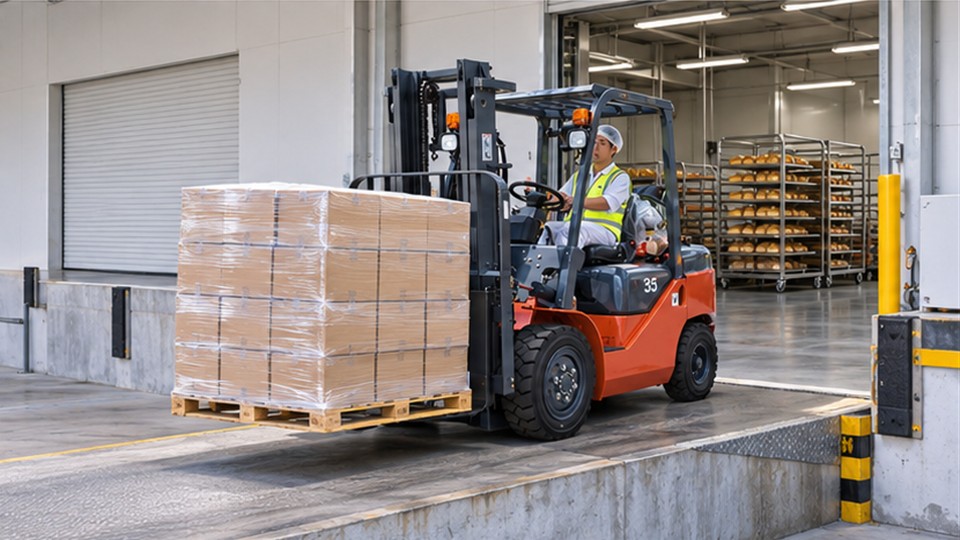
Compare shift coverage, completed pallet moves, waiting at doors, cylinder consumption, product damage, fuel exchange time and maintenance. Include ventilation changes, cylinder storage, operator training, monitoring, service access and the cost of a reserve truck. A mixed fleet may be more practical than choosing a single power source for every zone. Run a representative early-morning dispatch trial and record congestion, emissions controls, worker exposure and temperature transitions. If the limiting factor is order release accuracy, sanitation downtime or trailer arrival patterns, fuel type alone will not solve it.
A staged trial is the strongest way to validate a configuration. Select a representative route, define success measures, brief operators and compare throughput, energy use, handling accuracy and maintenance observations. Review results with operations, safety and finance before fleet-wide deployment. This evidence turns a current industry headline into a defensible material-handling plan.
ZGFORKLIFT and MYZG can tailor the final specification after reviewing the application. Product availability varies by market; confirm the latest technical data and comply with local regulations before purchase or operation.
Contact Shandong Zhuogong Machinery equipment Co.,Ltd. Email: vip@mingyuforklift.com. Tel: +86-0535-2090977. WhatsApp: +86 131 8160 2336. Address: Xiaqiu Town, Laizhou, Yantai City, Shandong Province, China.
Send the maximum load, load-center distance, aisle width, gradient, surface condition, daily duty hours and climate so MYZG engineers can recommend a practical configuration instead of a generic catalogue answer.
Name: selena
Mobile:+86-13176910558
Tel:+86-0535-2090977
Whatsapp:8613181602336
Email:vip@mingyuforklift.com
Add:Xiaqiu Town, Laizhou, Yantai City, Shandong Province, China