
vip@mingyuforklift.com
+86-0535-2090977

Introduction
In the material handling industry, the question of which forklift licence offers the greatest value is not merely academic—it represents a strategic career decision that can significantly impact employment prospects, earning potential, and operational versatility. With the global warehousing and logistics sector projected to reach unprecedented scale by 2026, operators equipped with the right certifications find themselves positioned at the forefront of an evolving industrial landscape. This technical analysis examines the various forklift licence categories, their respective advantages, and ultimately determines which certification provides the optimal return on investment for operators seeking to maximize their professional capabilities.
Understanding Forklift Classification Systems
The foundation of any meaningful discussion about forklift licensing begins with understanding how these machines are categorized. The Occupational Safety and Health Administration (OSHA) in the United States, along with equivalent regulatory bodies worldwide, classifies powered industrial trucks into distinct categories based on their design characteristics and operational parameters .
Class I: Electric Motor Rider Trucks encompass sit-down and stand-up rider models powered by electric motors, primarily designed for indoor warehouse operations where emissions control is critical. Class II: Electric Motor Narrow Aisle Trucks include reach trucks, order pickers, and straddle trucks engineered for high-density storage environments. Class III: Electric Motor Hand Trucks or Hand/Rider Trucks cover pedestrian-controlled equipment including pallet jacks and low-lift platform trucks. Class IV and V represent internal combustion engine trucks with cushion and pneumatic tires respectively, designed for both indoor and outdoor applications. Class VI covers electric and internal combustion engine tractors, while Class VII encompasses rough terrain forklifts specifically engineered for challenging outdoor environments .
This classification system is not merely bureaucratic taxonomy—it directly informs training requirements, operational limitations, and safety protocols that operators must master to achieve certification.
The Counterbalance Forklift Licence: The Industry Standard
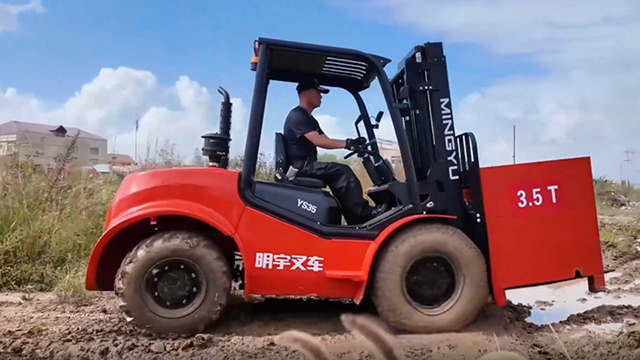
The counterbalance forklift licence remains the most widely recognized and frequently required certification in the material handling sector. Counterbalance forklifts derive their name from the substantial weight positioned at the rear of the vehicle, which counteracts the load lifted at the front, eliminating the need for outrigger arms or extending base legs .
From a technical perspective, counterbalance forklifts offer unmatched versatility. These machines typically handle loads ranging from 1.5 to 5 tonnes, with heavy-duty variants capable of exceeding 25,000 pounds . Their design permits operation on both smooth warehouse floors and uneven outdoor surfaces, making them indispensable in construction yards, manufacturing facilities, and distribution centers alike. The counterbalance configuration allows operators to approach loads directly and maneuver in relatively open spaces with aisle width requirements of 3.5 to 4.5 meters .
The counterbalance licence provides fundamental training in load capacity calculations, stability triangles, pre-operational inspections, and safe maneuvering techniques. Because this equipment type represents the baseline technology upon which other forklift variants are conceptualized, operators who master counterbalance systems develop transferable skills that facilitate cross-training on more specialized equipment .
However, the counterbalance licence has inherent limitations. As warehouse optimization trends toward higher vertical storage and narrower aisle configurations to maximize cubic space utilization, pure counterbalance certification may restrict operators from accessing positions in modern high-density facilities. The counterbalance design, while robust, cannot efficiently operate in aisles narrower than approximately 3.5 meters, and their maximum lift heights typically range from 4 to 7 meters—adequate for traditional warehousing but insufficient for contemporary distribution centers utilizing vertical space up to 12 meters or higher .
The Reach Truck Licence: Specialization for Modern Logistics
Reach truck certification addresses the operational requirements of contemporary high-density warehousing environments. Unlike counterbalance designs, reach trucks feature a compact chassis with extending mast mechanisms that enable the forks to reach into racking while the truck body remains stationary, allowing operation in aisles as narrow as 2.5 to 3 meters .
The technical advantages of reach truck certification extend beyond mere space efficiency. These machines routinely achieve lift heights of 8 to 12 meters, with specialized models reaching 40 feet or higher—capabilities essential for modern distribution centers maximizing vertical storage . The design incorporates outrigger arms that extend forward to support loads, distributing weight across the wheelbase during lifting operations, which provides enhanced stability at elevation compared to counterbalance configurations .
From an employment perspective, reach truck certification opens doors to positions in automated distribution centers, cold storage facilities, and retail distribution networks where space optimization directly impacts operational costs. The specialized nature of this equipment means that reach truck operators often command premium wages compared to general counterbalance operators, particularly in regions with high concentrations of modern logistics infrastructure .
Nevertheless, reach truck certification presents certain constraints. These machines are predominantly designed for indoor operation on smooth, level surfaces. Their load capacities typically max out at 2.5 tonnes, with heavy models rarely exceeding 4,500 pounds—limitations that render them unsuitable for heavy manufacturing, construction, or outdoor yard operations . Additionally, the specialized control systems and mast extension mechanisms require operators to develop distinct skill sets that do not fully transfer to counterbalance or rough terrain operations.
Multi-Category Certification: The Strategic Approach
Industry analysis suggests that the "best" forklift licence is not a single certification but rather a strategic combination of qualifications that maximizes operational flexibility. Training providers increasingly offer comprehensive programmes that certify operators across multiple equipment categories simultaneously, recognizing that modern material handling operations demand versatility .
A combined counterbalance and reach truck certification provides operators with the fundamental capabilities to work in virtually any warehouse environment—from traditional manufacturing facilities utilizing counterbalance equipment to high-density distribution centers requiring reach truck expertise. This dual certification approach typically requires marginally additional training time compared to single-category certification while exponentially expanding employment opportunities .
Furthermore, comprehensive certification programmes that include Class III equipment (electric pallet jacks and low-lift trucks) address the full spectrum of material handling operations. While these smaller machines may seem less technically demanding, they represent the workhorses of warehouse operations, and certification demonstrates an operator's commitment to comprehensive safety protocols and operational excellence .
Regulatory Considerations and International Recognition
The technical evaluation of forklift licensing must account for regulatory frameworks governing certification validity and recognition. In the United States, OSHA mandates that all forklift operators complete training comprising formal instruction, practical training, and performance evaluation . Certification remains valid for three years, after which refresher training is required .
Importantly, OSHA emphasizes that training must be specific to the type of truck and workplace conditions. An operator certified exclusively on counterbalance forklifts cannot legally operate reach trucks without additional equipment-specific training . This regulatory reality reinforces the argument for comprehensive multi-category certification, as employers bear legal responsibility for ensuring operators are qualified for specific equipment assignments.
International operators must consider recognition and equivalency agreements between jurisdictions. While OSHA certification is widely recognized throughout North America, operators seeking employment in the United Kingdom, European Union, or Australasian markets may encounter additional requirements. The UK's Construction Industry Training Board (CITB) and equivalent bodies in other jurisdictions maintain distinct certification schemes, though fundamental operational principles remain consistent across regulatory frameworks .
Economic Analysis: Return on Certification Investment
From a cost-benefit perspective, forklift certification represents a remarkably efficient professional investment. Individual certification courses typically range from $50 to $200 per equipment category, with comprehensive multi-category programmes offering economies of scale . When compared to the potential wage differential between uncertified laborers and certified forklift operators—which can exceed $5 to $8 per hour in competitive markets—the return on investment is realized within days of employment .
However, the economic analysis extends beyond immediate wage considerations. Operators holding multiple certifications demonstrate professional commitment and operational versatility that position them favorably for advancement into supervisory roles, training positions, or specialized logistics coordination. The technical breadth gained through comprehensive certification provides foundational knowledge for understanding complex warehouse management systems and automated material handling technologies increasingly prevalent in Industry 4.0 environments.
Emerging Technologies and Future-Proofing Certification
The material handling industry is undergoing significant technological transformation, with automated guided vehicles (AGVs), robotic picking systems, and telematics-integrated forklifts reshaping operational requirements. While current certification frameworks focus primarily on manual operation, forward-looking operators should consider how their certification choices position them for evolving industry demands.
Counterbalance and reach truck certifications that emphasize fundamental principles of load dynamics, stability, and safety protocols provide transferable knowledge applicable to semi-autonomous and remotely operated systems. Operators who understand the mechanical and physical principles underlying forklift operation will be better positioned to supervise, troubleshoot, and coordinate with automated systems than those with narrow, equipment-specific training.
Conclusion: The Optimal Certification Strategy
After comprehensive technical analysis of equipment capabilities, employment markets, regulatory requirements, and economic factors, the evidence strongly supports that the best forklift licence is a multi-category certification encompassing both counterbalance and reach truck qualifications, supplemented by Class III equipment certification where feasible.
This recommendation rests on several technical foundations:
Operational Versatility: Combined certification enables operators to work across the full spectrum of warehouse environments, from traditional manufacturing facilities to modern high-density distribution centers, eliminating employment limitations based on equipment type .
Market Demand: Contemporary logistics operations increasingly utilize mixed equipment fleets, with counterbalance trucks handling receiving/shipping and yard operations while reach trucks manage high-density storage. Employers value operators capable of transitioning seamlessly between equipment types .
Career Progression: Comprehensive certification demonstrates professional commitment and technical breadth that facilitates advancement into supervisory, training, and coordination roles with enhanced compensation and responsibility.
Regulatory Compliance: Multi-category certification ensures operators meet OSHA and international regulatory requirements for equipment-specific training, protecting both operators and employers from liability associated with unauthorized equipment operation .
Economic Efficiency: The marginal additional investment required for multi-category certification compared to single-category training yields disproportionate returns in employment opportunities and wage potential.
While specialized certifications for rough terrain forklifts (Class VII) or specific attachments may provide additional value for operators targeting niche markets such as construction or heavy manufacturing, the counterbalance-reach combination represents the foundational certification strategy that maximizes professional opportunity for the majority of material handling professionals.
In an industry characterized by technological evolution and increasing operational complexity, the operator who invests in comprehensive, multi-category certification positions themselves not merely as equipment operators, but as versatile material handling professionals capable of adapting to diverse operational demands. The best forklift licence, therefore, is not the one that certifies operation of a single machine type, but the one that opens the broadest spectrum of professional possibilities while ensuring the highest standards of safety and operational excellence.
Name: selena
Mobile:+86-13176910558
Tel:+86-0535-2090977
Whatsapp:8613181602336
Email:vip@mingyuforklift.com
Add:Xiaqiu Town, Laizhou, Yantai City, Shandong Province, China
