
vip@mingyuforklift.com
+86-0535-2090977

The Illusion of Control in Shared Workspaces
In warehouses, distribution centers, and manufacturing plants across the globe, a silent choreography unfolds daily. Workers navigate aisles on foot while multi-ton forklifts maneuver inches away, carrying loads that obscure operator vision. The assumption that posted speed limits and painted floor markings are sufficient to prevent catastrophe is not merely optimistic—it is dangerously naive.
Forklift-related incidents remain among the most severe occupational hazards, accounting for approximately 85 fatalities and 34,900 serious injuries annually in the United States alone, according to OSHA statistics. The vast majority of these incidents occur not from mechanical failure but from systemic safety gaps in environments where humans and machines are expected to coexist without adequate protective architecture.
This article examines why forklift safety demands a fundamentally deeper approach than conventional signage and speed restrictions. We explore the technical, behavioral, and engineering dimensions that must converge to create genuinely safe shared spaces.
The Anatomy of Forklift-Pedestrian Incidents
Understanding incident causation requires moving beyond simplistic attributions like "operator error" or "pedestrian carelessness." Modern safety science recognizes that accidents emerge from complex interactions between human factors, machine design, environmental conditions, and organizational systems.
Visibility Limitations constitute a primary technical challenge. When a forklift carries a load at standard mast heights (typically 15-20 feet), the operator's forward field of vision is severely compromised. A standard 48-inch pallet loaded to maximum capacity can create a blind spot extending 10-12 feet directly in front of the forklift. Counterbalance forklifts, the most common type, further exacerbate this problem with their rear-wheel steering configuration, which causes the rear counterweight to swing outward during turns—a movement pedestrians rarely anticipate.
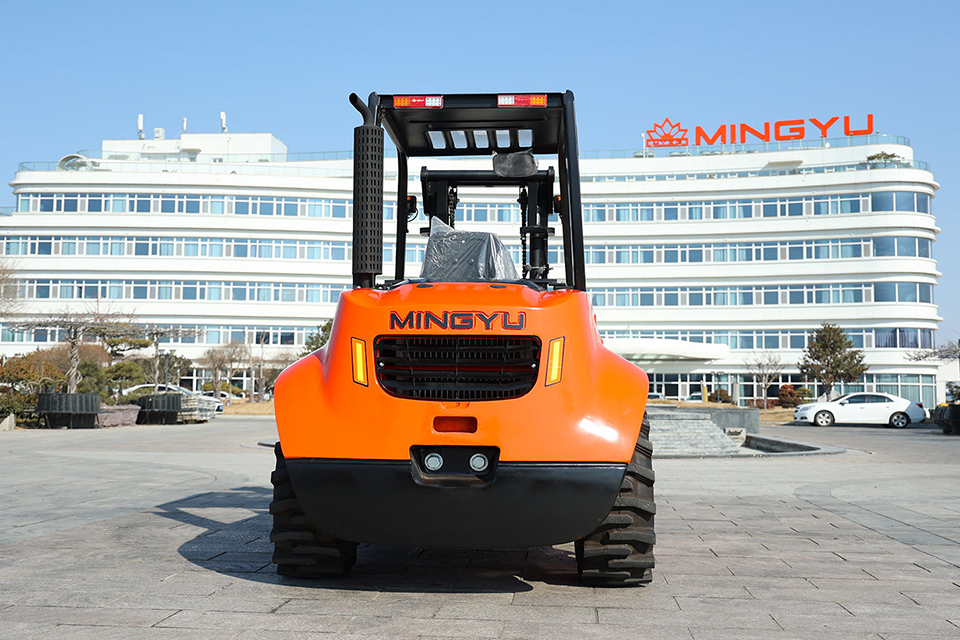
Pedestrian Behavior Patterns in industrial environments often contradict safety assumptions. Workers develop spatial familiarity over time, leading to complacency and "automatic pilot" walking patterns. Cognitive load from primary tasks—order picking, inventory checks, or quality inspections—diverts attention from environmental hazards. Research in situational awareness demonstrates that pedestrians in familiar environments process visual information peripherally, missing unexpected movements of industrial vehicles until collision is imminent.
Acoustic Masking presents an underappreciated hazard. Modern warehouses generate ambient noise levels of 75-85 decibels from ventilation systems, conveyor operations, and background machinery. Electric forklifts, increasingly prevalent for indoor air quality compliance, operate at significantly lower noise levels than internal combustion counterparts. A pedestrian wearing hearing protection or focused on a task may remain entirely unaware of an approaching forklift until visual contact occurs—often too late for evasive action.
Beyond Speed Limits: Engineering Controls That Actually Work
Speed limit signs represent administrative controls—the least effective tier in the hierarchy of controls. True safety in shared spaces requires engineering solutions that physically prevent or mitigate collisions regardless of human behavior.
Pedestrian Detection Systems have evolved dramatically from simple proximity sensors to sophisticated multi-modal detection networks. Modern systems integrate:
LiDAR-based scanning that creates real-time 3D environmental maps, distinguishing between static racking and moving humans based on point-cloud analysis. These systems can detect pedestrians in forklift blind spots and automatically trigger braking or warning protocols.
Ultra-wideband (UWB) proximity badges worn by personnel that communicate with forklift-mounted receivers. Unlike RFID systems that merely detect presence, UWB technology provides centimeter-level positional accuracy, enabling graduated responses—warning at 15 feet, speed reduction at 10 feet, automatic braking at 5 feet.
Computer vision systems employing deep learning algorithms trained on thousands of pedestrian images. These cameras can identify human forms even partially obscured by shelving or other warehouse infrastructure, though they require careful calibration to avoid false positives that could desensitize operators.
Physical Separation Technologies offer the most reliable protection where feasible. Elevated pedestrian walkways, though capital-intensive, eliminate ground-level interaction entirely. Where full separation is impractical, automated gate systems with interlocked pedestrian doors prevent simultaneous occupancy of high-risk zones. These systems use pressure-sensitive floor mats, light curtains, or magnetic loop detectors to ensure zones are clear before allowing forklift entry.
Blue Spotlights and Warning Projectors represent a middle-ground engineering control. Unlike audible alarms that contribute to acoustic fatigue, visual warnings projected onto the floor ahead of moving forklifts provide unambiguous spatial information. Blue or red spotlights projected 10-15 feet ahead of the vehicle create a "safety bubble" that pedestrians can perceive without direct line-of-sight to the forklift itself. Studies indicate these systems reduce near-miss incidents by 40-60% compared to standard backup alarms alone.
Operator Assistance Technologies: Augmenting Human Capability
Even the most skilled operators face physiological and cognitive limitations that technology can mitigate.
360-Degree Camera Systems stitch feeds from multiple vehicle-mounted cameras into a single overhead-view display, eliminating the visibility gaps inherent in traditional mirror systems. Advanced systems incorporate object detection overlays that highlight pedestrians in the video feed, drawing operator attention to threats they might otherwise miss while monitoring load stability.
Dynamic Stability Control prevents tip-over incidents that endanger both operators and nearby pedestrians. These systems use accelerometers and gyroscopes to monitor mast angle, load weight (via hydraulic pressure sensors), and vehicle tilt. When the system calculates that the center of gravity is approaching the stability triangle's boundary, it automatically limits travel speed and mast elevation, preventing the operator from executing maneuvers that would cause rollover.
Operator Presence Sensing ensures that forklifts cannot operate without a qualified operator properly seated and belted. Weight sensors in the seat, combined with seatbelt interlocks, prevent unauthorized operation. More advanced systems incorporate operator identification via RFID badges or biometric scanners, enabling fleet managers to restrict operation to certified personnel and track individual operator behavior patterns.
The Human Factors Dimension: Training That Transforms Behavior
Technology alone cannot overcome fundamental human limitations. Comprehensive training programs must address the cognitive and perceptual realities of shared-space operation.
Situational Awareness Training goes beyond basic operational instruction to develop active scanning behaviors. Effective programs use simulator-based training that presents unexpected pedestrian movements, forcing operators to develop systematic visual scanning patterns: mirrors, overhead, floor level, and blind spots. Research indicates that operators trained in structured scanning protocols detect pedestrians 30-40% faster than those relying on natural visual habits.
Pedestrian Safety Training is equally critical and frequently neglected. All personnel in forklift operating zones—not just operators—require training in forklift blind spots, swing radius characteristics, and right-of-way protocols. Effective programs include "ride-along" experiences where pedestrians sit in the operator's seat to viscerally understand visibility limitations. This perspective transformation significantly reduces risky pedestrian behaviors like crossing immediately behind operating forklifts or walking in identified blind spots.
Near-Miss Reporting Systems create organizational learning opportunities. Facilities that systematically collect and analyze near-miss data—without punitive framing—identify recurring hazard patterns invisible to casual observation. A cluster of near-misses at a particular intersection may indicate inadequate lighting, obstructed sightlines, or workflow patterns that create predictable conflict points. Data-driven interventions address root causes rather than symptoms.
Environmental Design: The Architecture of Safety
Facility design profoundly influences incident probability, yet safety considerations are often retrofitted rather than integrated into initial layout planning.
Aisle Width and Layout determine maneuvering complexity. Narrow-aisle and very-narrow-aisle configurations maximize storage density but increase pedestrian-forklift interaction frequency. The technical specification of aisle width must account not merely for forklift turning radius but for the dynamic envelope—the space occupied during actual operation including load swing, mast tilt, and operator correction movements. Aisle widths below 12 feet in counterbalance forklift operations dramatically increase side-swipe and crushing risks.
Lighting Design affects both operator and pedestrian visual performance. OSHA standards mandate minimum illumination levels (5 foot-candles in general warehouse areas), but optimal safety requires consideration of contrast, glare, and color rendering. High-pressure sodium lighting, common in warehouses, produces poor color rendition that can obscure pedestrian high-visibility clothing. LED systems with higher color rendering indices (CRI > 80) improve hazard detection while reducing energy consumption.
Floor Surface Conditions influence both forklift stability and pedestrian safety. Polished concrete, while durable and easy to clean, becomes dangerously slippery when contaminated with hydraulic fluid, water, or dust. Anti-slip floor treatments or textured finishes reduce slip risks for pedestrians while maintaining sufficient smoothness for efficient forklift operation. Floor flatness specifications (FF/FL numbers) also affect stability—excessive levelness deviations cause mast sway that can destabilize elevated loads.
Regulatory Framework and Standards Evolution
Safety standards provide baseline requirements, but compliance alone does not ensure safety. Understanding the technical rationale behind standards enables facilities to exceed minimums appropriately.
OSHA 29 CFR 1910.178 (Powered Industrial Trucks) establishes operator training and certification requirements but contains minimal specifications regarding pedestrian safety systems. The standard's general duty clause, however, has been interpreted to require pedestrian separation measures in high-traffic scenarios where recognized hazards exist.
ANSI/ITSDF B56.1 provides more detailed safety standards for powered industrial trucks, including stability requirements and design specifications. Recent revisions have incorporated performance requirements for operator restraint systems and visibility enhancements.
ISO 3691-1 (Industrial Trucks—Safety Requirements) represents the international consensus standard, with particular emphasis on ergonomic and visibility requirements. Compliance with ISO standards often facilitates global operations and may exceed local regulatory minimums.
Emerging standards address autonomous and semi-autonomous forklifts, which present novel safety challenges. These machines operate without human operators yet must navigate spaces populated by unpredictable human behavior. Standards development focuses on functional safety (ISO 13849), collaborative robot safety (ISO/TS 15066), and autonomous mobile robot navigation (ISO 3691-4).
The Economic Argument: Safety as Investment
Safety investments frequently face resistance based on perceived cost. However, comprehensive analysis reveals that inadequate safety imposes substantial hidden costs that dwarf proactive investment.
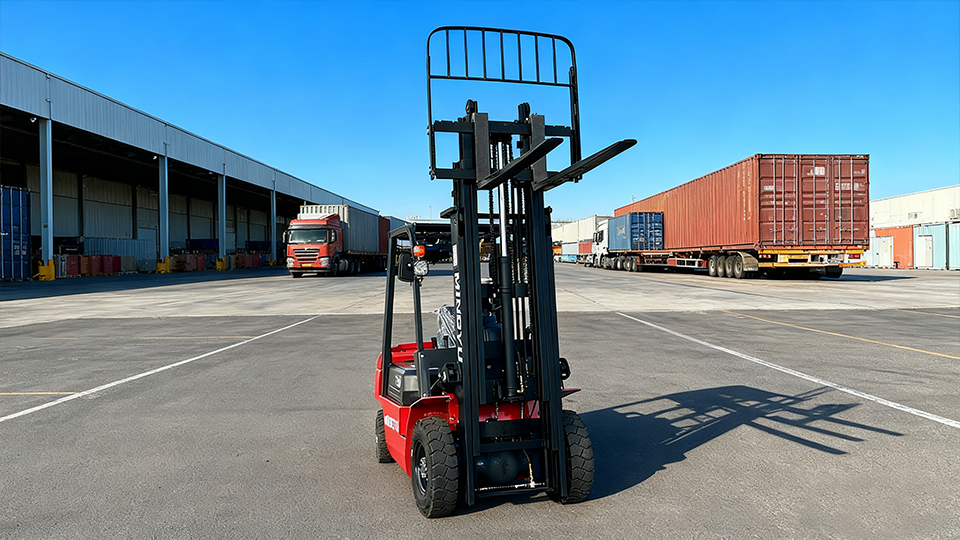
Direct Costs of forklift incidents include medical expenses, workers' compensation claims, equipment damage, and regulatory fines. The average cost of a forklift-related injury exceeds $150,000 when direct and indirect costs are combined.
Indirect Costs—often 3-5 times direct costs—encompass accident investigation time, replacement labor, schedule disruptions, increased insurance premiums, and morale impacts. A single serious incident can trigger OSHA inspections that consume hundreds of management hours and result in citations with penalties exceeding $15,000 per violation.
Productivity Benefits of advanced safety systems are frequently overlooked. Pedestrian detection systems that prevent unnecessary stops and cautious operation actually improve throughput by allowing operators to maintain optimal speeds with confidence. Separated pedestrian walkways eliminate the hesitation and defensive driving that slow operations in shared spaces.
Conclusion: Toward a Culture of Engineered Safety
Forklift safety in shared human-machine environments cannot be achieved through signage, speed limits, and good intentions. It requires a systematic approach integrating engineering controls that function independently of human vigilance, training programs that address cognitive and perceptual realities, environmental designs that minimize conflict points, and organizational cultures that treat near-misses as opportunities for improvement rather than occasions for blame.
The facilities achieving exemplary safety records share common characteristics: they invest in detection and warning technologies as standard equipment, they train continuously rather than merely certifying periodically, they analyze data to identify patterns before incidents occur, and they design workflows that physically separate humans and machines wherever feasible.
In the evolving landscape of warehouse automation, where autonomous vehicles and human workers increasingly share dynamic spaces, these principles become not merely advisable but essential. The question is no longer whether people and machines can share space safely, but whether organizations possess the technical sophistication and cultural commitment to engineer that safety into every aspect of their operations.
Name: selena
Mobile:+86-13176910558
Tel:+86-0535-2090977
Whatsapp:8613181602336
Email:vip@mingyuforklift.com
Add:Xiaqiu Town, Laizhou, Yantai City, Shandong Province, China
