
vip@mingyuforklift.com
+86-0535-2090977

Published: November 5, 2026
HTML Meta Description: Prepare diesel forklift capacity for port-hinterland cargo with verified loads, trailer interfaces, emissions controls and dispatch sequencing.
Keywords: China-Africa shipping connection, diesel forklift port hinterland, breakbulk cargo staging, freight yard capacity, heavy pallet transfer, forklift trailer loading, diesel service planning, cargo dispatch sequence, ZGFORKLIFT, MYZG
A weekly China–Africa shipping service planned for late November adds another schedule for freight teams to coordinate. Port-hinterland depots may need to receive, inspect, consolidate and dispatch cargo across varying surfaces and time windows. A diesel forklift may be suitable for some outdoor or heavy-duty loads, subject to local emissions rules, ventilation, machine rating and site approval. A shipping announcement is not a forecast of yard volume; operators should plan from confirmed bookings, cargo manifests and terminal instructions.
Start with a documented task and route survey. Record the narrowest aisle and turn, doorway and gate width, overhead clearance, maximum gradient, dock edges and the worst surface condition. Measure real loads at their actual load centers, including long, offset or irregular items. Nameplate capacity is only a starting point; residual capacity at the required height and with the selected attachment determines practical application fit.
The announced service connects Shanghai, Ningbo and Nansha with Dar es Salaam and Maputo via Port Klang Westport and Singapore. For a freight yard, the actionable step is to map expected handoffs and avoid congestion between customs holds, container drayage, inspection and outbound trucks. Check the carrier’s confirmed schedule and local terminal notices before assigning equipment. Keep documentation accessible to the receiving team and separate cleared freight from cargo awaiting checks. Details are provided in DP World’s route announcement.
Review the CPCD25K diesel forklift as the first product reference, then confirm current specifications with the manufacturer.
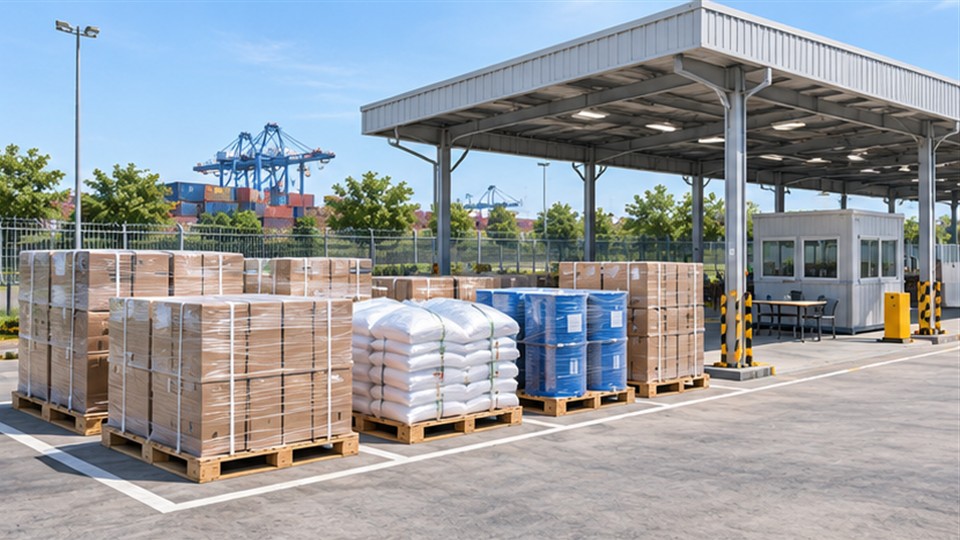
Build a cargo matrix for each scheduled shipment: dimensions, gross mass, centre of gravity, fork pockets, fragile faces, stacking limit and delivery deadline. Survey ground bearing, ramp angles, dock or trailer ratings, turning space and exhaust restrictions. Verify residual capacity for each attachment and set a maximum operating envelope. Coordinate equipment availability with customs inspection, container release and carrier arrival rather than relying on a general vessel schedule. Keep a backup plan for weather, delayed cargo and a machine defect.
Visibility and control deserve the same attention as capacity. Review the mast, carriage, tyres or wheels, lighting, mirrors or cameras, restraint, warning devices and speed management as one system. Dust, cold, heat, moisture and corrosion may require extra protection and shorter inspection intervals. Operators must see the travel path and place the load without leaving the protected operating position.
Compare the CPCD40K diesel forklift for a second view of capacity, manoeuvrability, energy and service access.
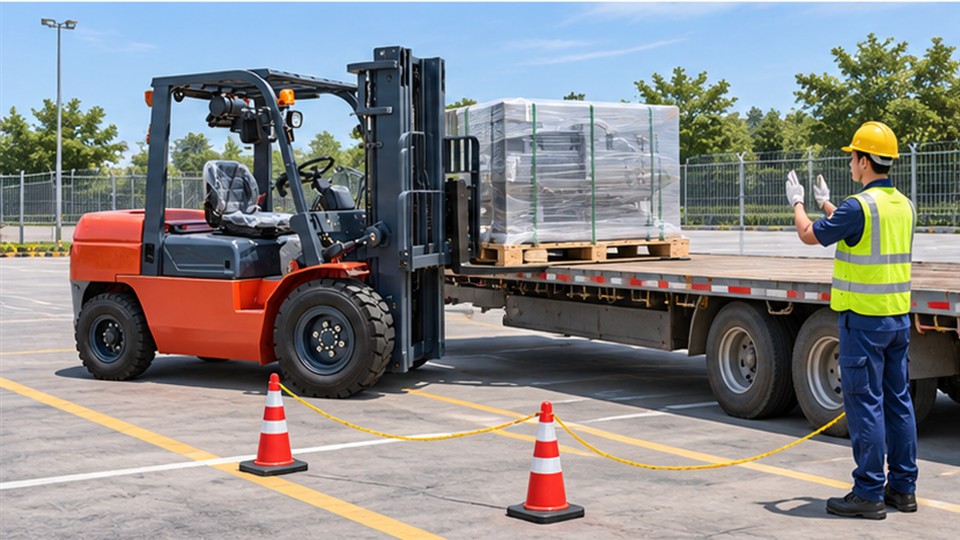
Set travel direction, pedestrian separation, spotter points and stop-work conditions for every yard zone. Keep loads low, avoid sudden turns and secure irregular cargo with approved equipment. Never use the forks as a crane or carry a passenger. Inspect brakes, steering, tyres, forks, chains, hoses, lights and alarms before each shift. Meet exhaust and emissions requirements, and do not use combustion equipment inside restricted or poorly ventilated spaces. Stop if trailer brakes, wheel chocks or dock plates are not confirmed.
Create a written operating envelope for every approved route: maximum load and lift height, travel direction, pedestrian exclusion points, slope rules and stop-work conditions. Complete a pre-shift inspection of tyres or wheels, forks, chains, hoses, brakes, steering, alarms and the energy or fuel system. Isolate defects affecting stability, braking or visibility until corrected.
Supervisors should observe real work, record near misses, harsh braking, overload attempts, impacts and recurring service issues, then improve layout, traffic separation and coaching. Build the business case around productive hours rather than purchase price alone. Include operator time, maintenance, energy or fuel, infrastructure, transport, downtime risk and resale value.
The CPCD15K diesel forklift is the third internal product reference for application comparison.
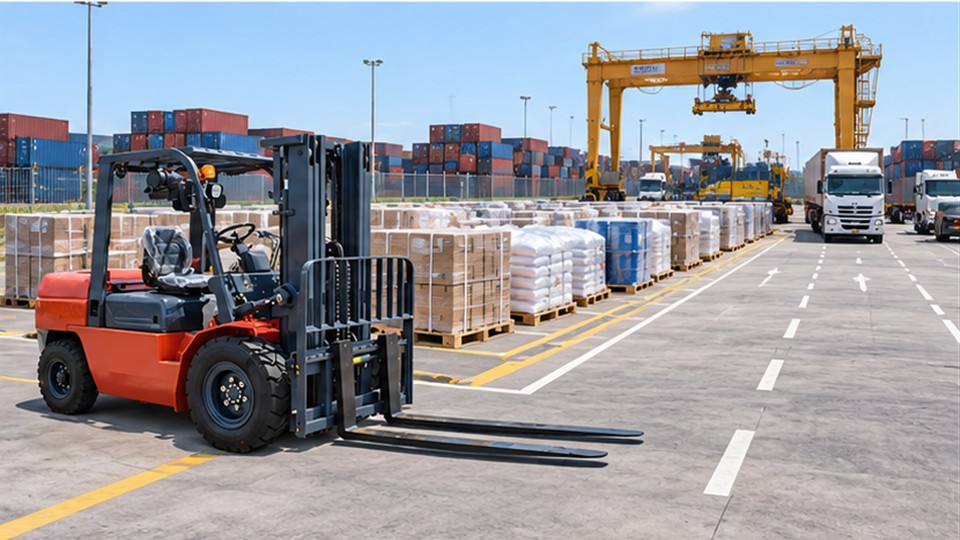
Measure cargo moves per shift, truck waiting, fuel use, damage, re-handling, maintenance hours and missed dispatch cutoffs. Add tire replacement, transport, operator training, service parts, emissions compliance and downtime coverage to lifecycle cost. Compare performance by route and load class rather than by nominal capacity. A staged pilot can expose constraints in the transfer area before a larger fleet is assigned. Port schedules and customs release remain external dependencies.
A staged trial is the strongest way to validate a configuration. Select a representative route, define success measures, brief operators and compare throughput, energy use, handling accuracy and maintenance observations. Review results with operations, safety and finance before fleet-wide deployment. This evidence turns a current industry headline into a defensible material-handling plan.
ZGFORKLIFT and MYZG can tailor the final specification after reviewing the application. Product availability varies by market; confirm the latest technical data and comply with local regulations before purchase or operation.
Contact Shandong Zhuogong Machinery equipment Co.,Ltd. Email: vip@mingyuforklift.com. Tel: +86-0535-2090977. WhatsApp: +86 131 8160 2336. Address: Xiaqiu Town, Laizhou, Yantai City, Shandong Province, China.
Send the maximum load, load-center distance, aisle width, gradient, surface condition, daily duty hours and climate so MYZG engineers can recommend a practical configuration instead of a generic catalogue answer.
Name: selena
Mobile:+86-13176910558
Tel:+86-0535-2090977
Whatsapp:8613181602336
Email:vip@mingyuforklift.com
Add:Xiaqiu Town, Laizhou, Yantai City, Shandong Province, China