vip@mingyuforklift.com
+86-0535-2090977

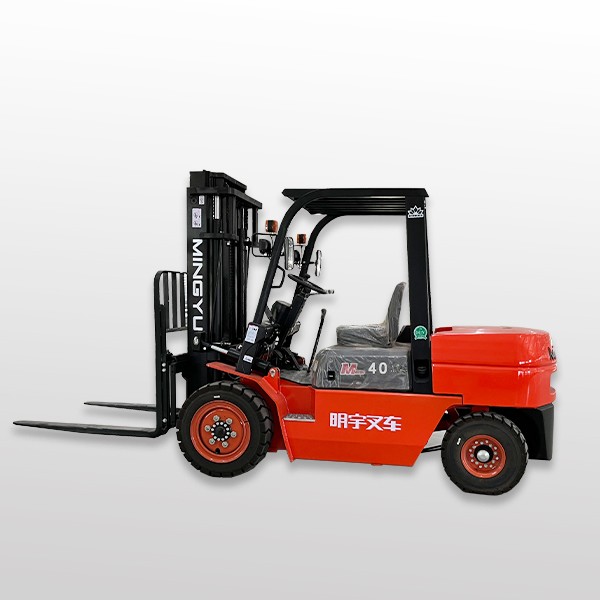
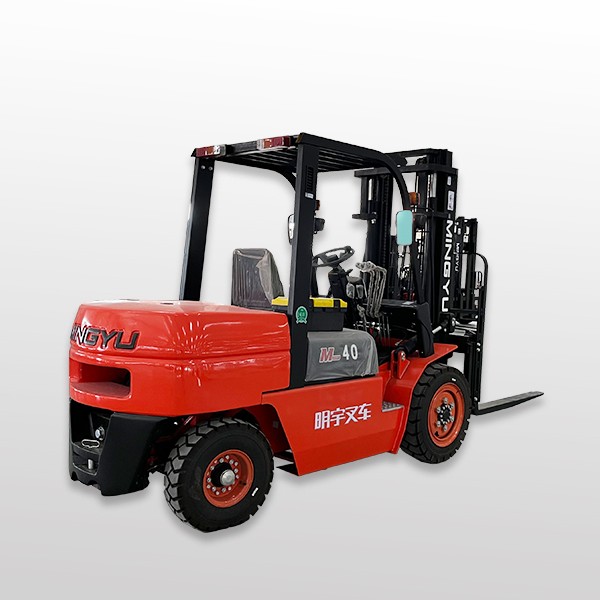
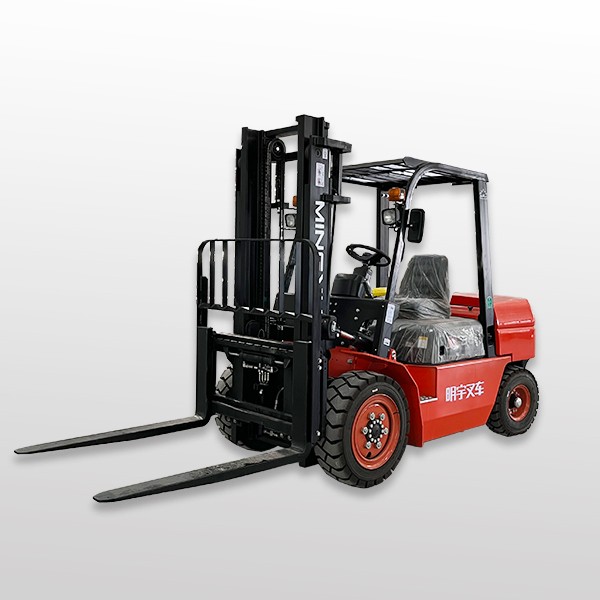
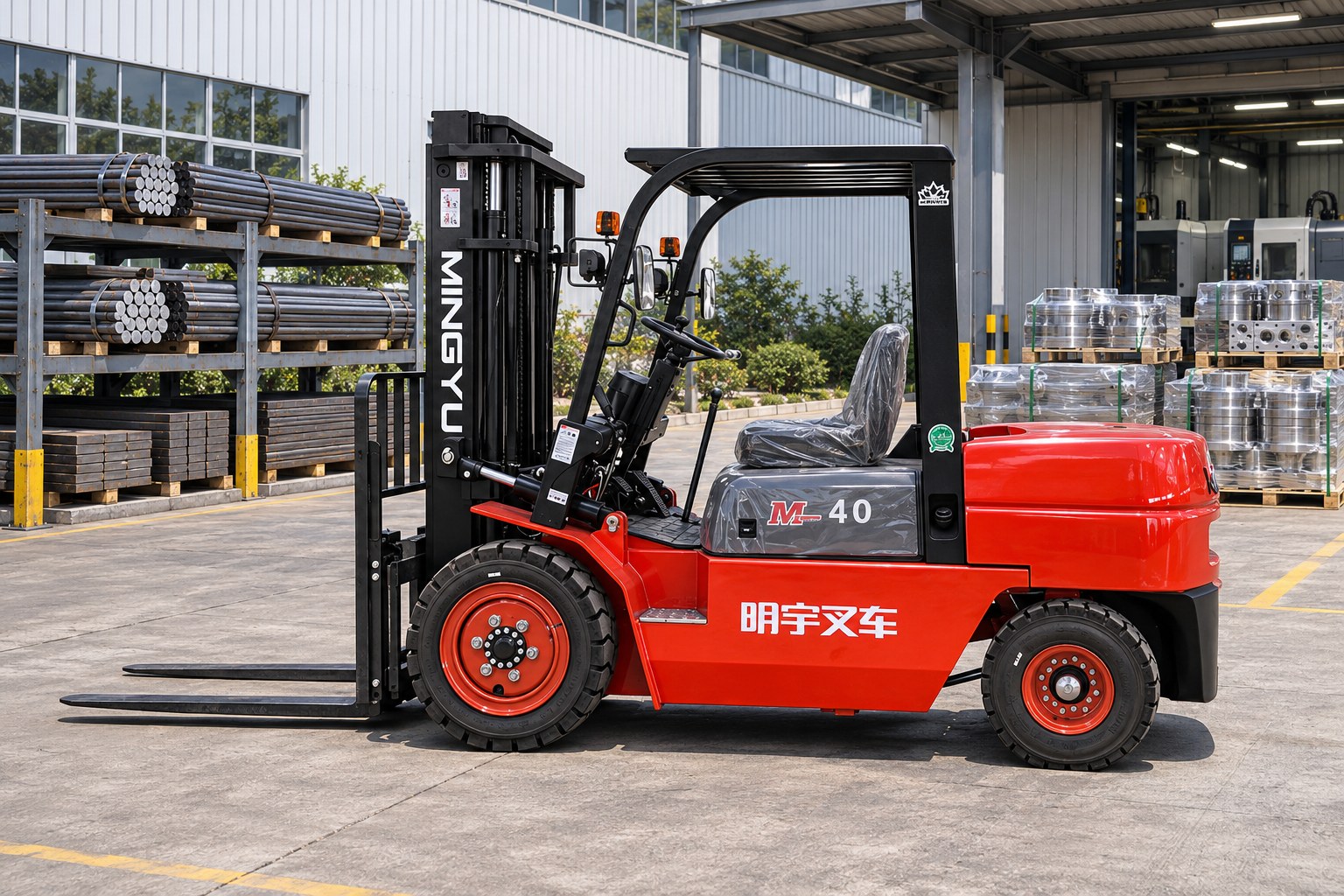
The CPC40 diesel counterbalance forklift shown in the website's red M-40 photographs is a ZGFORKLIFT / MYZG product family for assessed industrial material-handling tasks. This guide considers machine shops receiving steel stock, palletized castings and machined components at a paved yard beside the workshop. The customer needs a truck that can take a dense load from delivery to a designated staging point while keeping pedestrians, equipment and sensitive production areas safe. A nominal rating alone does not decide whether the truck is suitable; the load, route, delivered configuration and service plan must be checked together.
Steel bars, castings and boxed components have different handling risks. Record mass, dimensions, load center, fork pockets and the condition of each pallet or cradle. Long steel bundles require a method that controls roll and overhang; do not assume ordinary forks are suitable without an approved carrier and a residual-capacity assessment. Measure the path from delivery vehicle to inspection, stock rack and machine-shop buffer. Check paving, slopes, drainage, turning space and door clearance. A truck may be stable on a sound yard surface yet unsuitable for weak ground, a sharp cross-slope or a crowded production aisle.
The CPC40 source model page lists a nominal 4,000 kg rated load in its stated family configuration. Confirm the exact delivered capacity plate, mast, fork length and load center before using that number in a work plan. Capacity at lift height can change with an attachment or a nonstandard load. Ask the supplier to review a drawing of the heaviest real item and specify safe handling conditions in writing. The truck pictured is a reference for vehicle appearance, not proof of capacity for every possible industrial load.
Compare CPC40 with models in the diesel forklift category using the same pallet and site conditions. A smaller truck may better fit narrow lanes, while a heavier unit may be needed for a particular casting. Diesel equipment needs an assessment of exhaust, ventilation and local rules, especially if travel into a building is proposed. A covered loading bay is not automatically an approved operating environment. Specify the intended route and whether the truck must work only outdoors or in a ventilated transitional area.
Request an itemized quotation for engine and emissions variant, mast, forks, tires, warning devices, maintenance items, warranty and service response. Compare fuel supply, operating hours, downtime risk and technician availability. Review the All Products group to see alternative equipment families, but choose only after measuring the actual duty. For workshop-only floor transfers, a pallet truck or other handling device may avoid unnecessary diesel movement. For loading, lifting and yard travel, a counterbalance forklift may provide the needed functions if the route and load are approved.
At receiving, restrain the trailer and inspect dock or ramp capacity before unloading. Set castings in a marked inspection zone where staff can examine them after the forklift has withdrawn. Keep long stock in suitable racks or cradles, not loose in a travel lane. Use a planned turn rather than reversing into a pedestrian aisle. Travel with the load low and secure, slow at blind intersections and stop if someone enters the work zone. Protect finished parts from fork contact by using a suitable pallet, spacing or handling fixture.
If lateral alignment is needed at a storage rack, the side shifter page describes an attachment family. The CPC40 photographs show ordinary forks; an attachment is not included by implication. Ask the supplier to confirm hydraulic and mechanical compatibility and issue a revised capacity plate for the exact combination. If a load is exceptionally long or offset, consider a purpose-designed lifting method and a documented lift plan rather than adding an accessory without engineering review.
Before each shift, inspect forks, mast and chains, overhead guard, tires, brakes, steering, hydraulic hoses, warning devices, seat belt and the readable capacity plate. Stop use for a leak, damaged fork, steering fault or abnormal engine behavior until a qualified person assesses it. Keep a maintenance record by serial number and hours. Workshop dust, metal debris and repeated yard transitions may affect filters, radiators and tires; follow the delivered manual and adjust inspection intervals for actual conditions. Never allow a disabled truck to block an emergency route.
A buyer should know who can source routine filters, tires, hydraulic parts and mast components quickly. The parts business information is a starting point, while exact compatibility requires the delivered model, engine and serial number. Set a response process for faults during a busy production shift. A practical parts kit and local technician plan can matter more to uptime than an unsupported performance claim in a brochure.
A dealer serving machine shops should inspect typical castings, stock lengths, yard pavement and receiving docks before proposing a CPC40. Demonstrate a configuration that matches the intended offer and document the test load and route. Include operator familiarization, a service schedule, parts ordering and escalation contacts. The company page can support supplier assessment. Any claimed export experience or customer case should be backed by documents or a reference that can be shared; an illustrative work scene is not evidence of a completed project.
Shandong Zhuogong Machinery Equipment Co., Ltd. can be asked for packing, manuals, engine details, spare-parts lists and destination-specific documentation. For a CE-related requirement, obtain evidence covering the exact delivered machine and have the importer check applicability. EPA or other engine emissions rules depend on engine configuration and market; request the relevant documents rather than infer compliance from a general listing. Put warranty, after-sales scope and documentation in the signed order. The FAQ provides general buying context but cannot replace market-specific approval.
Provide the heaviest load's weight, dimensions and center of gravity, required height, yard and dock layout, working hours and destination country to Shandong Zhuogong Machinery Equipment Co., Ltd. through the contact page, email vip@mingyuforklift.com or telephone +86-0535-2090977. ZGFORKLIFT / MYZG can then discuss whether a CPC40 configuration fits the machine-shop material flow and confirm all technical and commercial details in writing.
Name: selena
Mobile:+86-13176910558
Tel:+86-0535-2090977
Whatsapp:8613181602336
Email:vip@mingyuforklift.com
Add:Xiaqiu Town, Laizhou, Yantai City, Shandong Province, China