vip@mingyuforklift.com
+86-0535-2090977

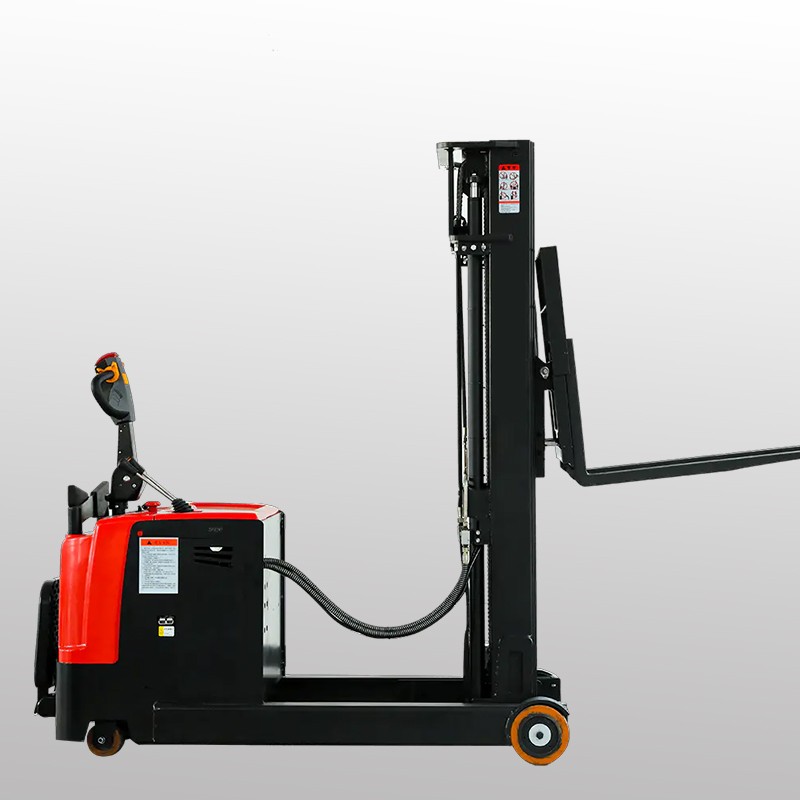
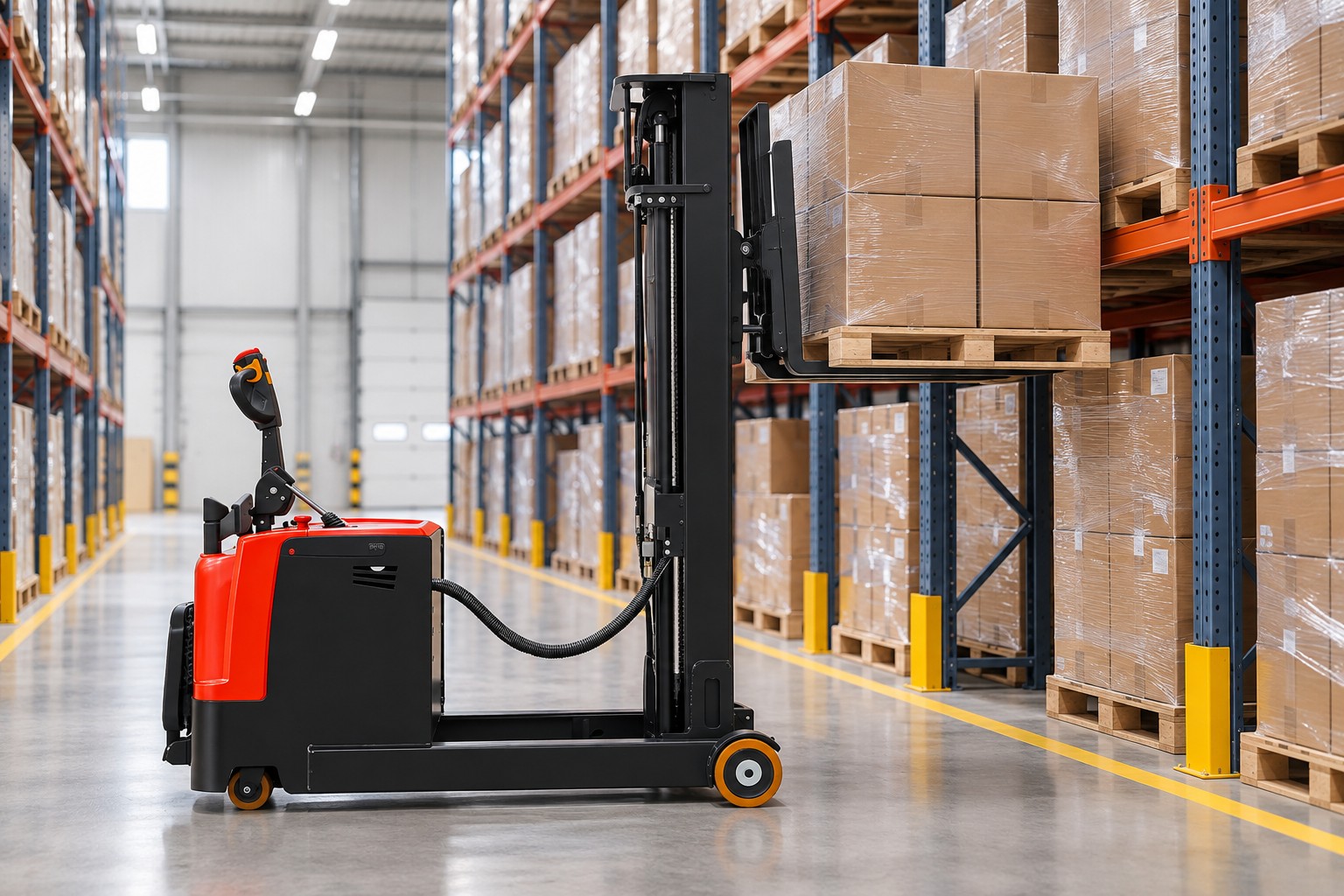
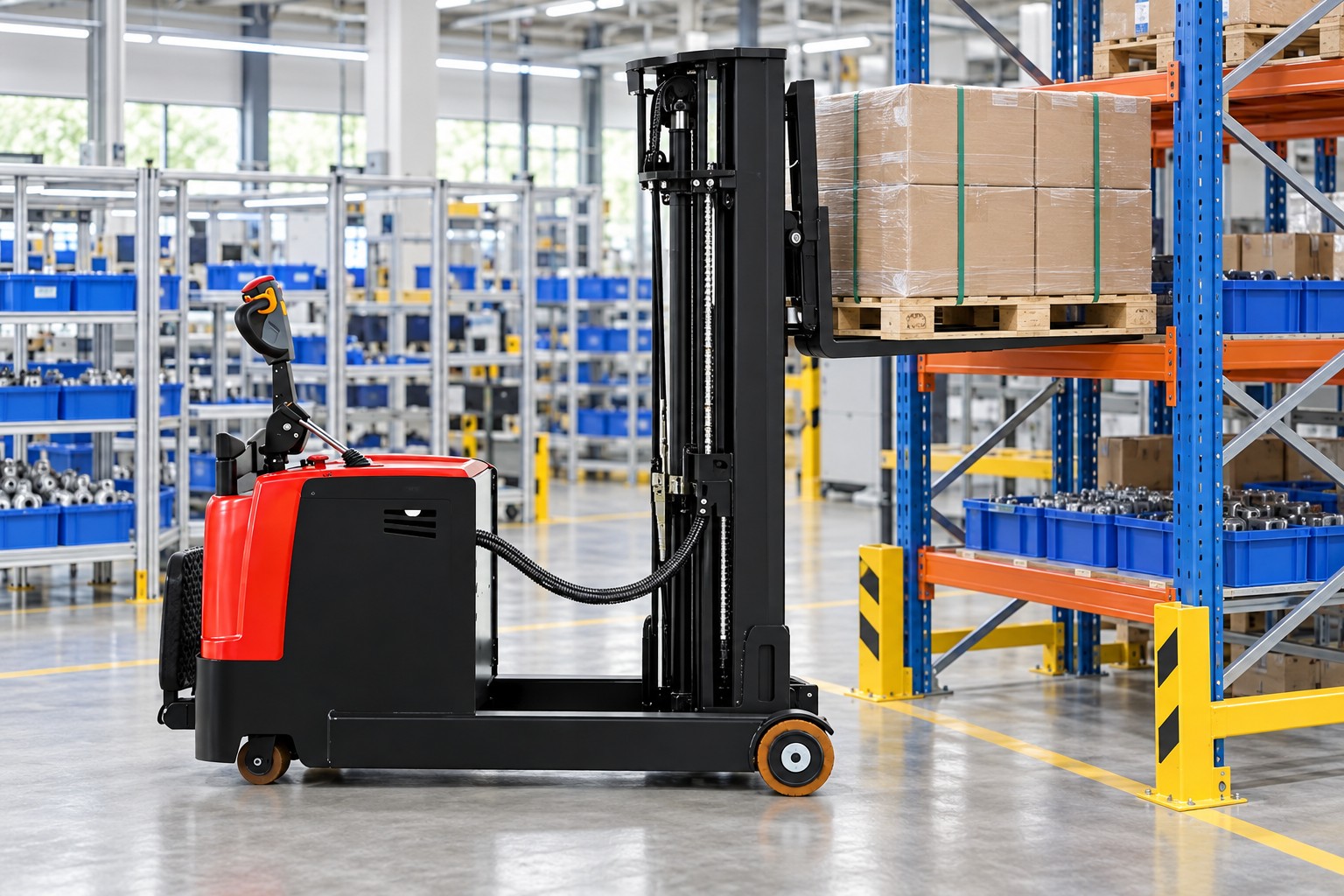
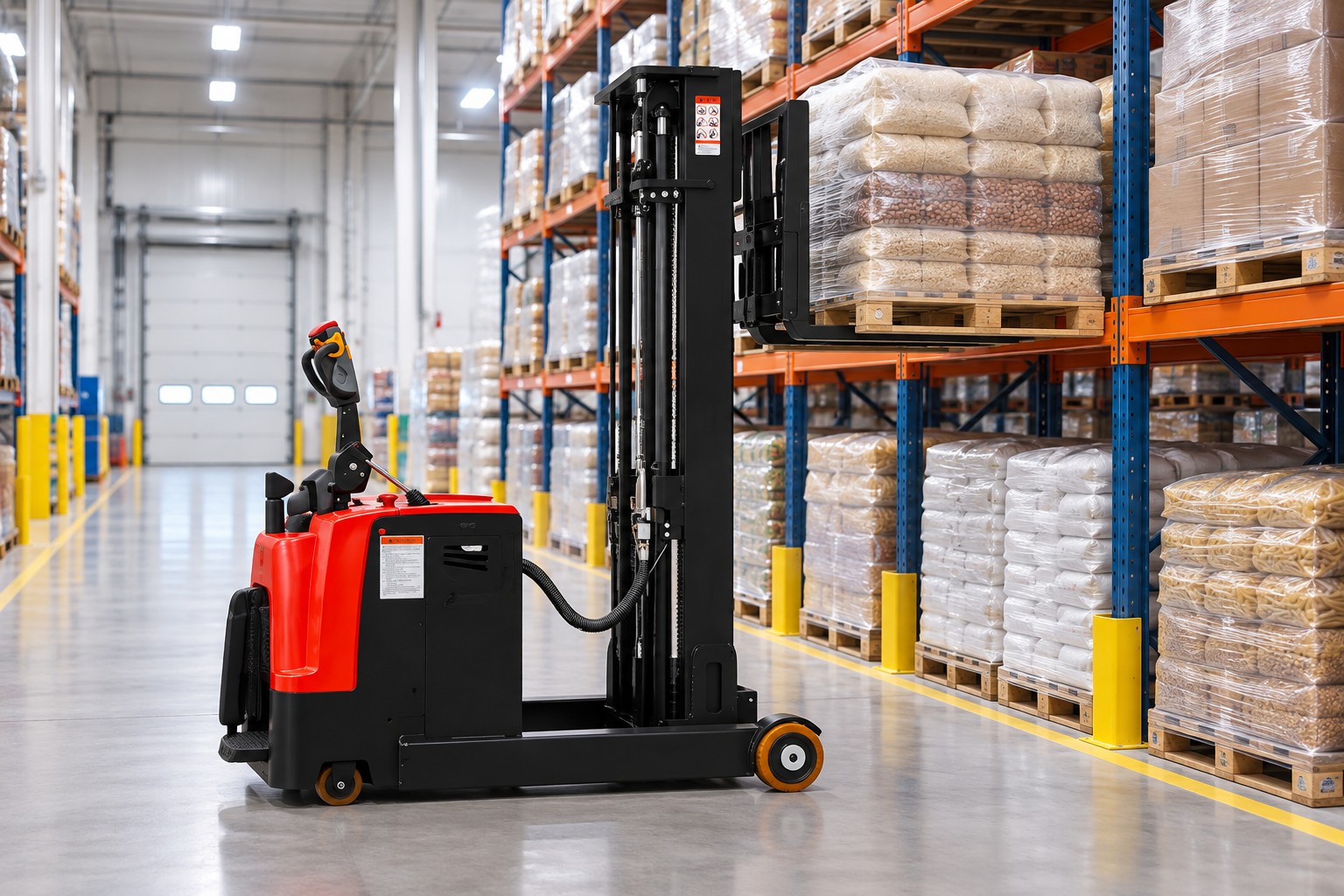
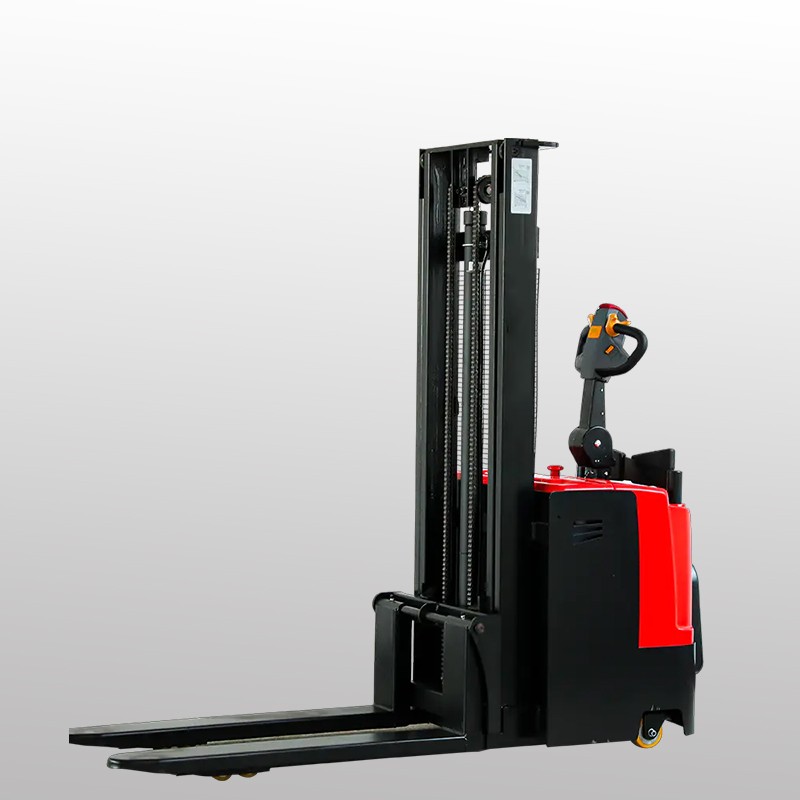
The CQDA15 1.5 ton electric reach pallet stacker is intended for high-rack warehouses, manufacturing supermarkets and distribution operations that need to place palletized loads at height while keeping the travel footprint compact. Its movable mast reaches the forks toward the rack for pallet placement and retracts for travel. ZGFORKLIFT / MYZG treats equipment selection as an application project: the load, pallet, rack, aisle, floor, battery, charger, operator and service plan must be reviewed together.
A request for a “1.5 ton reach stacker” is not enough to approve a machine. Buyers should record the maximum actual load, load dimensions and load center; pallet entry and underside clearances; rack beam height and rack depth; required lift height; the lowest doorway; aisle width; turning space; floor joints and gradients; shift hours; travel distance; lift cycles and charging opportunities. Long, offset or unstable loads and higher lift positions can reduce residual capacity. Capacity must therefore be confirmed for the ordered mast, fork arrangement and real load center.
The CQDA source family includes 1,500 kg and 2,000 kg classes. This page describes the CQDA15 selection. The source family uses a 24 V electric system and a reach-style movable mast, but final dimensions, battery capacity, charger, lift height, fork size, residual capacity and performance remain configuration-dependent. The commercial offer, delivered data plate and operating manual are the controlling references.
In receiving and reserve storage, the reach mechanism lets the operator approach a rack with the mast retracted, extend the load toward the target position and retract it before travel. This can support layouts where a counterbalance truck would require more room, but it does not eliminate the need for measured clearance. Check the right-angle stacking aisle with the real pallet, rack upright protection and any pedestrian separation. Test the highest required placement with a representative load under controlled conditions.
The operating solution should also control pallet quality. Broken deck boards, closed-bottom pallets, excessive overhang and uncertain weights can prevent safe entry or stable stacking. Receiving teams should inspect, isolate or repack nonconforming loads before they enter the rack system. The result is a repeatable material flow, not merely a high lift-height specification.
Manufacturing plants can use the CQDA15 for palletized components, packaging materials, work-in-process and line-side replenishment. Map the route from receiving to supermarket storage and the production buffer. Confirm visibility around machines and blind corners, establish pedestrian crossings and prevent the stacker from blocking emergency or production access. For delicate loads, smooth acceleration, braking, mast reach and lift control are more important than headline speed.
Food and dry-goods distribution centers may use an electric reach pallet stacker to avoid local engine exhaust in indoor handling areas. Hygiene procedures, pallet condition, moisture exposure and cleaning methods still require site-specific review. Cold-room or low-temperature suitability must never be assumed from this page; battery chemistry, seals, lubricants, electrical protection and condensation management must be confirmed for the actual temperature range.
Load and mast: state the heaviest pallet, load-center distance, required top beam height and lowest overhead restriction. Request written residual-capacity confirmation at the required height. A taller mast changes closed height, visibility, weight and capacity, so nominal 1,500 kg capacity alone is not an approval.
Pallet, forks and reach: record pallet length, width, underside opening, entry direction, fork length, outside fork width and required reach distance. Compare rack depth and pallet position so the load can be placed without striking beams or pushing the opposite pallet. Any special attachment or fork modification requires technical approval for the exact machine.
Aisle and floor: measure the narrowest loaded turn, not an empty demonstration. Include rack protection, wall clearance, columns, dock edges, slopes, thresholds and expansion joints. Wheel selection affects traction, vibration, noise and wear; damaged floors reduce stability and service life.
Procurement teams can compare the complete ZGFORKLIFT product range, review equipment in the electric stacker category and browse the All Products index. These pages support research; only the confirmed order specification defines the supplied machine.
The source CQDA family uses a 24 V electric architecture. Battery capacity and charger selection must match the ordered configuration and local power supply. A useful energy study records loaded and empty travel, lift and reach cycles, working height, shift length, breaks, ambient temperature and realistic charging windows. Buyers should plan capacity around the busiest operating period and future throughput rather than an average day.
The charging area should follow the battery and charger manufacturer’s instructions and applicable workplace rules. Inspect connectors and cables, keep required ventilation paths clear and prevent unauthorized charging changes. Stop using the equipment and obtain qualified support if operators notice abnormal heat, odor, swelling, leakage, repeated alarms or damaged cables.
Only trained and authorized operators should use the CQDA15 under the applicable workplace rules. Travel with the load low and the mast retracted, maintain visibility, slow before turns and keep people clear of raised forks. Never carry passengers or allow anyone under a suspended load. Extra controls are required near dock edges, ramps, rack ends, doors and pedestrian crossings.
Acceptance testing should use representative pallets on the intended route. Check steering, braking, emergency controls, warning devices, lift, lowering, mast reach and retraction, hoses, chains, fork alignment, visibility, charger compatibility and documents. Confirm clearance at the highest rack position and record the accepted configuration. The forklift FAQ and service guide can help teams prepare questions, while the delivered manual governs actual operation.
A pre-shift inspection should cover forks, carriage, mast, reach rails and rollers, chains, hydraulic hoses, load wheels, drive wheel, steering and lift controls, emergency controls, horn, brakes, battery connector and visible wiring. Look for leaks, damage, loose parts and abnormal noise. Record defects and isolate the stacker when a safety-related fault is found. Maintenance intervals should reflect cycles, dust, moisture, temperature and floor condition.
Fleet managers should identify routine service parts and high-use wear components from the delivered configuration. Machine identity, serial details, mast, battery and control information should accompany every parts inquiry. Customers can discuss lifecycle planning through the parts business and support page.
Dealers should qualify each lead with a consistent site questionnaire, demonstrate the reach function with controlled loads and document the agreed mast, forks, wheels, battery, charger and options. Commissioning, operator familiarization, service coverage, routine parts stock and escalation contacts should be planned before delivery. Rental fleets may benefit from standardized configurations, while project sales should preserve every site-specific choice.
Total cost includes electricity, charging infrastructure, scheduled service, wheels, battery planning, transport, training and downtime risk. A correctly selected stacker with accessible support can deliver more value than the lowest initial quotation. Company and service information is available in the Shandong Zhuogong Machinery Equipment Co., Ltd. profile.
Compliance claims must match the exact machine and destination. Where CE conformity requirements apply, request the relevant declaration, labels and manuals for the ordered configuration. Because the CQDA15 is electric and has no combustion engine, engine-exhaust EPA requirements generally do not apply in the same way as for diesel or gasoline forklifts. Destination rules may still cover electrical equipment, batteries, chargers, transport, recycling and workplace use.
Export planning should cover packing, charger input, plug type, manuals, warning labels, battery transport documents, spare parts and responsibility for import or registration. Shandong Zhuogong Machinery Equipment Co., Ltd. can coordinate the confirmed commercial scope, but this page does not claim unverified certificate numbers, named cooperation cases, performance results or approvals. Documentary evidence and references should be supplied only when available and permitted.
Send load and pallet data, rack drawings, working height, aisle and doorway measurements, route photographs, gradients, shift hours, charging windows, ambient conditions, destination country and required options. This lets the technical team compare the CQDA15 with walkie stackers, straddle stackers, counterbalance trucks and other reach solutions before order confirmation.
Contact Shandong Zhuogong Machinery Equipment Co., Ltd. for selection, configuration and export support. Visit the contact page, email vip@mingyuforklift.com, call +86-0535-2090977 or use WhatsApp +86 131 8160 2336. Address: Xiaqiu Town, Laizhou, Yantai City, Shandong Province, China.
SEO summary: CQDA15 electric reach stacker, 1.5 ton reach stacker, electric reach pallet stacker, high-rack warehouse stacker, narrow-aisle reach stacker, manufacturing pallet stacker, food distribution stacker, reach stacker buying guide, ZGFORKLIFT and MYZG.
Name: selena
Mobile:+86-13176910558
Tel:+86-0535-2090977
Whatsapp:8613181602336
Email:vip@mingyuforklift.com
Add:Xiaqiu Town, Laizhou, Yantai City, Shandong Province, China