
vip@mingyuforklift.com
+86-0535-2090977

The CPCY30/CPY30 LPG forklift can support demanding material handling, but indoor use requires a coordinated air-quality plan. This 2026 guide connects carbon-monoxide monitoring, zone mapping, ventilation response, maintenance verification and operator action.
Warehouses are combining higher throughput with tighter energy control, making vehicle emissions, ventilation and worker exposure a connected operating issue. An LPG forklift can be suitable for many indoor applications, but suitability depends on correct equipment condition, adequate fresh air, validated exposure controls and local requirements.
For every CPCY30 indoor application, ZGFORKLIFT and MYZG recommend following the equipment manual, applicable exposure rules, the site risk assessment and competent professional advice. Calibrate instruments, preserve time-and-zone evidence, verify ventilation and escalate abnormal readings immediately.
Carbon monoxide is invisible and odorless, so smell cannot be used as a warning system. A reading is meaningful only when the sensor is appropriate, calibrated, located correctly and interpreted against applicable occupational exposure limits by a competent person. One low result never replaces maintenance or ventilation.
For every CPCY30 indoor application, ZGFORKLIFT and MYZG recommend following the equipment manual, applicable exposure rules, the site risk assessment and competent professional advice. Calibrate instruments, preserve time-and-zone evidence, verify ventilation and escalate abnormal readings immediately.
Map docks, cold rooms, charging areas, narrow aisles, mezzanines, pits and doors that change airflow. Record the number of CPCY30 trucks, operating hours, loads, engine warm-up, idling and seasonal building configuration. The assessment should be reviewed whenever layout, fleet size or production schedules change.
For every CPCY30 indoor application, ZGFORKLIFT and MYZG recommend following the equipment manual, applicable exposure rules, the site risk assessment and competent professional advice. Calibrate instruments, preserve time-and-zone evidence, verify ventilation and escalate abnormal readings immediately.
Related product: CPY30 LPG Forklift - view specifications and request application support.
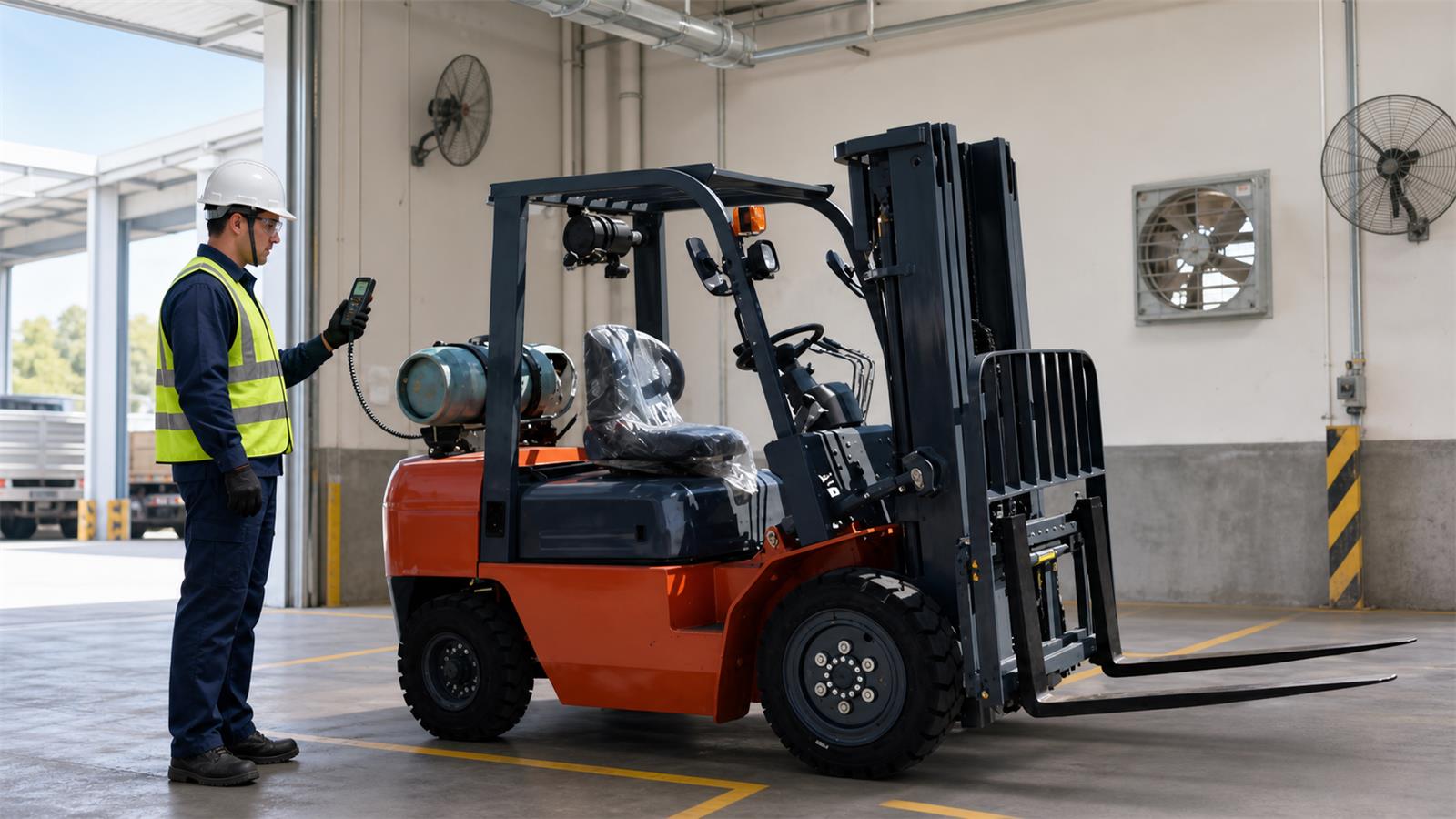
Use direct-reading instruments and sampling methods selected by qualified hygiene or safety professionals. Include operator breathing zones and fixed work areas, and collect data during realistic peak activity. Document time, location, ventilation state, vehicle identity and workload so a high value can be investigated rather than dismissed.
For every CPCY30 indoor application, ZGFORKLIFT and MYZG recommend following the equipment manual, applicable exposure rules, the site risk assessment and competent professional advice. Calibrate instruments, preserve time-and-zone evidence, verify ventilation and escalate abnormal readings immediately.
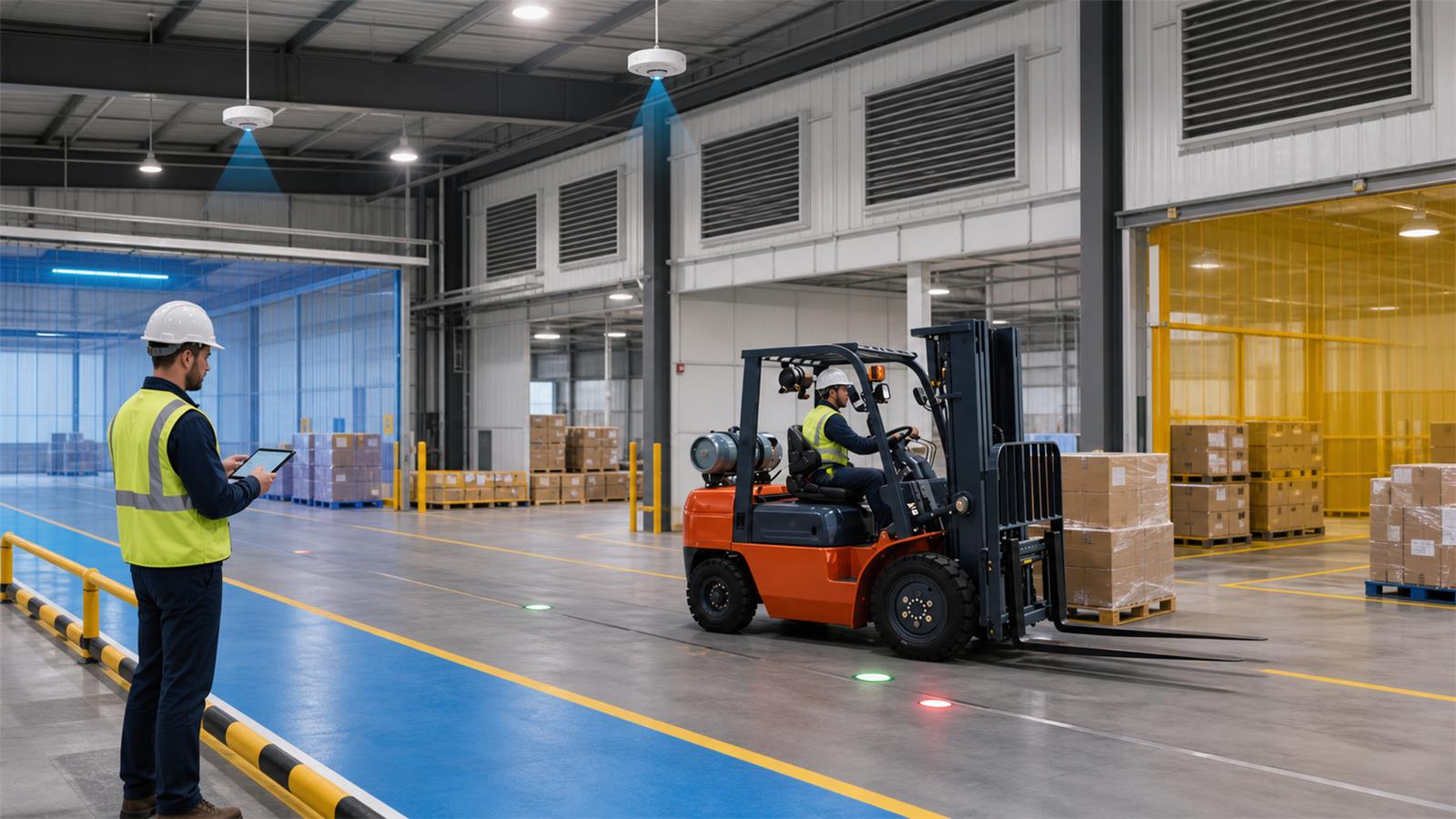
A convenient wall is not automatically a representative location. Consider supply air, exhaust air, doors, heat stratification, enclosed corners and where people actually work. Networked sensors can show differences between zones, but alarm points and response actions must be set by the site risk assessment and local law.
For every CPCY30 indoor application, ZGFORKLIFT and MYZG recommend following the equipment manual, applicable exposure rules, the site risk assessment and competent professional advice. Calibrate instruments, preserve time-and-zone evidence, verify ventilation and escalate abnormal readings immediately.
Workers need a written response for warning and alarm conditions: stop or restrict vehicle activity, move people to a safe area, increase ventilation where designed, notify supervision and investigate the source. Never silence an alarm simply because production is busy or another nearby sensor appears normal.
For every CPCY30 indoor application, ZGFORKLIFT and MYZG recommend following the equipment manual, applicable exposure rules, the site risk assessment and competent professional advice. Calibrate instruments, preserve time-and-zone evidence, verify ventilation and escalate abnormal readings immediately.
General and local ventilation should deliver verified fresh-air movement without creating blind zones or recirculating contaminants. Demand-controlled systems may adjust airflow by zone, but fail-safe behavior, sensor health, manual override and emergency procedures must be tested before the system is relied upon.
For every CPCY30 indoor application, ZGFORKLIFT and MYZG recommend following the equipment manual, applicable exposure rules, the site risk assessment and competent professional advice. Calibrate instruments, preserve time-and-zone evidence, verify ventilation and escalate abnormal readings immediately.
Related product: CPY40 LPG Forklift - view specifications and request application support.
Loading queues and prolonged idling can concentrate emissions near docks and doors. Schedule traffic, switch off when permitted by the manufacturer and site rules, and avoid unnecessary warm-up inside occupied areas. Cold engines and poor tuning may produce different emissions, so measurements should include start-up conditions.
For every CPCY30 indoor application, ZGFORKLIFT and MYZG recommend following the equipment manual, applicable exposure rules, the site risk assessment and competent professional advice. Calibrate instruments, preserve time-and-zone evidence, verify ventilation and escalate abnormal readings immediately.
A change in CO pattern can indicate maintenance need, but only qualified service personnel should diagnose the cause. Review ignition, fuel-air control, filters, catalyst or emission-control equipment, coolant temperature and operating condition according to the CPCY30 instructions. Never adjust fuel settings by guesswork.
For every CPCY30 indoor application, ZGFORKLIFT and MYZG recommend following the equipment manual, applicable exposure rules, the site risk assessment and competent professional advice. Calibrate instruments, preserve time-and-zone evidence, verify ventilation and escalate abnormal readings immediately.
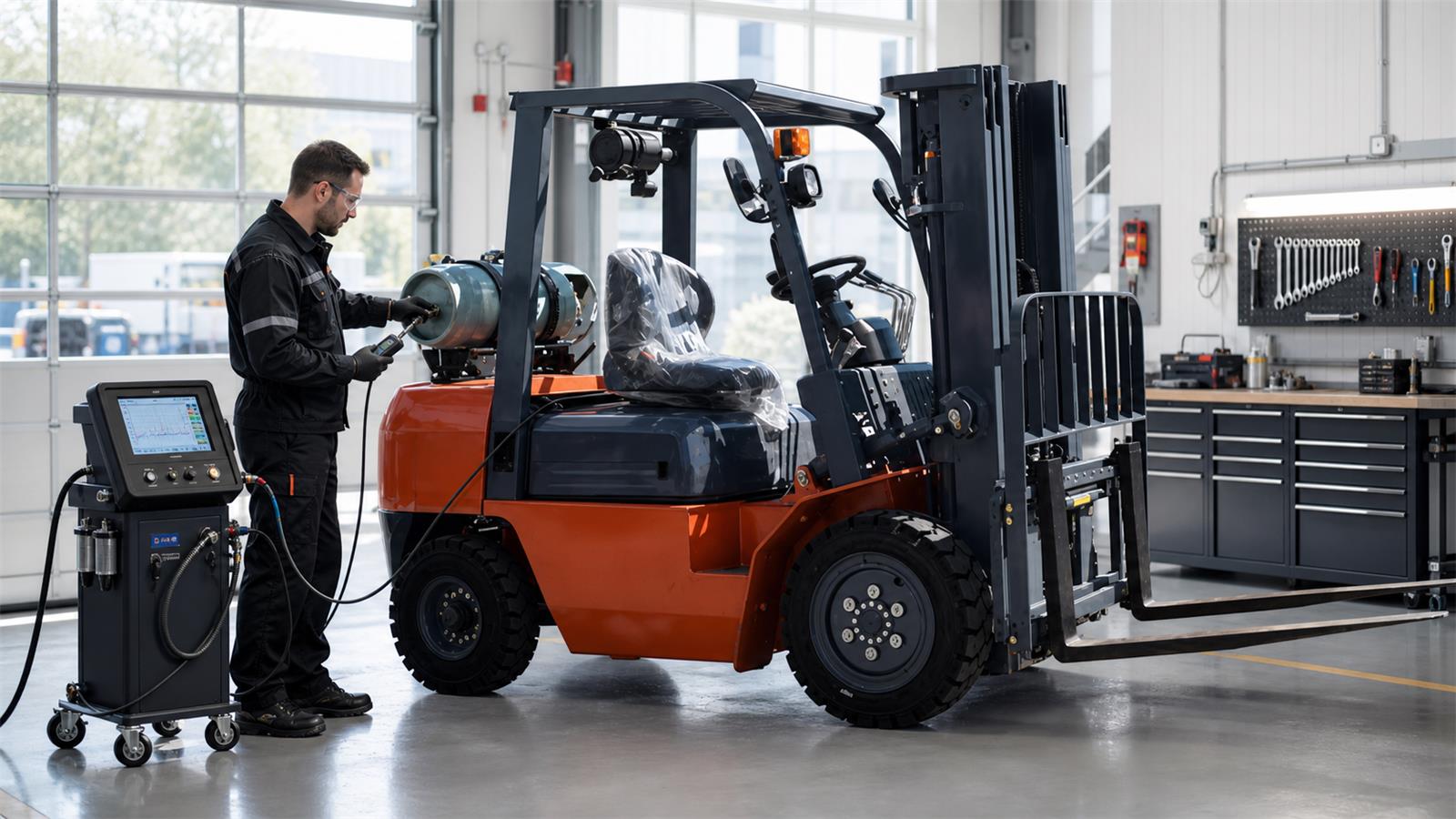
After service, repeat measurements under comparable load, route, temperature and ventilation conditions. Compare trends rather than relying on a single idle reading. Record analyzer identification, calibration status, test method and technician sign-off before returning the truck to routine indoor work.
For every CPCY30 indoor application, ZGFORKLIFT and MYZG recommend following the equipment manual, applicable exposure rules, the site risk assessment and competent professional advice. Calibrate instruments, preserve time-and-zone evidence, verify ventilation and escalate abnormal readings immediately.
Utilization records can identify which trucks operated in a zone when an air-quality event occurred. Integrating hours, route, idle time and maintenance dates with sensor trends helps prioritize investigation. Data should support trained judgment, privacy rules and documented corrective action, not automatic blame.
For every CPCY30 indoor application, ZGFORKLIFT and MYZG recommend following the equipment manual, applicable exposure rules, the site risk assessment and competent professional advice. Calibrate instruments, preserve time-and-zone evidence, verify ventilation and escalate abnormal readings immediately.
Related product: CPY15 LPG Forklift - view specifications and request application support.
Operators should complete pre-use checks, report unusual running, avoid unauthorized adjustments and understand alarms. Nearby workers need to know evacuation, reporting and first-aid procedures. Symptoms such as headache, dizziness, nausea or confusion require immediate attention under the emergency plan.
For every CPCY30 indoor application, ZGFORKLIFT and MYZG recommend following the equipment manual, applicable exposure rules, the site risk assessment and competent professional advice. Calibrate instruments, preserve time-and-zone evidence, verify ventilation and escalate abnormal readings immediately.
Plan, measure, respond, maintain and verify. Shandong Zhuogong Machinery equipment Co.,Ltd supports ZGFORKLIFT and MYZG users in selecting CPCY30 applications, while every owner remains responsible for ventilation design, exposure assessment, competent maintenance and compliance with local rules.
For every CPCY30 indoor application, ZGFORKLIFT and MYZG recommend following the equipment manual, applicable exposure rules, the site risk assessment and competent professional advice. Calibrate instruments, preserve time-and-zone evidence, verify ventilation and escalate abnormal readings immediately.
Shandong Zhuogong Machinery equipment Co.,Ltd
Website: https://www.vavforklift.com/
Email: vip@mingyuforklift.com
Tel: +86-0535-2090977
WhatsApp: +86 131 8160 2336
Address: Xiaqiu Town, Laizhou, Yantai City, Shandong Province, China.
Name: selena
Mobile:+86-13176910558
Tel:+86-0535-2090977
Whatsapp:8613181602336
Email:vip@mingyuforklift.com
Add:Xiaqiu Town, Laizhou, Yantai City, Shandong Province, China