vip@mingyuforklift.com
+86-0535-2090977

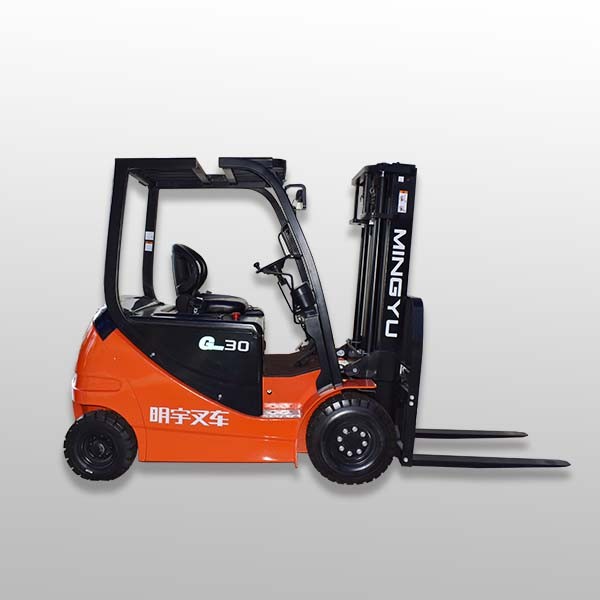
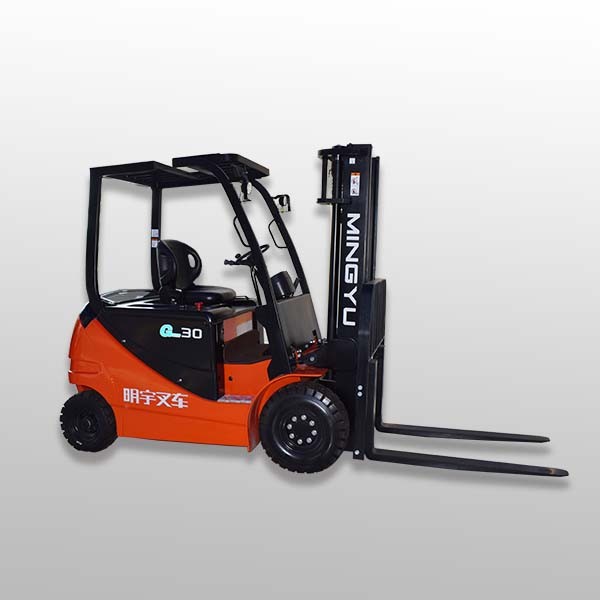
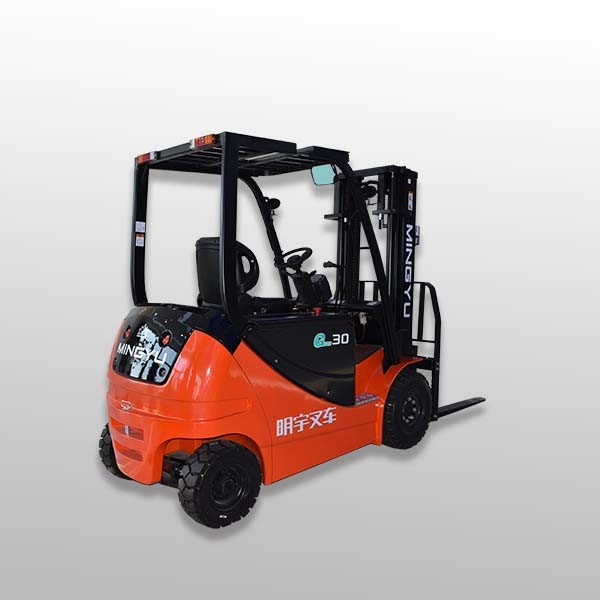
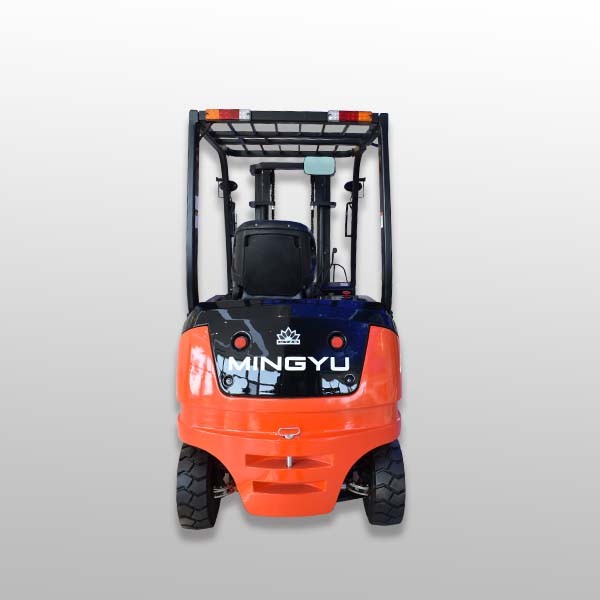
The CPD30-A is a 3 ton class sit-down electric counterbalance forklift shown in the existing ZGFORKLIFT / MYZG catalog. This guide focuses on packaging plants that move corrugated board, film, empty containers, finished cartons and packed outbound pallets between production and shipping. The website's source product identifies a CPD30 family machine with accumulator power and a 3,000 kg rated load at a 500 mm load center. Actual mast, battery chemistry, charger, tires, options and residual capacity must be confirmed for the delivered unit. Select the truck around the full material route rather than a single nominal capacity figure.
Packaging facilities often combine light but tall stacks of empty cartons with dense reels, tooling, strapped paperboard and finished customer orders. The tallest pallet may limit visibility even when its weight is modest. A reel, die or long pack can place its center of gravity beyond the assumed load center. Receiving peaks may coincide with machine replenishment and outbound carrier cutoffs. Document each distinct load family and the peak-hour traffic pattern before asking for a forklift quotation. Use measured dimensions, real pallet photographs and the heaviest credible gross weight.
Trace the route through receiving, quarantine, raw-material store, production supply, finished-goods storage and dispatch. Measure aisles at stored-stock level, not just between floor markings. Check doorways, rack heights, turning bays, pedestrian crossings, floor joints, loading docks and overhead services. Mark where a truck can park or charge without blocking fire exits or production movement. A counterbalance forklift can serve several stages, but the site may still benefit from a pallet truck or stacker for short, narrow or pedestrian-heavy sections.
The CPD30-A source product provides four different views of the same orange MINGYU-branded truck. It lists accumulator power, a 3,000 kg capacity reference at 500 mm and a sit-down driving style. The source mentions dashboard information and a wide-view mast, but no photograph is a substitute for the final specification. Ask for the exact data plate, lift and residual-capacity chart, battery document, charger input, tire specification and approved attachment list for the truck you buy. Do not infer lithium chemistry merely from a general electric-forklift label.
Compare related sizes in the electric forklift category and review the All Products listing when a narrower truck, different lift system or different power plan may suit the work better. The selected forklift must clear the real route and lift the actual load at the required height. Check the capacity after adding any clamp, side shift, extended forks or other equipment. An attachment can change load center, visibility and usable capacity.
Load data: list gross mass, load center, footprint, pallet entry, fork-pocket spacing, wrapping, height and stability for paper, film, tooling and finished cartons. Include the heaviest returnable unit and any off-center reel. Ask the supplier to review residual capacity for the actual mast and attachment at the intended storage level. Do not let a 3 ton badge stand in for this calculation.
Building fit: provide aisle width, door height, rack face dimensions, beam level, dock-plate rating, floor loading, gradients and turning space. Include protection rails and temporary staging that reduce the clear width. Ask for a controlled demonstration with a representative pallet and a route agreed with the safety team. Confirm operator sightlines and traffic-control measures where a tall carton stack blocks forward visibility.
Energy and service: record pallet moves per shift, travel distance, break windows, ambient temperature and destination electrical supply. Confirm battery chemistry and capacity, charger input, connector, charging room and battery-handling procedure in writing. Request manuals, training, pre-delivery inspection, warranty terms, spare-parts lead time and local service responsibility. Avoid generic runtime or fast-charge promises without a duty-cycle assessment.
At receiving, inspect incoming pallets and straps before a lift. Keep damaged board stacks, leaning film rolls and loose cartons in a defined rework area. Operators should align forks fully and follow the supplied manual for load height, travel direction and braking. Establish a clear transfer point between forklift traffic and employees feeding production machines. The broader product range can help buyers allocate pallet trucks, stackers and counterbalance forklifts to the stages each handles best.
In the raw-material store, protect reels from rolling and keep heavy stock within the approved rack and truck limits. At production supply, avoid placing materials where operators must step into forklift lanes. At finished-goods staging, separate customer orders by carrier and inspection status. For dispatch, verify trailer restraint, dock-plate capacity and the receiving vehicle's condition. Do not enter a truck body merely because the forks fit; the combined truck and load must be permitted by a documented safe method. Record unusual load shapes for technical review before routine handling.
Daily checks should cover forks, locks, mast, chains, hydraulic system, tires, steering, brakes, horn, lights, seat belt, overhead guard, battery restraint, connectors and a readable capacity plate. Remove a machine with a safety defect from service until qualified inspection and repair. Paper dust, plastic film and pallet fragments can collect around wheels and mast rollers; set cleaning intervals that match site conditions and the delivered manual. Protect electrical components during cleaning and keep charging cables away from moving traffic and water.
Track operating hours, charge events, brake and tire wear, chain care, charger faults and downtime by serial number. Compare actual duty to the planned service interval. The FAQ provides additional buyer questions, and the parts and dealer page supports a service discussion. Supply the machine, battery and charger identifiers with parts requests; similarly named trucks may use different components.
A dealer should use a repeatable inquiry form covering pallet types, maximum real load, rack height, clear aisle, daily cycles, charging supply, destination and local service. Agree a demonstration scope, document any limitations and specify training and handover responsibilities. A customer case should be described only with customer permission and verifiable details; this guide makes no claim about a named plant, delivery quantity or productivity improvement.
For export, request the exact machine and battery documentation, labels, destination-language manuals, charger compatibility, packing details and a spare-parts plan. If CE documentation is required, ask for the declaration and supporting file for the actual supplied configuration. EPA engine-emissions certification generally does not apply to a fully electric truck without a combustion engine; confirm the delivered powertrain and destination rules. Shandong Zhuogong Machinery Equipment Co., Ltd. has a company overview for background. Specific export, service and warranty commitments belong in the quotation and technical agreement.
Send pallet weights and dimensions, load centers, rack levels, aisle and dock measurements, shift schedule, charging window, destination electrical supply and service expectations. Ask Shandong Zhuogong Machinery Equipment Co., Ltd. to propose a CPD30-A configuration and the matching capacity, battery and charger documents. Contact vip@mingyuforklift.com or +86-0535-2090977, or use the contact page. State whether the main task is reel movement, production supply or finished-carton dispatch so the selection review addresses the real bottleneck.
Name: selena
Mobile:+86-13176910558
Tel:+86-0535-2090977
Whatsapp:8613181602336
Email:vip@mingyuforklift.com
Add:Xiaqiu Town, Laizhou, Yantai City, Shandong Province, China