vip@mingyuforklift.com
+86-0535-2090977

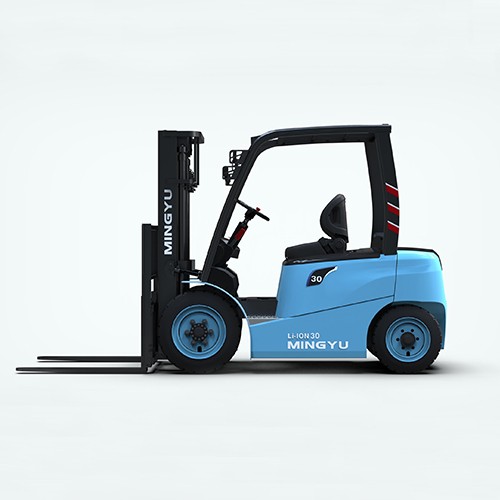
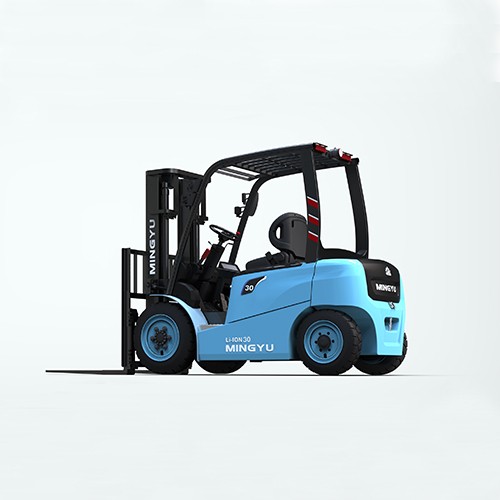
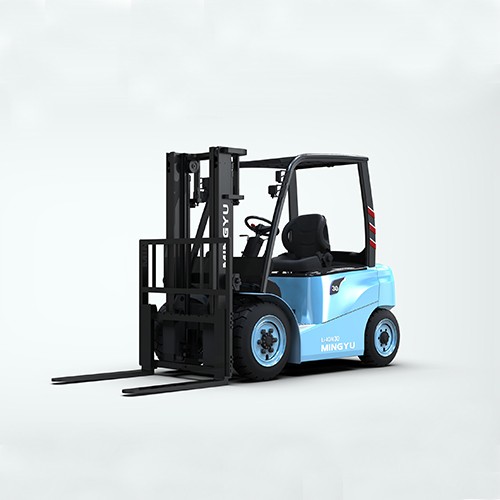
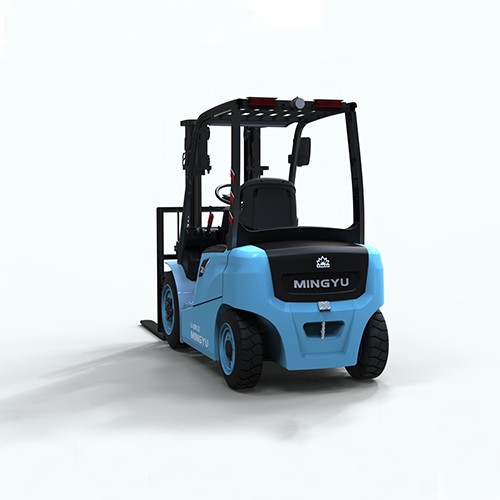
The CPD30 Blue Fox is a blue, MINGYU-branded electric counterbalance forklift shown as a distinct product in the existing ZGFORKLIFT / MYZG catalog. This page considers home-appliance distribution, where boxed refrigerators, washing machines and mixed accessory pallets pass through receiving, storage, order staging and vehicle loading. The source identifies the CPD30 electric forklift family; the exact capacity plate, battery, charger, mast and approved options must be checked for the supplied truck. A buyer should select the complete handling system around real loads, clearances, floor conditions, charging and service rather than rely on a model name alone.
Large appliances may be tall and fragile even when their mass is below the rated load. Carton overhang can move the load center forward and restrict a driver's view. Mixed accessory pallets may be unstable after partial picking. A distribution center may have a fast inbound peak, high reserve racks and short dispatch windows. Ask the operations team for the largest and heaviest packaged units, pallet footprints, fork entry directions, stack height and damage history. Separate the routine pallet from a difficult oversize or return load so each can be reviewed honestly.
Map the whole route from unloading to inspection, put-away, picking and outbound staging. Measure aisle width where rack guards and stored cartons reduce the clear space; record turning bays, door height, dock approach, floor joints and pedestrian crossings. A truck with enough nominal lift capacity can still be a poor fit at a narrow turn or high rack. Define where operators can stop, reverse and charge without blocking customer orders or escape routes. Specify load protection, sightline rules and supervision for a tall packaged appliance.
The CPD30 Blue Fox source product presents four distinct views of the same blue machine with its original MINGYU marks. The product describes an electric counterbalance forklift and highlights its appearance, operator layout and service access. These are model-family descriptions, not a substitute for a signed equipment schedule. Confirm the capacity plate, residual capacity at the required height, exact battery chemistry and capacity, charger input, tires, mast, forks, attachment and delivered manuals. The pictured side marking alone cannot establish the specification of every quoted unit.
The electric forklift category helps compare power and capacity families. The All Products directory gives alternatives when a smaller counterbalance truck, a pallet truck or a stacker better suits a zone. A battery-electric forklift can avoid local tailpipe exhaust on appropriate indoor routes, but charging, temperature, floor condition and traffic controls still require a site-specific plan. Do not infer cold-store approval or a particular ingress-protection level without documents for the exact unit.
Load and fork fit: note gross packaged mass, center of gravity, carton overhang, pallet structure, fork pockets, fork length and stability after a partial pick. Ask the supplier for the residual-capacity chart at the desired rack height with any side shift or other attachment. Check whether carton handling needs a different attachment or a dedicated method. Never assume the nominal capacity remains available at every height and load center.
Route and storage: document the lowest doorway, tightest right-angle turn, rack beam height, floor and mezzanine ratings, gradients, dock plate and vehicle-bed capacity. Include the actual appliance pallet orientation in turning calculations. Use a controlled demonstration on the approved route with a representative load. Verify rack design, pallet support and any restriction on handling tall loads above pedestrian areas.
Battery and duty: provide shifts, pallet moves per hour, travel distance, breaks, charge windows, ambient temperature and local power supply. Confirm charger voltage and plug, battery maintenance or replacement process, charging location, ventilation if applicable and emergency procedures for the supplied chemistry. Request a realistic energy assessment instead of accepting a generic runtime promise. Record who provides operator training, pre-delivery inspection and local service.
At receiving, inspect the appliance carton, pallet and restraints before a lift. Quarantine crushed, wet or leaning loads rather than forcing them into reserve storage. Keep forks fully engaged under an approved pallet and travel according to the delivered manual and site rules. Make the junction between forklift routes and pedestrian order picking visible and controlled. The product range can support a zoned plan in which a counterbalance forklift handles trailers and reserve pallets while smaller equipment handles short internal transfers.
At storage, verify the rack and pallet ratings and inspect damage before put-away. A tall boxed appliance may hide a rack upright during approach; use a safe sightline procedure and avoid striking the rack to align a load. For outbound staging, separate orders by carrier, route and return status. Verify trailer restraint, bridge-plate rating and combined truck-and-load allowance before entry. Keep damaged returns out of the dispatch flow and define how a questionable pallet is repaired or repacked.
Pre-use checks should cover forks, locks, mast and chains, hydraulics, tires, steering, brakes, lights, horn, seat belt, overhead guard, battery restraint, connectors and the capacity plate. Take a defective truck out of service until qualified inspection and repair. Remove plastic wrap, cardboard, pallet fragments and dust from the route and from equipment areas using methods approved in the machine manual. Inspect charge cables for wear or heat damage, protect them from traffic and record charger faults.
A service log should follow the truck serial number, operating hours, battery and charger identifiers, tires, brake work, chain care and downtime. The FAQ offers more selection questions, while the parts and dealer information can start a local spare-parts discussion. A dealer should hold the parts and skills that match the delivered configuration and agree who responds when the truck is unavailable during dispatch peaks.
A dealer inquiry form should capture appliance mix, pallet dimensions, maximum real load and center, rack level, aisle, dock, shift pattern, power supply, destination and service expectations. Demonstrate the proposed truck on a controlled route, document limitations and specify training and handover. Describe any customer case only with permission and verifiable facts; this page makes no claim about a named distribution center or measured efficiency gain.
For export, confirm the exact battery and charger documentation, shipping and packing requirements, labels, manuals, spare parts and destination electrical standard. If CE documents are required, request the declaration and supporting material for the supplied configuration. EPA engine-emissions certification usually does not apply to a fully electric machine without an engine; confirm the actual powertrain and local rules. Shandong Zhuogong Machinery Equipment Co., Ltd. provides a company overview. Specific compliance, warranty, commissioning and service commitments should be written into the quotation.
Send appliance pallet weights and dimensions, load centers, rack height, aisle and dock measurements, daily cycles, charging window, destination power and service expectations. Shandong Zhuogong Machinery Equipment Co., Ltd. can review those details against a CPD30 Blue Fox proposal. Contact vip@mingyuforklift.com or +86-0535-2090977, or use the contact page. Ask for the exact capacity and battery documents before committing to an appliance-distribution workflow.
Name: selena
Mobile:+86-13176910558
Tel:+86-0535-2090977
Whatsapp:8613181602336
Email:vip@mingyuforklift.com
Add:Xiaqiu Town, Laizhou, Yantai City, Shandong Province, China