vip@mingyuforklift.com
+86-0535-2090977

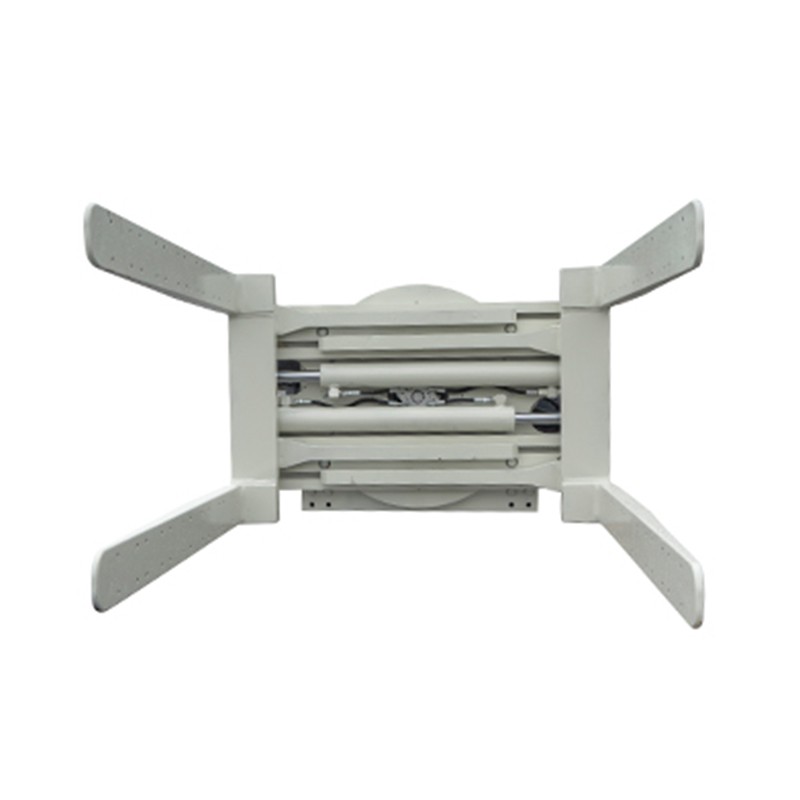
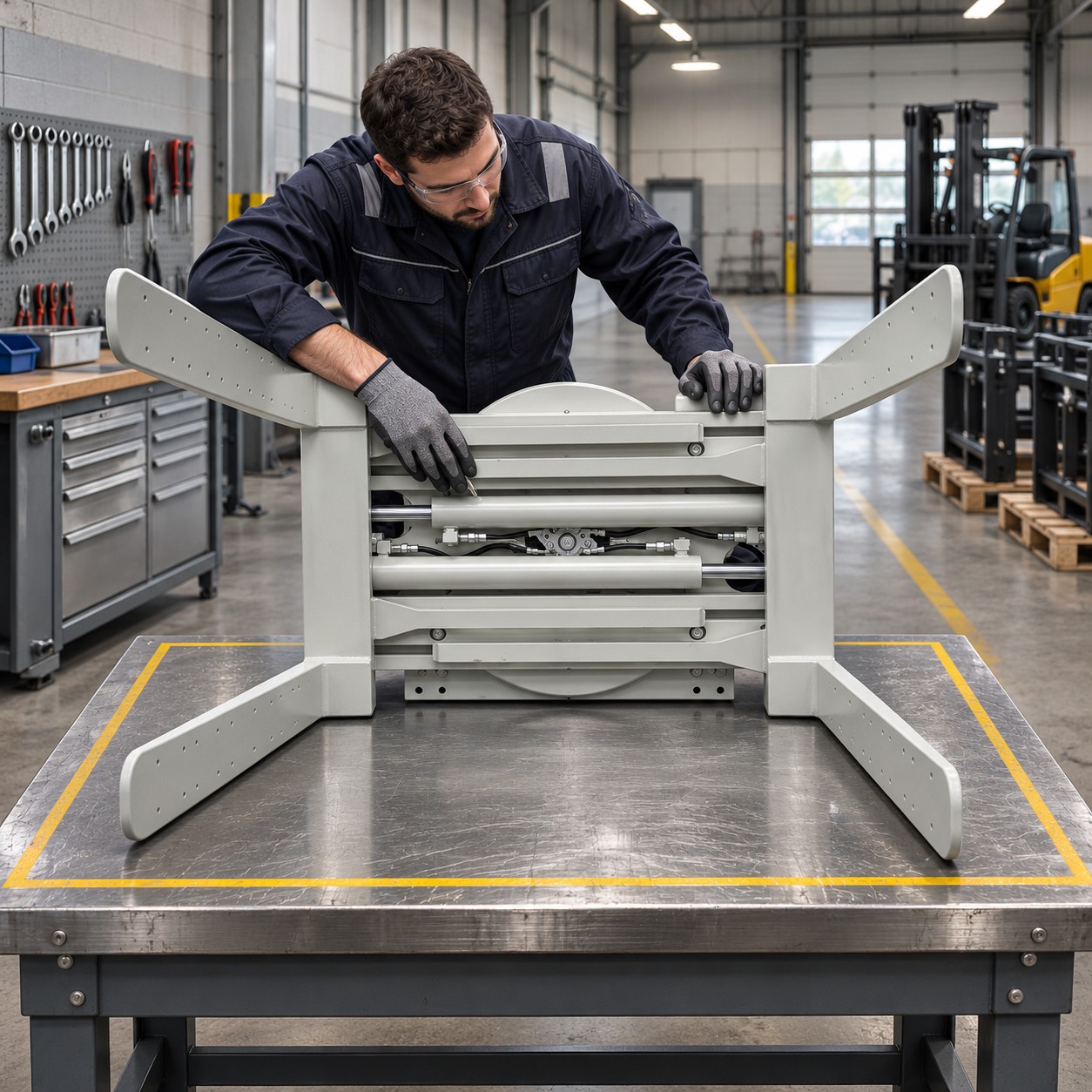
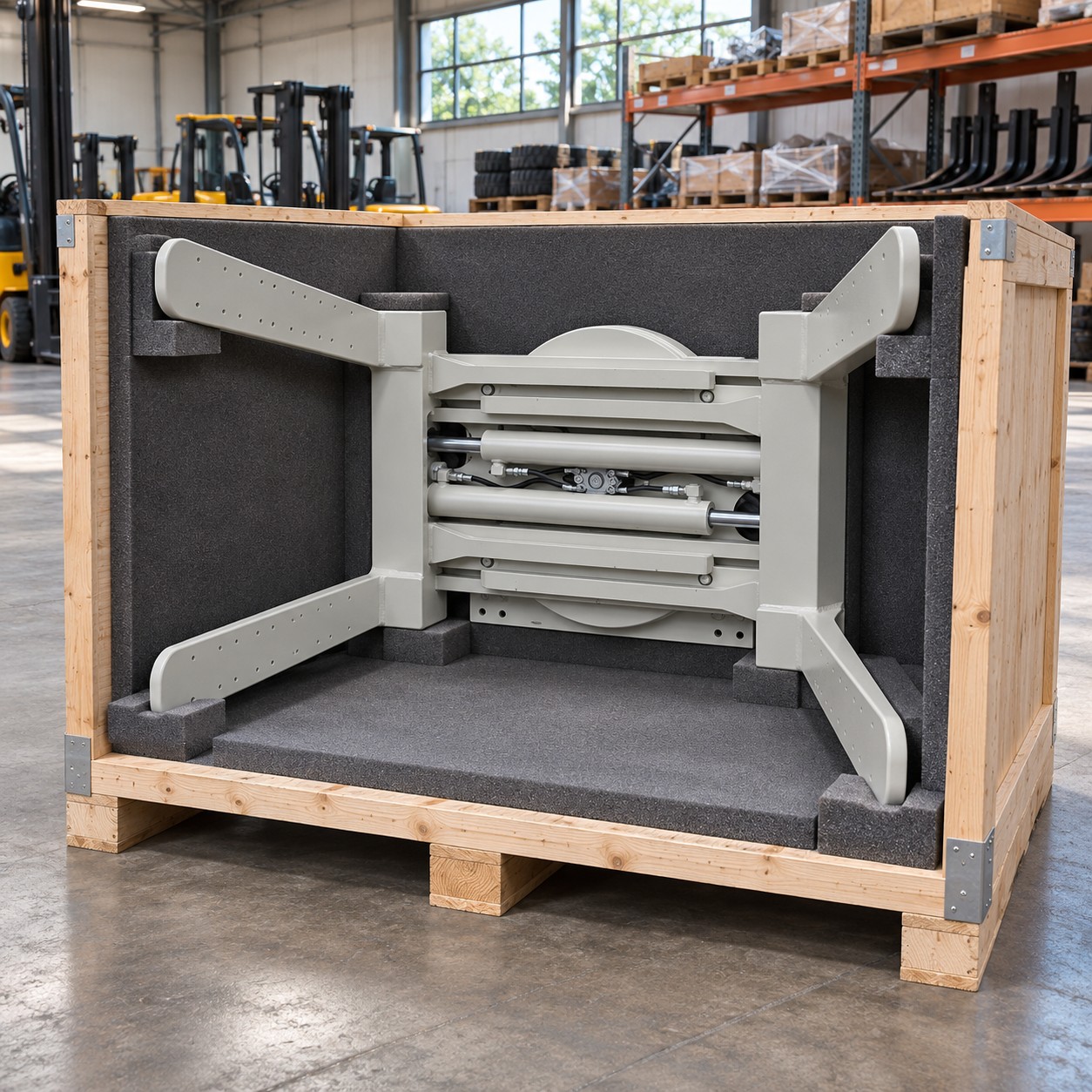
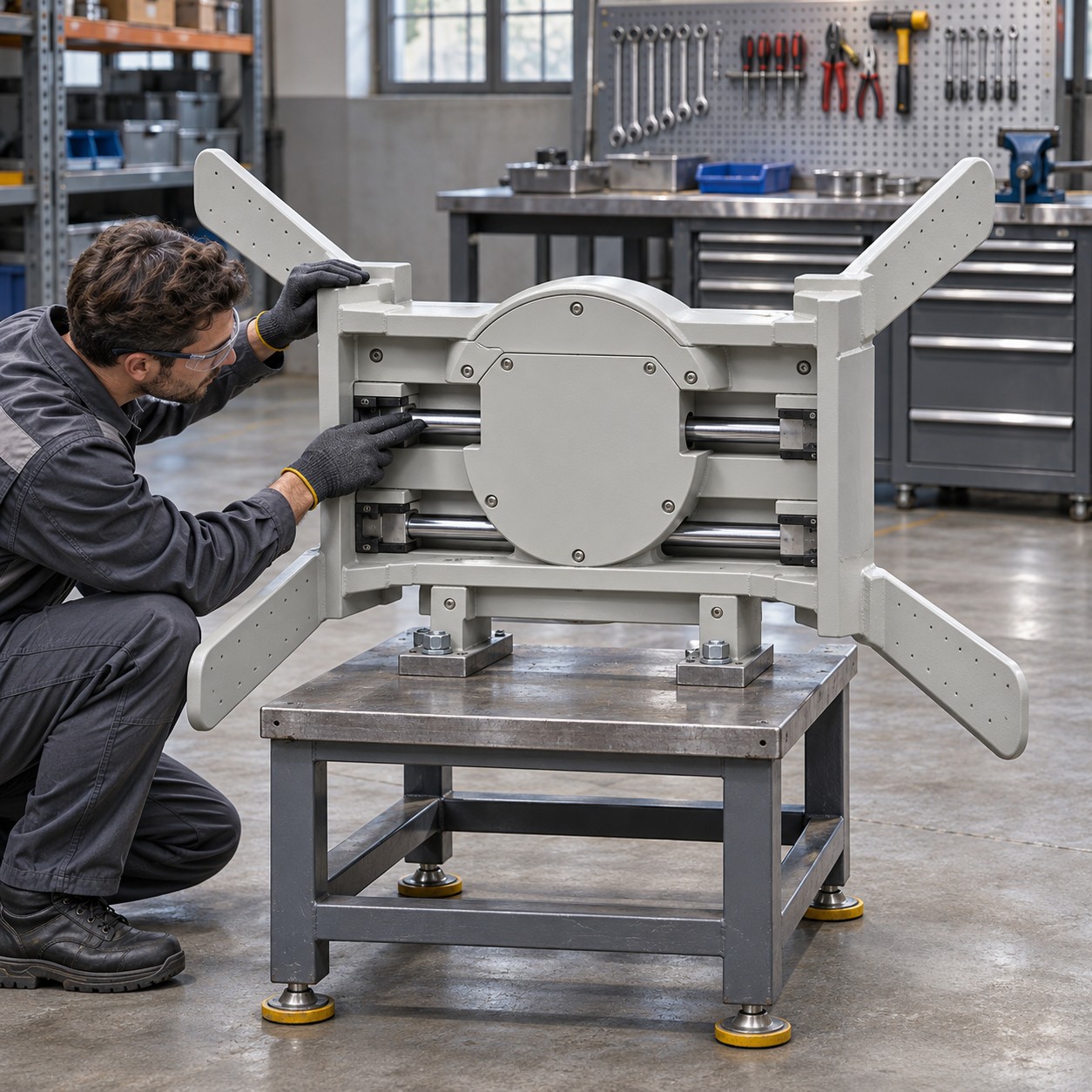
The ZGFORKLIFT / MYZG fork-positioner attachment is shown in the company's existing product listing as a light-gray central mechanism with paired outward projections. Fork positioning is considered when a forklift regularly handles approved loads or pallets of different widths and an operator needs to set fork spacing efficiently. The original listing does not give a verified capacity, opening range, dimensions, attachment mass or hydraulic specification. Buyers must obtain those details for the exact product offered and confirm how its carriage interfaces with the intended host forklift. The photographs illustrate the product family; the delivered drawing and load chart determine safe use.
A distribution warehouse can receive pallets with different stringer spacing, fork pockets and load footprints. Repositioning forks manually may interrupt a busy receiving sequence, but a powered adjustment is worthwhile only if it fits the host truck and handling task. Record the narrowest and widest approved pallet entries, typical load mass, load center, lift height and frequency of changes. Confirm whether the loads are stable and whether pallet construction is suitable for the forks. A fork positioner does not repair a damaged pallet or enlarge the forklift's certified capacity. The original fork-positioner listing provides the authentic pictured reference for an inquiry.
Map receiving, storage and dispatch routes. Check aisle width, door clearance, rack geometry and pedestrian crossings. Where pallets vary, create a schedule of common fork settings and a procedure for confirming the correct width before entry. Keep people away from moving components and confirm both forks are seated and secured under the delivered instructions. If the buyer needs lateral alignment of a fixed-width load instead, the side-shifter product page shows a separate accessory concept. These devices solve different problems and should be compared by function, not by their appearance alone.
Ask the supplier for a dimensioned drawing, host-carriage class, fork interface, minimum and maximum fork spacing, attachment mass, rated capacity, hydraulic requirements and operating instructions for the proposed unit. Provide the host forklift model, serial number, mast configuration, existing attachment details and hydraulic circuit information. A qualified installer should verify compatibility and any required control changes. An attachment can change the effective load center, so the truck needs revised residual-capacity documentation for the installed combination. The attachment category can help the buyer compare product types, but the final decision depends on a written technical match.
A useful quotation identifies exactly what is included: attachment frame, forks if supplied, hydraulic hoses and fittings, controls, installation labor, commissioning, manuals, packing and spare parts. Ask how the equipment will be tested with representative loads and which person is responsible for updating the capacity plate. Compare purchase price with operator time, maintenance needs, service access and the handling frequency. If pallets are always one standard width, the added mechanism may bring limited value. If a different load requires side clamping, assess a dedicated clamp rather than assuming fork-spacing adjustment will hold it. See the flat-clamp listing as a separate product reference.
Potential applications include mixed-pallet wholesale distribution, manufacturing stores and packaged-goods dispatch. These are examples to evaluate, not claims about named customer installations. Before each lift, an operator should inspect the pallet, set spacing as directed by the delivered manual and check that both forks support the load correctly. Travel with the load low and stable, respect the revised capacity chart, and avoid changing spacing while a load is suspended unless the manufacturer's instructions explicitly allow it. Never use the mechanism to force apart an unstable pallet or squeeze goods. Keep other workers outside the attachment's movement zone.
At a receiving dock, plan a clear pallet inspection area so fork settings can be confirmed without blocking trucks. At racking, verify the changed spacing still clears rack uprights and supports the pallet. At dispatch, keep a written record of unusual pallets and train operators to stop when fork entry is uncertain. The complete product range can inform a broader equipment choice, but it is the host machine and attachment combination that must be approved. Suitable pallets, consistent markings and clear routes remain essential even with powered fork adjustment.
Daily checks should follow the supplied instructions and cover the central frame, guide rails, fork mountings, retaining hardware, hoses and any visible leaks or distortion. A technician should inspect wear and alignment at the prescribed interval, clean debris from moving surfaces and address faults before the attachment returns to service. Hydraulic maintenance requires qualified staff and proper isolation; operators should not alter settings to overcome a sticky mechanism. Record repairs and component replacements against the attachment and host-truck serial numbers. Request a parts drawing and identify wear components before the equipment enters service.
For a dealer, the service plan includes installation support, operator handover, a scheduled inspection routine and access to matched spares. Ask how the supplier handles technical questions, claims and replacement parts, and define response terms in the quotation. A sales team should collect pallet drawings and host-forklift information rather than recommending a product from a catalog photo. The service FAQ provides a starting point for questions, while machine-specific answers should be confirmed in writing.
For an export order, request packing dimensions, installation and operating manuals, spare-parts information and documents required by the destination market. CE or other conformity claims should be checked for the exact attachment and its integration with the host truck. EPA emissions rules, where relevant, concern powered equipment and market requirements; no engine approval should be claimed for this accessory alone. Any statement about export experience, customer service or a cooperation case should be supported by verifiable material for the buyer's inquiry. Shandong Zhuogong Machinery Equipment Co., Ltd. can discuss the scope of supply; the company background page gives general context.
Send the host forklift model and serial number, pallet dimensions, load weights, required fork-spacing range, hydraulic information and destination country. ZGFORKLIFT / MYZG can discuss whether the pictured fork positioner is suitable and which drawing and capacity checks are needed before purchase. Contact Shandong Zhuogong Machinery Equipment Co., Ltd. through the contact page, email vip@mingyuforklift.com, or call +86-0535-2090977. Confirm all specifications and integration requirements in the final offer.
Name: selena
Mobile:+86-13176910558
Tel:+86-0535-2090977
Whatsapp:8613181602336
Email:vip@mingyuforklift.com
Add:Xiaqiu Town, Laizhou, Yantai City, Shandong Province, China