
vip@mingyuforklift.com
+86-0535-2090977

1. Introduction: Understanding Electric Forklift Capacity
Hook: The difference between "rated capacity" and "actual safe capacity"
Brief overview of electric forklift load ranges (3,000–12,000+ lbs / 1.5–6+ tons)
Why capacity matters: safety, efficiency, equipment longevity, and regulatory compliance
Thesis: Capacity is determined by multiple interdependent factors, not just a single number on the spec sheet
2. Defining Rated Capacity: The Manufacturer's Baseline
What "rated capacity" means per ANSI/ITSDF and ISO standards
Standard test conditions: load center, mast height, and level surface
How manufacturers calculate and certify rated loads
The role of the data plate and why operators must read it
Common misconception: rated capacity ≠ maximum possible lift
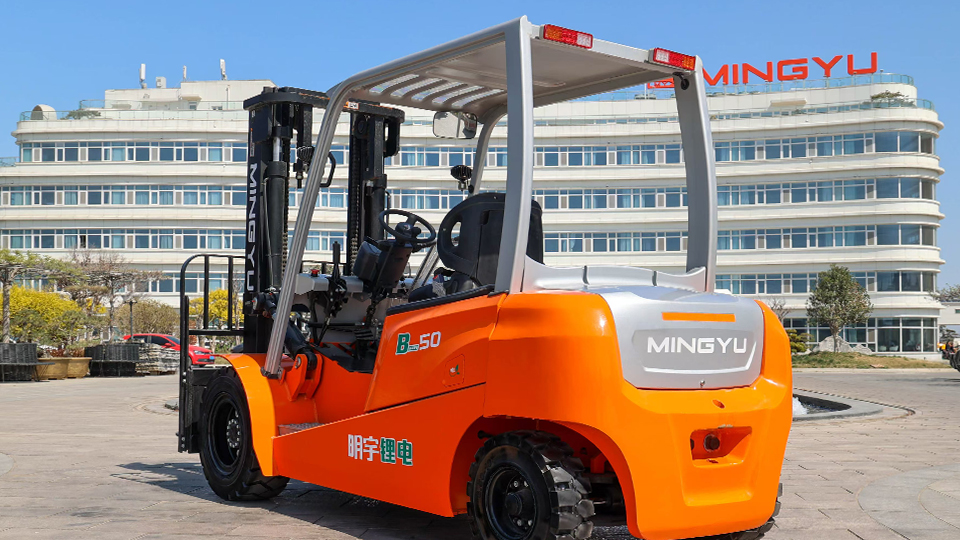
3. The Load Center: The Hidden Variable That Changes Everything
Definition of load center (typically 24 in / 600 mm from the backrest)
Physics of the moment arm: how load distance exponentially reduces capacity
Visual explanation: same weight, different load center = different stability
Real-world examples: lifting pallets vs. pipes vs. irregular loads
How to calculate actual capacity when the load center shifts
4. Forklift Class and Design: Capacity by Machine Type
Class I (Counterbalance): 3,000–12,000 lbs standard; heavy-duty models up to 15,000+ lbs
Class II (Narrow Aisle): Reach trucks, order pickers, and stand-up models (2,500–5,500 lbs)
Class III (Pallet Jacks/Stackers): Walk-behind and rider models (3,000–6,000 lbs)
Three-wheel vs. four-wheel counterbalance: stability trade-offs
Heavy-duty electric models vs. internal combustion equivalents
5. Mast Configuration and Lift Height: The Height Penalty
How mast stages (duplex, triplex, quad) affect capacity
Capacity derating at full lift height: why a 5,000 lb forklift may only safely hold 3,500 lbs at 20 feet
Free lift vs. full lift considerations
Tilt angle and its role in maintaining load stability at elevation
The "residual capacity" concept for high-rack warehousing
6. Battery Weight: The Electric Forklift's Secret Counterbalance
How battery mass functions as part of the counterweight system
Battery size/capacity vs. forklift rated load: the engineering balance
Lithium-ion vs. lead-acid: weight differences and capacity implications
Why swapping to a lighter battery can reduce safe operating capacity
Battery compartment location and center of gravity shifts
7. Attachments and Accessories: When Capacity Drops
Common attachments: side shifters, fork positioners, paper roll clamps, carton clamps, rotators
How attachments add weight and shift the center of gravity forward
Manufacturer derating charts: understanding the recalculated capacity
Attachment-specific load centers and their impact on the data plate
When to request a factory-derated capacity plate after attachment installation
8. Environmental and Operational Factors
Surface conditions: ramps, inclines, and uneven floors
Temperature effects on battery performance and hydraulic systems
Tire type (cushion vs. pneumatic) and its influence on stability
Operating speed, turning radius, and dynamic loads during travel
9. Safety Margins and Best Practices
The 80% rule: why experienced operators never max out the rated load
Pre-shift inspections and load assessment protocols
Training requirements: OSHA and ANSI compliance
Warning signs of overload: rear tire lift, mast deflection, sluggish hydraulics
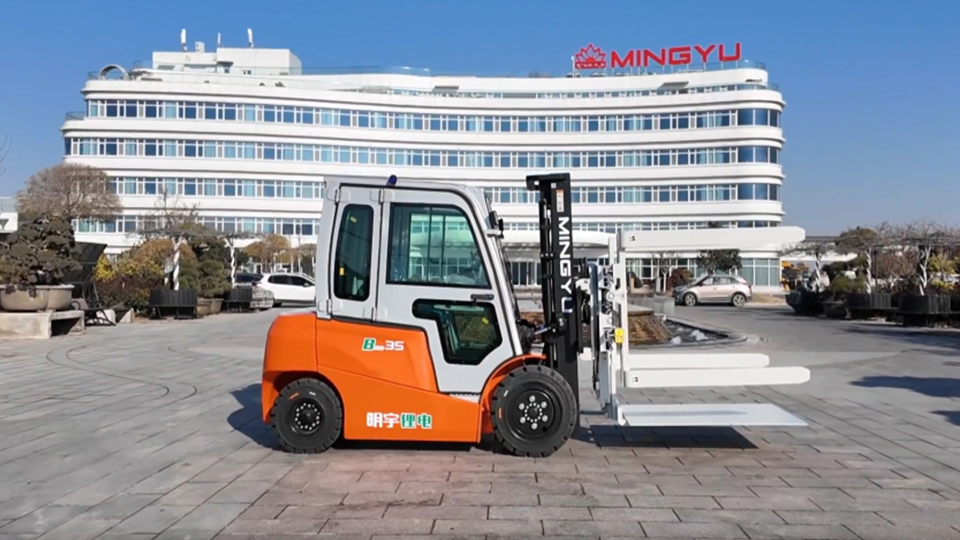
When to use a larger capacity forklift or a different lifting solution
10. Conclusion: Matching the Right Forklift to the Right Load
Recap: capacity is a dynamic equation, not a fixed number
Key takeaways: consult the data plate, respect the load center, account for attachments and height
Final recommendation: always consult the manufacturer or certified dealer for application-specific capacity verification
Call to action: invest in operator training and regular capacity audits
Name: selena
Mobile:+86-13176910558
Tel:+86-0535-2090977
Whatsapp:8613181602336
Email:vip@mingyuforklift.com
Add:Xiaqiu Town, Laizhou, Yantai City, Shandong Province, China