
vip@mingyuforklift.com
+86-0535-2090977

1. Introduction: Beyond the Sticker Price
Hook: Why the purchase price is only 15–25% of what you'll actually spend
Definition of Total Cost of Ownership (TCO) in the material handling context
The TCO advantage myth: when electric forklifts save money—and when they don't
Thesis: TCO is a multi-year calculation spanning acquisition, energy, maintenance, downtime, and disposal
2. Acquisition Costs: The Tip of the Iceberg
New vs. used vs. leased: how each model affects upfront cash flow
Base unit pricing tiers by capacity (3,000 lb, 5,000 lb, 10,000 lb+ classes)
Essential add-ons: batteries, chargers, attachments, and fleet management systems
Hidden upfront costs: delivery, installation, facility electrical upgrades
Financing and tax incentives (Section 179, energy credits) that offset initial outlay
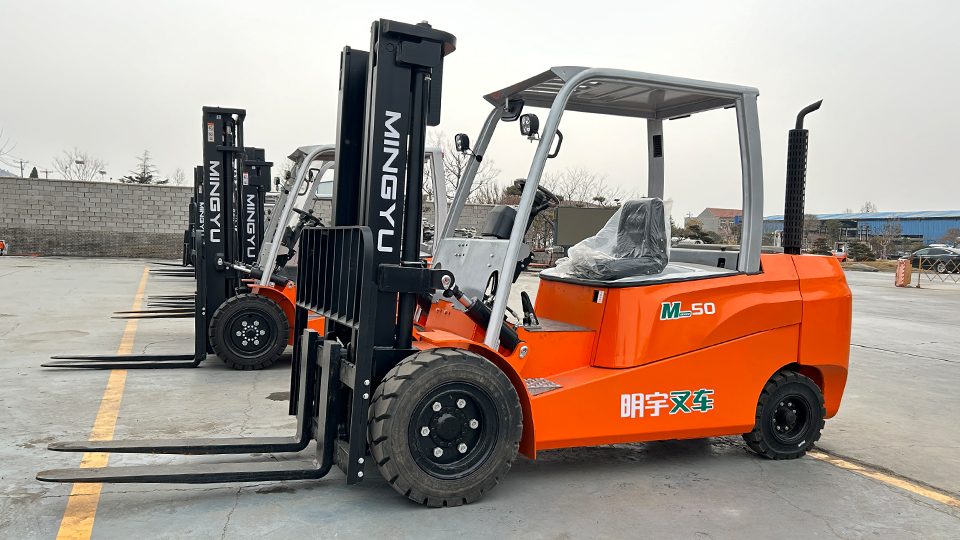
3. Battery Economics: The Heart of Electric TCO
Lead-acid batteries: Lower upfront cost, shorter lifespan, watering maintenance, and ventilation requirements
Lithium-ion batteries: 2–3x higher initial cost, longer cycle life, opportunity charging, and zero maintenance
Battery capacity sizing: how the wrong battery creates hidden replacement costs
Battery replacement cycles: when to budget for a second or third battery over the forklift's life
The "battery-as-a-service" leasing model and its impact on TCO calculations
4. Charging Infrastructure and Energy Consumption
Charger types: standard, fast, and opportunity charging systems
Electrical infrastructure upgrades: panel capacity, wiring, and dedicated circuits
Kilowatt-hour consumption per shift: calculating daily, monthly, and annual energy costs
Peak demand charges: how charging schedules affect utility bills
Solar and off-peak charging strategies that reduce lifetime energy spend
5. Maintenance and Service: Electric vs. Internal Combustion
What's eliminated: engine oil, transmission fluid, spark plugs, exhaust systems, and emission testing
What's required: hydraulic servicing, mast chain lubrication, brake checks, and software updates
Average annual maintenance cost benchmarks (electric vs. LP gas vs. diesel)
The role of telematics and predictive maintenance in reducing unplanned repairs
Warranty coverage periods and extended service contracts: value or hidden cost?
6. Downtime and Productivity: The Silent Expense
Charging downtime vs. fueling downtime: time-is-money calculations per shift
Battery swap logistics for multi-shift operations
Mean Time Between Failures (MTBF): electric forklifts typically win, but parts availability matters
The cost of a forklift being out of service: rental expenses, labor idle time, and delayed shipments
How fleet size and redundancy buffer against downtime costs
7. Operator and Training Costs
OSHA/ANSI certification requirements and refresher training schedules
Differences in operator training: electric controls, battery safety, and pedestrian awareness systems
Ergonomic benefits: reduced operator fatigue, lower injury rates, and associated workers' comp savings
The productivity learning curve: new operators often adapt faster to electric forklifts
8. End-of-Life Value and Disposal
Residual value trends: electric forklifts in the secondary market
Battery recycling costs and buyback programs
Scrap value vs. trade-in value when refreshing a fleet
Environmental disposal regulations for batteries and electronic components
9. The TCO Calculation Framework: A Practical Model
Step-by-step formula: TCO = Acquisition + Energy + Maintenance + Downtime – Residual Value
Sample 5-year TCO comparison: electric vs. LP gas forklift (same 5,000 lb capacity class)
Sensitivity analysis: how battery choice, shifts per day, and operating hours swing the numbers
Spreadsheet tools and manufacturer TCO calculators
When to re-evaluate TCO mid-lifecycle (battery replacement, facility changes, usage spikes)
10. Conclusion: Making the Electric TCO Decision
Recap: TCO favors electric in high-utilization, multi-shift, indoor applications
Key variables that tip the scale: electricity rates, shift patterns, and battery technology choice
Final recommendation: run a 3–5 year TCO model before purchase; never decide on sticker price alone
Call to action: consult a dealer for a site-specific TCO analysis
Name: selena
Mobile:+86-13176910558
Tel:+86-0535-2090977
Whatsapp:8613181602336
Email:vip@mingyuforklift.com
Add:Xiaqiu Town, Laizhou, Yantai City, Shandong Province, China
