
vip@mingyuforklift.com
+86-0535-2090977

1. The Standard Technical Term: Montacargas
In the majority of professional contexts across Latin America and the United States, the most accurate and widely understood term is montacargas.
Etymology: Derived from montar (to lift/mount) and carga (load).
Usage: It is used as a masculine noun (el montacargas). Note that the word is the same in both singular and plural forms.
Context: This is the term you will find in OSHA-compliant safety manuals, technical specifications, and legal employment contracts.
Why Context Matters
While montacargas is the standard, in some Caribbean and South American regions, it can also refer to a "dumbwaiter" or a small freight elevator. To be technically precise, you might use montacargas industrial to specify the vehicle.
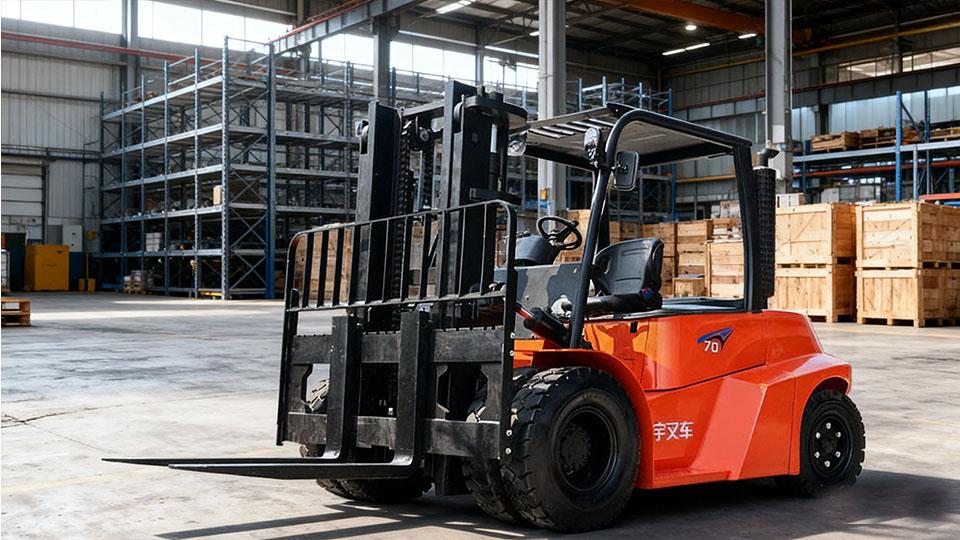
2. Regional Variations: The "Dialect Map" of Forklifts
The Spanish-speaking world is vast, and equipment names often evolve from local slang or brand names (proprietary eponyms).
|
Region |
Primary Term |
Notes |
|
Mexico & Central America |
Montacargas |
Universal and standard. |
|
Spain |
Carretilla elevadora |
The formal technical term in the EU. |
|
Spain (Slang) |
Toro |
Literally "Bull," referring to the "horns" (forks). |
|
Argentina / Uruguay / Chile |
Autoelevador |
Highly common in the Southern Cone. |
|
Colombia / Venezuela |
Montacargas |
Standard, though autoelevador is understood. |
|
Caribbean (PR/DR) |
Forklift (Spanglish) |
Often pronounced "forli" or "el forklift." |
The "Toro" Phenomenon (Spain)
In Spain, if you ask for a montacargas, you might be directed to a freight elevator. To refer to the vehicle, locals use carretilla elevadora. However, the most common colloquialism is toro. This stems from the visual similarity between the forks and a bull’s horns. Using this term can build immediate rapport with local crews, but avoid it in formal safety documentation.
3. Technical Anatomy: Parts of a Forklift in Spanish
To truly communicate in a warehouse setting, you need more than just the name of the machine. Technical proficiency requires knowing the components, especially for pre-shift inspections.
Forks: Las horquillas (or los picos in some regions).
Mast: El mástil.
Overhead Guard: El protector de cabina or techo protector.
Hydraulic Controls: Controles hidráulicos.
Tires: Llantas (Latin Am.) or Neumáticos (Spain).
Counterweight: Contrapeso.
Propane Tank: Tanque de propano.
4. Class-Specific Terminology
Not all forklifts are created equal. Using specific terms ensures the right equipment is dispatched to the right task.
Reach Truck: Montacargas de alcance or Retráctil.
Pallet Jack (Manual): Traspaleta manual (Spain) or Patín hidráulico (Mexico).
Electric Pallet Jack: Traspaleta eléctrica.
Order Picker: Preparador de pedidos.
Rough Terrain Forklift: Montacargas para terreno irregular.
5. Essential Safety Phrases for Operators
If you are managing a Spanish-speaking crew, these "Power Phrases" are critical for maintaining OSHA compliance and site safety:
"Watch out!": ¡Cuidado!
"Back up": Retroceder or Dar marcha atrás.
"Lower the load": Baje la carga.
"Is the parking brake on?": ¿Está puesto el freno de mano?
"The load is unbalanced": La carga está desequilibrada.
"Safety first": La seguridad es lo primero.
6. The Impact of "Spanglish" in U.S. Warehousing
In many U.S.-based facilities, a hybrid language emerges. You may hear operators say "el forkli" or "chequear el aceite." While linguistically fascinating, this can lead to technical drift.
Pro-Tip for Managers: Always provide safety signage in "Neutral Spanish." Using montacargas ensures that a worker from Mexico, an operator from El Salvador, and a technician from Colombia all understand the instruction with 100% clarity.
Summary of Key Terms
|
English |
Spanish (Neutral) |
Spanish (Regional) |
|
Forklift |
Montacargas |
Toro (Spain), Autoelevador (Argentina) |
|
Operator |
Operador |
Carretillero (Spain) |
|
Load |
Carga |
Bulto |
|
Warehouse |
Almacén |
Bodega |
Understanding these linguistic nuances does more than just bridge a communication gap; it demonstrates a commitment to the cultural and physical safety of your workforce.
Name: selena
Mobile:+86-13176910558
Tel:+86-0535-2090977
Whatsapp:8613181602336
Email:vip@mingyuforklift.com
Add:Xiaqiu Town, Laizhou, Yantai City, Shandong Province, China
