
vip@mingyuforklift.com
+86-0535-2090977

Published: November 5, 2026
HTML Meta Description: Improve production-line kitting flow with an electric stacker selected for component pallets, rack height, aisle width and controlled replenishment cycles.
Keywords: electric stacker production kitting, inventory accuracy 2026, manufacturing line replenishment, component pallet handling, walkie stacker rack height, warehouse cycle count route, small parts supermarket, production logistics, ZGFORKLIFT, MYZG
Inventory improvement is emerging as a central warehouse and factory performance topic. On a production floor, a well-organized kitting supermarket can reduce line-side shortages only when each component location, pallet identity and replenishment trigger are reliable. An electric stacker may support movement of approved pallets between reserve locations and a controlled pick face. It cannot fix inaccurate bills of material, unlabelled containers or a replenishment signal that arrives after the line has stopped.
Start with a documented task and route survey. Record the narrowest aisle and turn, doorway and gate width, overhead clearance, maximum gradient, dock edges and the worst surface condition. Measure real loads at their actual load centers, including long, offset or irregular items. Nameplate capacity is only a starting point; residual capacity at the required height and with the selected attachment determines practical application fit.
The November 2026 warehouse operations survey discusses inventory performance and the enduring challenge of peak staffing. Manufacturing teams can translate the findings into a practical cycle: scan or record the unit, verify the part and lot, replenish the correct bin and reconcile exceptions. Keep count corrections separate from physical moves so inventory records remain auditable. Use a replenishment window that respects line demand and avoids a truck entering a crowded workcell during changeover. The survey summary is available from Supply Chain Management Review.
Review the MYCPDB electric counterbalanced stacker as the first product reference, then confirm current specifications with the manufacturer.
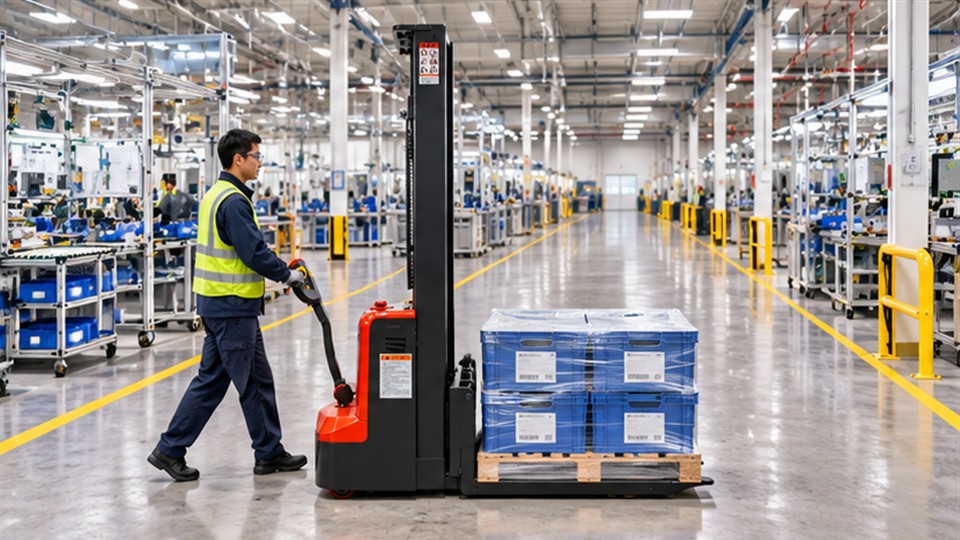
List component pallet weight, footprint, packaging, fork entry, destination rack level and replenishment frequency. Measure aisle width, cross-aisle turns, rack beam height, floor flatness, joints and charging access. Verify rated capacity at the load centre and required lift height, with the selected mast and any attachment. Compare pedestrian, stand-on and reach-style designs against route length and operator exposure. Protect fragile components from fork contact, and use containers that remain stable at height. Confirm the battery and charger match shift length and duty cycle.
Visibility and control deserve the same attention as capacity. Review the mast, carriage, tyres or wheels, lighting, mirrors or cameras, restraint, warning devices and speed management as one system. Dust, cold, heat, moisture and corrosion may require extra protection and shorter inspection intervals. Operators must see the travel path and place the load without leaving the protected operating position.
Compare the MYCDDH electric pallet stacker for a second view of capacity, manoeuvrability, energy and service access.
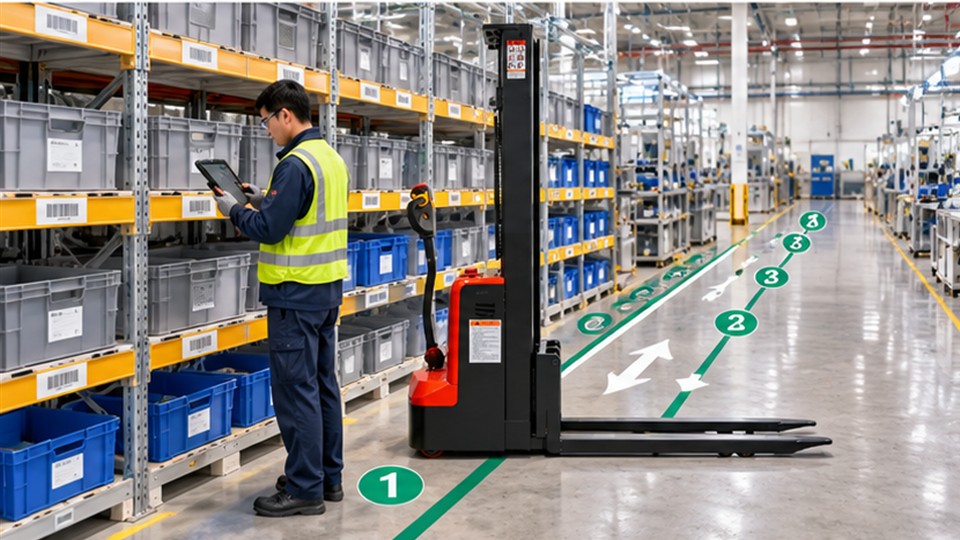
Separate stacker routes from line workers, tugger trains and open machine guarding. Use marked crossing points, speed controls and spotters where visibility is restricted. Secure the load, keep it low during travel and never place a person on the forks or beneath a raised pallet. Check mast chains, forks, tiller controls, brakes, wheels, warning signals and battery connections before use. Follow rack load plaques and do not push a pallet into position with the truck. If part identification, destination or rack condition is uncertain, stop and resolve the discrepancy before lifting.
Create a written operating envelope for every approved route: maximum load and lift height, travel direction, pedestrian exclusion points, slope rules and stop-work conditions. Complete a pre-shift inspection of tyres or wheels, forks, chains, hoses, brakes, steering, alarms and the energy or fuel system. Isolate defects affecting stability, braking or visibility until corrected.
Supervisors should observe real work, record near misses, harsh braking, overload attempts, impacts and recurring service issues, then improve layout, traffic separation and coaching. Build the business case around productive hours rather than purchase price alone. Include operator time, maintenance, energy or fuel, infrastructure, transport, downtime risk and resale value.
The CQDH20 electric reach stacker is the third internal product reference for application comparison.
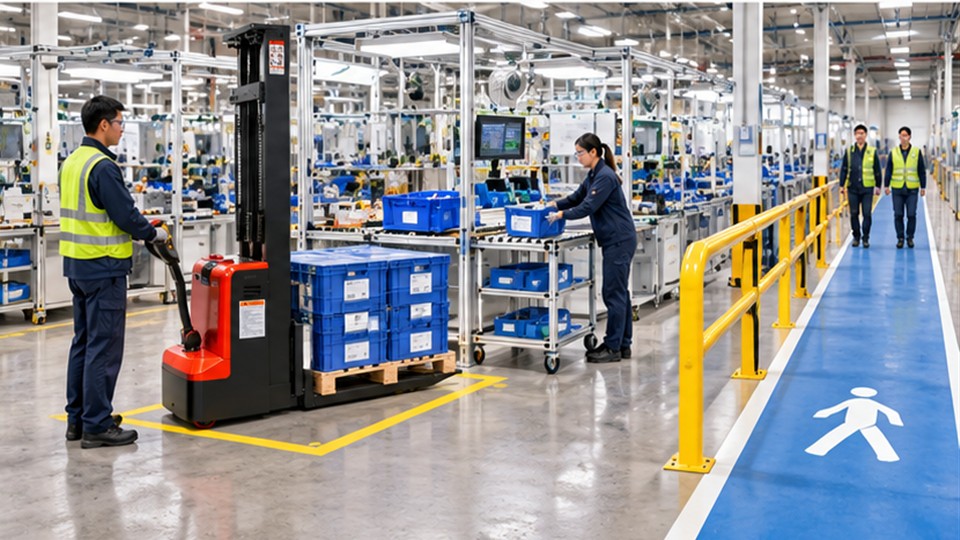
Track replenishment response, line-side shortage events, mis-picks, pallet damage, travel distance, charging time and operator hours. Include training, battery, charger, rack maintenance, service intervals and repair access. Test the route during a normal production cycle and a changeover to expose congestion. Review inventory accuracy separately from forklift cycle time: a faster truck can reduce travel but cannot correct poor master data. Scale the stacker fleet only when the pilot shows repeatable service, safe separation and fewer avoidable re-handles.
A staged trial is the strongest way to validate a configuration. Select a representative route, define success measures, brief operators and compare throughput, energy use, handling accuracy and maintenance observations. Review results with operations, safety and finance before fleet-wide deployment. This evidence turns a current industry headline into a defensible material-handling plan.
ZGFORKLIFT and MYZG can tailor the final specification after reviewing the application. Product availability varies by market; confirm the latest technical data and comply with local regulations before purchase or operation.
Contact Shandong Zhuogong Machinery equipment Co.,Ltd. Email: vip@mingyuforklift.com. Tel: +86-0535-2090977. WhatsApp: +86 131 8160 2336. Address: Xiaqiu Town, Laizhou, Yantai City, Shandong Province, China.
Send the maximum load, load-center distance, aisle width, gradient, surface condition, daily duty hours and climate so MYZG engineers can recommend a practical configuration instead of a generic catalogue answer.
Name: selena
Mobile:+86-13176910558
Tel:+86-0535-2090977
Whatsapp:8613181602336
Email:vip@mingyuforklift.com
Add:Xiaqiu Town, Laizhou, Yantai City, Shandong Province, China