vip@mingyuforklift.com
+86-0535-2090977

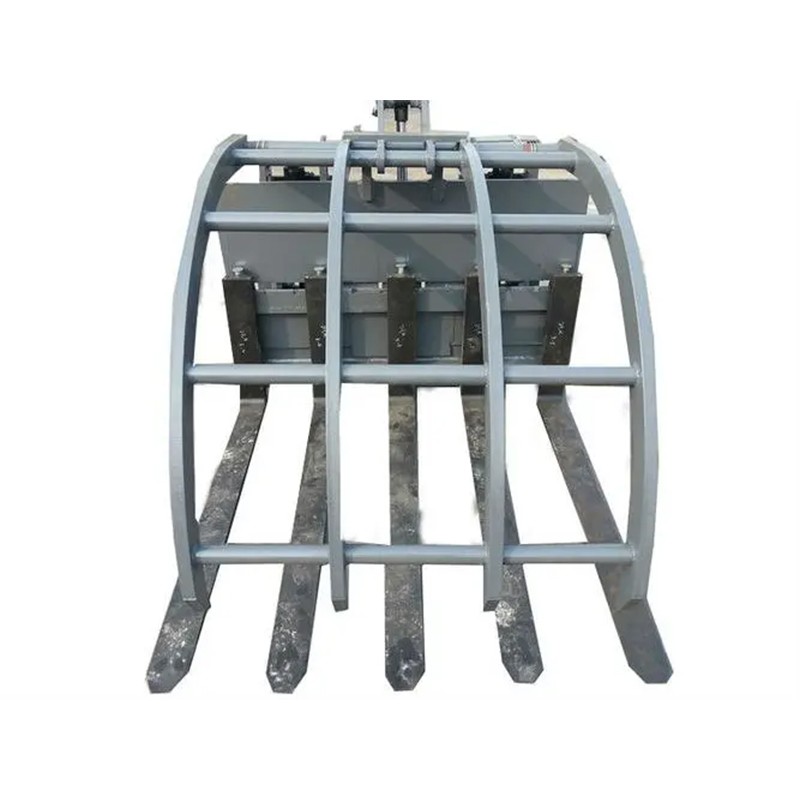
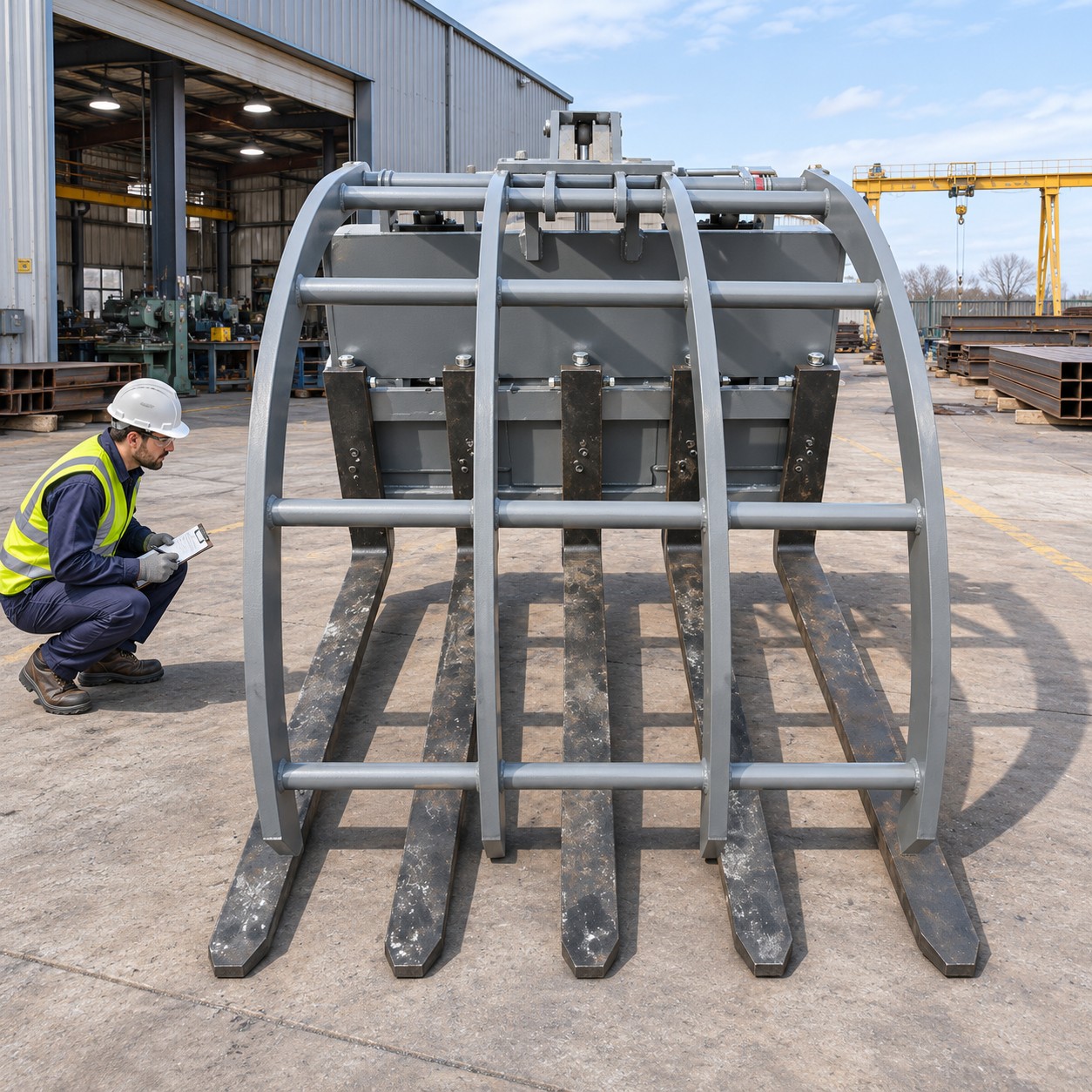
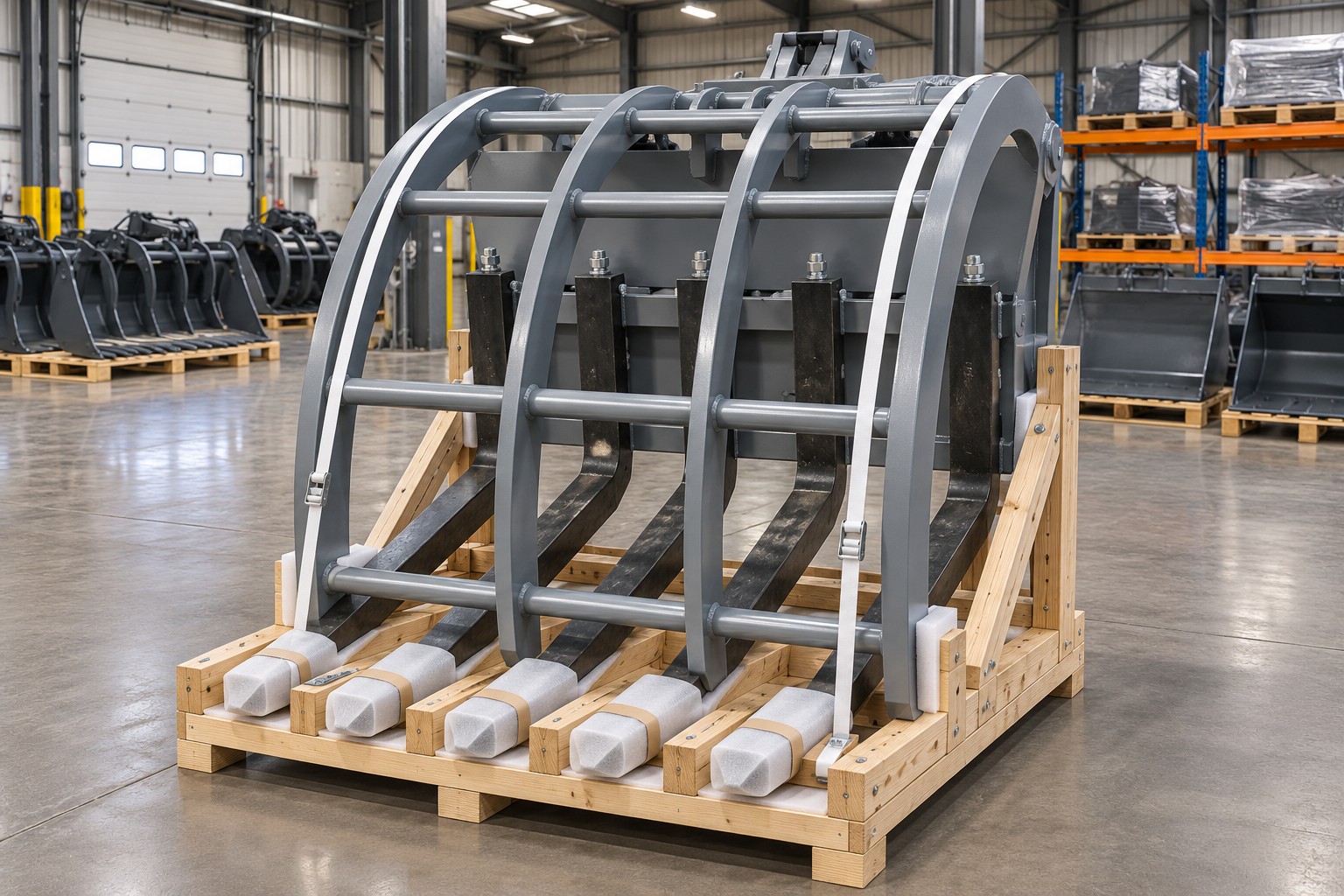
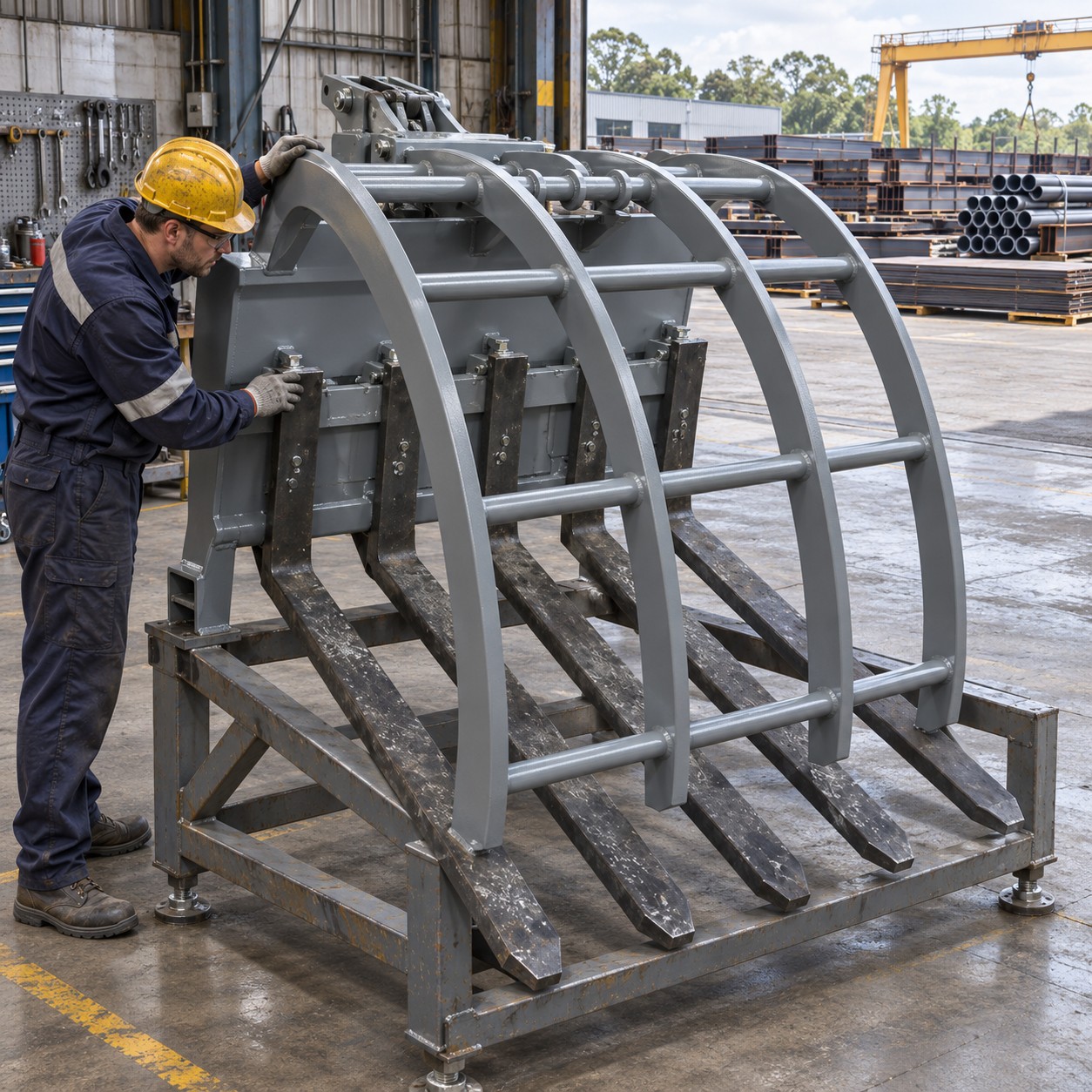
The ZGFORKLIFT / MYZG scrap-fork attachment shown on the company's existing product page has a gray curved retaining structure and multiple dark steel tines. It is a specialized material-handling accessory to evaluate for loose or irregular industrial material. The source page does not state a verified capacity, size, attachment mass or host-machine interface. Those figures must be requested for the exact product offered. A buyer should begin with the material, handling method, host truck and safety controls, then obtain a drawing and the revised load-capacity information before purchase.
Steel-fabrication yards, recycling operations and industrial parts depots may move material that does not form a stable pallet. Loose offcuts, carefully segregated process scrap or irregular bundles can require a dedicated fork design and an appropriate retaining arrangement. The attachment pictured may be considered for such work only after the supplier and site assess the actual material. It should never be treated as a universal clamp, bucket or approved lifting device for every scrap type. Sharp edges, shifting loads and falling material create risks that a standard pallet-handling plan may not cover.
Document the material's mass range, bulk shape, center of gravity and whether it can fall through the tines. Measure any bin, container or trailer opening, the necessary discharge height and the available approach space. Identify pedestrian exclusion zones and overhead obstructions. Check the ground or floor supporting the host vehicle, especially where the load may be lifted or turned. A practical trial should use representative material under an approved method, with personnel clear of the load path. The original scrap-fork listing supplies the authentic product photograph for an initial technical inquiry.
Before requesting a price, send the host machine's model and serial number, carriage or quick-coupler details, hydraulic capability if required, and the typical material specification. Ask for a dimensioned attachment drawing, mass, tine length and spacing, rated load, mounting method, operating range, hydraulic connections and maintenance instructions. The exact compatibility must be checked by qualified personnel. An attachment changes the effective load center and may reduce the host machine's usable capacity, so request the revised capacity chart or plate for the installed combination. The site's attachment category can help buyers compare options, while a drawing determines fit.
Compare the attachment against the actual task. A flat clamp is a separate handling concept for suitable loads, shown on the flat-clamp product page; a side-shifter adjusts pallet alignment rather than containing loose scrap, as illustrated by the side-shifter listing. Do not choose an accessory merely because it appears to fit the forklift in a photograph. Confirm how the load is supported, retained, transported and released. Request a written quote identifying included mounting components, any hoses or controls, installation labor, manuals, spare parts and transport packing.
Possible applications include a fabrication shop moving clean offcuts to a designated bin, a recycler staging separated metal material, or a machinery-parts yard consolidating irregular pieces. These are use cases to assess, not claims that named customers already use this product. The operator should follow the delivered manual and a site-approved method for load size, travel speed, lift height and discharge. Keep the load low and stable during travel, prevent people from entering the attachment's sweep or drop zone, and stop if material shifts unexpectedly. Avoid carrying loads that extend beyond the attachment's confirmed limits or block the operator's view.
A good yard layout places the loading zone, travel lane and receiving bin so the vehicle can approach without reversing into people. Use barriers and visible signals where pedestrians or other machinery operate nearby. Confirm container walls and edges can withstand the planned method and that no person stands beneath raised material. If the scrap contains hazardous residues, heat, sharp protrusions or unstable shapes, obtain a separate technical assessment. The complete product range is useful for reviewing host machine types, but the final operation must be checked for the specific combination.
Before use, inspect tines, curved frame, welds, retaining hardware, mounting points and any moving or hydraulic components shown on the delivered configuration. Look for cracks, bending, excessive wear, leaks and loose connections. Remove the unit from service if damage could affect strength or secure mounting. Cleaning matters because debris trapped near joints can hide wear or interfere with motion. A qualified technician should carry out repairs under the supplier's instructions; operators should not straighten bent tines or improvise a different retainer. Record inspections and work against both attachment and host-machine serial numbers.
Estimate total cost with the purchase price, installation, the revised-capacity assessment, consumable wear, service labor, spare tines or hardware if available, and downtime planning. Request a parts drawing for the exact version supplied and ask which items a dealer should hold. The supplier should confirm a support channel and warranty terms in writing. A distributor can help customers by documenting the handled material, fitment and inspection routine at handover. General questions on service can be prepared using the site's FAQ and guidance, followed by a machine-specific technical review.
For an export inquiry, ask for packing dimensions, attachment weight, installation instructions, parts list and any destination-specific conformity documents. CE documentation, where applicable, should be verified for the actual attachment and integration with the host machine. EPA engine-emission requirements concern a powered host machine and market rather than this steel attachment alone; no approval should be claimed without a relevant document. Export experience and customer cases should be supported by evidence specific to the inquiry. Shandong Zhuogong Machinery Equipment Co., Ltd. can discuss the proposed supply scope, but the quotation should state exactly which drawings, documents, commissioning and after-sales services are included.
For dealers, the key commercial task is to qualify the buyer's material and machine before describing this as a solution. Collect photos or samples of the scrap, load weights, container geometry and host-truck information. Have a technician confirm fitment and capacity, then prepare operator training and a parts plan. Do not promise productivity, capacity or certification values that have not been validated for the delivered combination. The company's background page provides context, while a written technical proposal should answer the customer's actual handling questions.
Send the host machine model and serial number, material type and mass, required tine dimensions, loading and discharge points, and destination country. ZGFORKLIFT / MYZG can discuss whether a scrap-fork attachment is appropriate and what documentation is needed to confirm safe use. Contact Shandong Zhuogong Machinery Equipment Co., Ltd. through its contact page, by email at vip@mingyuforklift.com, or by phone at +86-0535-2090977. Confirm the offered drawing, rating and support terms before ordering.
Name: selena
Mobile:+86-13176910558
Tel:+86-0535-2090977
Whatsapp:8613181602336
Email:vip@mingyuforklift.com
Add:Xiaqiu Town, Laizhou, Yantai City, Shandong Province, China