vip@mingyuforklift.com
+86-0535-2090977

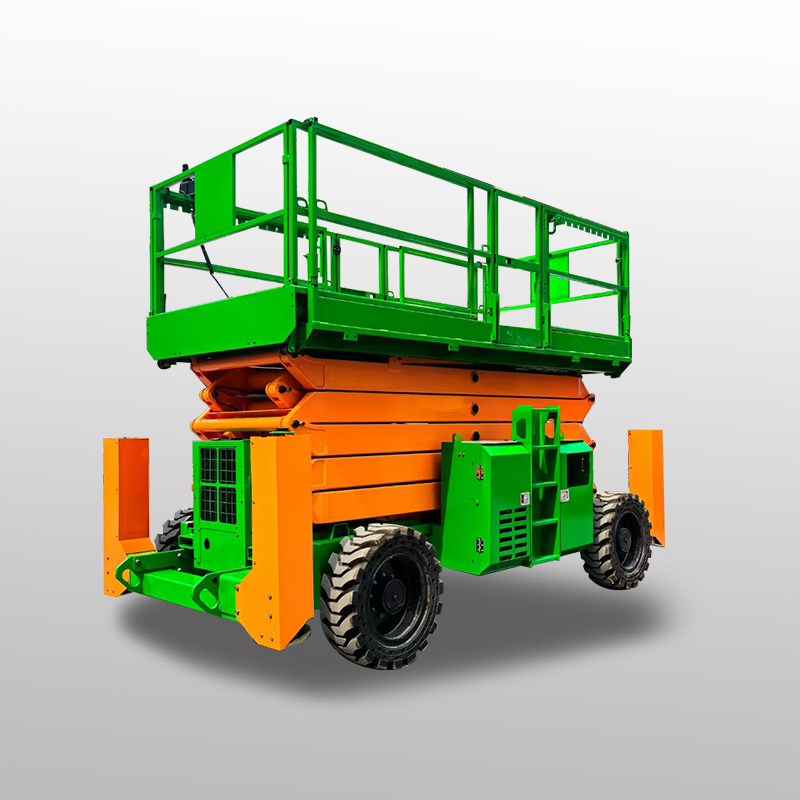
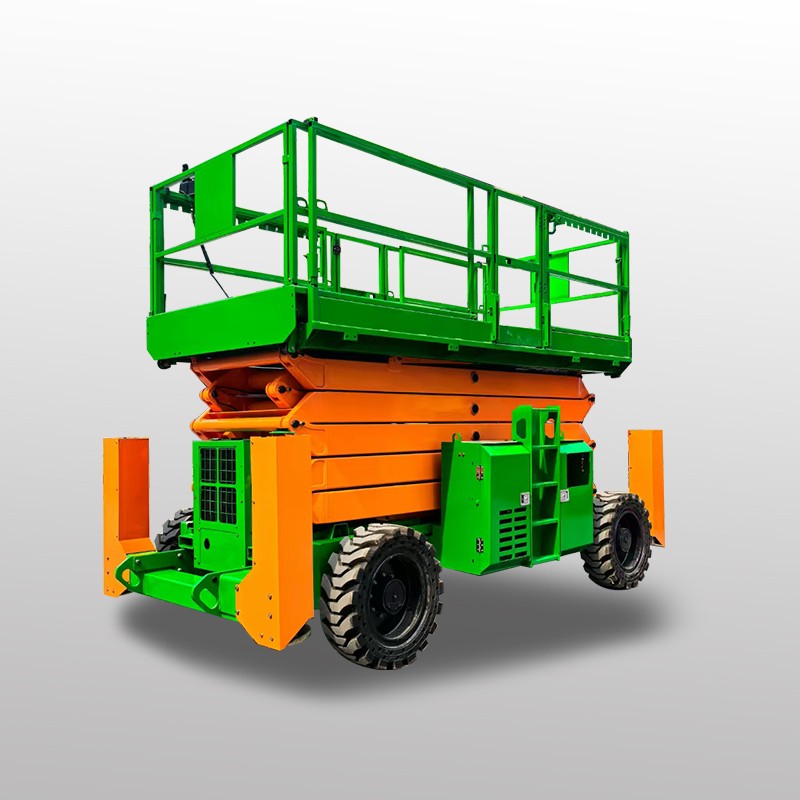
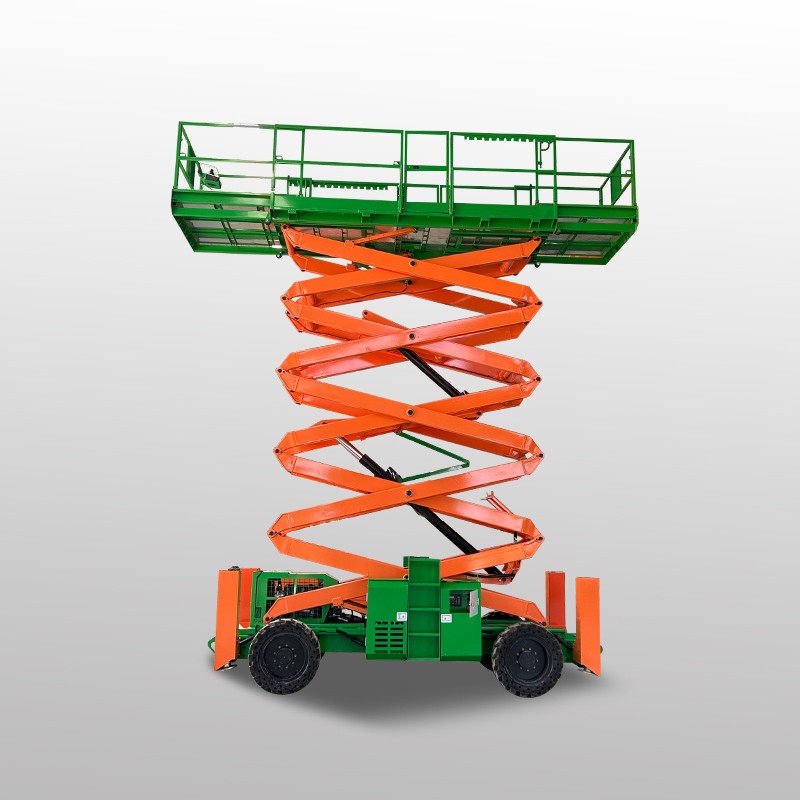
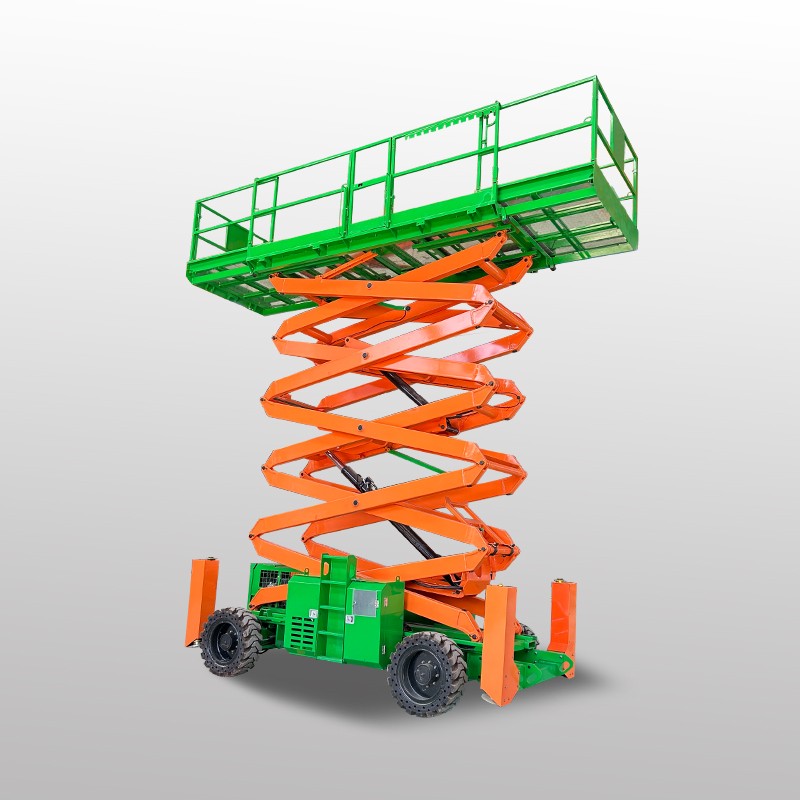
The ZG-YY-12-16M rough-terrain scissor lift platform is intended for construction, solar-farm and outdoor facility work where buyers need vertical access on assessed jobsite routes. The model name represents a family of height configurations, so platform height, load, machine dimensions, drive system and stabilizer procedure must be confirmed in the quotation, data plate and delivered manual. ZGFORKLIFT / MYZG recommends selection from a documented work-envelope, route, ground and rescue survey.
Construction sites, solar installations and outdoor industrial facilities may have work points above prepared gravel, compacted yards or other mixed surfaces. A slab scissor lift is optimized for finished floors, while a boom lift adds outreach that a straight vertical task may not require. The rough-terrain chassis can support controlled positioning on surfaces approved for the delivered machine, subject to tire, slope, wind and ground-bearing limits.
Typical work includes lighting and cable installation, facade and canopy service, overhead equipment inspection, warehouse extension projects and maintenance around landscaping or compacted site areas. Crawler mobility does not make every surface acceptable. Soft fill, voids, trenches, drain covers, uncompacted shoulders, steep cross slopes and drop-offs can still cause instability. The work zone must be evaluated before unloading and again whenever weather or site activity changes the ground.
The official ZG-YY-12-16M source page describes an off-road scissor lift family rather than one universal specification. Required platform height, rated load, working platform dimensions, machine mass, tires, power, travel performance, wind limit and allowable slope must be confirmed together. Site managers must never infer that “off-road” permits operation on uncompacted, unsupported or excessive-slope ground.
Start with the Aerial Platforms category, the broader product range and the full All Products catalog. The existing ZG-YY source product page provides the family context. This page focuses on construction and solar-farm maintenance selection.
Height: measure the platform height needed to place the operator at the task. Do not confuse platform height with working height, building height or maximum reach. Include overhead beams, pipes and cable trays in the drawing.
Load: total every occupant, tool, component and material carried on the platform. Confirm the main deck and extension-deck ratings separately. No load should rest on or project through the rails unless an approved accessory and procedure allow it.
Route: measure unloading space, gates, doorways, turns, gradients, curb transitions and the narrowest point. Check overhead clearance in the stowed travel condition. A platform that reaches the task but cannot safely reach the setup point is not the correct selection.
Ground: identify soil type, compaction, paving, drainage, underground services, edges and recent excavation. Obtain engineering review when surface capacity is uncertain. Stabilizers, if fitted and required for the delivered configuration, must bear on approved areas and be deployed exactly as instructed.
Energy: provide daily travel distance, lift cycles, shift hours, charging windows, ambient temperature and site power. Confirm battery and charger configuration for the destination supply rather than relying on a generic family value.
Rough-terrain scissor lifts can suit constrained construction and maintenance routes where ground contact and low-speed positioning are priorities. A compact wheeled slab platform can be more efficient on finished indoor floors and frequent long travel. A large rough-terrain platform may be needed when high travel speed, heavy platform load or demanding outdoor ground is required. Compare the electric scissor lift platform for firm-floor work and the ZG-YY rough-terrain scissor lift family for a different outdoor duty profile.
Do not select by traction appearance alone. Compare platform height and capacity, stowed size, total machine mass, ground pressure, stabilizer procedure, slope and wind limits, turning method, battery endurance, transport requirements and emergency controls. The right choice may be the smaller machine that fits the route and task, or a different platform class when outreach or ground conditions demand it.
Create an exclusion zone around the machine and below the elevated work area. Separate the lift from forklifts, trucks, cranes, autonomous vehicles and pedestrians. Identify overhead power lines, energized equipment, fragile roofs, doors and moving machinery. Ground personnel must understand the emergency lowering controls, communication method and rescue plan before elevation begins.
Before each shift, inspect tires, chassis, scissor arms, pins, fasteners, hydraulic hoses and cylinders, guardrails, gate, platform extension, stabilizers, controls, alarms, emergency stop, emergency lowering, battery connections and visible structural damage. Test functions in a clear area at low height. A fault affecting stability, control, braking, lifting, lowering or guarding must remove the machine from service until qualified repair and release.
Keep occupants inside the guardrails with both feet on the deck. Never use boxes, ladders or rail climbing to gain extra height. Follow the delivered rules for travel when elevated; do not assume movement is permitted at every height, slope or extension position. Stop operation when wind, rain, mud, ground settlement, traffic or visibility moves outside the approved conditions.
In commercial construction, the 10 m configuration can be evaluated for ceiling services, facade panels, signage and mechanical installation where access routes suit the rough-terrain chassis. In factory maintenance, it can support planned work on lighting, ducting and production-area utilities after traffic and energy sources are controlled. In warehouse expansion, it can provide elevated access around new racking or building services without treating the platform as a material crane.
Municipal and venue teams may use rough-terrain scissor lifts for inspections and repairs in controlled areas where the ground has been assessed. Seasonal planning matters: freezing, water saturation, loose aggregate and hidden voids can change bearing conditions. The article on pre-winter facility checks and scissor-lift access provides additional task-planning ideas, while the exact machine manual and local rules remain controlling.
Crawler undercarriages require inspection for debris, tension, damage and uneven wear. Clean soil, wire and construction waste without forcing water into electrical components. Inspect scissor-arm pivots, platform rollers, extension mechanisms, hydraulic lines, battery restraints and control cables at the intervals stated in the delivered manual. Do not weld, drill, heat or straighten structural parts without approved technical guidance.
Maintain a service record with machine identification, date, operating hours or cycles where available, reported fault, diagnosis, parts used and return-to-service approval. Dealers should plan common wear items and diagnostic support around local duty and lead time. Review the parts and dealer support page and include the model, serial information and photographs in each request.
A dealer quotation should collect required platform height, load and occupants, surface photographs, ground assessment, access dimensions, gradients, travel frequency, charging supply, climate, transport limits, destination and service capability. Demonstration and handover should cover pre-use inspection, ground assessment, exclusion zones, platform extension limits, stabilizer procedure, emergency lowering, charging, parking and defect reporting. Written application data helps protect both customer and dealer.
For export orders, confirm the exact configuration, power system, charger or supply connection, labels, manuals, packing, shipping dimensions and destination rules before contract. Where CE documentation is required, request and verify the declaration and supporting documents for the exact supplied machine. EPA engine-emissions certification is generally not applicable to an electrically powered lift configuration when it has no combustion engine; confirm the actual power configuration, and electrical, machinery, workplace, battery transport and import requirements may still apply. This page makes no unverified certificate, test-result, export-volume, delivery or customer-case claim.
Shandong Zhuogong Machinery Equipment Co., Ltd. can review buyer-provided application data, discuss the available family configuration and coordinate product, documentation, packing and parts questions for the proposed order. Final specifications, compliance documents, warranty scope, lead time and commercial terms must be confirmed in the quotation or technical agreement.
Send the required platform and working height, total platform load, number of occupants, surface and route photographs, ground assessment, doorway and gate measurements, gradients, work hours, charging supply, destination and after-sales expectations. Contact Shandong Zhuogong Machinery Equipment Co., Ltd. at vip@mingyuforklift.com or +86-0535-2090977, or use the contact and inquiry page. Include “ZG-YY-12-16M rough-terrain scissor lift platform” so the complete application can be reviewed together.
Name: selena
Mobile:+86-13176910558
Tel:+86-0535-2090977
Whatsapp:8613181602336
Email:vip@mingyuforklift.com
Add:Xiaqiu Town, Laizhou, Yantai City, Shandong Province, China