
vip@mingyuforklift.com
+86-0535-2090977

Is the most common source of premature battery failure. Weekly cleaning with a baking soda solution neutralizes acid residue, followed by thorough rinsing and application of petroleum jelly or anti-oxidation grease to prevent corrosion. Connection torque must be verified monthly; loose terminals create high-resistance junctions that generate heat, accelerate corrosion, and can cause catastrophic thermal events. The specific gravity of fully charged electrolyte should measure 1.280 ± 0.005 at 30°C, with monthly equalization charges (extended charging at reduced current after full charge) preventing stratification and sulfation of plates.
Charging discipline fundamentally determines battery longevity. Deep discharges below 20% state-of-charge cause irreversible sulfation, while opportunity charging (topping off during breaks) is increasingly viable with modern chargers but requires compatible battery technology. Charging environments must maintain temperatures between -20°C and 45°C, with adequate ventilation to dissipate hydrogen gas generated during the gassing phase. Charging connectors must be fully seated—partial engagement creates arcing that damages contacts and poses ignition risks.
1.2 Lithium-Ion Battery Management
Lithium-ion batteries are gaining market share due to their maintenance-free operation, faster charging capability, and longer cycle life. However, they are not entirely maintenance-free. State-of-charge management is critical: discharging below 20% triggers protective shutdowns and accelerates cell degradation. Unlike lead-acid systems, lithium-ion batteries benefit from partial-state-of-charge operation and should never be stored at 100% capacity for extended periods. Optimal long-term storage occurs at 50% charge, with supplemental charging every three months to counter self-discharge.
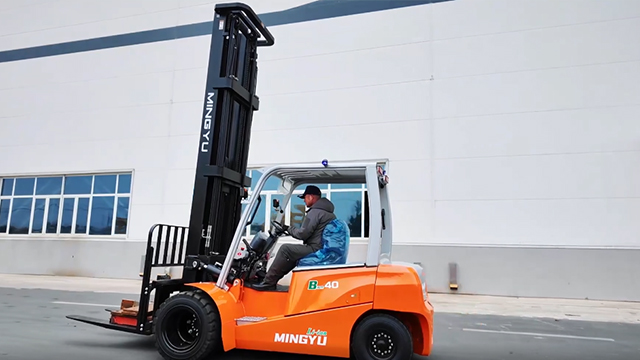
Thermal management distinguishes premium lithium-ion systems. Charging at temperatures below 0°C causes lithium plating on anodes, creating dendrites that compromise cell integrity and safety. Pre-heating systems or climate-controlled charging bays are essential for cold environments. Conversely, high-temperature operation above 45°C accelerates electrolyte decomposition and cathode degradation. Post-operation cooling periods of 30 minutes before charging allow heat dissipation and prevent thermal stress during the exothermic charging process.
Battery Management System (BMS) diagnostics provide predictive maintenance capabilities. Modern systems monitor individual cell voltages, balance charge distribution, and log thermal events. Maintenance technicians should download and analyze BMS data quarterly to identify cells deviating from nominal parameters, enabling proactive module replacement before cascading failures develop.
2. Electric Drive System Maintenance
2.1 Motor Care and Inspection
Electric forklift motors—whether AC induction or permanent magnet synchronous designs—require less maintenance than combustion engines but are not maintenance-free. Quarterly insulation resistance testing using a megohmmeter verifies winding integrity; readings below 0.5 MΩ indicate moisture ingress or insulation degradation requiring immediate attention. For DC motors still in service, carbon brush inspection every three months is essential. Brushes worn below 50% of original length or exhibiting uneven wear patterns require replacement, while commutator surfaces must maintain a smooth, chocolate-brown patina. Scoring, glazing, or discoloration indicates brush alignment issues or electrical overload conditions.
Motor cooling systems demand particular attention in dusty environments. Monthly cleaning of cooling fins and fan housings prevents thermal derating. Forced-air cooling systems require filter inspection and replacement; clogged filters reduce airflow, causing winding temperatures to exceed insulation class ratings and accelerating thermal aging. Sealed motors (IP54 or higher) resist dust and moisture ingress but still require external cleaning to maintain heat dissipation efficiency.
Motor cable connections represent a frequently overlooked failure point. Vibration, thermal cycling, and mechanical flexing loosen terminal connections over time. Quarterly torque verification of power cables—particularly between the battery, controller, and motor—prevents arcing, voltage drops, and intermittent operation. Cable insulation must be inspected for chafing at routing points and heat damage near exhaust components on hybrid designs.
2.2 Controller and Electronics Protection
The motor controller serves as the intelligence of the electric drivetrain, managing torque delivery, regenerative braking, and thermal protection. Controller maintenance centers on environmental protection and thermal management. The controller enclosure must maintain its IP rating; compromised gaskets or cover seals allow moisture and conductive dust ingress that causes short circuits and corrosion. Monthly inspection of sealing integrity, particularly after pressure washing or exposure to harsh environments, prevents catastrophic controller failure.
Internal controller maintenance requires specialized expertise but follows clear protocols. Annual cleaning of controller internals using dry compressed air removes dust accumulation that insulates heat-generating components. Cooling fan operation must be verified; fan failure causes rapid thermal shutdowns and, if uncorrected, permanent damage to power semiconductors. Capacitor banks within controllers exhibit aging characteristics; equivalent series resistance (ESR) testing after five years of service identifies capacitors approaching end-of-life.
Wiring harness integrity extends beyond the power cables. Control signals—encoder feedback, temperature sensors, and CAN bus communications—use low-voltage circuits vulnerable to electromagnetic interference and moisture. Connector pin inspection for corrosion, proper seating, and wire strain relief prevents intermittent faults that manifest as erratic operation or diagnostic trouble codes. Dielectric grease application to sensor connectors during annual service provides additional moisture protection.
3. Hydraulic System Maintenance
3.1 Fluid Management and Contamination Control
Electric forklifts utilize hydraulic systems for mast lifting, tilting, and attachment operation, powered by electric motor-driven pumps rather than engine-driven counterparts. Hydraulic fluid serves as both power transmission medium and lubricant, making contamination control paramount. Fluid analysis every 500 operating hours or six months monitors viscosity degradation, water content, and particle contamination. ISO cleanliness codes should be maintained at 18/16/13 or better; exceeding these thresholds accelerates pump wear, valve sticking, and seal failure.
Fluid replacement intervals typically range from 1,000 to 2,000 hours depending on operating severity. During replacement, the entire system—including reservoir, filters, cylinders, and hoses—must be flushed to remove varnish deposits and particulate contamination. Filter elements require replacement at 250-hour intervals or when differential pressure indicators activate. Return-line filters are particularly critical as they capture wear debris before it recirculates to sensitive pump components.
Water contamination, indicated by milky fluid discoloration or failed crackle tests, demands immediate attention. Water reduces lubricity, promotes rust, and in freezing conditions, causes valve and line blockage. Reservoir breathers with desiccant filters prevent atmospheric moisture ingress, while annual reservoir cleaning removes settled water and sludge accumulation.
3.2 Component Inspection and Seal Maintenance
Hydraulic cylinders operate under extreme pressure cycles, making seal integrity essential for safety and efficiency. Monthly inspection of lift and tilt cylinders for rod scoring, seal leakage, and alignment prevents catastrophic failure. Rod wipers must be intact to exclude abrasive contamination; damaged wipers allow particulate ingress that destroys rod surfaces and accelerates seal wear. Cylinder drift tests—measuring load descent rate with controls in neutral—identify internal seal bypass that reduces lifting capacity and creates safety hazards.
Hose condition assessment follows SAE and manufacturer guidelines. Cover abrasion, kinking, or blistering indicates reinforcement damage requiring immediate replacement. Hose routing must avoid contact with sharp edges, heat sources, or moving components; abrasion sleeves or spring guards provide additional protection at contact points. Hose age, regardless of apparent condition, should be limited to five years due to rubber compound degradation and reinforcement fatigue.
The hydraulic pump, typically a gear or vane type driven by the traction motor or a dedicated pump motor, requires bearing condition monitoring. Excessive noise, casing temperature rise, or flow reduction indicates internal wear or cavitation damage. Inlet strainer cleaning and suction line integrity verification prevent cavitation, while pressure testing against manufacturer specifications confirms pump volumetric efficiency.
4. Mechanical and Structural Maintenance
4.1 Mast and Chain Systems
The mast assembly constitutes the most visually active and mechanically stressed component. Weekly lubrication of mast rollers, side thrust bearings, and carriage slides with lithium-based grease (or low-temperature alternatives in cold environments) prevents galling and premature wear. Chain lubrication every 250 hours using penetrating chain lubricant—never heavy grease that attracts abrasive contamination—maintains link flexibility and reduces sprocket wear.
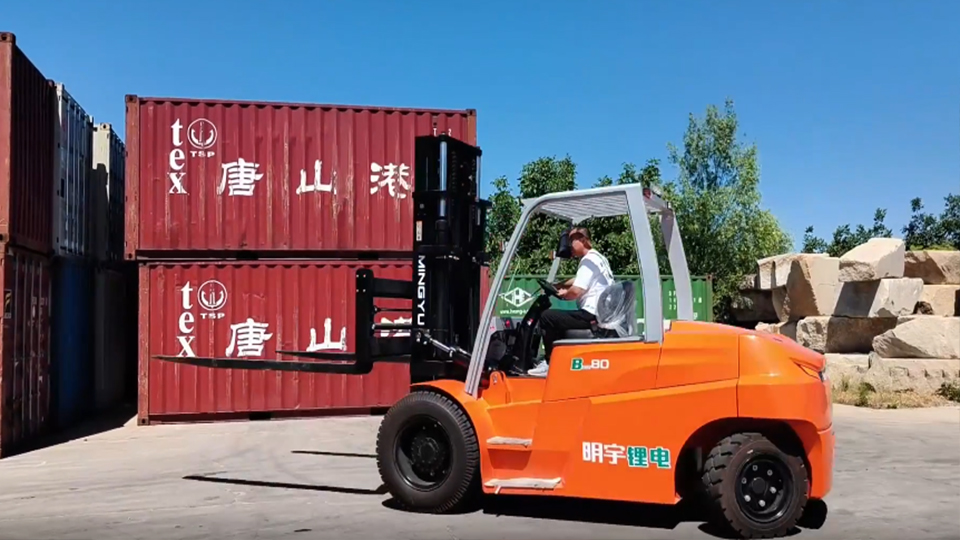
Chain elongation measurement using pin-to-pin comparison against manufacturer specifications identifies stretch exceeding 3%, the typical replacement threshold. Uneven elongation between duplex chains causes load twisting and binding; paired chain replacement is mandatory even if only one chain appears worn. Anchor pin and pulley inspection for wear, cracks, or deformation prevents catastrophic chain failure under load.
Carriage and fork inspection follows OSHA and ANSI standards. Heel thickness measurement identifies wear exceeding 10% of original dimension; thinned heels compromise load capacity and create fracture risks. Fork alignment verification ensures parallel positioning within 3 mm over the blade length, preventing uneven loading and stress concentration. Attachment locking mechanisms must engage positively, with daily operator verification of latch engagement.
4.2 Brake System Integrity
Electric forklifts employ multiple brake systems: electromagnetic parking brakes, hydraulic or electric service brakes, and regenerative braking through the drive motor. Each requires distinct maintenance protocols. Parking brake adjustment ensures holding capacity on specified grades; typically, 15% grade holding is required. Brake pad or shoe thickness inspection identifies wear approaching minimum limits, while drum or disc condition assessment prevents scoring and reduced friction coefficients.
Service brake fluid (for hydraulic systems) requires biennial replacement to prevent moisture accumulation that reduces boiling point and causes fade. Brake line inspection for corrosion, particularly at flex hose connections and underbody routing, prevents rupture. For fully electric brake systems, actuator stroke and force verification against manufacturer specifications ensures consistent performance.
Regenerative braking systems reduce mechanical brake wear but require controller calibration verification. Deceleration rate testing confirms that regenerative contribution meets design parameters; degraded regeneration overloads mechanical brakes and reduces energy recovery efficiency.
5. Tire and Running Gear Maintenance
5.1 Tire Condition Management
Tire selection and maintenance directly impact stability, traction, and load capacity. Cushion tires (solid rubber bonded to rim) require inspection for chunking, splitting, and wear flat spots that indicate aggressive braking or spinning. Wear limits are typically defined by manufacturer specifications, often when tread depth reaches 50% of original or when damage exposes internal cords.
Pneumatic tires demand pressure maintenance within 3.5–4.5 bar range depending on load and application. Underinflation increases rolling resistance, generates excessive heat, and causes sidewall damage; overinflation reduces traction and creates harsh ride characteristics that stress the mast and load. Nitrogen inflation minimizes pressure variation with temperature and prevents internal rim corrosion from moisture in compressed air.
Wheel bearing inspection every 1,000 hours detects play or roughness indicating lubrication failure or contamination ingress. Bearing replacement before catastrophic failure prevents axle damage and unplanned downtime.
6. Electrical System and Charging Infrastructure
6.1 Charging System Maintenance
The charger represents a critical extension of the battery system, requiring dedicated maintenance attention. Charger output voltage and current calibration verification ensures proper charge profiles; drifted calibration causes undercharging (reducing runtime and promoting sulfation) or overcharging (generating excessive heat and water loss). Cooling fan and filter maintenance parallels controller care, preventing thermal derating and semiconductor failure.
Charger connectors experience mechanical wear and electrical arcing that degrades contact surfaces. Pin inspection for burning, pitting, or spring tension loss identifies connectors requiring replacement. Cable strain relief and routing prevents conductor fatigue at entry points.
Charging area infrastructure extends beyond the charger itself. Ventilation systems must provide minimum air exchange rates specified for hydrogen gas dilution. Electrical distribution, including GFCI protection and proper grounding, prevents shock hazards in wet environments. Fire suppression equipment and clear egress paths address the low-probability but high-consequence risk of battery thermal events.
7. Long-Term Preservation and Storage
Extended storage requires specific protocols to preserve equipment condition. Batteries must be fully charged before storage, with lead-acid systems receiving supplemental charges every 1–2 months to prevent self-discharge and sulfation. Lithium-ion systems should be stored at 50% charge with periodic top-ups. Battery disconnect prevents parasitic drain from control modules.
Hydraulic systems should be cycled through full stroke ranges monthly to prevent seal setting and cylinder bore corrosion. Tire pressure maintenance during storage prevents flat-spotting, while mast lowering to minimum height reduces chain tension and cylinder rod exposure.
Environmental storage conditions should maintain temperatures between 10°C and 30°C with relative humidity below 80%. Corrosion protection through dry-air preservation or vapor-phase inhibitors protects exposed metal surfaces in high-humidity environments.
8. Documentation and Predictive Maintenance
Modern fleet management demands rigorous documentation. Maintenance records should track all inspections, fluid analyses, component replacements, and diagnostic readings. This data enables trend analysis—identifying degradation patterns before failure—and supports warranty claims and resale valuation.
Integration of telematics and condition monitoring transforms maintenance from reactive to predictive. Vibration analysis on motors and pumps, thermal imaging of electrical connections, and oil analysis trending provide early warning of incipient failures. The investment in monitoring technology typically returns multiples through avoided catastrophic failures and optimized maintenance scheduling.
Conclusion
Electric forklift maintenance transcends simple periodic servicing; it requires a systematic, technically informed approach that recognizes the interdependence of battery, electrical, hydraulic, and mechanical subsystems. The transition from internal combustion to electric power has shifted maintenance emphasis from oil changes and emission controls to battery chemistry management, thermal control, and electronic system protection. Organizations that master these disciplines achieve operational availability exceeding 95%, battery life approaching or exceeding manufacturer design targets, and total cost of ownership advantages that justify the higher initial capital investment.
The technical measures outlined in this article—from electrolyte specific gravity management to hydraulic contamination control, from motor insulation testing to predictive analytics integration—provide a comprehensive framework for electric forklift stewardship. As battery technology continues evolving toward solid-state chemistries and as autonomous operation increases duty cycles, these maintenance fundamentals will adapt but remain rooted in the same principles: cleanliness, proper fluid condition, torque integrity, thermal management, and disciplined documentation. Electric forklifts represent the future of material handling; their maintenance protocols must evolve with equal sophistication to realize that future's full potential.
Name: selena
Mobile:+86-13176910558
Tel:+86-0535-2090977
Whatsapp:8613181602336
Email:vip@mingyuforklift.com
Add:Xiaqiu Town, Laizhou, Yantai City, Shandong Province, China
