
vip@mingyuforklift.com
+86-0535-2090977

Introduction
Fuel economy stands as one of the most consequential factors in forklift fleet management, directly impacting operational budgets, emissions compliance, and long-term profitability. The material handling industry offers three dominant powertrain options—diesel, propane (LPG), and electric—each with distinct fuel economy characteristics shaped by fundamentally different energy conversion principles. For fleet managers evaluating equipment acquisitions or planning powertrain transitions, understanding the precise fuel economy differences between these technologies is essential. This article provides a comprehensive technical comparison of diesel, propane, and electric forklift fuel economy, examining energy consumption rates, cost per operating hour, efficiency metrics, and the operational contexts where each technology delivers optimal economic performance.
Defining Fuel Economy in Material Handling
Fuel economy measurement in forklifts diverges significantly from automotive conventions. While passenger vehicles report miles per gallon (MPG) or liters per 100 kilometers, forklifts operate in stationary or limited-range environments where distance traveled is secondary to productive work performed. Consequently, forklift fuel economy is measured in energy consumed per operating hour or per unit of material handled—typically gallons or liters per hour for internal combustion models, and kilowatt-hours (kWh) per hour for electric units.
To enable meaningful cross-technology comparisons, energy consumption must be normalized to common units. Diesel fuel contains approximately 137,000 BTU per gallon (38.3 MJ/liter), propane delivers roughly 91,000 BTU per gallon (25.5 MJ/liter), and electricity provides 3,412 BTU per kWh. These energy density differences are critical: a gallon of diesel contains 50% more energy than a gallon of propane, meaning volumetric consumption rates alone cannot indicate relative efficiency.
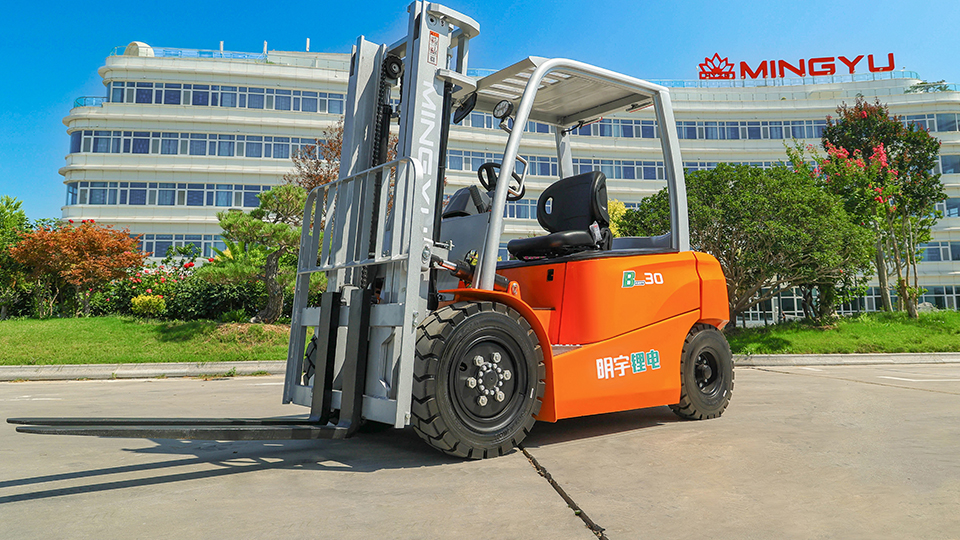
The true measure of fuel economy is energy efficiency—the ratio of useful mechanical work output to energy input. Electric forklifts excel dramatically in this metric, converting over 80% of electrical energy into mechanical power at the wheels, with lithium-ion battery systems achieving up to 95% charge-discharge efficiency. Internal combustion engines, by contrast, operate at 15% to 20% thermal efficiency under the transient load conditions typical of material handling, with the vast majority of fuel energy dissipated as heat through exhaust, cooling systems, and radiation.
Diesel Forklift Fuel Economy
Diesel forklifts represent the traditional powertrain for heavy-duty outdoor material handling, offering robust torque delivery and durability in harsh environments. Their fuel economy, however, reflects the inherent thermodynamic limitations of compression-ignition engines in stop-and-go applications.
A standard 3-ton (6,000-pound) capacity diesel forklift consumes 2.5 to 3.5 liters per hour (0.66 to 0.92 gallons per hour) under typical working conditions. Larger 5-ton models burn 4.5 to 6.0 liters per hour (1.19 to 1.58 gallons per hour), while heavy-duty 7-ton units reach 6.5 to 8.0 liters per hour (1.72 to 2.11 gallons per hour). At current U.S. commercial diesel prices of $3.40 to $4.20 per gallon, hourly fuel costs range from $2.25 to $3.87 for standard capacity models.
The fuel economy of diesel forklifts is influenced by several factors. Engine technology plays a significant role—modern turbocharged common-rail diesel engines with electronic fuel injection achieve better fuel economy than older naturally aspirated mechanical injection systems. However, emissions compliance requirements have partially offset these gains. EPA Tier 4 Final standards necessitate Diesel Particulate Filters (DPF), Selective Catalytic Reduction (SCR) using Diesel Exhaust Fluid (DEF), and Exhaust Gas Recirculation (EGR), all of which introduce fuel consumption penalties. DPF regeneration cycles alone increase fuel consumption by 2% to 5%, while EGR systems reduce combustion efficiency by 3% to 7%.
Operating conditions substantially impact diesel fuel economy. Cold weather increases consumption by 40% to 60% during warm-up periods. Rough terrain or unpaved surfaces elevate consumption by 15% to 25% due to increased rolling resistance. High load factors—frequent lifting near rated capacity—push consumption toward the upper bounds of specified ranges, while light-duty transport applications may achieve the lower bounds.
From a total cost perspective, diesel forklifts operating 2,000 hours annually accumulate approximately $4,500 to $7,700 in fuel costs per machine for standard capacity models. Over a five-year ownership period, fuel costs alone reach $22,500 to $38,500 per unit, with larger capacity models and heavy-duty applications scaling proportionally higher.
Propane (LPG) Forklift Fuel Economy
Propane forklifts occupy the middle ground between diesel and electric technologies, offering cleaner combustion than diesel with refueling convenience that electric models cannot match. Their fuel economy reflects the lower energy density of propane compared to diesel, combined with similar thermodynamic efficiency limitations.
Standard propane forklifts consume 2.0 to 3.0 gallons per hour, with some operational studies citing narrower ranges of 1.5 to 2.0 gallons per hour under light-duty conditions. The volumetric consumption exceeds diesel because propane contains approximately 33% less energy per gallon. A propane forklift performing equivalent work to a diesel model must burn more gallons to deliver the same mechanical energy output.
At average U.S. commercial propane prices of $2.50 to $3.00 per gallon, hourly fuel costs range from $5.00 to $9.00—competitive with or slightly higher than diesel depending on regional pricing and application intensity. A standard 33-pound propane tank typically provides 6 to 8 hours of operation, enabling a full shift on a single tank with quick 3- to 5-minute exchange procedures.
Propane engines achieve thermal efficiency similar to or slightly below gasoline engines, generally falling short of diesel engines due to diesel's higher compression ratios and greater energy density. However, propane's cleaner combustion characteristics—producing approximately 60% less carbon monoxide and 50% fewer volatile organic compounds than gasoline, and significantly lower particulate emissions than diesel—allow indoor operation with adequate ventilation, expanding application versatility.
The fuel economy of propane forklifts benefits from consistent fuel quality and simple fuel system maintenance. Unlike diesel, which can suffer from fuel contamination and filter clogging, propane burns cleanly with minimal residue. However, propane forklifts share the same basic maintenance requirements as gasoline engines, including regular oil changes, spark plug replacement, and valve adjustments, which indirectly affect overall operating economy.
Annual fuel costs for propane forklifts operating 2,000 hours range from $10,000 to $18,000 per machine, placing them in the same cost bracket as diesel models despite lower per-gallon fuel prices. The economic advantage of propane lies not in superior fuel economy but in operational flexibility—quick refueling, indoor-outdoor versatility, and lower emissions compliance costs compared to modern diesel engines.
Electric Forklift Energy Economy
Electric forklifts represent a fundamentally different approach to material handling energy, replacing hydrocarbon combustion with battery-stored electrical energy. Their fuel economy—measured in kWh per operating hour—demonstrates dramatic advantages over internal combustion alternatives.
Modern electric forklifts typically consume 6 to 10 kWh per operating hour, with advanced lithium-ion models achieving the lower end of this range through regenerative braking systems and high-efficiency AC drive motors. Older lead-acid battery systems may trend toward 10 to 15 kWh per hour due to lower charge-discharge efficiency and battery degradation.
At average U.S. commercial electricity rates of $0.12 per kWh, hourly energy costs range from $0.72 to $1.20—substantially lower than either diesel or propane. Even at elevated industrial rates of $0.15 per kWh, electric forklifts maintain hourly energy costs of $0.90 to $1.50. This economic advantage stems from the high energy conversion efficiency of electric drivetrains: over 80% of electrical energy reaches the wheels as mechanical power, compared to 15% to 20% for diesel and propane engines.
Battery technology significantly impacts energy economy. Lead-acid batteries, the traditional standard, offer lower upfront costs but achieve only 75% to 80% round-trip energy efficiency, meaning 20% to 25% of charging energy is lost as heat during charge and discharge cycles. They also require regular maintenance, including watering and equalization charging, and exhibit voltage sag as they discharge, reducing forklift performance toward the end of a shift.
Lithium-ion batteries have transformed electric forklift energy economy. With 95% charge-discharge efficiency, they minimize energy waste during operation. They support opportunity charging—topping off batteries during breaks and shift changes—eliminating the need for dedicated charging periods and enabling continuous multi-shift operation. Consistent voltage output throughout the discharge cycle maintains full performance until depletion. The elimination of daily maintenance further reduces total operating costs.
Annual energy costs for electric forklifts operating 2,000 hours range from $1,440 to $2,400 per machine at standard electricity rates—roughly one-fifth to one-quarter the fuel costs of diesel or propane equivalents. Over a five-year ownership period, energy savings accumulate to $20,000 to $35,000 per machine compared to internal combustion alternatives, often offsetting higher initial acquisition costs.
Comparative Energy Efficiency Analysis
To quantify the fuel economy differences across technologies, standardized testing provides the most reliable comparison framework. The VDI 2198 testing cycle, developed by the Association of German Engineers, establishes consistent operating conditions for industrial truck evaluation.
In one comparative study using VDI 2198 methodology, researchers measured energy consumption per handling cycle across equivalent capacity forklifts. The battery-electric forklift consumed 0.114 kWh per cycle, while the diesel equivalent consumed 3.175 liters per cycle. When converted to common energy units, the diesel forklift consumed 9.92 times more energy per cycle than the electric model. At tested regional energy prices, the cost per cycle was 0.603 TL for electric versus 5.82 TL for diesel—a 9.65-fold economic advantage for the electric powertrain.
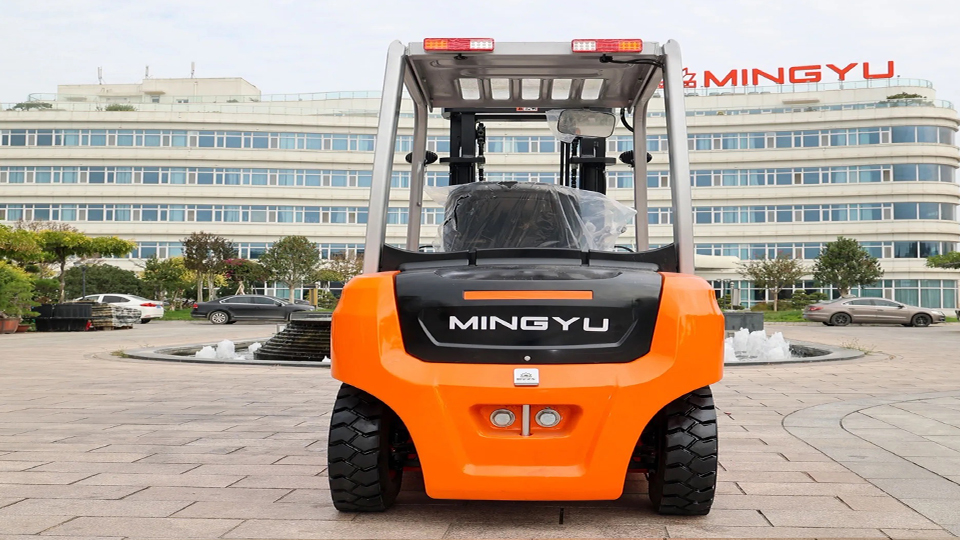
This efficiency gap is not merely a laboratory curiosity but translates directly to operational economics. For high-utilization scenarios of 6,000 operating hours annually, the same study projected annual energy cost savings of approximately €37,552 per machine when comparing electric to diesel forklifts. Even at moderate utilization of 2,000 hours annually, the savings remain substantial and compelling.
The well-to-wheel efficiency comparison further illuminates these differences. Accounting for energy losses in fuel extraction, refining, transportation, and electricity generation, electric forklifts still maintain approximately 3 to 4 times greater overall energy efficiency than diesel models. As electrical grids incorporate increasing renewable energy sources, this advantage continues to expand.
Total Cost of Ownership: Fuel Economy in Context
While hourly energy costs clearly favor electric forklifts, comprehensive fuel economy evaluation requires examination of total cost of ownership (TCO) over the equipment lifecycle. TCO incorporates acquisition cost, energy expenses, maintenance, infrastructure, and residual value.
Industry TCO analyses reveal striking differences across powertrains. A diesel forklift operating 2,000 hours annually for five years accumulates approximately $68,400 in fuel costs alone, with total 5-year TCO reaching $121,400 including purchase price and maintenance. A comparable propane model incurs roughly $62,500 in fuel costs, yielding total TCO of $108,500. An electric lithium-ion forklift, despite a higher initial purchase price, requires only about $9,600 in energy costs over five years, resulting in total TCO of approximately $59,600.
Extending the analysis to an 8-year ownership horizon widens the cost divergence. Diesel forklifts may accumulate $100,000 to $128,000 in fuel costs, propane models $60,000 to $72,000, and electric models merely $8,000 to $24,000. When combined with maintenance savings—electric forklifts eliminate engine oil, filters, belts, and exhaust system maintenance—the total 8-year TCO for electric models ranges from $59,000 to $87,000 compared to $100,500 to $125,000 for propane and $137,000 to $177,000 for diesel.
These figures demonstrate that fuel economy advantages compound dramatically over time. While diesel and propane forklifts may offer lower upfront acquisition costs, their inferior energy economy generates escalating operating costs that overwhelm initial savings within the first few years of ownership.
Operational Factors Affecting Relative Fuel Economy
The fuel economy hierarchy—electric superior to propane and diesel—holds consistently across standardized testing, but real-world operational factors can modify the magnitude of differences.
Duty Cycle Intensity
High-intensity operations with continuous lifting and minimal idle time maximize the fuel economy advantage of electric forklifts. Regenerative systems recover energy during mast lowering and braking, which occurs frequently in rack storage and loading dock applications. Conversely, low-intensity operations with extensive travel and minimal lifting reduce the regenerative energy recovery benefit, though electric models still maintain substantial efficiency advantages.
Load Factors
All forklift technologies experience increased energy consumption under heavy load, but the proportional increase varies. Diesel forklifts show pronounced consumption spikes when lifting near-rated capacity due to high-torque demands on the engine. Electric forklifts, with their high-torque characteristics at low RPMs, handle heavy loads more efficiently relative to their baseline consumption. This characteristic makes electric forklifts particularly fuel-economical in high-load applications such as steel handling and heavy manufacturing.
Environmental Conditions
Cold weather affects each technology differently. Diesel forklifts experience 40% to 60% higher consumption during warm-up periods and reduced efficiency until reaching operating temperature. Propane forklifts generally maintain more consistent performance across temperature ranges, though extreme cold can affect vaporization rates. Electric forklifts face battery capacity reduction of up to 20% in cold environments, effectively increasing energy consumption per unit of work unless battery heating systems are employed.
Altitude impacts naturally aspirated engines more severely than turbocharged models, with power loss of approximately 20% at 2,000 meters elevation forcing higher fuel consumption for equivalent performance. Electric forklifts are unaffected by altitude, maintaining consistent fuel economy across elevation changes.
Maintenance Practices
Well-maintained diesel forklifts achieve designed fuel economy; poorly maintained units can consume 10% to 20% more fuel. Critical maintenance factors include air filter condition, fuel injector performance, turbocharger health, and tire pressure. Electric forklifts require less maintenance but still benefit from battery management system optimization, proper charging protocols, and drive motor inspection.
Application-Specific Fuel Economy Optimization
The optimal forklift technology from a fuel economy perspective depends on specific operational requirements that may override pure energy efficiency considerations.
Outdoor Heavy-Duty Applications
Diesel forklifts remain the practical choice for lumber yards, construction sites, ports, and steel yards despite their inferior fuel economy. Their maximum torque at low RPMs, durability in harsh conditions, and independence from charging infrastructure justify higher fuel costs in these environments. Fuel economy optimization in these applications focuses on operator training, idle reduction systems, and preventive maintenance rather than technology substitution.
Mixed Indoor-Outdoor Operations
Propane forklifts offer the best compromise for operations requiring flexibility between indoor and outdoor environments. Their fuel economy, while inferior to electric, is offset by quick refueling capability and operational versatility. Building supply yards, agricultural facilities, and manufacturing plants with loading docks benefit from propane's ability to operate across environments without the infrastructure investment required for electric fleets.
High-Utilization Indoor Operations
Electric forklifts deliver optimal fuel economy for indoor warehousing, distribution centers, and manufacturing operations with predictable schedules. Food and beverage, pharmaceutical, and electronics industries favor electric models not only for energy cost savings but for zero emissions and quiet operation. High-utilization scenarios (2,000+ annual hours) maximize the TCO advantages of superior fuel economy.
Multi-Shift Operations
The fuel economy advantage of electric forklifts in multi-shift operations depends on charging infrastructure and battery technology. Lithium-ion batteries with opportunity charging capability can support continuous operation across multiple shifts, maintaining fuel economy benefits. Lead-acid batteries, requiring 8-hour charging cycles and cool-down periods, may necessitate additional battery inventory that increases capital costs and partially offsets energy savings.
Future Trends in Forklift Fuel Economy
The material handling industry is experiencing a sustained shift toward electrification driven by improving battery technology, tightening emissions regulations, and total cost of ownership advantages. Several trends will shape future fuel economy comparisons.
Lithium-ion battery costs continue declining while energy density improves, enhancing the economic case for electric forklifts across increasingly heavy-duty applications. Solid-state battery technologies under development promise further improvements in energy density, charging speed, and safety, potentially extending electric forklift advantages into capacity classes currently dominated by diesel.
Renewable diesel and biodiesel alternatives offer modest fuel economy improvements for existing diesel fleets while reducing lifecycle carbon emissions. However, these fuels cannot overcome the fundamental thermodynamic limitations of internal combustion engines.
Hydrogen fuel cell forklifts represent an emerging alternative that combines electric drivetrain efficiency with rapid refueling comparable to propane. Current implementations show promise for very heavy-duty applications but remain limited by hydrogen infrastructure availability and high fuel costs.
Hybrid diesel-electric drivetrains, combining diesel generators with electric drive motors, may improve diesel forklift fuel economy by 15% to 25% by enabling engine operation at optimal efficiency points. However, these systems add complexity and capital cost that may limit adoption.
Conclusion
The fuel economy comparison between diesel, propane, and electric forklifts reveals a clear and substantial hierarchy. Electric forklifts consume 6 to 10 kWh per hour, translating to $0.72 to $1.20 in hourly energy costs—approximately one-third to one-fifth the fuel costs of internal combustion alternatives. Propane forklifts consume 2.0 to 3.0 gallons per hour at $5.00 to $9.00 hourly cost, while diesel models burn 1.5 to 2.5 gallons per hour at $2.25 to $3.87 hourly cost. When standardized to energy units and work output, diesel forklifts consume nearly ten times more energy per unit of work than electric models.
These fuel economy differences compound into dramatic total cost of ownership gaps over equipment lifecycles. A five-year TCO analysis shows electric forklifts at approximately $59,600, propane at $108,500, and diesel at $121,400 for equivalent capacity machines operating 2,000 hours annually. The energy cost component alone—$9,600 for electric versus $62,500 for propane and $68,400 for diesel—demonstrates that fuel economy is the dominant economic differentiator.
However, fuel economy is not the sole selection criterion. Diesel forklifts justify their higher energy costs through unmatched torque, outdoor durability, and operational independence. Propane models offer versatility that pure fuel economy metrics cannot capture. Electric forklifts deliver superior energy efficiency but require charging infrastructure and operational planning.
For fleet managers, the decision should be driven by comprehensive TCO analysis that weighs fuel economy against application requirements, utilization rates, and infrastructure capabilities. Operations with high annual hours in indoor environments will find electric forklifts provide compelling fuel economy advantages that rapidly offset higher acquisition costs. Outdoor heavy-duty applications will continue to rely on diesel despite its energy inefficiency, though the boundary of electrification is expanding as battery technology advances. The fuel economy gap between technologies is substantial and growing, making energy efficiency an increasingly decisive factor in material handling equipment selection.
Name: selena
Mobile:+86-13176910558
Tel:+86-0535-2090977
Whatsapp:8613181602336
Email:vip@mingyuforklift.com
Add:Xiaqiu Town, Laizhou, Yantai City, Shandong Province, China
