
vip@mingyuforklift.com
+86-0535-2090977

Introduction
The material handling industry faces a critical decision when selecting forklift power sources: diesel, propane (LPG), or electric. While purchase price and lifting capacity often dominate initial conversations, fuel efficiency represents one of the most significant long-term cost drivers—and one of the most misunderstood metrics in fleet management. This article provides a comprehensive technical analysis of how diesel forklifts compare to propane and electric alternatives in terms of raw fuel efficiency, energy conversion, total cost of ownership, and real-world operational performance.
Understanding Fuel Efficiency Metrics
Before comparing power sources, it is essential to establish how fuel efficiency is measured across different forklift types. Internal combustion engine (ICE) forklifts—both diesel and propane—typically report consumption in gallons per operating hour. Electric forklifts, conversely, use kilowatt-hours (kWh) per hour of operation. These metrics are not directly comparable without converting to a common energy unit or cost basis.
According to industry data, a standard 5,000–8,000 lb capacity diesel forklift consumes approximately 0.7 to 1.2 gallons (2.6–4.5 liters) of diesel per hour under normal operating conditions, with larger capacity models (15,000+ lbs) potentially consuming 2–4+ gallons per hour. Propane forklifts of similar capacity typically use 1.0 to 1.5 gallons (approximately 4–6 lbs) of propane per hour, meaning a standard 33-pound propane tank lasts roughly 6–8 hours. Electric forklifts generally consume 6–10 kWh per operating hour, depending on application intensity and battery technology.
At first glance, these numbers suggest diesel forklifts are more fuel-efficient than propane on a volume basis—using fewer gallons per hour. However, this superficial comparison ignores critical factors including energy density, engine thermal efficiency, and the fundamental differences between combustion and electric drivetrains.
Diesel: High Energy Density, Moderate Conversion Efficiency
Diesel fuel possesses the highest energy density among common forklift fuels at approximately 129,500 BTU per gallon (36.4 MJ/liter). This high energy content means diesel contains more potential work per unit volume than propane (91,500 BTU/gallon) or gasoline (114,000 BTU/gallon). In heavy-duty outdoor applications where maximum torque and sustained power are required, this energy density translates to longer operation between refueling and superior performance on inclines and rough terrain.
However, the critical limitation of diesel forklifts lies in thermal conversion efficiency. Diesel engines in forklifts typically achieve 15–20% efficiency in real-world transient cycles—meaning 80–85% of the fuel's energy is lost as heat rather than converted to useful mechanical work. This is particularly problematic in forklift applications, where operations involve frequent starts, stops, and variable loads rather than steady-state highway driving where diesel engines perform optimally. Research from the Southwest Research Institute indicates that propane-powered forklifts averaged 0.35 kg/kWh or 0.19 gallons per kWh delivered to the wheels, while accounting for charger and battery inefficiencies, approximately 1.56 kWh of electricity must be purchased to deliver 1 kWh to the wheels for electric models.
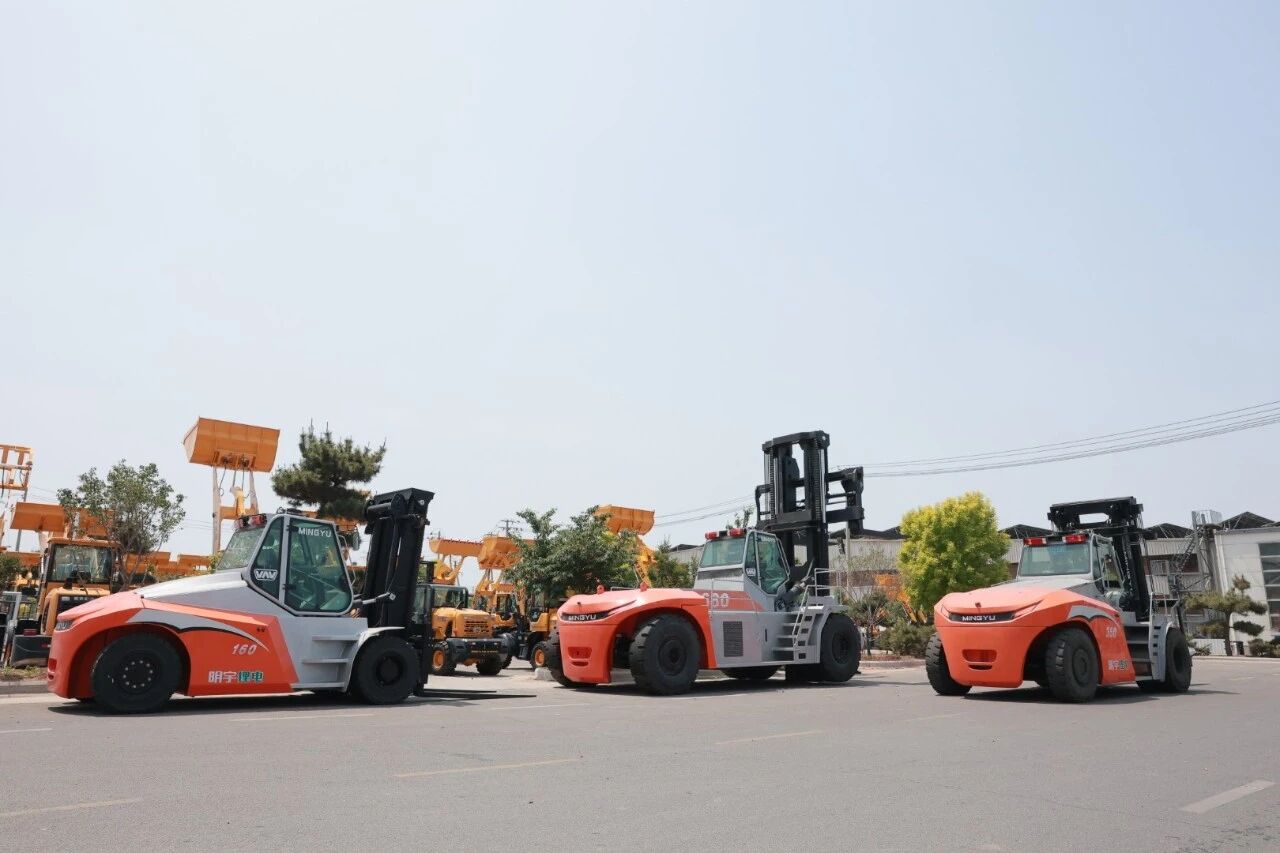
Diesel forklifts also face increasing regulatory pressure. Modern diesel engines require diesel particulate filters (DPF), diesel exhaust fluid (DEF) systems, and complex emissions controls that add maintenance burden and can reduce operational efficiency. These systems require periodic regeneration cycles that consume additional fuel and take the forklift out of service. Furthermore, diesel emissions restrict these forklifts to outdoor use in most jurisdictions, limiting operational flexibility.
Propane: The Middle Ground with Consistent Power
Propane forklifts occupy a unique position in the efficiency landscape. While propane contains less energy per gallon than diesel, propane engines often demonstrate more consistent efficiency across varying load conditions. A standard 5,000 lb propane forklift typically consumes 2–3 gallons per hour according to fleet cost calculators, though other industry sources cite 1.0–1.5 gallons per hour for properly tuned engines under normal conditions.
The key efficiency advantage of propane lies in its clean combustion characteristics and lower maintenance requirements compared to diesel. Propane engines do not require the complex emissions after-treatment systems mandated for diesel, reducing both downtime and maintenance costs. Propane forklifts also maintain consistent power output throughout the tank's depletion—unlike electric forklifts that experience performance degradation as batteries discharge.
From a pure energy conversion perspective, propane forklifts demonstrate comparable or slightly better thermal efficiency than diesel in stop-start forklift duty cycles. The absence of particulate matter emissions allows propane forklifts to operate indoors with proper ventilation, providing operational versatility that diesel cannot match. However, propane's lower energy density means more frequent refueling than diesel for equivalent energy content, and the need for cylinder storage and exchange infrastructure adds logistical complexity.
Electric: Superior Energy Efficiency, Infrastructure Dependent
Electric forklifts represent a fundamentally different approach to efficiency. Rather than converting chemical energy to mechanical work through combustion, electric forklifts convert stored electrical energy directly to mechanical motion with typical motor efficiencies of 85–95%. Even accounting for battery charging inefficiencies (approximately 85–90% for lead-acid, 95%+ for lithium-ion) and grid transmission losses, the overall energy efficiency of electric forklifts dramatically exceeds that of any combustion alternative.
Typical electric forklift consumption ranges from 6–10 kWh per operating hour, with some intensive applications reaching 12–15 kWh. At average U.S. commercial electricity rates of $0.12–$0.15 per kWh, this translates to approximately $0.72–$1.50 per hour in energy costs. By comparison, diesel at $3.80/gallon and 1.8 gallons/hour consumption costs approximately $6.84/hour, while propane at $2.50/gallon and 2.5 gallons/hour costs $6.25/hour.
This cost differential—electric forklifts operating at roughly one-fifth the energy cost of diesel—explains why total cost of ownership (TCO) analyses consistently favor electric for high-utilization indoor operations. One TCO calculator estimates a five-year ownership cost of $59,600 for electric versus $121,400 for diesel—a difference of nearly $62,000, with fuel/energy representing the largest single factor.
Modern lithium-ion batteries have further improved electric forklift efficiency by enabling opportunity charging during breaks, eliminating the need for full shift-long battery swaps, and maintaining consistent voltage output throughout discharge cycles. Regenerative braking systems can recapture 10–20% of energy during deceleration, further improving overall efficiency in applications with frequent stopping.
Comparative Analysis: The Complete Picture
When evaluating fuel efficiency comprehensively, several factors beyond raw consumption must be considered:
Energy Conversion Efficiency: Electric forklifts convert grid electricity to wheel power at approximately 70–80% system efficiency (including charging and battery losses), while diesel and propane forklifts convert fuel energy at 15–20% efficiency. This 4:1 advantage in energy conversion fundamentally determines operating costs regardless of local fuel prices.
Maintenance Impact on Efficiency: Diesel engines require more intensive maintenance including oil changes, filter replacements, injector servicing, and emissions system upkeep. Poorly maintained diesel forklifts can experience 10–20% fuel efficiency degradation. Electric forklifts have minimal maintenance requirements—primarily brake pads, tires, and battery terminal checks—maintaining consistent efficiency throughout their service life.
Operational Downtime and Productivity: While not strictly a fuel efficiency metric, refueling time affects overall operational efficiency. Diesel and propane refueling takes 5–10 minutes, while electric forklifts require 1–10 hours for full charging depending on battery technology. However, opportunity charging with lithium-ion batteries can mitigate this disadvantage. Propane's quick cylinder exchange (under 5 minutes) provides the fastest refueling option for multi-shift operations.
Environmental and Regulatory Factors: Diesel forklifts face increasing restrictions on indoor use due to emissions, effectively limiting their operational efficiency to outdoor applications. Electric forklifts produce zero point-of-use emissions, while propane produces significantly fewer pollutants than diesel—52% fewer greenhouse gas emissions than grid-generated electricity in some analyses, though this claim depends heavily on local grid composition.
Load and Terrain Considerations: Diesel maintains advantages in heavy-load, rough-terrain applications where its high torque and energy density justify the efficiency penalty. Electric forklifts excel in smooth, indoor environments with moderate loads. Propane provides versatility across both domains, though with efficiency compromises in each.
Real-World Cost Implications
The practical financial impact of these efficiency differences is substantial. For a forklift operating 2,080 hours annually (40 hours/week), the energy/fuel costs break down as follows based on current market data:
Electric: 8.0 kWh/hour × $0.12/kWh × 2,080 hours = $1,997/year
Propane: 2.5 gallons/hour × $2.50/gallon × 2,080 hours = $13,000/year
Diesel: 1.8 gallons/hour × $3.80/gallon × 2,080 hours = $14,227/year
These figures demonstrate that diesel is the most expensive option on a pure energy cost basis, while electric offers potential annual savings exceeding $12,000 per forklift compared to diesel. Over a five-year ownership period with 10,000 operating hours, these savings compound significantly, often justifying electric forklifts' higher upfront purchase price.
An Indian warehouse case study provides additional validation: a 2.5-ton diesel forklift consuming 1.8 liters/hour at ₹95/liter cost ₹30,096 monthly in fuel alone, while an equivalent electric model using 12 kWh/shift at ₹7/kWh cost ₹14,784 monthly—a 51% reduction. Maintenance costs fell from ₹2.1 lakh to ₹68,000 annually when switching from diesel to electric.
Conclusion
The question of whether diesel forklifts are more or less fuel-efficient than propane and electric alternatives requires nuanced analysis beyond simple gallons-per-hour metrics. On a raw volumetric consumption basis, diesel forklifts often use fewer gallons per hour than propane alternatives. However, this metric obscures the complete efficiency picture.
Diesel forklifts are less fuel-efficient than both propane and electric alternatives when measured by energy conversion efficiency, cost per operating hour, and total cost of ownership. Diesel's high energy density is offset by low thermal conversion efficiency (15–20%), complex emissions systems, and high fuel costs. Diesel remains justified only in specific heavy-duty outdoor applications requiring maximum torque and durability.
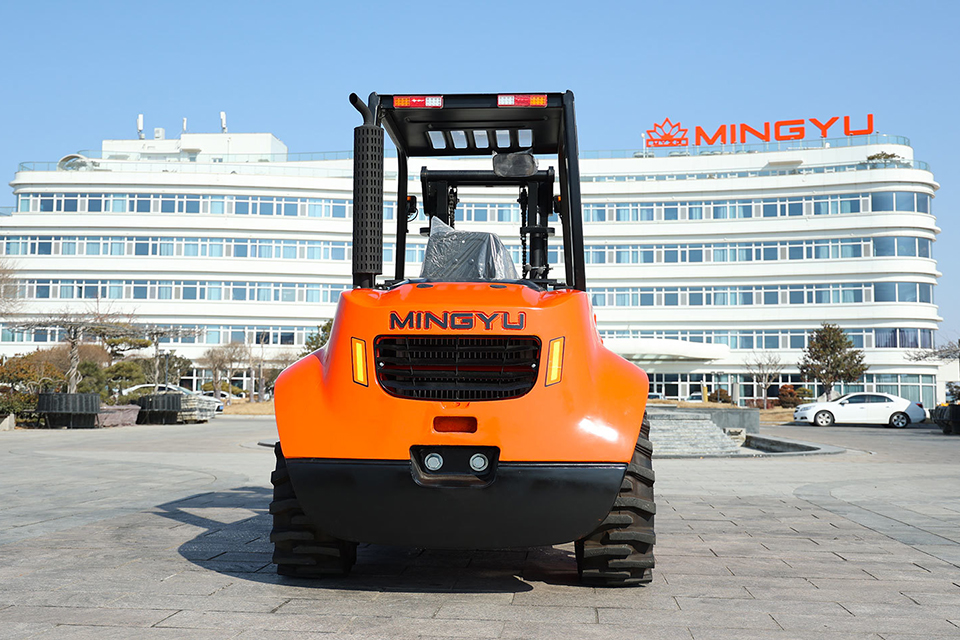
Propane forklifts offer moderate efficiency with the advantage of quick refueling, consistent power output, and operational versatility across indoor and outdoor environments. While propane's per-gallon energy content is lower than diesel, cleaner combustion and reduced maintenance requirements often result in comparable or better overall operational efficiency for mixed-use applications.
Electric forklifts demonstrate superior energy efficiency by every meaningful metric—energy conversion, operating cost, maintenance requirements, and environmental impact. With system efficiencies roughly four times higher than combustion alternatives and energy costs at one-fifth to one-quarter of diesel or propane, electric forklifts represent the most fuel-efficient option for the majority of indoor material handling applications.
For fleet managers, the decision should be driven by operational requirements rather than sticker price. High-utilization indoor operations overwhelmingly favor electric forklifts from an efficiency and cost perspective. Mixed indoor/outdoor environments with moderate utilization may find propane optimal. Diesel should be reserved for heavy-duty outdoor applications where its power advantages justify the efficiency and cost penalties. As battery technology continues advancing and electricity grids decarbonize, the efficiency gap between electric and combustion forklifts will only widen, further cementing electric's position as the efficiency leader in material handling.
Name: selena
Mobile:+86-13176910558
Tel:+86-0535-2090977
Whatsapp:8613181602336
Email:vip@mingyuforklift.com
Add:Xiaqiu Town, Laizhou, Yantai City, Shandong Province, China
