
vip@mingyuforklift.com
+86-0535-2090977

Introduction
The question "how much is an electric forklift?" opens a complex discussion that extends far beyond simple sticker prices. In 2026, electric forklift prices range from approximately $20,000 for basic warehouse models to over $100,000 for heavy-duty industrial units, with significant variations based on capacity, technology, brand, and configuration . This comprehensive guide examines the full spectrum of electric forklift costs, analyzes factors driving price variations, and explores the total cost of ownership (TCO) calculations that ultimately determine the true investment value.
Understanding electric forklift pricing requires examining not just purchase prices but operational costs, maintenance requirements, financing options, and long-term value retention. For procurement officers, warehouse managers, and fleet operators, making informed decisions demands technical knowledge of how specifications translate into costs and how upfront investments generate returns through operational efficiencies.
New Electric Forklift Purchase Price Ranges by Capacity
Electric forklift pricing correlates directly with lifting capacity, though the relationship isn't strictly linear. Manufacturers price units based on component costs, engineering complexity, and market positioning across different industrial segments.
Light-Duty Electric Forklifts (1.5–3.0 Ton Capacity)
The entry-level segment for warehouse operations typically ranges from $20,000 to $40,000 . A standard 3,000 lb (1.5-ton) electric forklift from established manufacturers generally costs between $36,500 and $39,500, including battery and charger . Chinese manufacturers and emerging brands offer competitive alternatives, with some 3-ton models available from $11,000 to $13,000, though these may lack comprehensive warranty support and service networks .
The 2.5-ton capacity class—an industry workhorse for standard warehouse operations—typically commands $28,000 to $35,000 from premium manufacturers . This capacity range balances maneuverability in narrow aisles with sufficient lifting capability for most palletized goods, making it the most commonly purchased electric forklift category.
Medium-Duty Electric Forklifts (3.5–5.0 Ton Capacity)
As capacity increases to 3.5–5.0 tons, prices escalate to $37,000–$55,000 . A 5,000 lb (2.5-ton) electric forklift from major manufacturers typically ranges from $37,000 to $44,500, reflecting the heavier-duty components, larger batteries, and more robust construction required .
This segment shows significant price variation based on battery technology. Models equipped with advanced lithium-ion batteries command premiums of $5,000–$10,000 over equivalent lead-acid configurations, though this differential is narrowing as lithium-ion technology matures and production scales increase .
Heavy-Duty Electric Forklifts (6.0–10.0 Ton Capacity)
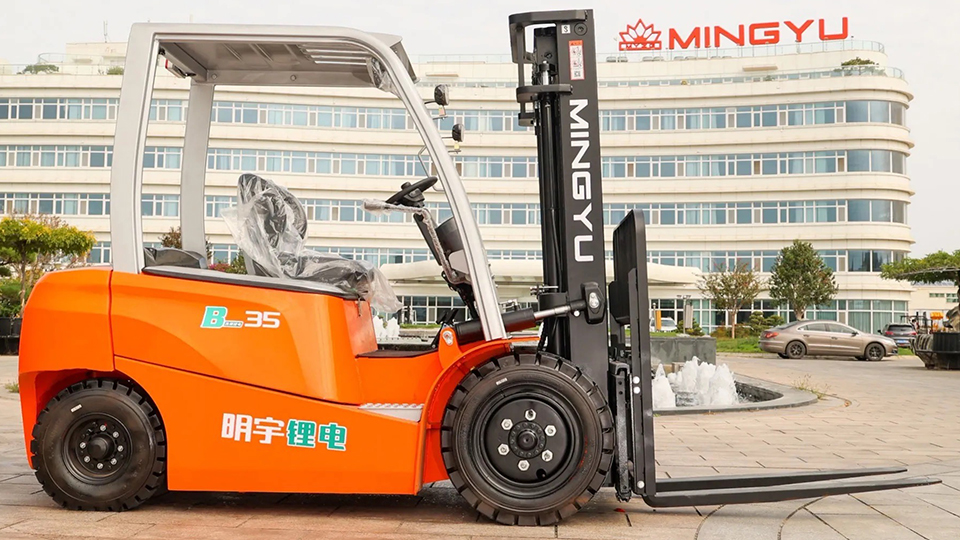
Heavy-duty electric forklifts designed for manufacturing, ports, and outdoor applications range from $50,000 to $80,000 . A 10,000 lb (5-ton) capacity electric forklift typically costs $68,500–$74,000 for cushion tire models and $77,000–$80,000 for pneumatic tire configurations suitable for outdoor use .
These higher-capacity electric models represent significant engineering investments, requiring larger battery systems, more powerful electric motors, and reinforced frames to handle substantial loads. The transition to electric power at these capacity levels often requires consultation with manufacturers to ensure battery systems can support operational demands through full shifts.
Extra Heavy-Duty and Specialized Electric Forklifts (10+ Ton Capacity)
For capacities exceeding 10 tons, electric forklift prices start at approximately $100,000 and can exceed $150,000 depending on specifications . These specialized machines, used in heavy manufacturing, shipping ports, and steel handling, feature massive battery systems, custom engineering, and often incorporate opportunity charging systems to maintain productivity.
Critical Factors Influencing Electric Forklift Prices
Battery Technology and Capacity
The battery represents the most significant variable in electric forklift pricing, accounting for 30–40% of total vehicle cost. Lead-acid batteries, the traditional standard, offer lower upfront costs but require more maintenance and provide shorter operational lifespans. A typical lead-acid battery and charger add $2,500–$5,000 to the base forklift price .
Lithium-ion batteries command substantial premiums—often $8,000–$15,000 above lead-acid equivalents—but deliver longer lifespans (2,000+ charge cycles versus 500–1,000 for lead-acid), faster charging capabilities, and zero maintenance requirements . For operations running multiple shifts, lithium-ion technology often generates positive return on investment within 18–24 months despite higher initial costs .
Battery capacity, measured in kilowatt-hours (kWh), directly impacts both price and operational autonomy. Larger batteries extend runtime but increase weight and cost. Manufacturers optimize battery specifications for typical application profiles, with options to upgrade for high-intensity operations.
Mast Configuration and Lift Height
Standard mast configurations typically support lift heights of 187 inches (approximately 4.75 meters), suitable for most warehouse racking systems . However, specialized applications require enhanced masts:
Triple-stage masts enable lift heights exceeding 20 feet, adding $3,000–$8,000 depending on height and capacity
Quad-stage masts for very high racking (up to 30+ feet) can add $10,000–$20,000
Integrated side-shift and fork positioners add $2,000–$5,000 for enhanced operational flexibility
Mast specifications must be carefully matched to warehouse racking heights and load requirements, as oversized masts waste capital while underspecified masts limit operational capability.
Tire Selection and Configuration
Electric forklifts offer three primary tire types, each affecting pricing:
Cushion tires (solid rubber) suit smooth indoor surfaces and represent the standard, lowest-cost option
Pneumatic tires (air-filled) accommodate outdoor and rough surface applications, adding $2,000–$5,000
Solid pneumatic tires (rubber-filled) combine outdoor capability with puncture resistance, adding $3,000–$7,000
Tire selection should align with operational environments. Indoor warehouses with polished concrete floors optimize costs with cushion tires, while lumber yards or construction material suppliers require pneumatic options despite higher costs .
Brand Premium and Manufacturer Positioning
Brand positioning significantly impacts pricing. Premium manufacturers such as Toyota, Linde, Crown, and Hyster command 20–40% price premiums over mid-tier competitors, reflecting established reliability, comprehensive dealer networks, and strong residual values . Emerging manufacturers from China and other markets offer competitive specifications at 30–50% lower prices, though buyers must evaluate service support availability, parts accessibility, and warranty terms .
For operations prioritizing uptime and long-term support, premium brands often justify higher initial costs through reduced downtime and higher resale values. For cost-sensitive operations with in-house maintenance capabilities, mid-tier alternatives may offer compelling value propositions.
Total Cost of Ownership: Beyond Purchase Price
The initial purchase price represents only 20% of total forklift costs over a typical five-year lifespan . Comprehensive TCO analysis reveals why electric forklifts, despite higher upfront costs, often deliver superior long-term value compared to internal combustion alternatives.
Energy Cost Analysis
Electric forklifts demonstrate dramatic operational cost advantages through energy efficiency. Electricity costs for charging typically range from $1.50 to $3.00 per operating hour, compared to $3.00 to $7.00 per hour for diesel or propane alternatives . Over 2,000 annual operating hours, this differential accumulates to $3,000–$8,000 annual savings per unit.
For a 2.5-ton forklift operating 2,000 hours annually over five years, electric power costs approximately $12,000 total, versus $45,000 for diesel fuel at average commercial rates . This $33,000 energy cost differential alone often justifies electric forklift price premiums within the first two years of operation.
Maintenance Cost Differential
Electric forklifts reduce maintenance costs by 50–70% compared to internal combustion models . Eliminating engine oil changes, air filter replacements, fuel system maintenance, and exhaust treatment system servicing generates substantial savings. Annual maintenance for electric forklifts typically ranges from $1,000–$2,500, versus $1,500–$4,000 for diesel equivalents .
Over five years, maintenance savings of $2,500–$7,500 per unit accumulate significantly. Additionally, electric forklifts offer extended service intervals—often exceeding 1,000 hours between maintenance events compared to 250–500 hours for diesel models—reducing downtime and labor costs associated with servicing .
Battery Replacement Considerations
Battery replacement represents the primary lifecycle cost differentiator between electric and internal combustion forklifts. Lead-acid batteries require replacement every 3–5 years at costs of $3,000–$6,000, while lithium-ion batteries last 7–10 years with costs of $8,000–$15,000 .
When calculating TCO, battery replacement timing and costs must be factored against the extended engine rebuilds and transmission servicing required for internal combustion forklifts at equivalent operational hours. Well-maintained electric forklifts often achieve lower total lifecycle costs despite battery replacement expenses.
Residual Value and Depreciation
Electric forklifts typically retain value better than diesel models, depreciating at 15–20% annually versus 20–25% for internal combustion units . This slower depreciation reflects market demand for used electric equipment, lower maintenance histories, and alignment with sustainability trends driving fleet electrification.
For fleet operators, higher residual values reduce effective ownership costs and improve return on investment calculations. A $40,000 electric forklift retaining 35% value after five years ($14,000) delivers better net cost than a $30,000 diesel unit retaining 25% ($7,500), despite higher initial investment.
Used and Refurbished Electric Forklift Markets
The secondary market offers significant cost savings for budget-conscious buyers. Used electric forklifts range from $5,000 to $25,000 depending on age, hours, condition, and specifications . Late-model units (3–5 years old) with moderate hours (3,000–6,000) typically command 40–60% of new prices while retaining substantial operational life.
Refurbished electric forklifts, often sold with warranties by dealers, offer middle-ground pricing at 60–75% of new costs with verified operational status. For operations with in-house maintenance capabilities, quality used equipment can deliver exceptional value, though battery condition requires careful evaluation as replacement costs can offset purchase savings.
Financing and Acquisition Options
Purchase vs. Lease vs. Rental
Electric forklift acquisition extends beyond cash purchase to various financing structures:
Outright purchase maximizes long-term value for high-utilization operations with stable demand
Capital leases spread costs over 3–5 years with ownership transfer, preserving cash flow while building equity
Operating leases provide flexibility for operations with variable demand or rapid technology evolution
Short-term rentals ($500–$1,500 monthly) suit seasonal demands or trial periods before commitment
Financing rates typically range from 5% to 10% annually, with electric forklifts sometimes qualifying for preferential "green equipment" financing programs reflecting their environmental benefits .
Government Incentives and Rebates
Many jurisdictions offer incentives for electric forklift adoption to support emissions reduction goals. These may include direct rebates, tax credits, or accelerated depreciation allowances. In regions with carbon pricing or emissions regulations, electric forklifts avoid compliance costs that add to diesel operational expenses .
Organizations should investigate local, state, and federal programs that can reduce effective purchase prices by 10–30%, significantly improving ROI calculations for electric conversion projects.
Hidden Costs and Considerations
Charging Infrastructure Investment
Electric forklift adoption requires charging infrastructure investment beyond vehicle costs. Basic charging stations cost $500–$2,000 per unit, while fast-charging systems enabling opportunity charging during breaks may cost $5,000–$15,000 per station .
Facility electrical upgrades to support multiple chargers, particularly for large fleets, can add $10,000–$50,000 depending on existing electrical capacity and charger placement requirements. These infrastructure costs must be factored into TCO calculations, though they represent fixed assets that appreciate facility value.
Operator Training and Certification
While both electric and internal combustion forklifts require OSHA-compliant operator training, electric models feature different operational characteristics—regenerative braking, instant torque, battery management—that necessitate specific training modules. Budget $200–$500 per operator for comprehensive training programs ensuring safe and efficient electric forklift operation.
Productivity Considerations
Electric forklifts offer productivity advantages through reduced downtime (no refueling trips, shorter maintenance intervals) and superior maneuverability (tighter turning radius, precise speed control). These operational benefits, while difficult to quantify precisely, contribute to lower cost per pallet moved and improved warehouse throughput.
Conversely, battery charging requirements demand operational planning. Single-shift operations allow overnight charging, while multi-shift operations require battery swapping systems or opportunity charging infrastructure, adding complexity and cost that must be balanced against operational benefits.
Conclusion
Answering "how much is an electric forklift?" requires understanding that prices range from $20,000 for basic models to $100,000+ for heavy-duty units, with the specific answer depending on capacity, battery technology, brand, and configuration . However, the purchase price represents merely the entry point to a financial analysis that must encompass energy costs, maintenance requirements, battery lifecycle, residual values, and productivity impacts.
For most indoor warehouse and manufacturing applications, electric forklifts deliver superior total cost of ownership despite 30–50% higher upfront costs compared to diesel alternatives. The combination of lower energy costs (60–70% reduction), reduced maintenance (50–70% savings), and higher residual values typically generates positive ROI within 18–36 months .
As battery technology advances, charging infrastructure improves, and emission regulations tighten, electric forklifts continue gaining market share across capacity ranges and applications. For organizations evaluating material handling investments, comprehensive TCO analysis consistently favors electrification, making the higher initial investment a strategic decision delivering long-term operational and financial benefits.
The electric forklift market in 2026 offers options across all price points and operational requirements, enabling businesses to select equipment matching both immediate budget constraints and long-term strategic objectives. By understanding the factors driving pricing and the mechanisms generating return on investment, procurement professionals can make informed decisions that optimize both operational capability and financial performance.
Name: selena
Mobile:+86-13176910558
Tel:+86-0535-2090977
Whatsapp:8613181602336
Email:vip@mingyuforklift.com
Add:Xiaqiu Town, Laizhou, Yantai City, Shandong Province, China