
vip@mingyuforklift.com
+86-0535-2090977

Introduction
Understanding diesel forklift fuel tank capacity is fundamental to efficient warehouse management, operational planning, and cost control. The question "how much diesel does a forklift tank hold?" doesn't have a single answer—it varies significantly based on forklift classification, intended application, manufacturer specifications, and operational requirements. This comprehensive technical guide examines fuel tank capacities across different forklift categories, explores factors influencing tank sizing decisions, and provides practical guidance for fuel management in material handling operations.
Standard Fuel Tank Capacity Ranges by Forklift Classification
Diesel forklift fuel tank capacities typically range from 13 to 55 gallons (50 to 235 liters), with specific capacities correlating directly to the forklift's weight class and lifting capacity . Understanding these ranges helps operators and fleet managers plan refueling schedules, calculate operating costs, and optimize productivity.
Light-Duty Forklifts (1.5–2.5 Ton Capacity)
Light-duty diesel forklifts, commonly used in smaller warehouses and light manufacturing facilities, feature the smallest fuel tanks in the industry spectrum. These machines typically hold between 12 to 16 gallons (45 to 60 liters) of diesel fuel . For example, a standard 1.5-ton capacity diesel forklift usually comes equipped with a 45-liter (approximately 12-gallon) fuel tank, providing sufficient operational autonomy for single-shift operations without excessive weight or space allocation .
The 2.0 to 2.5-ton category, representing one of the most popular warehouse forklift sizes, typically features 60-liter (16-gallon) fuel tanks . This capacity supports approximately 12–15 hours of continuous operation under moderate working conditions, making it ideal for standard eight-hour shifts with reserve capacity for overtime or unexpected operational demands .
Medium-Duty Forklifts (3.0–5.0 Ton Capacity)
The medium-duty category represents the workhorse class of diesel forklifts, commonly found in distribution centers, manufacturing facilities, and outdoor lumber yards. These forklifts typically feature fuel tank capacities ranging from 14 to 23 gallons (55 to 90 liters) .
A standard 3.0 to 3.5-ton diesel forklift commonly comes with a 55 to 70-liter fuel tank (14.5 to 18.5 gallons) . For instance, the popular 3.5-ton class often features 60 to 70-liter tanks, supporting extended operational periods without refueling . The 4.0-ton capacity models typically upgrade to 90-liter (24-gallon) tanks to accommodate higher fuel consumption rates associated with heavier loads and more powerful engines .
The 5.0-ton capacity forklifts generally feature 140-liter (37-gallon) fuel tanks, reflecting their increased fuel consumption and typical deployment in demanding outdoor applications . These larger tanks ensure operators can complete full shifts without interruption, even under heavy-load conditions.
Heavy-Duty Forklifts (6.0–10.0 Ton Capacity)
Heavy-duty diesel forklifts, designed for ports, construction sites, and heavy manufacturing, require substantially larger fuel tanks to support their powerful engines and extended operational requirements. These machines typically feature fuel tank capacities ranging from 37 to 55 gallons (140 to 235 liters) .
A 6.0 to 7.0-ton capacity forklift typically comes equipped with a 140-liter (37-gallon) fuel tank, providing sufficient autonomy for demanding applications . The 10-ton capacity class, representing heavy industrial applications, generally features 140-liter tanks, though some manufacturers offer 135 to 140-liter configurations depending on engine specifications .
Extra Heavy-Duty Forklifts (10+ Ton Capacity)
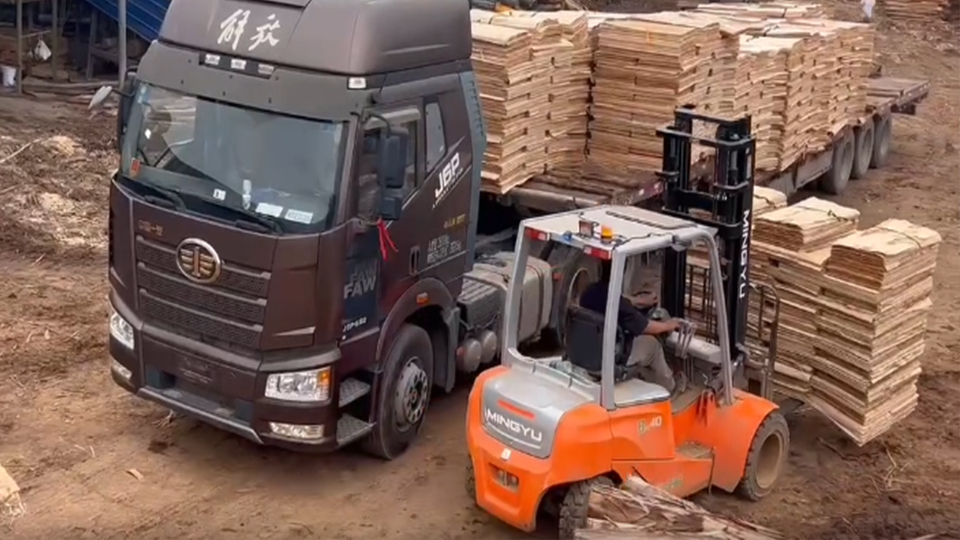
For the largest diesel forklifts—those exceeding 10-ton capacity and reaching up to 16 tons or more—fuel tank capacities can reach 235 liters (62 gallons) or more . These massive machines, used in shipping ports, heavy construction, and specialized industrial applications, require substantial fuel reserves to maintain productivity during extended operations without frequent refueling interruptions.
Factors Determining Fuel Tank Capacity
Engine Size and Power Requirements
The relationship between engine displacement and fuel tank size is direct and critical. Larger engines consume more fuel per operating hour, necessitating larger tanks to maintain equivalent operational autonomy. A compact diesel forklift with a 2.0-liter engine might operate efficiently with a 45-liter tank, while a heavy-duty machine with a 6.5-liter engine requires 140 liters or more to achieve similar runtime .
Engine technology also influences tank sizing decisions. Modern diesel engines featuring advanced fuel injection systems and emission controls may achieve better fuel efficiency than older models, potentially allowing slightly smaller tanks for equivalent range. However, emission control systems such as Diesel Exhaust Fluid (DEF) tanks add complexity to fuel system design, with some models requiring separate 30-liter DEF tanks in addition to diesel fuel storage .
Operational Environment and Application
The intended operating environment significantly influences fuel tank sizing. Indoor warehouse applications typically involve shorter travel distances, consistent surfaces, and predictable duty cycles, allowing smaller tanks to suffice. Conversely, outdoor construction sites, lumber yards, and port operations involve rough terrain, longer travel distances, and variable loads, necessitating larger fuel reserves .
Outdoor applications also face weather-related challenges that increase fuel consumption. Cold weather operations require longer engine warm-up periods and may reduce fuel efficiency, while extremely hot conditions can increase cooling system demands. Manufacturers account for these variables when specifying tank capacities for different application categories.
Regulatory and Design Constraints
Fuel tank placement must balance operational requirements with safety regulations and design practicality. Tanks must be positioned to maintain proper center of gravity, protected from impact damage, and accessible for refueling while remaining secure from tampering or theft. Modern forklifts often feature locking fuel caps as standard security features, particularly important for outdoor deployments .
Material selection also affects tank design. Steel tanks offer superior impact resistance for construction and outdoor applications, while considerations for weight distribution may influence tank shape and placement. Some manufacturers offer dual-tank configurations or extended-range options for specialized applications requiring exceptional operational autonomy.
Fuel Consumption Rates and Operational Planning
Understanding fuel tank capacity alone provides limited operational value without corresponding knowledge of fuel consumption rates. Diesel forklifts typically consume between 1.5 to 3 gallons (6 to 12 liters) per hour during normal operation, though this varies significantly based on load weight, travel distance, terrain, and operator behavior .
Calculating Operational Range
To determine how long a full tank will last, operators must consider both tank capacity and consumption rates. A 3.5-ton forklift with a 60-liter tank consuming 5 liters per hour provides approximately 12 hours of operation—sufficient for a standard shift with reserve . Heavy-duty applications with higher consumption rates may reduce this autonomy proportionally.
For fleet planning purposes, managers should calculate worst-case consumption scenarios. Heavy loads, frequent acceleration, rough terrain, and extended travel distances can increase fuel consumption by 25–50% above baseline rates. Planning refueling schedules based on conservative estimates prevents unexpected downtime and maintains operational continuity.
Cost Planning and Budgeting
Accurate fuel capacity knowledge enables precise operational cost calculations. With current diesel prices, a full tank for a medium-duty forklift might range from $75 to $150 depending on tank size and local fuel costs. For operations running multiple shifts, these costs accumulate rapidly, making fuel efficiency a significant factor in total cost of ownership calculations.
Fleet managers should establish baseline fuel consumption metrics for their specific applications and monitor variance over time. Unexpected increases in fuel consumption often indicate maintenance needs—clogged air filters, worn injectors, or tire pressure issues—that, when addressed, restore efficiency and reduce operational costs.
Manufacturer-Specific Capacity Variations
Different manufacturers approach fuel tank sizing based on their design philosophies, target markets, and engineering standards. Understanding these variations helps buyers select appropriate equipment for their specific needs.
Toyota Diesel Forklifts
Toyota's diesel forklift lineup demonstrates the correlation between capacity and tank size. Their compact 8FDU series typically features 18–20 gallon tanks, while heavy-duty 8FDN series models accommodate 25–30 gallons . Toyota emphasizes operational efficiency and typically optimizes tank sizes for standard shift lengths in target applications.
Caterpillar Diesel Models
Caterpillar diesel forklifts generally feature robust fuel systems reflecting their construction and heavy-industry focus. Smaller DP series models typically hold 20–22 gallons, while industrial units like the DP70-120 series accommodate 30–35 gallons or more . Caterpillar prioritizes operational continuity in demanding environments, often specifying larger tanks than competitors for equivalent capacity classes.
Hyster and Yale Industrial Forklifts
Hyster's diesel range varies considerably, with compact models featuring 16–20 gallon tanks and heavy-duty H-Series industrial forklifts accommodating 28–33 gallons . Yale and Hyster (both Hyster-Yale Materials Handling subsidiaries) emphasize application-specific configurations, offering various tank options for different operational requirements.
Asian Manufacturers (Heli, Hangcha, Lonking)
Chinese manufacturers such as Heli, Hangcha, and Lonking have gained significant market share with competitive specifications. The Heli K30 (3-ton) features a 13.21-gallon (50-liter) tank , while the Hangcha A35 (3.5-ton) offers 70-liter capacity . Lonking's 5–7 ton series provides 140-liter tanks for extended operations . These manufacturers often emphasize value engineering, sometimes offering smaller standard tanks with optional upgrades for extended range.
Refueling Best Practices and Safety Protocols
Refueling Procedures
Safe refueling requires adherence to established protocols regardless of tank size. Operators should refuel in designated areas with proper ventilation, fire suppression equipment, and spill containment materials. Engines must be shut down and cooled before refueling to prevent ignition of diesel vapors. Static electricity poses significant risks—grounding procedures and static-dissipative equipment prevent dangerous sparks.
Operators should avoid overfilling tanks, as diesel fuel expands with temperature increases. Overfilling creates spill hazards and can damage emission control systems. Most modern forklifts feature automatic shut-off nozzles or visible fill indicators to prevent overfilling.
Fuel Quality Management
Diesel fuel quality significantly impacts engine performance and longevity. Water contamination, common in outdoor storage tanks, promotes microbial growth that clogs filters and corrodes fuel systems. Regular fuel testing, proper storage tank maintenance, and water separator installation protect expensive engine components.
Cold weather operations require additional considerations. Diesel fuel gels at low temperatures, potentially blocking fuel lines and filters. Winter blend fuels or fuel additives prevent gelling, while tank heaters maintain fuel flowability in extreme conditions. Operators in cold climates should plan for increased fuel consumption during warm-up periods and potential efficiency reductions.
Environmental and Regulatory Considerations
Modern diesel forklifts must comply with stringent emission standards including EPA Tier 4 Final and Euro Stage V requirements. These regulations affect fuel system design through the addition of Diesel Exhaust Fluid (DEF) systems, diesel particulate filters (DPF), and selective catalytic reduction (SCR) systems.
DEF tanks typically range from 15 to 30 liters and require monitoring separate from diesel fuel levels . The consumption ratio of DEF to diesel fuel is approximately 2–3%, meaning a forklift consuming 100 gallons of diesel requires 2–3 gallons of DEF. Fleet managers must track both fluids to maintain compliance and avoid operational interruptions from depleted DEF tanks.
Conclusion
The question "how much diesel in a full tank of forklift?" encompasses a range from approximately 12 gallons for light-duty warehouse machines to over 60 gallons for heavy industrial models. This variation reflects the diverse applications, operational requirements, and design constraints across the forklift industry.
Understanding specific fuel tank capacities enables effective operational planning, accurate cost budgeting, and optimized refueling schedules. Whether managing a single forklift or a large fleet, knowledge of fuel consumption rates, manufacturer specifications, and best practices for fuel management contributes significantly to operational efficiency and equipment longevity.
As emission regulations tighten and alternative power sources including electric and hydrogen fuel cells gain market share, diesel forklift technology continues evolving. However, for the foreseeable future, diesel remains the dominant power source for heavy-duty outdoor applications, making fuel tank capacity knowledge essential for material handling professionals worldwide.
Name: selena
Mobile:+86-13176910558
Tel:+86-0535-2090977
Whatsapp:8613181602336
Email:vip@mingyuforklift.com
Add:Xiaqiu Town, Laizhou, Yantai City, Shandong Province, China
