
vip@mingyuforklift.com
+86-0535-2090977

Introduction
Forklifts are indispensable workhorses of modern industry, powering warehouses, manufacturing plants, distribution centers, and construction sites across the globe. Yet beneath their utilitarian exterior lies a sobering reality: these machines are among the most dangerous pieces of equipment in the industrial workplace. In the United States alone, over 850,000 forklifts are in active operation, and an estimated 11% of them will be involved in an injury-causing accident during their service life. Approximately 7,500 injuries and nearly 100 deaths occur annually from forklift-related incidents. The most critical insight, however, is not the scale of the problem but its nature—the vast majority of these accidents are entirely preventable.
According to the Occupational Safety and Health Administration (OSHA), approximately 70% of all forklift accidents result from improper training or failure to follow established safety procedures. Between 2021 and 2023, 198 fatalities were directly attributed to forklift operations, with the leading cause being crushed-by-tipping-vehicle incidents at 42%, followed by being crushed between the vehicle and a surface at 25%. These statistics reveal a pattern: most accidents do not stem from catastrophic equipment failure but from human factors—complacency, inadequate visibility, and the persistent challenge of blind spots. Understanding blind spots and implementing systematic countermeasures is not merely a training requirement; it is a moral and operational imperative that can transform workplace safety culture.
The Anatomy of a Blind Spot: Why Forklifts Are Uniquely Vulnerable
Blind spots on forklifts differ fundamentally from those on passenger vehicles. A forklift's design prioritizes load capacity and maneuverability over operator visibility, creating inherent visual obstructions that no amount of training can fully eliminate. The structural framework of the forklift—including the overhead guard, mast assembly, counterweight, and carriage—creates zones of complete visual obstruction around the vehicle. When a load is elevated, these blind spots expand dramatically; a full pallet can completely block the operator's forward view, forcing them to drive while looking through, around, or under the load.
The rear blind spot is particularly dangerous and accounts for a disproportionate share of pedestrian incidents. More than 50% of accidents involving industrial trucks and pedestrians occur when forklifts are reversing. Unlike automobiles, forklifts lack rear windows, and the operator must physically turn their head to check behind the vehicle. When turning to look over one shoulder, a substantial blind spot opens on the opposite side—a critical vulnerability that even experienced operators can underestimate. The mast assembly further compounds this problem by restricting rearward visibility, especially on high-reach trucks where the mast extends vertically during lifting operations.
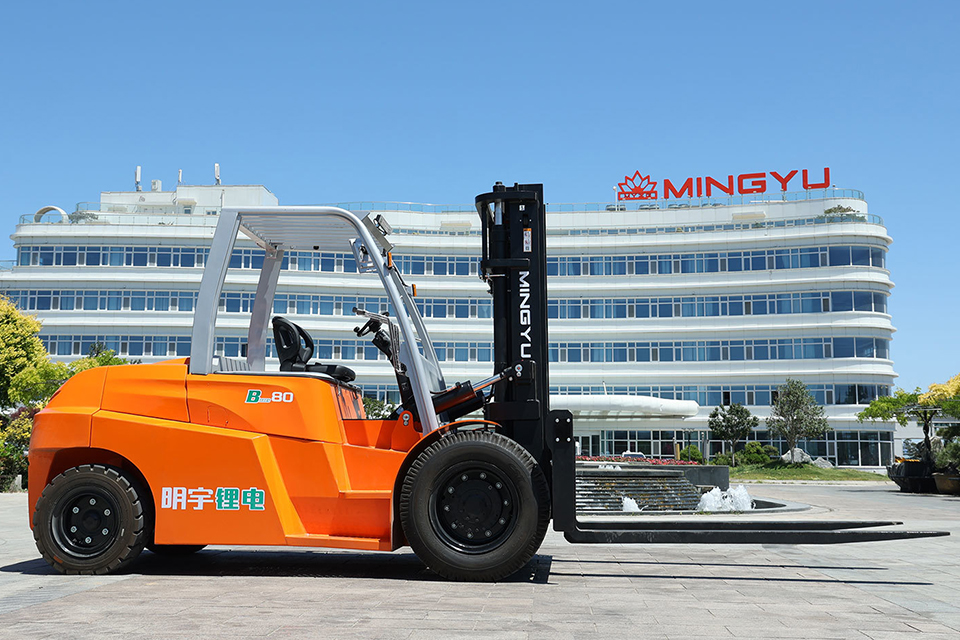
Side blind spots present equally serious risks. When navigating narrow aisles or making turns, the forklift's counterweight and battery compartment obscure lateral visibility. Pedestrians walking alongside the vehicle, especially on the non-visibility side during turns, can enter the danger zone without the operator's awareness. Intersections within warehouse layouts—where aisles cross, staging areas meet travel paths, or loading docks connect to storage zones—create natural convergence points where multiple blind spots overlap, dramatically increasing collision probability.
Environmental factors amplify these inherent design limitations. Tall racking systems block sightlines across warehouse floors. Stacked inventory creates visual barriers at ground level. Dim lighting in storage areas reduces the operator's ability to detect movement in peripheral vision. Rapid transitions between brightly lit loading docks and darker warehouse interiors cause temporary visual adaptation delays—literal blind spots that persist for several seconds as the operator's eyes adjust. Noise from machinery, ventilation systems, and other forklifts can mask backup alarms and warning horns, removing the auditory cues that might compensate for visual deficiencies.
The Human Factor: Why Operators Fail to See What Is There
Understanding blind spots requires more than mapping physical obstructions; it demands recognition of the cognitive and perceptual limitations that affect every human operator. The human visual system is not a camera recording everything within the field of view. Instead, it is an active, selective process that directs attention based on expectations, experience, and task demands. Operators develop mental models of their environment based on routine patterns—assumptions that aisles are clear, that pedestrians stay in designated walkways, that other forklifts follow predictable routes. These assumptions, while efficient under normal conditions, become dangerous when violated.
Inattentional blindness is a well-documented phenomenon where operators fail to perceive clearly visible objects because their attention is focused elsewhere. A forklift operator concentrating on precise load placement may not register a pedestrian entering the periphery, even when looking directly toward them. Change blindness—failure to notice alterations in a familiar scene—means operators may miss a new obstacle or person who enters a previously clear area. These cognitive limitations are not failures of diligence; they are fundamental characteristics of human perception that no amount of training can fully overcome.
Fatigue compounds these issues significantly. Warehouse operations often involve long shifts, repetitive tasks, and physically demanding work. As fatigue accumulates, reaction times increase, peripheral awareness diminishes, and the operator's ability to scan for hazards degrades. Studies in industrial safety consistently demonstrate that accident rates increase substantially in the final hours of extended shifts. The monotony of routine operations—driving the same aisles, handling similar loads, following familiar routes—can induce a state of automaticity where the operator operates on mental autopilot, reducing vigilance precisely when unexpected hazards are most likely to emerge.
Production pressure creates another layer of risk. Warehouse and manufacturing environments operate under tight schedules, with throughput metrics directly tied to operational success. The temptation to take shortcuts—to skip a head check, to travel faster than safe speeds, to assume an aisle is clear rather than verifying—is constant and often implicitly encouraged by organizational culture. When management prioritizes speed over safety, operators internalize the message that production targets supersede procedural compliance, and blind spot checks become the first casualties of time pressure.
The Pedestrian Perspective: Shared Responsibility in Shared Spaces
While operator awareness is critical, blind spot accidents are not solely an operator problem. Pedestrians in industrial environments share responsibility for their own safety and that of their colleagues. The most effective safety programs recognize that forklift-pedestrian incidents occur at the intersection of two parties' behaviors, and prevention requires action from both.
Pedestrians often develop complacency similar to that of operators. Familiarity with forklift traffic patterns breeds assumption—workers come to expect forklifts on designated routes at predictable times, and they may cross aisles or enter travel paths without the vigilance they would exercise in unfamiliar environments. The normalization of forklift presence means pedestrians may stop reacting to backup alarms, assuming they are routine background noise rather than active warnings. In congested facilities, pedestrians may walk alongside forklifts in narrow aisles, positioning themselves in blind spots where the operator cannot see them even with proper head checks.
Effective pedestrian safety protocols include designated walkways physically separated from forklift travel paths where feasible, high-visibility personal protective equipment that makes workers conspicuous in peripheral vision, and training that emphasizes the pedestrian's role in maintaining situational awareness. Physical barriers—concrete dividers, guardrails, or bollards—provide more reliable protection than painted floor markings or signage, which depend on voluntary compliance. When pedestrians and forklifts must share space, spotters, communication protocols, and temporary traffic control measures can reduce the probability of blind spot encounters.
Engineering Controls: Technology as a Force Multiplier
The limitations of human perception and the persistent challenge of blind spots have driven significant technological innovation in forklift safety. Modern collision avoidance systems represent a paradigm shift from passive safety measures—training, signage, mirrors—to active, real-time hazard detection that compensates for human limitations.
Proximity detection systems using ultrasonic, infrared, and radar technologies can identify objects and pedestrians in blind spot areas, providing audible and visual warnings to operators before a collision becomes imminent. These systems are particularly valuable for rear blind spots, where the operator's natural visibility is most restricted. Advanced implementations can automatically reduce forklift speed or even apply brakes when a hazard is detected, creating a last line of defense when human reaction time is insufficient.
Artificial intelligence-powered camera systems represent the cutting edge of blind spot mitigation. Unlike simple proximity sensors that cannot distinguish between humans and inanimate objects, AI cameras use machine learning algorithms to identify pedestrians specifically, reducing false alarms that might otherwise lead to alert fatigue and system disregard. These systems can be configured with multiple cameras providing 360-degree coverage, effectively eliminating blind spots by giving the operator a comprehensive view of the vehicle's surroundings on a dashboard monitor. Some implementations include driver behavior monitoring, detecting signs of fatigue, phone use, or smoking that might compromise attention.
Real-world deployments demonstrate the effectiveness of these technologies. One engineering and construction company that installed AI blind spot detection cameras on telescopic forklifts reported that vehicular near-misses dropped from approximately five per month to zero. Beyond the direct safety benefits, the company observed increased operator confidence, reduced vehicle damage and repair costs, and improved productivity as operations ran more smoothly. Workers developed heightened awareness of forklift traffic, and the technology reinforced a safety culture that extended beyond the equipment itself.
Wearable alert systems offer another layer of protection. These systems pair forklift-mounted sensors with wearable devices carried by pedestrians. When a pedestrian enters a defined danger zone around the forklift, both the operator and the pedestrian receive immediate alerts—vibrations, audible warnings, or visual signals—creating bidirectional awareness that does not depend solely on the operator's vigilance. This approach is particularly valuable in facilities with high pedestrian traffic, temporary workers, or frequently changing layouts where familiarity with traffic patterns cannot be assumed.
Zone projection systems use colored lights—typically blue or red spotlights mounted on the forklift—to project warning zones on the floor ahead of and behind the vehicle. These visual cues alert pedestrians to approaching forklifts before they enter blind spots, providing advance warning that is more effective in noisy environments than auditory alarms alone. The projected zones move with the forklift, creating a dynamic safety perimeter that adjusts to the vehicle's position and direction of travel.
Operational Best Practices: Beyond Technology
Technology is a powerful tool, but it is not a substitute for sound operational practices. The most effective blind spot management programs integrate engineering controls with robust procedural safeguards and continuous cultural reinforcement.
Pre-shift inspections are a regulatory requirement under OSHA standard 29 CFR 1910.178(q)(7), which mandates that industrial trucks be examined before being placed in service and that defects be immediately reported and corrected. These inspections should specifically address visibility-related components: mirrors, lights, backup alarms, camera systems, and proximity sensors. A forklift with a non-functional camera or damaged mirror should be removed from service until repairs are completed, not operated with the assumption that extra caution will compensate.
Speed management is fundamental to blind spot safety. The relationship between travel speed and stopping distance is non-linear; doubling speed quadruples stopping distance, and the time available for hazard detection and response shrinks proportionally. Safe speed limits must be established for each area of the facility, with particular attention to intersections, blind corners, and areas with limited visibility. These limits are meaningless without enforcement; speed governors, monitoring systems, and supervisory oversight are necessary to ensure compliance.
The buddy system remains one of the most effective low-tech solutions for blind spot management. When transporting loads through areas with restricted visibility, a spotter walking ahead of or alongside the forklift can provide real-time guidance, alert pedestrians, and verify that travel paths are clear. This practice is especially important for oversized loads that significantly expand blind spots, or in areas with complex traffic patterns where multiple forklifts and pedestrians may converge.
Communication protocols—standardized hand signals, two-way radios, or horn patterns—enable operators to signal their intentions and receive confirmation from spotters or other workers. These protocols must be consistently applied and regularly reinforced through training; ad hoc communication introduces ambiguity that can be more dangerous than no communication at all.
Housekeeping practices directly impact blind spot severity. Cluttered aisles, improperly stored materials, and accumulated debris reduce available sightlines and force operators to navigate around obstacles that further restrict visibility. Clear floor markings for travel paths, pedestrian walkways, and staging areas provide visual structure that helps both operators and pedestrians predict traffic patterns and maintain safe separation.
Training and Competency: The Foundation of Prevention
OSHA requires that forklift operators be trained and evaluated in accordance with 29 CFR 1910.178(l), which specifies formal instruction, practical training, and performance evaluation components. However, compliance with regulatory minimums is insufficient for effective blind spot management. Training must be ongoing, scenario-based, and reinforced through regular refreshers that address the specific hazards of the operating environment.
Effective blind spot training includes hands-on exercises where operators identify blind spot zones on actual equipment, practice head-check techniques, and experience the limitations of mirrors and cameras under realistic conditions. Simulator training can expose operators to high-risk scenarios—pedestrians entering blind spots, other forklifts emerging from intersections, loads shifting unexpectedly—without real-world consequences, building pattern recognition and response skills that transfer to actual operations.
Refresher training should not be limited to operators. Pedestrians, supervisors, and maintenance personnel all play roles in blind spot safety and benefit from understanding the operator's perspective. Cross-functional safety committees that include representatives from all stakeholder groups can identify blind spot hazards specific to facility layout and operations, develop targeted countermeasures, and monitor effectiveness over time.
Incident and near-miss reporting systems are essential for continuous improvement. Every close call represents an opportunity to identify a blind spot hazard before it causes injury. Facilities that cultivate reporting cultures—where near-misses are treated as learning opportunities rather than grounds for punitive action—generate the data necessary to target interventions where they will have the greatest impact.
The Business Case: Safety as a Strategic Investment
The financial case for comprehensive blind spot management is compelling beyond the moral imperative to protect workers. OSHA estimates 35,000 to 62,000 forklift-related injuries annually, with an average workers' compensation claim cost of $41,003. Direct costs—medical expenses, legal fees, regulatory fines—represent only a fraction of the total impact. Indirect costs include lost productivity, equipment damage, product loss, investigation time, training disruptions, increased insurance premiums, and the incalculable damage to workforce morale and organizational reputation.
The return on investment for blind spot mitigation technologies is typically measured in months rather than years. A single prevented serious injury can offset the entire cost of a fleet-wide camera or proximity detection system. Beyond accident prevention, these technologies improve operational efficiency by reducing near-miss interruptions, enabling faster travel speeds in controlled conditions, and providing data analytics that identify high-risk zones and behaviors for targeted improvement.
Conclusion
The assertion that 90% of forklift accidents are preventable is not an optimistic aspiration; it is a statistical reality grounded in the fact that most incidents result from human factors—blind spot management failures, inadequate training, complacency, and production pressure—that can be systematically addressed through integrated safety programs. Blind spots are an inherent characteristic of forklift design, but their danger is not inevitable.
Effective blind spot management requires a multi-layered approach: engineering controls that compensate for human perceptual limitations, operational practices that structure safe interactions between forklifts and pedestrians, training that builds competency and awareness, and organizational culture that prioritizes safety over speed. Technology—AI cameras, proximity sensors, wearable alerts, zone projection systems—provides powerful tools, but these tools achieve their full potential only when embedded within comprehensive safety management systems.
The forklift operator who understands blind spots, who checks them consistently, who uses available technology, and who maintains situational awareness even under production pressure, is not merely following procedures—they are exercising professional judgment that protects lives. The pedestrian who stays alert, who respects designated walkways, who makes eye contact with operators, and who treats forklift traffic with appropriate caution, is an active participant in their own safety and that of their colleagues.
In the final analysis, preventing blind spot accidents is not about eliminating risk—an impossible standard in any industrial operation—but about managing it through knowledge, vigilance, technology, and culture. The 90% of preventable accidents represent 90% of opportunities: opportunities to train better, to invest smarter, to supervise more effectively, and to build workplaces where every worker returns home unharmed at the end of every shift. That is not merely a safety goal; it is the defining measure of operational excellence.
Name: selena
Mobile:+86-13176910558
Tel:+86-0535-2090977
Whatsapp:8613181602336
Email:vip@mingyuforklift.com
Add:Xiaqiu Town, Laizhou, Yantai City, Shandong Province, China
