
vip@mingyuforklift.com
+86-0535-2090977

Introduction
In the material handling industry, propane-powered forklifts—technically known as liquefied petroleum gas (LPG) forklifts—represent one of the most widely adopted solutions across warehouses, distribution centers, and manufacturing facilities worldwide. Despite the growing popularity of electric alternatives and the raw power of diesel engines, propane maintains a dominant market position, particularly in North America. Understanding why propane became the fuel of choice for forklifts requires examining the intersection of engineering constraints, operational economics, regulatory frameworks, and environmental considerations that have shaped industrial equipment design over the past century.
The Engineering Foundation: How Propane Forklifts Work
Propane forklifts operate using internal combustion engines specifically designed or modified to burn liquefied petroleum gas. Unlike gasoline or diesel, propane is stored in pressurized tanks as a liquid and vaporizes as it exits the tank, entering the engine as a gas. This phase change characteristic provides several technical advantages. The fuel system consists of a service valve, regulator, mixer, and throttle body, working together to deliver consistent fuel-air mixtures regardless of ambient temperature or operating conditions.
The combustion properties of propane make it particularly suitable for industrial applications. Propane has an octane rating of 104, significantly higher than gasoline (87-93), allowing for higher compression ratios and more efficient combustion. This results in cleaner burning with fewer carbon deposits compared to gasoline or diesel engines, extending engine life and reducing maintenance intervals. The fuel's consistent vaporization also ensures reliable cold-weather starting—a critical factor in facilities operating in unheated environments or cold storage applications.
The Indoor-Outdoor Versatility Advantage
Perhaps the most significant technical reason for propane's dominance in the forklift market is its unique ability to bridge indoor and outdoor operations. Diesel forklifts, while powerful, produce high levels of particulate matter, nitrogen oxides, and carbon monoxide, making them unsuitable for indoor use without extensive ventilation systems. Gasoline forklifts face similar emission constraints and present additional fire hazards due to fuel volatility.
Electric forklifts, while emission-free, historically faced limitations in outdoor applications, particularly in wet conditions where electrical systems could be compromised, and in cold environments where battery performance degrades significantly. Additionally, electric models traditionally offered lower lifting capacities compared to internal combustion alternatives, though this gap has narrowed with modern lithium-ion technology.
Propane forklifts occupy the optimal middle ground. When equipped with three-way catalytic converters and proper maintenance, modern propane forklifts can meet stringent indoor air quality standards while maintaining the power and durability needed for outdoor applications. The Occupational Safety and Health Administration (OSHA) permits propane forklift use indoors provided facilities maintain adequate ventilation—typically requiring 4-6 air changes per hour—and monitor carbon monoxide levels, keeping them below the 50 ppm permissible exposure limit over an 8-hour period .
Operational Economics and Total Cost of Ownership
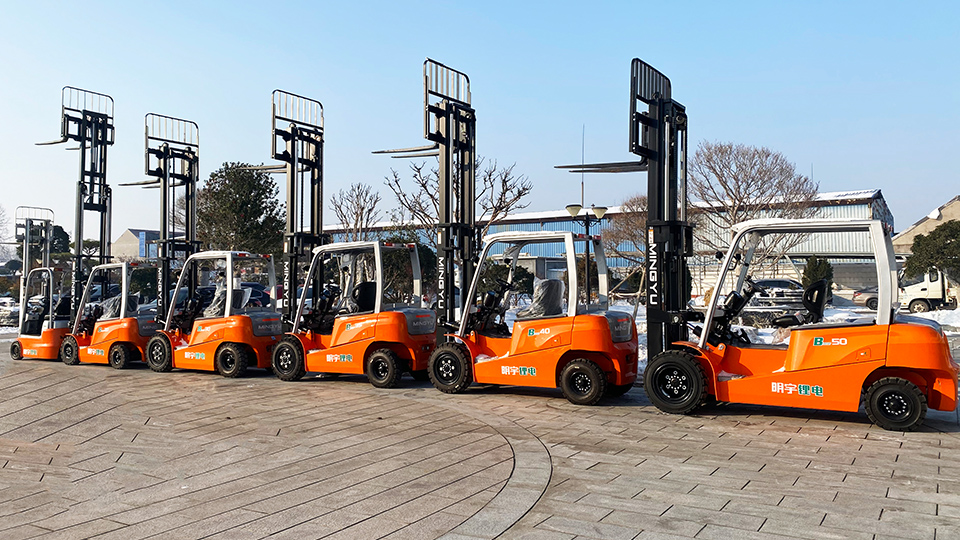
From a financial perspective, propane forklifts offer compelling economics that have sustained their market position. The initial capital expenditure for a propane forklift typically ranges from $15,000 to $50,000 for standard models, positioning them between the higher upfront costs of electric forklifts ($20,000-$60,000+) and comparable diesel units . This lower entry point makes propane attractive for small to medium operations and businesses building initial material handling capabilities.
Fuel infrastructure represents another economic consideration. Unlike electric forklifts requiring dedicated charging stations with appropriate electrical capacity, ventilation, and temperature control, or CNG forklifts needing specialized compression equipment, propane forklifts utilize exchangeable tanks that require minimal infrastructure. Facilities can lease tanks from propane suppliers and exchange empty cylinders for full ones, eliminating capital investment in fueling infrastructure. This "fuel-as-a-service" model simplifies logistics and converts fueling costs from capital expenditures to operational expenses.
Refueling speed provides operational advantages that electric systems struggle to match. A propane tank exchange takes approximately 2-5 minutes, compared to 6-8 hours for lead-acid battery charging or even 2 hours for fast-charging lithium-ion systems . For multi-shift operations running 24/7, this rapid refueling capability minimizes downtime and eliminates the need for expensive battery changeout equipment or large battery fleets. The consistent power output throughout the fuel cycle—unlike electric forklifts that experience performance degradation as batteries discharge—ensures predictable operational capacity.
Maintenance and Reliability Considerations
The maintenance profile of propane forklifts contributes significantly to their operational appeal. While they contain more moving parts than electric alternatives—requiring regular service of engines, transmissions, and exhaust systems—they benefit from cleaner combustion compared to gasoline or diesel. Propane's gaseous state ensures complete mixing with air, reducing carbon buildup in engines and extending oil change intervals. The absence of liquid fuel also eliminates concerns about fuel degradation, gumming, or carburetor issues common in gasoline engines.
Engine longevity in propane forklifts often exceeds that of gasoline equivalents, with well-maintained units achieving 10,000+ operating hours over their service life . The fuel system's simplicity—lacking the high-pressure fuel injection systems of modern diesel engines—reduces maintenance complexity and parts costs. Additionally, propane engines typically operate at lower temperatures than gasoline engines, reducing thermal stress on components.
However, propane systems require specific maintenance protocols. Fuel system components, including regulators, hoses, and valves, must be inspected regularly for leaks. OSHA mandates pre-shift inspections of propane systems, including checking for leaks and ensuring proper tank mounting. Facilities must also establish protocols for safe tank storage, keeping cylinders away from ignition sources, exits, and stairways, with a maximum of two tanks per forklift in storage .
Environmental and Regulatory Compliance
Environmental considerations have increasingly influenced forklift power source selection, and propane occupies a favorable position in this evolving landscape. While not emission-free like electric forklifts, propane produces significantly fewer pollutants than diesel or gasoline alternatives. Propane combustion generates approximately 12% less carbon dioxide, 20% less nitrogen oxide, and up to 60% less carbon monoxide than gasoline per unit of energy. Crucially, propane engines produce negligible particulate matter—the harmful microscopic particles that make diesel exhaust particularly hazardous in indoor environments.
For facilities seeking to reduce their carbon footprint without the infrastructure requirements of full electrification, propane offers a pragmatic intermediate solution. Modern propane forklifts equipped with catalytic converters can reduce carbon monoxide emissions by up to 95%, bringing them into compliance with stringent indoor air quality standards . However, facilities must still invest in adequate ventilation and monitoring systems, including carbon monoxide detectors positioned at breathing height (4-5 feet) to ensure operator safety.
The regulatory landscape continues to evolve, with some jurisdictions implementing increasingly strict emission standards. California's OSHA program requires monthly ventilation certification and carbon monoxide alarms with sensitivity below 5 ppm—stricter than federal OSHA requirements . Some municipalities have prohibited propane use in food storage areas regardless of ventilation, pushing facilities toward electric alternatives. These regulatory trends suggest that while propane maintains current viability, long-term planning must account for potential tightening of indoor emission standards.
Performance Characteristics and Application Suitability
Propane forklifts deliver performance characteristics well-suited to general material handling applications. Typical lifting capacities range from 3,000 to 15,000 pounds, with some models extending to 20,000 pounds, covering the majority of warehouse and manufacturing needs . Power delivery remains consistent throughout the operating shift, unlike electric forklifts that may experience reduced performance as batteries discharge.
The ability to operate in varied environments makes propane forklifts particularly valuable in facilities with mixed indoor/outdoor operations. A single propane forklift can move materials from outdoor loading docks to indoor storage racks without equipment changes, optimizing fleet utilization. This versatility reduces the need for multiple specialized vehicles, simplifying fleet management and operator training.
However, propane forklifts do present operational constraints. The propane tank, typically mounted on the rear of the forklift, can obstruct rearward visibility compared to electric models where batteries serve as counterweights beneath the operator seat . This visibility limitation requires operators to exercise additional caution when reversing and may necessitate supplementary mirrors or camera systems. Noise levels, while lower than diesel, exceed those of electric forklifts, potentially creating challenges in noise-sensitive environments or during night operations.
The Evolving Competitive Landscape
The material handling industry is experiencing significant technological disruption that challenges propane's traditional dominance. Lithium-ion battery technology has addressed many historical limitations of electric forklifts, offering fast charging (as little as 2 hours), opportunity charging capabilities, and consistent power output throughout discharge cycles. These advances, combined with zero emissions and reduced maintenance requirements, make electric forklifts increasingly attractive for indoor operations .
Hydrogen fuel cell technology represents another emerging alternative, offering the rapid refueling of propane with zero emissions. However, hydrogen infrastructure costs and limited fuel availability currently restrict adoption to large-scale operations with centralized facilities. Similarly, compressed natural gas (CNG) forklifts offer emission advantages over propane but require dedicated fueling infrastructure and suffer from reduced energy density, requiring more frequent refueling .
Despite these competitive pressures, propane maintains significant market share due to established infrastructure, proven reliability, and the substantial installed base of equipment. For many operations, the transition costs from propane to alternative technologies—encompassing equipment replacement, infrastructure development, and operational retraining—outweigh the incremental benefits, particularly when existing ventilation systems and safety protocols already accommodate propane use.
Conclusion
The prevalence of propane-powered forklifts in modern material handling stems from a confluence of technical, economic, and practical factors. Propane's unique position as a fuel capable of powering robust internal combustion engines while meeting indoor air quality standards—when properly managed—has made it the default choice for versatile material handling operations. The combination of lower upfront costs, rapid refueling, consistent performance, and established supply chains creates compelling value propositions for businesses across diverse industries.
However, the landscape is shifting. Environmental regulations, advancing battery technology, and growing emphasis on sustainability are gradually eroding propane's advantages. Electric forklifts are capturing increasing market share in indoor applications, while outdoor heavy-duty operations remain the province of diesel. Propane's future likely lies in specialized applications where its specific combination of characteristics—indoor/outdoor versatility, rapid refueling, and moderate infrastructure requirements—continues to deliver superior value compared to alternatives.
For facility managers and operations directors, the decision to deploy propane forklifts requires careful analysis of specific operational requirements, regulatory environments, and long-term strategic goals. While propane remains a technically sound and economically viable solution for many applications, the accelerating pace of technological change suggests that the dominance of propane forklifts may gradually diminish as alternative technologies mature and infrastructure develops. Understanding the technical foundations of propane's advantages—and its limitations—enables informed decision-making in an evolving industrial landscape.
Name: selena
Mobile:+86-13176910558
Tel:+86-0535-2090977
Whatsapp:8613181602336
Email:vip@mingyuforklift.com
Add:Xiaqiu Town, Laizhou, Yantai City, Shandong Province, China