
vip@mingyuforklift.com
+86-0535-2090977

Introduction
The relationship between load weight and fuel consumption in diesel-powered forklifts represents one of the most frequently asked yet technically nuanced questions in material handling operations. On the surface, the answer appears straightforward: heavier loads require more energy to lift and transport, which logically translates to increased fuel consumption. However, a deeper technical examination reveals that this relationship is far more complex than a simple linear correlation. The physics of material handling, thermodynamic efficiency of diesel engines, hydraulic system characteristics, and operational dynamics all contribute to a multifaceted picture where absolute fuel consumption, specific fuel consumption, and overall operational efficiency must be carefully distinguished.
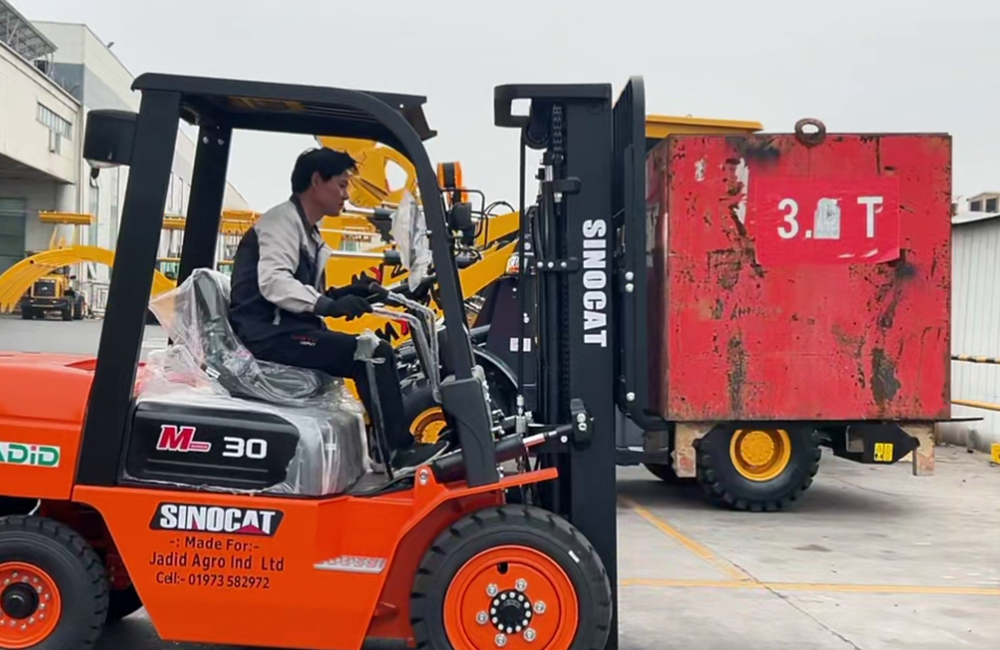
This article provides a comprehensive technical analysis of how load weight affects diesel forklift fuel usage, examining the underlying mechanical principles, real-world performance data, and practical implications for fleet operators seeking to optimize fuel efficiency while maintaining productivity.
The Physics of Lifting: Energy Requirements and Fuel Demand
At the most fundamental level, lifting a load requires overcoming gravitational force. The potential energy imparted to a load of mass m lifted through vertical height h is given by the equation E = mgh, where g represents gravitational acceleration (9.81 m/s²). For a forklift lifting a 2,000-kilogram pallet to a height of 4 meters, the minimum theoretical energy required is approximately 78.5 kilojoules. Doubling the load to 4,000 kilograms doubles this energy requirement to 157 kilojoules.
In practice, the actual energy consumed far exceeds these theoretical minimums due to system inefficiencies. Diesel engines convert chemical energy in fuel to mechanical energy with typical thermal efficiencies of 30% to 40%. Hydraulic pumps transform mechanical energy into fluid power with efficiencies ranging from 80% to 92%. Hydraulic cylinders, valves, hoses, and seals introduce additional losses through friction, leakage, and pressure drops. The overall system efficiency from fuel to useful lifting work typically ranges from 15% to 25%.
Consequently, lifting heavier loads absolutely requires more fuel. A forklift handling 5-ton steel coils will consume more diesel during the lifting phase than the same machine handling 1.5-ton pallets. This direct relationship holds across all operating conditions and represents the most intuitive aspect of load-fuel consumption dynamics. However, this is only one component of total fuel consumption, and the complete picture requires examining how load affects other operational phases and overall system efficiency.
Diesel Engine Efficiency: The Critical Non-Linearity
The diesel engine's brake-specific fuel consumption (BSFC) map reveals the critical non-linearity that complicates the load-fuel relationship. BSFC, expressed in grams of fuel per kilowatt-hour of mechanical output, varies dramatically across the engine's operating envelope. At very low loads—such as idling or moving an empty forklift—the engine consumes fuel without producing useful work, resulting in extremely poor specific efficiency. As load increases toward the engine's optimal operating range (typically 60% to 80% of maximum power), BSFC improves significantly. Near maximum load, efficiency may deteriorate slightly due to increased heat losses and mechanical friction.
This characteristic creates a counterintuitive phenomenon: while absolute fuel consumption increases with load, the specific fuel consumption—fuel per unit of useful work—often improves up to a certain point. Consider a 3.5-ton capacity diesel forklift with a 2.5-liter engine. When idling or traveling empty, the engine might consume 2.5 liters per hour while producing minimal useful work. When lifting and transporting 1-ton loads, fuel consumption might increase to 3.8 liters per hour, but the useful work output increases proportionally more, improving the efficiency metric. At 3-ton loads, fuel consumption might reach 5.2 liters per hour, with the engine operating closer to its optimal efficiency island.
The practical implication is that while heavier loads always increase total fuel consumption during active work cycles, they may actually improve the fuel efficiency per ton of material moved. A forklift moving ten 1-ton loads consumes more total fuel than moving five 2-ton loads for the same total material quantity, because the fixed fuel consumption associated with each lift cycle—engine warm-up, hydraulic system pressurization, mast movement—is distributed over more material in the heavier load scenario.
Hydraulic System Dynamics Under Variable Load
The hydraulic lifting system represents a major energy conversion pathway where load weight significantly influences fuel consumption patterns. Modern diesel forklifts employ load-sensing hydraulic systems that adjust pump displacement and system pressure to match actual demand. When lifting light loads, the system operates at reduced pressure and flow, lowering the power drawn from the engine. When lifting heavy loads, pump displacement increases, system pressure rises, and the engine must deliver substantially more power.
However, hydraulic system efficiency is not constant across the load range. At very light loads, fixed losses—including pump case drain flow, valve spool leakage, and seal friction—represent a large fraction of total hydraulic power, resulting in poor efficiency. As load increases, these fixed losses become proportionally smaller, improving the incremental efficiency of the hydraulic system. This effect partially offsets the increased energy requirement of heavier loads.
The hydraulic oil temperature provides a practical indicator of these efficiency variations. Light-load operation with frequent cycling may actually generate more heat per unit of work than sustained heavy-load operation, because the system undergoes more pressure transitions and flow reversals. Elevated oil temperature indicates energy losses that ultimately derive from fuel consumption, even when the direct load-lifting energy requirement is modest.
Multi-stage masts, common in higher-capacity forklifts, introduce additional complexity. The nested cylinder arrangement required for compact retracted height increases seal count and internal leakage paths. Under heavy loads, these seals compress more firmly against cylinder walls, paradoxically reducing leakage despite the higher pressure. Under light loads, reduced seal compression permits more internal leakage, decreasing volumetric efficiency. This phenomenon means that the hydraulic system's response to load variation is not purely proportional and may exhibit unexpected efficiency characteristics.
Travel and Maneuvering: The Hidden Fuel Consumer
While lifting operations attract attention due to their visible energy intensity, travel and maneuvering often constitute the dominant fuel consumption mode in typical forklift operations. A forklift moving between storage racks, navigating aisles, and positioning loads may spend 60% to 80% of engine runtime in travel mode rather than lifting. Load weight significantly affects travel fuel consumption through several mechanisms.
Rolling resistance—the force resisting motion due to tire deformation and surface interaction—increases with total vehicle weight. For pneumatic-tired forklifts, rolling resistance coefficients range from 0.015 to 0.025. A 3-ton capacity forklift weighing 4.5 tons empty experiences baseline rolling resistance of approximately 660 to 1,100 Newtons. When carrying a 2.5-ton load, total weight increases to 7 tons, and rolling resistance rises to 1,030 to 1,720 Newtons. This 56% increase in resistance directly increases the power required to maintain speed or accelerate.
Acceleration energy requirements scale with total mass. The kinetic energy of a moving vehicle is given by E = ½mv². Accelerating a loaded forklift from rest to 15 km/h requires proportionally more fuel than accelerating the empty vehicle. In typical warehouse operations with frequent stops and starts, these acceleration cycles dominate fuel consumption. Heavier loads amplify this effect substantially.
Gradeability—the ability to climb slopes—becomes relevant in outdoor yards, loading docks, and multi-level facilities. A forklift carrying maximum rated load on a 5% grade requires significantly more engine power than the same load on level ground. The additional fuel consumption during grade climbing can exceed the lifting energy requirements for moderate heights.
Counterbalance dynamics introduce another travel-related factor. Diesel forklifts rely on rear-mounted counterweights to prevent forward tipping when lifting loads at the front. As load increases, the effective weight distribution changes, altering tire contact patches and rolling resistance. Heavier loads may actually reduce rear axle loading and associated tire losses, partially offsetting the increased front axle resistance.
Idle Time and Fixed Fuel Consumption
A substantial portion of diesel forklift fuel consumption occurs during idle periods—waiting for loads, positioning, operator breaks, and shift changes. Industry data suggests that idle time can represent 30% to 50% of total engine runtime in typical operations. During idle, the engine consumes 1.5 to 3.0 liters of diesel per hour depending on displacement and idle speed setting, producing zero useful work.
Load weight indirectly affects idle fuel consumption through operational efficiency. Heavier loads often require more careful handling, longer positioning times, and more frequent pauses for stability assessment. A forklift handling 5-ton steel coils may spend more time in idle or low-speed maneuvering than the same machine handling 1.5-ton general merchandise. Conversely, heavier loads may enable fewer total trips for the same material volume, reducing the number of idle periods associated with trip initiation and completion.
The fixed fuel consumption during idle and low-load operation creates a powerful effect on average efficiency metrics. A forklift that spends 40% of its runtime idling will exhibit poor specific fuel consumption regardless of load weight during active periods. Load optimization strategies must therefore consider not only the direct lifting and travel energy but also the impact on total cycle time and idle percentage.
Duty Cycle Effects: Average Load Factor and Real-World Performance
The statistical distribution of loads over an operating period—the duty cycle—fundamentally determines how load weight affects overall fuel consumption. Average load factor, defined as the ratio of time-weighted average load to rated capacity, provides a useful metric for characterizing duty cycles. Fleet data typically reveals average load factors between 0.4 and 0.7, meaning most forklifts operate below rated capacity most of the time.
Consider two operational scenarios for a 5-ton capacity diesel forklift. In Scenario A, the truck handles loads uniformly distributed between 1 ton and 5 tons, averaging 3 tons. In Scenario B, the truck handles primarily 1-ton loads with occasional 5-ton peaks, averaging 2 tons. Despite both scenarios involving the same maximum load, Scenario A will likely exhibit better specific fuel consumption because the engine and hydraulic system operate more frequently in efficient regions.
The frequency of load variation also matters. A forklift alternating rapidly between heavy and light loads experiences more transient operation, with engine speed fluctuations, hydraulic pressure oscillations, and thermal cycling that reduce average efficiency. A forklift handling sustained periods of consistent load weight allows the engine to stabilize in an efficient operating point.
Seasonal and shift-based variations further complicate duty cycle analysis. A forklift handling heavy inbound shipments during morning shifts and light outbound pallets in afternoon shifts exhibits different average fuel consumption than the simple load average would suggest, due to engine thermal state and operator fatigue effects.
Comparative Analysis: Small vs. Large Loads
Empirical data from manufacturer specifications and independent testing illuminates the quantitative relationship between load weight and fuel consumption. For a representative 3-ton capacity diesel forklift, typical fuel consumption values might range as follows: idle operation at 2.2 liters per hour; travel empty at 3.0 liters per hour; travel with 1-ton load at 3.6 liters per hour; travel with 2-ton load at 4.3 liters per hour; and travel with 3-ton load at 5.1 liters per hour. Lifting operations add transient consumption spikes of 1 to 3 liters per hour above baseline during actual mast movement.
These figures reveal several important patterns. First, the incremental fuel consumption per additional ton of load decreases as load increases. The increase from empty to 1 ton is 0.6 liters per hour, while the increase from 2 tons to 3 tons is 0.8 liters per hour—a smaller proportional increase despite the same absolute load increment. Second, the ratio of loaded to empty consumption provides insight into efficiency: at 3 tons, the truck consumes 70% more fuel than empty, but moves 300% more material, improving the material-specific metric.
For larger capacity classes, the patterns persist but with different magnitudes. A 7-ton capacity forklift might consume 4.5 liters per hour empty and 7.8 liters per hour at full load—a 73% increase for a 700% load increase relative to empty operation. This demonstrates the improving efficiency of larger loads on appropriately sized equipment, while acknowledging that total fuel consumption absolutely increases.
Cross-manufacturer comparisons require careful normalization for engine technology, transmission type, and hydraulic system design. Modern electronically controlled engines with common-rail fuel injection achieve better part-load efficiency than older mechanical injection systems, flattening the load-fuel consumption curve. Load-sensing hydraulic systems with variable displacement pumps reduce the fuel penalty of light-load operation compared to fixed-displacement systems.
Emissions Control Systems and Load-Dependent Fuel Effects
Modern diesel forklifts must comply with stringent emissions standards including EPA Tier 4 Final and Euro Stage V requirements. The aftertreatment systems required for compliance—diesel particulate filters (DPF), selective catalytic reduction (SCR), and exhaust gas recirculation (EGR)—introduce load-dependent fuel consumption effects that modify the basic load-fuel relationship.
DPF regeneration, necessary to oxidize accumulated particulate matter, requires elevated exhaust temperatures. Under sustained heavy-load operation, exhaust temperatures remain naturally high, enabling passive regeneration without additional fuel input. Under light-load operation, exhaust temperatures may be insufficient for passive regeneration, triggering active regeneration cycles that inject extra fuel or throttle intake air to raise temperatures. This can increase fuel consumption by 3% to 8% during regeneration periods, disproportionately affecting light-load operations.
SCR systems inject diesel exhaust fluid (DEF) to reduce nitrogen oxide emissions. DEF consumption correlates with engine load and NOx production, generally increasing with higher power output. While DEF is not diesel fuel, it represents an operating fluid cost that scales with load. Combined diesel plus DEF consumption provides a more complete picture of fluid efficiency across load ranges.
EGR reduces combustion temperatures to limit NOx formation but decreases engine efficiency. EGR rates are typically highest at partial loads where combustion stability permits the dilution effect. This technology disproportionately increases fuel consumption during the light-load operation that predominates in many applications, partially offsetting the theoretical efficiency advantage of lighter loads.
Maintenance, Wear, and Degradation Over Time
The load-fuel consumption relationship evolves as equipment ages due to mechanical wear and maintenance condition. Engines operating predominantly at high loads may experience accelerated ring wear, valve recession, and bearing degradation, gradually reducing compression and combustion efficiency. Conversely, engines operating primarily at low loads may suffer from cylinder glazing, carbon buildup, and incomplete combustion that also degrade efficiency.
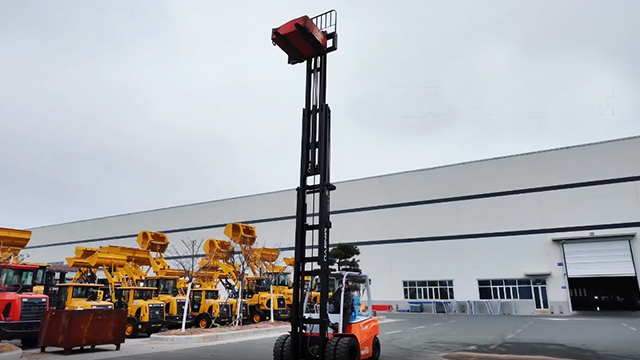
Hydraulic system degradation affects load-dependent fuel consumption through increased internal leakage and reduced pump volumetric efficiency. Worn cylinder seals may exhibit load-dependent leakage characteristics, with heavy loads forcing fluid past damaged seals more readily than light loads. Contaminated hydraulic oil increases valve spool friction and pump wear, with effects that vary across the load range.
Tire condition significantly influences the travel-related fuel consumption component. Worn or underinflated tires increase rolling resistance, amplifying the fuel penalty of heavier loads. Proper tire maintenance reduces the incremental fuel consumption associated with load increases.
The cumulative effect of maintenance factors is that the load-fuel relationship for a well-maintained forklift may differ substantially from that of a poorly maintained unit of the same model. Fleet operators seeking to optimize fuel efficiency must recognize that maintenance quality interacts with load weight in determining actual consumption.
Optimization Strategies for Variable Load Operations
Given the complex relationship between load weight and fuel consumption, fleet operators can employ several strategies to optimize efficiency. Load consolidation, where multiple partial loads are combined into fewer full loads, reduces the number of lift cycles and associated fixed fuel consumption. However, this must be balanced against load stability, safety margins, and potential productivity impacts from handling larger individual loads.
Right-sizing equipment—matching forklift capacity to typical load requirements—ensures that engines operate in efficient regions more frequently. Using a 3-ton capacity truck for predominantly 2-ton loads places the engine in a favorable operating point, while using a 7-ton truck for the same loads results in chronic light-load inefficiency. Fleet diversification with multiple capacity classes enables better load-capacity matching.
Operator training significantly influences how load translates to fuel consumption. Smooth acceleration, minimized idle time, and efficient travel path selection reduce unnecessary fuel consumption that compounds across all load levels. Telematics systems enable monitoring of operator-specific fuel efficiency and identification of training opportunities.
Route and task optimization through warehouse management systems can improve load factors by sequencing tasks to minimize empty travel and maximize loaded travel percentage. Every meter traveled empty represents fuel consumed without productive output, regardless of the load weight during loaded segments.
Technology upgrades offer additional optimization potential. Engine stop-start systems eliminate idle fuel consumption during extended pauses. Hybrid hydraulic systems recover and reuse energy during load lowering, reducing the net energy requirement for lifting operations. Automated guided vehicles (AGVs) with optimized path planning and consistent operation may achieve fuel efficiency improvements through reduced variability.
The Electric Alternative: Context for Diesel Load-Fuel Analysis
Understanding how load affects diesel forklift fuel consumption requires contextual comparison with electric alternatives. Electric forklifts eliminate idle fuel consumption entirely and maintain high motor efficiency across a wide load range. The load-energy relationship for electric trucks is more linear because electric motor efficiency varies less across the operating envelope than diesel engine efficiency.
However, electric forklifts face their own load-related challenges. Battery weight increases with capacity, reducing available payload in some configurations. Battery discharge rates and thermal management limit sustained heavy-load performance. The energy density of lithium-ion batteries, while improving, still constrains runtime for high-capacity, high-utilization applications.
For operations considering fleet transitions, the load-fuel consumption characteristics of diesel equipment provide a baseline for evaluating electric alternatives. Applications with predominantly heavy loads and high utilization may show less dramatic improvement from electrification than applications with light loads and frequent idle periods, where diesel inefficiencies are most pronounced.
Conclusion
The question of whether carrying heavier loads makes a diesel forklift use more fuel admits a qualified affirmative answer. Heavier loads absolutely increase total fuel consumption during active work cycles due to increased lifting energy, higher rolling resistance, and greater acceleration requirements. The physics of material handling and thermodynamics of diesel engines ensure that moving more mass requires more energy, which ultimately derives from diesel fuel.
However, the relationship is not linear, and the critical metric for operational efficiency—fuel per unit of useful work—often improves with heavier loads up to the equipment's optimal operating range. Diesel engines achieve better brake-specific fuel consumption at moderate to high loads than at light loads. Hydraulic systems exhibit improving incremental efficiency as fixed losses become proportionally smaller. The fixed fuel consumption associated with each lift cycle is distributed over more material when loads are heavier.
The practical implications for fleet operators emphasize the importance of duty cycle analysis, equipment right-sizing, and operational optimization. Simply minimizing load weight does not guarantee improved fuel efficiency if it results in more total cycles, increased idle time, or operation in inefficient engine regions. Conversely, maximizing individual load weights without regard for safety, equipment capacity, and handling requirements risks equipment damage and operational inefficiency.
As emissions regulations tighten and alternative technologies mature, the diesel forklift's role in material handling will continue evolving. Yet the fundamental relationship between load and fuel consumption—complex, non-linear, and context-dependent—will remain relevant for operators seeking to optimize the performance of existing diesel fleets. Understanding this relationship enables informed decisions that balance productivity, safety, and fuel efficiency in the demanding environment of material handling operations.
Name: selena
Mobile:+86-13176910558
Tel:+86-0535-2090977
Whatsapp:8613181602336
Email:vip@mingyuforklift.com
Add:Xiaqiu Town, Laizhou, Yantai City, Shandong Province, China
