
vip@mingyuforklift.com
+86-0535-2090977

The construction industry stands at a critical environmental crossroads. Responsible for approximately 39% of global carbon emissions when accounting for both operational and embodied carbon, the sector faces intensifying pressure to decarbonize operations while maintaining the productivity essential for economic growth . Within this transformation, aerial work platforms (AWPs) have emerged as unexpected pioneers of sustainable construction technology. The shift from diesel-powered to lithium battery electric platforms represents more than incremental improvement—it constitutes a fundamental reimagining of how elevated access equipment can align with environmental stewardship without compromising operational capability.
The market dynamics reflect this paradigm shift decisively. The global AWP lithium battery market, valued at approximately $750 million in 2025, is projected to grow at an extraordinary 18% compound annual growth rate to reach $2.5 billion by 2033 . This growth trajectory substantially exceeds overall AWP market expansion, indicating that electrification is not merely an alternative but increasingly the default choice for equipment procurement. Electric engine types already dominated the scissor lift market with 68.7% revenue share in 2024, driven by zero-emission operation that aligns with stringent environmental regulations .
This transformation extends beyond regulatory compliance. Construction firms, rental companies, and facility managers recognize that lithium-powered AWPs deliver operational advantages—reduced noise, lower maintenance costs, enhanced indoor usability—that improve project economics while advancing sustainability objectives. The convergence of environmental responsibility and business advantage creates momentum that regulatory pressure alone could not achieve.
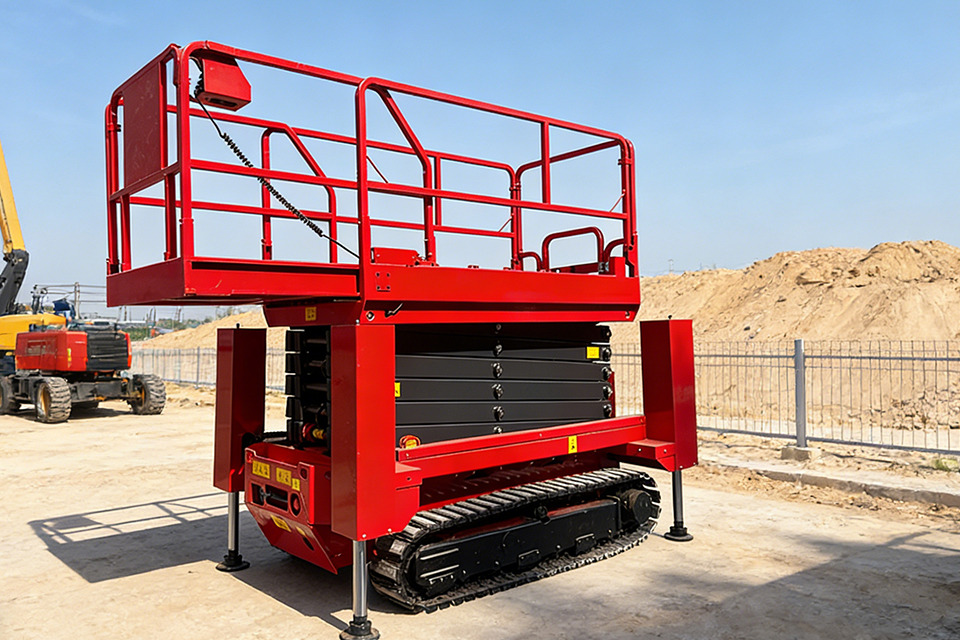
Lithium Battery Technology: The Power Behind Green Construction
Chemistry and Performance Advantages
Lithium battery technology has matured to address the demanding requirements of aerial work platform applications. Lithium Iron Phosphate (LiFePO4) chemistry has emerged as the preferred choice for AWPs, offering enhanced safety profiles, thermal stability, and longevity compared to alternative lithium formulations . These characteristics prove essential for industrial equipment where battery failures can strand workers at height, disrupt project schedules, and create safety hazards.
The performance advantages over traditional lead-acid batteries are substantial and multifaceted. Lithium batteries deliver 3,500+ charge cycles compared to 500-1,000 cycles for lead-acid equivalents, dramatically extending service life and reducing replacement frequency . Energy density improvements enable longer operational periods between charges, while fast-charging capabilities reduce downtime—critical factors for equipment utilization in rental fleets and construction schedules. Spiderway's AWP battery systems demonstrate charging rates up to 3x faster than lead-acid alternatives, enabling rapid turnaround between shifts .
Battery management systems (BMS) represent the intelligence layer that optimizes lithium battery performance and safety. These integrated systems monitor cell temperatures, balance charge across cells, prevent overcharge and deep discharge, and provide diagnostic data for maintenance planning . Real-time monitoring ensures that batteries operate within safe parameters while maximizing available capacity, protecting both equipment investment and operational continuity.
Integration with Platform Design
Modern electric AWPs are designed around lithium battery characteristics rather than simply retrofitting electric powertrains into diesel-era chassis. This integrated approach optimizes weight distribution, center of gravity, and structural efficiency. The reduced weight of lithium batteries compared to lead-acid equivalents, combined with the elimination of internal combustion engines and fuel systems, enables platform designs with improved stability and reduced ground pressure .
Zoomlion's development of a 40-meter electric AWP—the highest in the world—demonstrates that electrification need not compromise reach capability . This achievement required comprehensive system engineering: high-capacity battery packs capable of sustaining extended operations at maximum elevation, efficient electric motors that deliver precise control without hydraulic complexity, and structural optimization that maintains stability despite battery weight and distribution challenges.
The integration extends to charging infrastructure. Delta-Q's specialized charging systems for MEWP OEMs provide optimized charging profiles that maximize battery life while minimizing charge duration . These systems communicate with platform BMS to adjust charging parameters based on battery condition, temperature, and operational history—intelligent charging that preserves battery investment while ensuring equipment availability.
Operational Advantages: Beyond Environmental Compliance
Noise Reduction and Urban Viability
The acoustic signature of construction equipment increasingly determines project viability in urban environments. Diesel-powered AWPs generate noise levels that exceed municipal ordinances, restricting operation hours and creating community relations challenges. Electric platforms operate at substantially reduced noise levels—often 10-15 decibels lower than combustion equivalents—enabling extended operating hours and indoor use without hearing protection requirements .
This quiet operation transforms project logistics. Nighttime maintenance in operational facilities, early morning work in residential areas, and continuous operation in noise-sensitive environments such as hospitals and educational institutions all become feasible with electric platforms. The elimination of exhaust emissions similarly expands operational flexibility, allowing seamless transition between indoor and outdoor work without equipment changes or ventilation concerns .
Total Cost of Ownership Economics
The economic case for lithium-powered AWPs extends beyond fuel cost savings to encompass maintenance reduction, operational efficiency, and residual value. Electric drivetrains eliminate engine oil changes, filter replacements, exhaust system maintenance, and the complex emission control systems that burden diesel equipment. These maintenance reductions translate to lower labor costs, reduced parts inventory, and improved equipment availability .
Energy costs favor electric operation substantially. Electricity prices, even in high-cost markets, typically deliver 60-70% savings compared to diesel fuel for equivalent energy content. When combined with regenerative braking systems that recover energy during platform lowering, operational energy costs become a minor component of total ownership expense . For rental companies operating large fleets, these savings accumulate to substantial competitive advantages in pricing flexibility and profit margins.
Residual value trends increasingly favor electric equipment. As environmental regulations tighten and urban emission restrictions expand, demand for diesel equipment in secondary markets declines. Electric AWPs retain value better and face broader resale markets, improving total cost of ownership calculations beyond operational savings alone.
Market Transformation and Industry Response
Manufacturer Electrification Strategies
Leading AWP manufacturers have committed to comprehensive electrification across product portfolios. Zoomlion's new energy AWP lineup covers ranges from 4 to 68 meters, with new energy models accounting for 60% of AWP sales in 2021 and presence in 58 countries . This scale demonstrates that electrification has transitioned from niche application to mainstream product strategy.
JLG, Genie, and Haulotte have similarly expanded electric offerings across scissor lift and boom lift categories. JLG's EC450AJ Compact, launched at bauma 2025, addresses European urban market demands with lithium-ion battery power and zero tail swing design . Genie's next-generation scissor lifts incorporate curved linkage designs that reduce weight while optimizing battery placement and capacity . These product developments reflect market intelligence indicating that electric capability has become a baseline expectation rather than premium option.
The rental market drives much of this transformation. Rental companies seek fleet standardization that maximizes utilization across diverse customer applications. Electric platforms serve indoor and outdoor markets without the segment restrictions that limit diesel equipment demand, improving fleet turnover and return on investment. The thriving North American rental sector, generating over $55 billion annually, increasingly specifies electric platforms for new fleet additions .
Regional Adoption Patterns
Regional markets demonstrate varying electrification trajectories based on regulatory environments, energy costs, and infrastructure development. Europe leads in electric adoption, driven by stringent emissions regulations, urban low-emission zones, and high energy costs that maximize the economic advantages of electric operation. Germany's National Hydrogen and Fuel Cell Technology Innovation Program provides financial incentives for battery-electric construction equipment, while France's low-emission zone regulations in major cities prompt diesel phase-outs .
North America follows with substantial electric adoption, supported by the Inflation Reduction Act's tax credits and California Air Resources Board's strict off-road diesel regulations . The mature construction market and strong rental infrastructure facilitate rapid technology adoption once economic advantages become clear.
Asia-Pacific represents the fastest-growing electric AWP market, with China's domestic manufacturers including Zoomlion, Dingli, and Sinoboom driving both supply and demand . Rapid urbanization, infrastructure investment, and government sustainability initiatives create market conditions favoring electric equipment adoption at scale.
Green Construction Integration
Zero-Emission Jobsites
The concept of zero-emission construction sites—once considered aspirational—is becoming operational reality through equipment electrification. Lithium-powered AWPs eliminate local emissions during operation, contributing to air quality improvements that benefit workers and surrounding communities. When combined with renewable energy charging, these platforms achieve lifecycle emissions reductions of 80-90% compared to diesel equivalents .
This capability proves particularly valuable for projects pursuing green building certifications such as LEED, BREEAM, or WELL. Construction phase emissions increasingly factor into building lifecycle assessments, and zero-emission equipment contributes to certification points while demonstrating developer commitment to sustainability. For corporate clients with carbon neutrality commitments, zero-emission construction aligns supply chain operations with organizational environmental objectives.
Sustainable Fleet Management
The environmental advantages of lithium-powered AWPs extend to end-of-life management. Battery recycling infrastructure is developing rapidly, with second-life applications for industrial power storage extending component utility before material recovery . Manufacturers are implementing take-back programs and designing for disassembly to facilitate component recycling and material recovery.
Telematics integration enables optimization of charging patterns to minimize energy costs and grid impact. Smart charging systems can schedule charging during off-peak hours or coordinate with on-site renewable generation, further reducing carbon intensity of operations. These intelligent energy management capabilities transform AWPs from passive equipment to active participants in sustainable energy systems.
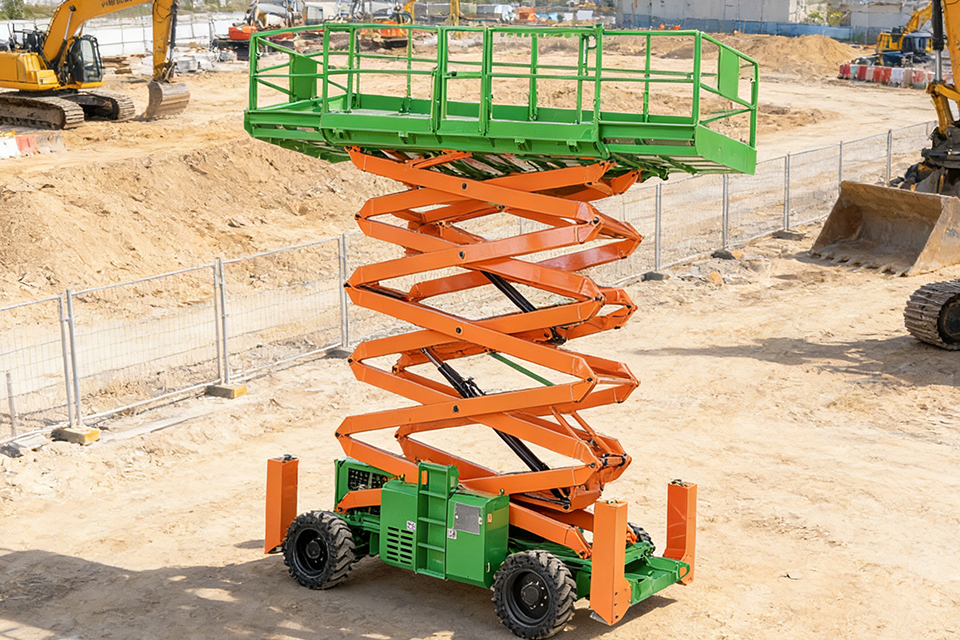
Challenges and Solutions
Range and Charging Infrastructure
Range anxiety—the concern that battery capacity will prove insufficient for operational demands—has historically constrained electric equipment adoption. Modern lithium battery systems address this through capacity optimization and fast-charging capability. Platform designs incorporate battery capacities matched to typical duty cycles, with onboard diagnostics that predict remaining operational time based on current usage patterns.
Charging infrastructure development keeps pace with equipment deployment. Job site charging stations, standardized connectors, and rapid charging protocols enable opportunity charging during breaks and shift changes that maintains equipment availability . For applications requiring continuous operation, hybrid systems combine battery power with compact generators, providing zero-emission capability for typical use with extended range when necessary.
Cold Weather Performance
Battery performance in extreme cold has presented operational challenges, with capacity reduction and charging difficulties affecting equipment reliability. Advanced battery management systems address these concerns through thermal management—heating batteries to optimal operating temperatures and preconditioning prior to charging. LiFePO4 chemistry demonstrates superior cold-weather performance compared to other lithium formulations, maintaining operational capability in conditions that challenge alternative technologies .
Operational protocols adapt to cold conditions, with battery state-of-charge monitoring that prevents deep discharge in low temperatures and charging procedures that ensure battery longevity despite environmental stress. These combined technical and procedural approaches maintain electric platform viability across climate zones that previously favored diesel equipment.
Future Trajectories
Battery Technology Evolution
Continued lithium battery development promises further improvements in energy density, charging speed, and operational longevity. Solid-state battery technologies, currently in development, offer potential for 50% energy density improvements and enhanced safety characteristics that could transform AWP design possibilities. These advances will enable longer operational periods, faster charging, and potentially lighter equipment that improves transportability and reduces ground pressure.
Integration with construction site energy systems will deepen. Vehicle-to-grid capabilities may enable AWPs to serve as mobile energy storage, providing power for tools and equipment or supporting grid stability during peak demand periods. This bidirectional energy flow transforms equipment from energy consumers to active participants in site energy management.
Autonomous and Intelligent Operation
Artificial intelligence integration will optimize electric platform operation for energy efficiency and productivity. Autonomous positioning systems can calculate optimal paths that minimize energy consumption while maximizing work coverage. Predictive algorithms will anticipate energy needs based on scheduled tasks and environmental conditions, ensuring that equipment maintains adequate charge for operational requirements.
The convergence of electrification and automation creates synergies that amplify both technologies' benefits. Electric platforms provide the precise, responsive control necessary for autonomous operation, while intelligent energy management extends operational duration and reduces charging requirements. These combined capabilities will define the next generation of aerial work platforms.
Conclusion: The Green Construction Standard
Lithium battery aerial work platforms have transitioned from alternative technology to construction industry standard. The combination of environmental benefits, operational advantages, and economic viability creates an irreversible market transformation that aligns construction equipment with sustainability imperatives. As battery technology continues advancing and charging infrastructure expands, electric platforms will dominate an increasing share of applications currently served by combustion equipment.
For construction industry stakeholders, the transition to lithium-powered AWPs represents opportunity rather than obligation. Reduced operating costs, expanded operational flexibility, and alignment with environmental regulations create competitive advantages that reward early adoption. The green construction revolution is not coming—it is here, powered by lithium batteries that deliver quieter, cleaner, and more efficient elevated access. The aerial work platform industry has kicked off green construction in earnest, and the trajectory points toward comprehensive electrification that will define the sector for decades to come.
Name: selena
Mobile:+86-13176910558
Tel:+86-0535-2090977
Whatsapp:8613181602336
Email:vip@mingyuforklift.com
Add:Xiaqiu Town, Laizhou, Yantai City, Shandong Province, China