
vip@mingyuforklift.com
+86-0535-2090977

The Foundation of Aerial Safety: Stability and Load Management
In the aerial work platform industry, the margin between safe operation and catastrophic failure is measured in millimeters of stability and kilograms of load capacity. Every year, accidents involving elevated work platforms result in serious injuries and fatalities, with the majority traceable to instability or overloading—factors that modern engineering can effectively eliminate. Professional aerial platforms have evolved from simple mechanical lifts to sophisticated systems where stability and load capacity are managed through integrated sensor networks, intelligent control systems, and structural engineering that prioritizes safety above all other considerations.
The regulatory landscape reflects this safety imperative. North American standards now mandate that all Mobile Elevating Work Platforms (MEWPs) incorporate on-board load sensing systems to continuously monitor platform weight and disable functions when load limits are reached . Similarly, chassis tilt sensors are required to measure machine angle during operation, automatically disabling functions when slope limits are exceeded . These requirements represent more than compliance checkboxes; they embody a fundamental shift toward proactive safety systems that prevent accidents before they occur.
Load Sensing Technology: Intelligent Weight Management
Continuous Monitoring Systems
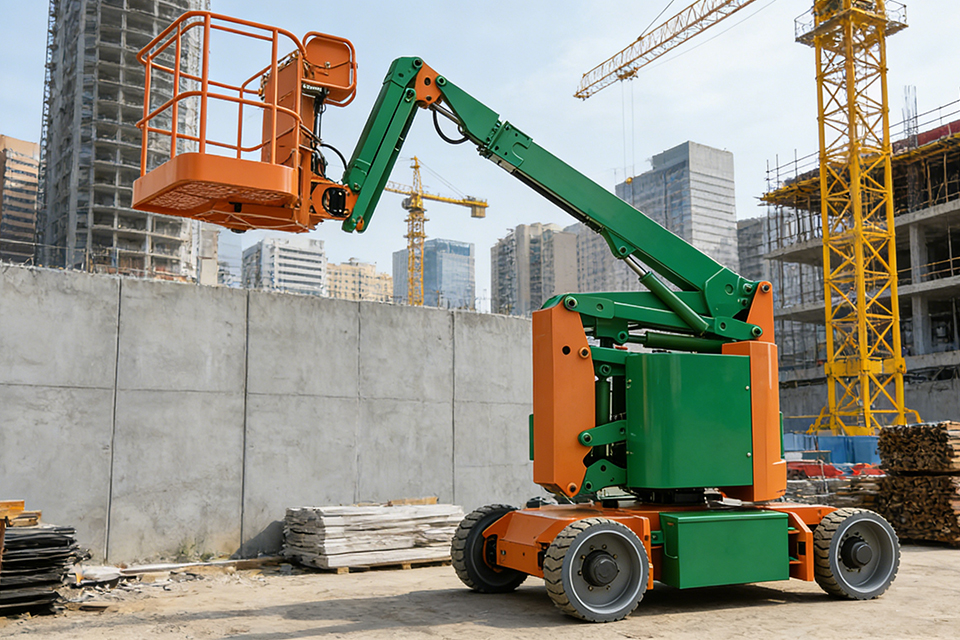
Modern professional AWPs incorporate sophisticated load-sensing technologies that transform weight management from operator judgment to automated safety enforcement. These systems utilize strain gauges, pressure transducers, and load cells distributed throughout the platform structure to calculate total load in real-time with precision measured in single kilograms . The Genie AWP 40 exemplifies this capability with automatic load-sensing systems that monitor weight distribution and prevent overloading, ensuring compliance with OSHA and ANSI standards while protecting workers .
The operational mechanics of these systems demonstrate their sophistication. As weight is added to the platform—whether workers, tools, or materials—sensors transmit data to central processors that calculate both total load and its distribution. If weight approaches rated capacity, visual and audible warnings alert operators. Should capacity be exceeded, the system restricts platform elevation, preventing the dangerous combination of height and overload that leads to tip-over incidents . This automatic intervention removes the human error factor that has historically contributed to stability failures.
Dana's Spicer Smart Suite Intelligent Load Monitoring System (ILMS) represents the cutting edge of load management technology. Adapted specifically for AWPs, this system uses patented data-collecting technologies across the vehicle to prevent tip-over incidents, estimate static loads, and supply intelligent calibration management . By analyzing load distribution in real-time, ILMS alerts operators to potential tipping situations before they develop, effectively creating a safety buffer between normal operation and hazardous conditions.
Dynamic Load Considerations
Static load capacity—the maximum weight a platform can support at rest—represents only one dimension of load management. Professional platforms must also accommodate dynamic loads created by movement, wind forces, and operational stresses. Advanced load-sensing systems account for these dynamic factors, adjusting safe working envelopes based on real-time conditions. When platforms are elevated and extended, the moment arm of any load increases dramatically; intelligent systems calculate these moments and restrict operation accordingly .
The ANSI A92.20 standard's load sensing requirements specifically address these dynamic considerations. Systems must prevent platform movement when load limits are reached, but they must also account for the distribution of that load. A platform loaded to capacity with weight concentrated on one side presents different stability characteristics than the same total weight evenly distributed. Modern sensors detect these distribution variations and adjust safety parameters to maintain stability margins .
Stability Engineering: Structural and Active Systems
Structural Design Principles
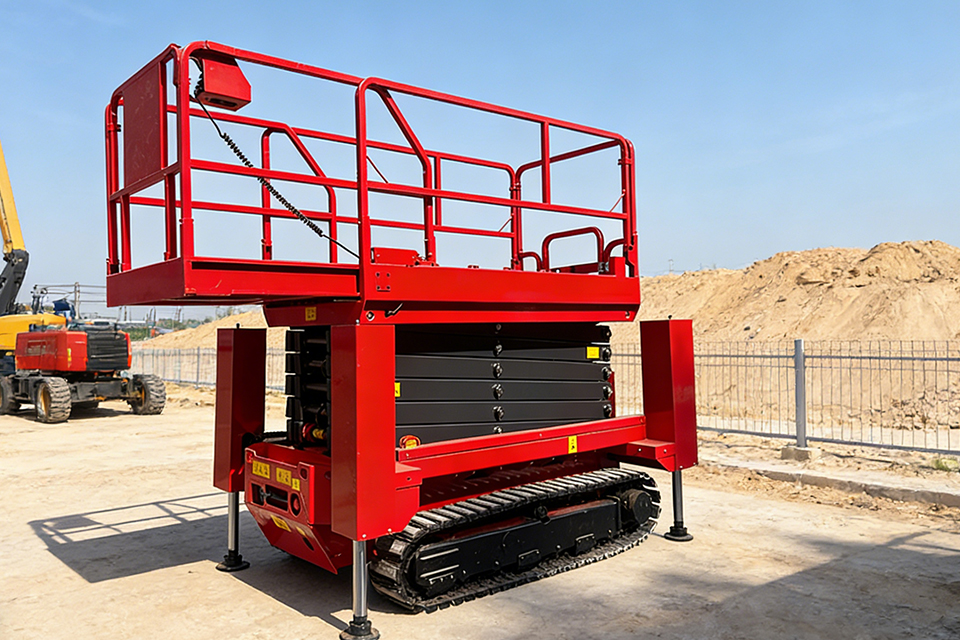
The inherent stability of professional AWPs begins with fundamental structural engineering. Scissor lifts achieve stability through wide base dimensions and vertical lift geometry that maintains center of gravity directly above the support structure . The crisscrossing arm design creates a robust structure that resists lateral forces while providing substantial platform capacity—often exceeding 500 kg for models designed for multiple workers and heavy materials .
Boom lifts present more complex stability challenges due to their extended reach capabilities. Articulating and telescopic booms create significant moment arms that must be counterbalanced by chassis weight and outrigger systems. The engineering solution involves sophisticated weight distribution, with heavy components positioned to maximize stability during extension. Platform capacity for boom lifts typically ranges from 230-450 kg—lower than scissor lifts but appropriate for the extended reach and maneuverability these platforms provide .
High-strength steel alloys and advanced manufacturing techniques enable structural integrity without excessive weight. Weldox, Domex, and Strenx steels provide exceptional strength-to-weight ratios, allowing platforms to achieve substantial working heights while maintaining stability margins . These materials undergo rigorous testing including 2,000-cycle stress tests and ultrasonic weld penetration scans to ensure durability under cyclic loading .
Active Stabilization Technologies
Beyond passive structural design, active stabilization systems continuously maintain platform security. Automatic leveling systems adjust chassis orientation to compensate for uneven terrain, ensuring that platforms remain stable on slopes up to manufacturer-specified limits . These systems utilize hydraulic actuators controlled by inclinometers that detect chassis angle and adjust support legs or suspension systems to achieve level orientation.
Self-leveling technology represents the latest advancement in active stabilization. Available on premium boom lifts, these systems automatically level the chassis continuously, even when driving elevated . This capability eliminates the trial-and-error of finding level work areas and reduces operator fatigue by minimizing platform bounce during travel over uneven terrain. The technology adjusts the machine to ground conditions rather than requiring ground preparation for the machine—a fundamental shift that improves productivity while enhancing safety.
For scissor lifts, variable-tilt technology provides similar benefits, allowing operation on slopes that would previously have required extensive site preparation . These systems extend the operational envelope of professional platforms while maintaining the stability essential for safe elevated work.
Terrain Sensing and Environmental Adaptation
Dynamic Terrain Sensing
The new ANSI standards mandate dynamic terrain sensing for boom lifts, requiring systems that automatically disable certain functions when machines operate beyond their slope limits . These systems integrate chassis inclinometers with control systems that restrict boom extension, platform elevation, and drive functions when terrain angles approach stability thresholds.
The operational benefits extend beyond safety compliance. By providing real-time feedback on terrain suitability, these systems enable operators to make informed decisions about positioning and setup. Rather than discovering instability through dangerous experimentation, operators receive immediate data on whether current terrain supports intended operations. This information streamlines setup processes while preventing the trial-and-error approaches that historically led to accidents.
Outrigger Systems and Ground Pressure Management
Professional platforms utilize outrigger systems that extend the effective base dimension, dramatically improving stability during elevated operation. Modern outriggers feature automatic deployment and leveling, with individual leg adjustment that accommodates uneven surfaces . Scissor-style outriggers with automatic leveling jacks enable operators to position machines and level frames up to 6 degrees, compensating for significant terrain irregularities .
Ground pressure management ensures that stability improvements don't compromise surface integrity. Spider lifts and crawler-mounted platforms distribute weight through track systems that reduce ground pressure to levels safe for sensitive surfaces including landscaping, flooring systems, and elevated structural slabs . This capability extends professional platform applications to environments where traditional wheeled equipment would cause damage or prove unstable.
Platform Capacity and Application Matching
Capacity Ratings and Real-World Application
Understanding platform capacity requires distinguishing between rated capacity and practical working load. Rated capacity represents the maximum weight a platform can safely support under specified conditions, while practical working load accounts for worker weight, tools, materials, and dynamic forces. Professional platforms provide substantial margins between these values, with scissor lifts typically offering 500+ kg capacity and boom lifts providing 230-450 kg depending on configuration .
The REES Industries integrated rail scissor lift series demonstrates capacity engineering with models supporting up to 450 kg on larger platforms . These capacities accommodate multiple workers with heavy tools and materials, enabling productive teamwork without approaching safety limits. Load sensing systems ensure that even with substantial rated capacity, operations remain within safe parameters.
Specialized Configurations for Demanding Loads
Professional applications often require capacity characteristics beyond standard configurations. Explosion-proof platforms maintain full load capacity while incorporating safety features for hazardous environments . Insulated platforms support electrical utility work with appropriate protection ratings. Low-weight designs with aluminum components reduce overall machine weight while maintaining platform capacity, improving transportability and reducing ground pressure.
Material handling boom lifts combine personnel lifting with load manipulation capabilities. Elliott's HiReach platforms, designed for utility applications, feature 360-degree continuous rotation combined with material handling systems that manage loads safely during elevated operation . These specialized configurations demonstrate that load capacity and stability engineering can adapt to specific industry requirements without compromising safety.
Control Systems and Operator Interface
Intelligent Control Integration
Modern professional platforms integrate stability and load management into intuitive control systems. Joystick-based proportional controls provide precise command of platform functions, with response rates adjusted based on load status and stability conditions . Electronic control systems like Genie's ALC 1000 offer menu-based adjustments for machine calibration, multi-language diagnostics, and real-time operational feedback .
The operator interface displays critical stability information including load status, tilt angle, and operational restrictions. When systems detect conditions approaching safety limits—whether from overload, excessive slope, or environmental factors—clear warnings alert operators to modify operations. These interfaces transform complex engineering data into actionable information that supports safe decision-making.
Emergency Systems and Fail-Safe Operation
Professional platforms incorporate multiple redundant safety systems that maintain stability even during component failures. Emergency descent systems allow safe platform lowering during power failures or mechanical issues . Load sensing systems maintain their safety functions even when primary control systems are compromised. Hydraulic systems incorporate pressure relief valves that prevent over-pressurization and uncontrolled movement .
Secondary guarding systems provide additional protection beyond primary safety features. Snorkel Guard, standard on all new boom lifts since 2015, stops all machine movement if activated by operator contact or solid objects . Ultrasonic sensing systems detect overhead obstructions during elevation or driving, preventing collision-related instability. These layered safety approaches ensure that single-point failures cannot compromise overall platform stability.
Certification, Testing, and Quality Assurance
Standards Compliance and Verification
Professional platforms undergo rigorous testing to verify stability and load capacity claims. CE marking under the Machinery Directive 2006/42/EC requires comprehensive risk assessment, structural calculations, and stability testing . ANSI/SAIA A92 standards mandate specific safety devices including load sensing, tilt sensors, and emergency descent systems .
Manufacturers conduct extensive validation testing including full-extension load tests, cyclic stress testing, and stability verification across operational envelopes. REES Industries performs 2,000-cycle railing stress tests and ultrasonic weld penetration scans, with every platform load-tested at full extension before delivery . These quality assurance processes ensure that rated capacities reflect real-world operational capabilities, not theoretical maximums.
Field Verification and Maintenance
Professional platform safety extends beyond manufacturing through operational life. Pre-start inspection protocols verify that load sensing systems, tilt sensors, and stability systems function correctly before each use . Mobile apps and digital checklists ensure comprehensive inspections that identify potential issues before they affect safety.
Maintenance programs preserve stability and load capacity characteristics over equipment lifetime. Battery maintenance, hydraulic system servicing, and structural inspections ensure that platforms maintain their safety margins throughout operational life. Smart diagnostic systems alert operators or maintenance teams when components approach end-of-service life, preventing failures that could compromise stability .
Future Trajectories: Enhanced Stability Through Technology
Artificial Intelligence and Predictive Stability
Artificial intelligence integration promises to enhance stability management through predictive algorithms that anticipate unsafe conditions before they develop. Machine learning analysis of operational data can identify patterns that precede instability incidents, enabling proactive intervention. AI-powered limiters analyze load distribution and stability dynamically, adjusting machine capabilities to prevent overextension or tipping .
Autonomous Stability Management
Semi-autonomous and autonomous platforms will manage stability without continuous operator input. Self-leveling systems will automatically optimize chassis orientation for maximum stability. Load distribution will be managed automatically as workers and materials move within platforms. These capabilities will reduce operator cognitive load while improving consistency of safe operation across varying skill levels.
Conclusion: Engineering Confidence at Elevation
The evolution of professional aerial work platforms has created equipment where stability and load capacity are managed through integrated systems rather than operator skill alone. From continuous load sensing that prevents overloading to automatic leveling that maintains stability on uneven terrain, modern platforms safeguard every aerial operation through engineering sophistication that makes safety the default outcome.
For construction managers, safety officers, and equipment operators, these advancements transform elevated work from high-risk activity to routine operation. The combination of robust structural design, intelligent sensing systems, and proactive safety enforcement creates an environment where workers can focus on productive tasks rather than continuous risk assessment. In professional aerial work, stability and load capacity are no longer variables to manage—they are guarantees engineered into every platform, safeguarding every operation from ground level to maximum elevation.
Name: selena
Mobile:+86-13176910558
Tel:+86-0535-2090977
Whatsapp:8613181602336
Email:vip@mingyuforklift.com
Add:Xiaqiu Town, Laizhou, Yantai City, Shandong Province, China
