
vip@mingyuforklift.com
+86-0535-2090977

Introduction
Aerial Work Platforms (AWPs), now more commonly referred to as Mobile Elevating Work Platforms (MEWPs) under updated ANSI and international standards, have revolutionized how industries approach elevated work. These mechanical systems provide temporary access to elevated areas that would otherwise require scaffolding, ladders, or other traditional access methods. From construction sites to warehouse maintenance, film production to emergency rescue operations, AWPs have become indispensable tools for modern industry.
The global market for aerial work platforms continues to expand, with projections indicating growth of nearly seven percent annually through 2026 . This growth reflects not only increasing construction activity worldwide but also the recognition that properly selected and operated AWPs significantly enhance productivity while reducing workplace accidents compared to conventional access methods.
Understanding the classification systems, selection criteria, and application scenarios for these machines is essential for safety managers, project engineers, and equipment operators. This guide provides a comprehensive technical overview of aerial work platform taxonomy, decision-making frameworks for equipment selection, and real-world application guidance.
Classification Systems: Understanding MEWP Taxonomy
Group and Type Classification (ANSI/CSA Standards)
The modern classification of MEWPs follows standards established by the American National Standards Institute (ANSI) and the Canadian Standards Association (CSA), which replaced the older AWP terminology with a more comprehensive MEWP framework . This classification system organizes machines by two primary characteristics: Group (based on platform position relative to the tipping line) and Type (based on mobility characteristics).
Group A MEWPs feature platforms that remain vertically aligned within the tipping lines during operation. This group includes scissor lifts and vertical mast lifts, where the center of gravity stays between the machine's wheels or outriggers throughout the elevation range .
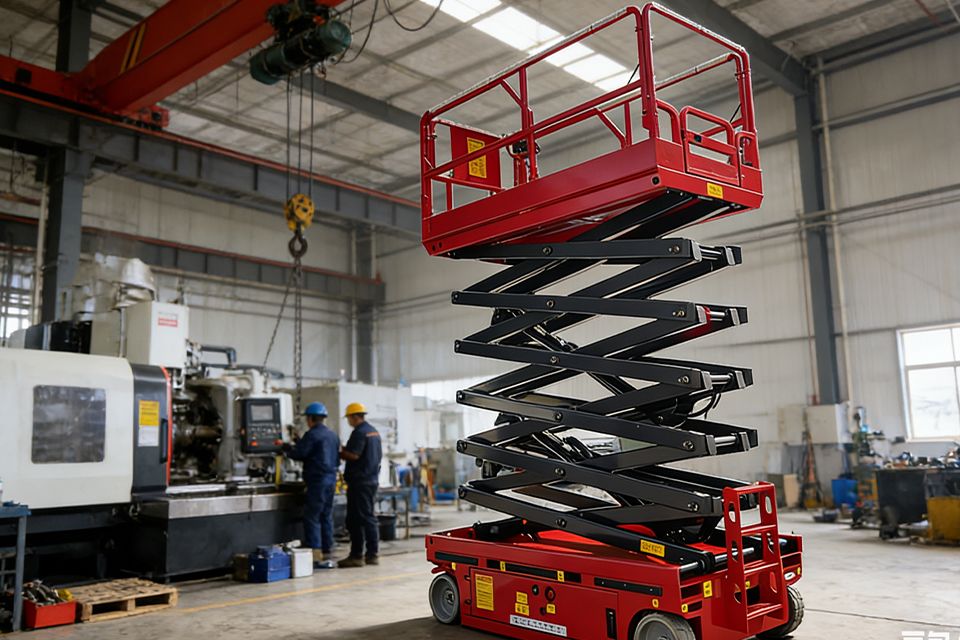
Group B MEWPs extend their platforms beyond the tipping line during operation. This encompasses all boom-type lifts, including articulated and telescopic booms, where the platform can be positioned outside the machine's base footprint .
The Type classification addresses mobility:
Type 1: Machines that can only travel with the platform in the stowed/lowered position (most scissor lifts)
Type 2: Machines capable of traveling with the platform elevated, controlled from the chassis
Type 3: Self-propelled units that can travel with the platform elevated, controlled from within the work platform itself (most modern boom lifts)
Major Equipment Categories
Beyond the standardized MEWP classification, the industry recognizes several distinct equipment categories based on mechanical design and operational characteristics:
1. Scissor Lifts
Scissor lifts operate through a crisscrossing pantograph mechanism that extends vertically to raise a rectangular platform. These machines provide only vertical movement—the platform travels directly above the base, requiring positioning directly beneath the work area .
Technical Specifications:
Working height: 15–60 feet (4.5–18 meters), with some specialized models reaching higher
Platform capacity: 500–1,500 lbs (227–680 kg), with rough-terrain models offering higher capacities
Platform dimensions: Typically spacious, accommodating multiple workers and equipment
Power options: Electric (indoor), diesel (outdoor), or hybrid systems
Scissor lifts excel in applications requiring vertical access with substantial platform space. Their mechanical simplicity translates to lower acquisition costs and straightforward operation compared to boom-type equipment .
2. Boom Lifts: Articulating and Telescopic
Boom lifts utilize hydraulic arms to position platforms at various heights and horizontal distances from the base. Two primary subcategories exist:
Articulating (Knuckle) Boom Lifts feature multiple jointed sections allowing the boom to bend around obstacles. The turntable base typically provides 360-degree rotation, enabling access to complex architectural features or industrial equipment . These machines are ideal for maintenance work where direct vertical access is blocked by building elements, machinery, or structural components.
Telescopic Boom Lifts employ straight, extendable boom sections that provide maximum horizontal outreach. These machines offer the greatest working heights in the AWP family, with some models exceeding 180 feet (55 meters) . The straight boom configuration provides stability and precise positioning for applications requiring extended reach over obstacles or across voids.
Technical Specifications:
Working height: 30–180+ feet (9–55+ meters)
Horizontal outreach: Up to 75 feet (23 meters) depending on model
Platform capacity: 500–1,000 lbs (227–454 kg)
Power options: Diesel standard; electric and hybrid variants available
3. Vertical Mast Lifts
These compact machines feature a single telescoping mast that raises a small platform vertically. Designed for one-person operation, vertical mast lifts offer exceptional maneuverability in confined spaces .
Technical Specifications:
Working height: 15–30 feet (4.5–9 meters)
Platform capacity: 300–500 lbs (136–227 kg)
Width: Narrow enough to pass through standard doorways and operate in tight aisles
Power: Electric-only operation
4. Atrium (Spider) Lifts
Named for their four outrigger legs resembling spider limbs, these specialized boom lifts combine compact transport dimensions with substantial working heights. The outrigger system distributes weight over a broader area, enabling operation on sensitive flooring or uneven terrain where conventional lifts would be unsuitable .
Technical Specifications:
Working height: 30–85 feet (9–26 meters)
Platform capacity: 440–500 lbs (200–227 kg)
Track or wheel configurations for various terrain conditions
Extremely narrow transport width
5. Personnel Lifts (Push-Around)
These lightweight, manually positioned units serve as mechanical ladders for one-person tasks. They offer greater stability than conventional ladders while maintaining portability and simplicity .
Technical Specifications:
Working height: 20–40 feet (6–12 meters)
Platform capacity: ~300 lbs (136 kg)
Manual positioning; non-powered vertical movement
Ideal for light maintenance and facility management
6. Towable Boom Lifts
Mounted on trailer chassis, these portable units can be towed between job sites using standard vehicles. They bridge the gap between permanent installations and full self-propelled units .
Technical Specifications:
Working height: 30–65 feet (9–20 meters)
Platform capacity: 400–500 lbs (181–227 kg)
Hydraulic outriggers for stability
Electric or gas power options
Selection Criteria: A Decision Framework
Selecting the appropriate aerial work platform requires systematic evaluation of multiple technical and operational factors. The following framework addresses the primary selection criteria equipment managers must consider :
1. Working Height and Horizontal Reach Requirements
The fundamental starting point for AWP selection is defining the vertical and horizontal access requirements. Critical questions include:
What is the maximum elevation required for the task?
Is horizontal outreach necessary to access the work area, or can the machine be positioned directly beneath?
Are there obstacles (building overhangs, machinery, structural elements) that require up-and-over capability?
For tasks below 15 meters requiring only vertical access, electric scissor lifts typically provide the most economical and efficient solution. When horizontal outreach exceeds 5 meters or working heights surpass 20 meters, boom-type equipment becomes necessary .
Articulating booms excel when navigating around obstacles, while telescopic booms maximize reach in open environments. For extreme heights exceeding 40 meters, telescopic boom lifts offer the only practical solution .
2. Load Capacity and Platform Configuration
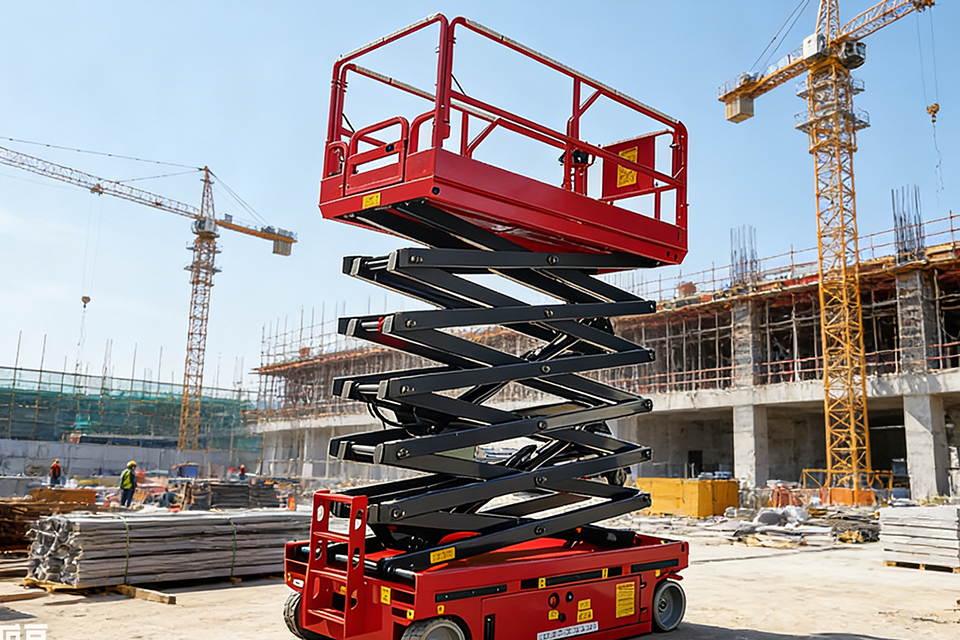
Platform capacity must accommodate not only personnel weight but also tools, materials, and dynamic loads from work activities. Industry standards require that rated capacities include all personnel, equipment, and materials on the platform simultaneously .
Capacity Considerations:
Personnel count: How many workers require simultaneous platform access?
Tool weight: What specialized equipment (welding machines, pneumatic tools, glass handling systems) must be supported?
Material handling: Will the platform transport construction materials, or only serve as a work station?
Scissor lifts generally offer the highest platform capacities (up to 1,500 lbs for rough-terrain models), making them preferred for multi-person crews with substantial equipment . Boom lifts typically offer lower capacities (500–1,000 lbs) due to the mechanical stresses of extended boom operation .
Modern AWPs offer platform customization options—pipe racks, glazier kits, tool trays—that optimize space utilization and organization for specific trades .
3. Terrain and Environmental Conditions
The operating environment fundamentally constrains equipment selection:
Indoor Applications:
Floor loading limits may restrict machine weight
Doorway and aisle dimensions constrain machine width
Ventilation requirements may mandate electric power
Noise restrictions favor electric operation
Non-marking tires protect flooring surfaces
Outdoor Applications:
Ground conditions (paved, gravel, mud, slopes) determine drive system requirements
Gradeability specifications become critical for sloped sites
Wind ratings must be respected; most AWPs have operational wind speed limits
Rough-terrain models with four-wheel drive and oscillating axles handle uneven surfaces
Specialized Environments:
Atrium lifts with track systems navigate sensitive flooring (marble, tile) without damage
Bi-leveling scissor lifts accommodate significant slopes through automatic leveling systems
Corrosion-resistant finishes and sealed electrical systems suit marine or chemical environments
4. Power Source Selection
The power system affects operational cost, environmental impact, and application suitability:
Electric Systems:
Zero emissions for indoor air quality
Reduced noise levels (typically <65 dB)
Lower operating costs per hour
Limited by battery capacity; require charging infrastructure
Best for indoor maintenance, warehouse operations, and clean environments
Diesel Systems:
Unlimited runtime with fuel availability
Higher power output for rough terrain and heavy loads
Emissions restrict indoor use without ventilation
Higher operating costs due to fuel and maintenance
Standard for outdoor construction and industrial applications
Hybrid Systems:
Combine electric operation with diesel backup
Higher acquisition cost offset by operational flexibility
Ideal for mixed indoor/outdoor applications
5. Mobility and Transport Considerations
Self-propelled units offer job site mobility but require transport between sites. Towable units provide site-to-site flexibility but lack self-propulsion during operation. For multi-site projects, transport logistics—including trailer requirements, loading procedures, and permitting—may influence selection as significantly as operational characteristics .
Application Scenarios: Matching Equipment to Tasks
Construction and Building Envelope Work
Facade Installation and Maintenance: Articulating boom lifts provide the up-and-over capability necessary to navigate building projections, balconies, and architectural features. The 360-degree continuous rotation enables efficient work on building corners without repositioning .
Structural Steel Erection: Telescopic boom lifts offer the height and outreach required for steel assembly, with platform capacities supporting welders and equipment. Rough-terrain capabilities accommodate unprepared construction sites .
Interior Finishing: Electric scissor lifts serve drywall installation, painting, and MEP rough-in within buildings. Narrow models navigate framed corridors, while large-deck units accommodate material carts and multiple trades simultaneously .
Industrial Maintenance and Manufacturing
Facility Maintenance: Vertical mast lifts access overhead lighting, HVAC diffusers, and fire suppression systems in operational facilities. Their compact footprint allows work in congested production areas without disrupting operations .
Equipment Servicing: Articulating booms navigate around production machinery to access overhead components for preventive maintenance. Non-marking tires and electric power maintain clean room standards where required .
Warehouse Operations: Scissor lifts support inventory management, racking installation, and facility maintenance. High-capacity rough-terrain models handle outdoor loading dock maintenance and yard work .
Specialized Applications
Film and Event Production: Towable boom lifts provide rapid deployment for lighting and camera positioning. Quiet electric models suit sound-sensitive production environments .
Arboriculture and Landscaping: Spider lifts navigate residential landscapes without damaging lawns or hardscaping. Compact transport dimensions enable access through narrow gates .
Emergency Services: Specialized boom configurations support firefighting, rescue operations, and utility maintenance. Insulated booms provide protection for electrical line work .
Safety and Compliance Considerations
Modern AWP operation requires adherence to comprehensive safety protocols. The transition from AWP to MEWP terminology reflects evolving standards that emphasize risk assessment and operator competency .
Key safety requirements include:
Operator Training and Certification: Only trained and authorized personnel may operate MEWPs. Training must cover machine-specific controls, hazard recognition, and emergency procedures .
Fall Protection: Group B MEWP operators must wear harnesses with lanyards attached to designated anchor points due to ejection risks. Group A operations typically rely on guardrail systems, though some jurisdictions require harnesses for scissor lifts as well .
Pre-Operation Inspection: Daily inspections verify tire condition, control function, emergency lowering systems, and structural integrity before operation .
Site-Specific Risk Assessment: Evaluation of ground conditions, overhead hazards (particularly electrical lines), weather conditions, and pedestrian traffic patterns must precede MEWP deployment .
Maintenance of Clearances: Minimum 10-foot clearance from energized power lines is standard; greater distances apply to higher voltage systems .
Conclusion
The aerial work platform industry offers a sophisticated array of equipment designed for specific operational contexts. From compact vertical mast lifts for facility maintenance to towering telescopic booms for industrial construction, proper classification understanding enables informed selection decisions.
The selection process demands systematic evaluation of height requirements, load capacities, environmental conditions, power systems, and mobility needs. No single machine type serves all applications; the diversity of MEWP categories reflects the diversity of elevated work challenges across industries.
As standards evolve and technology advances—with electric and hybrid systems expanding capabilities while reducing environmental impact—equipment managers must maintain current knowledge of available options and regulatory requirements. The investment in proper selection, training, and safety protocols returns substantial dividends in productivity, worker safety, and operational efficiency.
The seven percent annual growth projected for the AWP market through 2026 signals continued innovation and expanding applications. Organizations that master the classification, selection, and application of these essential machines position themselves to execute elevated work with the efficiency and safety that modern standards demand.
Name: selena
Mobile:+86-13176910558
Tel:+86-0535-2090977
Whatsapp:8613181602336
Email:vip@mingyuforklift.com
Add:Xiaqiu Town, Laizhou, Yantai City, Shandong Province, China