
vip@mingyuforklift.com
+86-0535-2090977

Introduction
Diesel-powered material handling equipment remains the backbone of heavy-duty logistics, warehousing, and construction operations worldwide. Despite the rapid electrification of the forklift and industrial truck market, diesel engines continue to dominate applications requiring high torque, extended runtime, and outdoor ruggedness. For fleet managers, procurement officers, and operations directors, understanding the fuel efficiency benchmarks for diesel-powered material handling equipment is not merely an academic exercise—it is a critical determinant of total cost of ownership (TCO), environmental compliance, and operational productivity. This article provides a comprehensive technical analysis of the fuel efficiency benchmarks that define modern diesel material handling equipment, examining the regulatory frameworks, engineering standards, real-world consumption metrics, and optimization strategies that shape this essential industrial sector.
Regulatory and Emissions Context
The fuel efficiency of diesel-powered material handling equipment cannot be discussed in isolation from the emissions regulations that govern engine design. In the United States, the Environmental Protection Agency (EPA) mandates Tier 4 Final standards for all diesel forklifts manufactured after January 1, 2013. These regulations require dramatic reductions in particulate matter (PM) by 90–95% and nitrogen oxides (NOx) by 80–85% compared to Tier 3 engines. In Europe, the equivalent standard is Stage V, which imposes similarly stringent limits on off-road diesel engines.
While these regulations were primarily designed to reduce harmful emissions, they have had profound secondary effects on fuel efficiency. To achieve compliance, manufacturers have integrated advanced aftertreatment systems including Diesel Particulate Filters (DPF), Selective Catalytic Reduction (SCR) using Diesel Exhaust Fluid (DEF), and Diesel Oxidation Catalysts (DOC). Paradoxically, these systems can increase fuel consumption under certain operating conditions due to the energy required for DPF regeneration cycles and the additional weight of aftertreatment hardware. However, the broader engineering response to Tier 4 and Stage V has driven innovations in combustion efficiency, turbocharging, and electronic fuel injection that have ultimately improved fuel economy. Modern Tier 4 diesel forklifts now demonstrate up to 18% greater fuel efficiency than their pre-Tier 4 counterparts, with some manufacturers offering fuel-saver modes that reduce consumption by an additional 14%.
The regulatory landscape creates a complex trade-off for operators. Tier 4 engines reduce environmental impact and improve long-term fuel efficiency but introduce operational complexity through DPF regeneration requirements. Forklifts used in light-duty applications with average engine loads below 40–50% may trigger active regeneration cycles every 8–12 operating hours, during which the unit must run at high load for 20–40 minutes and cannot be shut down. This operational disruption must be factored into any fuel efficiency benchmark analysis, as idling and interrupted workflows represent hidden fuel costs.
Fuel Consumption Benchmarks by Equipment Class
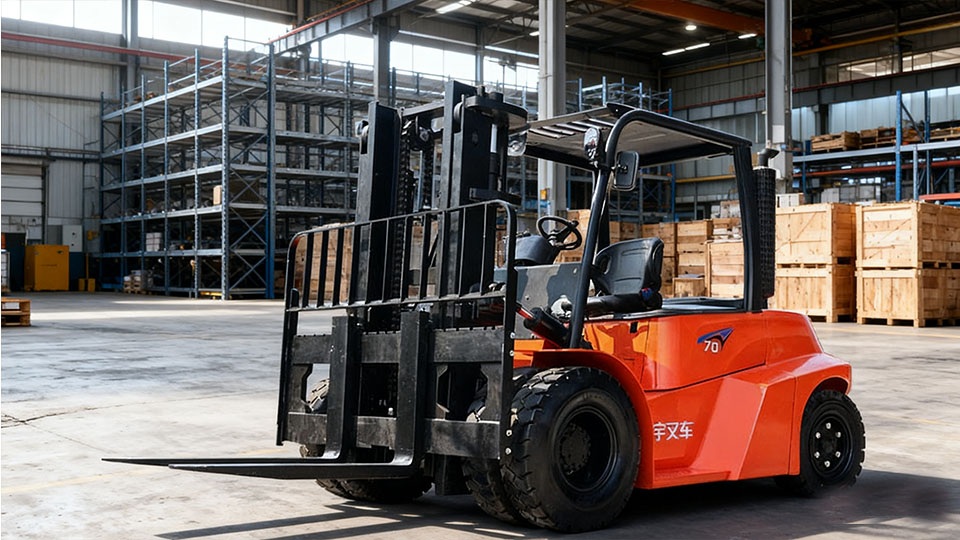
The fuel efficiency of diesel material handling equipment is typically measured in liters per hour (L/hr) or gallons per hour (gal/hr) rather than distance-based metrics like miles per gallon, reflecting the stop-and-go, load-variable nature of material handling operations. Industry data and manufacturer specifications reveal clear consumption patterns correlated with lifting capacity and duty cycle intensity.
For light-duty diesel forklifts in the 2–3 ton capacity range, fuel consumption typically falls between 2.0 and 4.0 liters per hour (approximately 0.5 to 1.0 gallons per hour). These compact units are commonly deployed in light manufacturing, retail distribution centers, and yard spotting applications where travel distances are short and load weights moderate. Under standard working conditions, a 3-ton diesel forklift averages 2.5–3.5 liters per hour.
Medium-duty equipment in the 3–5 ton range represents the workhorse category of the material handling industry. These forklifts consume between 3.0 and 6.0 liters per hour (0.8 to 1.6 gallons per hour), with the 5-ton class averaging 4.5–6.0 liters per hour. The consumption spread reflects the significant impact of operating conditions: a 5-ton unit handling continuous heavy loads on rough terrain may approach the upper bound, while the same unit performing intermittent pallet movements on smooth concrete will operate near the lower bound.
Heavy-duty diesel forklifts exceeding 5 tons in capacity demonstrate the steepest fuel consumption curves. Units in the 7-ton range typically consume 6.5–8.0 liters per hour, while 8,000-pound (approximately 3.6-ton) capacity machines in heavy-duty cycles consume 1.2–1.5 gallons per hour (4.5–5.7 liters per hour). In moderate duty cycles, consumption drops to 0.8–1.0 gallons per hour, and in light-duty applications, it can fall as low as 0.5–0.7 gallons per hour. For very heavy applications exceeding 10 tons, fuel consumption can surpass 10 liters per hour, with some specialized container handlers and heavy-duty yard trucks consuming significantly more.
The non-linear relationship between load and fuel consumption is a critical benchmark consideration. Operating at maximum rated capacity can increase fuel usage by 20–40% compared to handling lighter loads, while rough terrain or frequent inclines can increase consumption by 30–50% relative to smooth, level surfaces. Idle time represents another significant factor: a diesel forklift engine consumes 0.3–0.4 gallons per hour at idle, meaning that operations with substantial waiting periods—such as queueing for truck loading—can see annual fuel consumption increase by 15–20% if automatic idle shutdown systems are not implemented.
Thermal Efficiency and Engine Technology Benchmarks
Beyond operational consumption metrics, the underlying thermal efficiency of diesel engines in material handling equipment provides a fundamental benchmark for fuel performance. Research on heavy-duty diesel engine energy audits reveals that EPA 2010-compliant heavy-duty diesel engines convert approximately 39% of total input fuel energy to useful brake power over standard engine test cycles. The remaining energy is distributed across exhaust heat (35.5%), coolant heat transfer (10.6%), charge air cooler rejection (6%), ambient heat transfer (3.4%), friction (2.3%), pumping losses (1.7%), and parasitic accessory loads (1.3%).
Peak Brake Thermal Efficiency (BTE) for modern heavy-duty diesel platforms reaches approximately 40–42.8% at peak torque conditions. Advanced technology projections for 2020+ engine architectures suggest that maximum BTE could approach 49% through the integration of technologies including increased compression ratios, optimized combustion controls, low-friction lubricants, advanced turbocharging, and waste heat recovery systems. Simulations indicate that these advanced engines could achieve an 18.3% reduction in fuel consumption compared to 2010 baseline engines, with waste heat recovery contributing an additional 3.27% improvement.
For material handling equipment specifically, the adoption of electronic fuel injection, common-rail systems, variable geometry turbochargers, and optimized engine calibration for off-road duty cycles has narrowed the efficiency gap between industrial diesel engines and their on-highway counterparts. Modern industrial diesel engines in forklifts now routinely achieve BTE values in the 35–40% range under typical operating conditions, representing a substantial improvement over the 25–30% efficiency typical of older mechanically governed engines.
Transmission and Hydraulic System Efficiency
The fuel efficiency benchmark for diesel material handling equipment extends beyond the engine to the powertrain and hydraulic systems. Two transmission architectures dominate the market: hydrostatic and powershift (torque converter with multi-speed gearbox). Hydrostatic transmissions provide infinite speed control and superior inching capability, reducing operator fatigue by 30–40% in applications requiring frequent direction changes. However, hydrostatic systems consume 15–20% more fuel than powershift transmissions during steady-state travel due to hydraulic efficiency losses. For operations with long travel distances—such as yard operations and container terminals—powershift transmissions offer superior fuel economy, while hydrostatic systems are preferred for loading/unloading and pallet put-away applications where precision and operator comfort take precedence.
Hydraulic system efficiency also significantly impacts fuel consumption during lifting operations. Well-maintained hydraulic pumps and cylinders require less engine power, reducing overall fuel usage. Conversely, worn hydraulic components, contaminated hydraulic fluid, and improperly adjusted relief valves can increase fuel consumption by forcing the engine to work harder to achieve the same lifting performance. The overall efficiency of the hydraulic system is therefore a critical maintenance benchmark for fuel performance.
Testing Standards and Measurement Protocols
Fuel efficiency benchmarking for diesel material handling equipment relies on standardized testing protocols to ensure comparability across manufacturers and models. The International Organization for Standardization (ISO) provides the foundational framework through standards such as ISO 3691-1 (Safety requirements and verification for industrial trucks) and ISO 5053-1 (Terminology and classification). While these standards primarily address safety and classification, they establish the testing conditions under which fuel consumption data is collected.
In practice, manufacturer fuel consumption figures are typically derived from standardized duty cycles that simulate real-world operating conditions. These cycles account for acceleration, travel, lifting, lowering, and idle periods in proportions representative of typical applications. However, the absence of a universally mandated fuel consumption test cycle for industrial trucks—analogous to the EPA fuel economy tests for highway vehicles—means that published figures should be treated as comparative benchmarks rather than absolute guarantees of real-world performance.
Fleet managers seeking to establish internal benchmarks are advised to implement fuel monitoring programs that measure actual consumption over representative operating periods. The standard calculation formula—Fuel Efficiency (liters/hour) = Fuel Consumed (liters) / Operating Hours (hours)—provides a straightforward metric, but accuracy requires measurement over periods that reflect typical load and operating conditions rather than short, atypical test runs.
Optimization Strategies and Best Practices
Achieving fuel efficiency benchmarks requires more than selecting efficient equipment; it demands systematic operational optimization. Operator behavior represents one of the most significant controllable variables. Aggressive acceleration, excessive idling, and improper load handling can increase fuel consumption by 20% or more compared to smooth, trained operation. Comprehensive operator training programs that emphasize fuel-efficient driving techniques—including route planning, minimizing travel distances, and proper load positioning—are essential.
Maintenance discipline directly impacts fuel efficiency benchmarks. Clogged air filters can increase fuel consumption by 10–15%, while underinflated tires create additional rolling resistance that forces the engine to work harder. Regular oil changes, filter replacements, fuel system inspections, and hydraulic system maintenance are non-negotiable elements of fuel efficiency management. Using ASTM D975 ultra-low sulfur diesel (ULSD) with maximum 15 ppm sulfur is mandatory for Tier 4 engines, and operators should avoid biodiesel blends above B20, as higher concentrations can reduce fuel injector life by 50% and increase oil change frequency by 40%.
Technology-enabled optimization offers additional fuel savings. Automatic idle shutdown systems that power down the engine after 5–10 minutes of inactivity can reduce annual fuel consumption by 15–20%. Telematics systems that monitor usage patterns, operator behavior, and maintenance needs enable data-driven optimization of fleet operations. For operations with significant idle time, these technologies represent some of the highest-return fuel efficiency investments available.
Comparative Context: Diesel, Electric, and LPG
Understanding diesel fuel efficiency benchmarks requires comparative context with alternative powertrains. Electric forklifts offer the lowest per-hour operating cost and zero direct emissions, making them ideal for indoor, clean-environment applications. However, they require substantial charging infrastructure and experience performance degradation in extreme temperatures. LPG (liquefied petroleum gas) forklifts occupy a middle ground with moderate fuel costs and flexible usage, but they lack the torque and runtime endurance of diesel for heavy-duty outdoor applications.
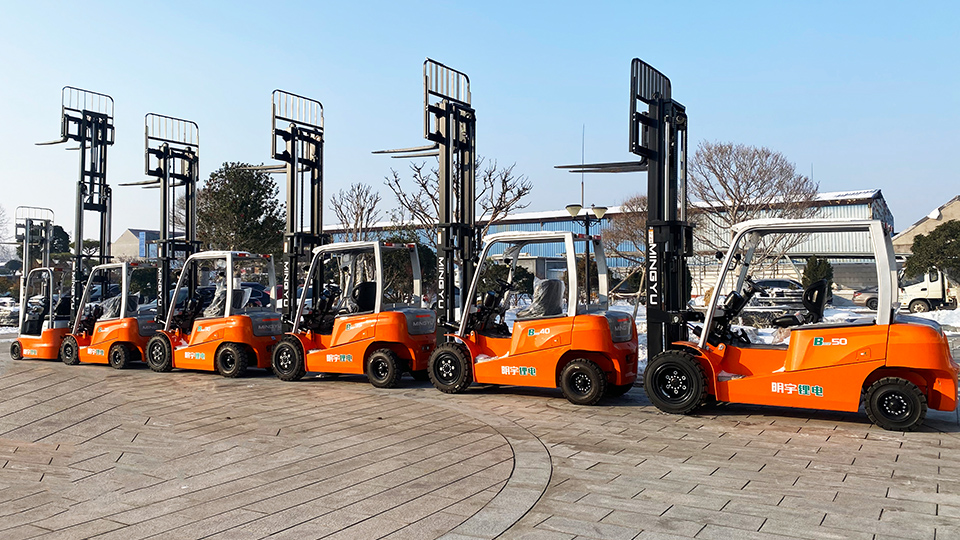
Diesel forklifts maintain their position as the preferred solution for outdoor, heavy-duty, and long-duration operations where the power density of diesel fuel and the robustness of diesel engines outweigh the benefits of alternatives. The fuel efficiency benchmark for diesel must therefore be evaluated not in isolation but as part of a total cost of ownership analysis that includes acquisition cost, fuel cost, maintenance cost, infrastructure requirements, and operational flexibility.
Conclusion
The fuel efficiency benchmark for diesel-powered material handling equipment is a multidimensional metric shaped by regulatory requirements, engine technology, transmission design, hydraulic efficiency, operating conditions, and maintenance practices. Modern Tier 4/Stage V diesel forklifts demonstrate consumption rates ranging from 2.0 liters per hour for light-duty 2–3 ton units to 10+ liters per hour for heavy-duty applications, with thermal efficiency approaching 40% at peak conditions. While emissions compliance has introduced operational complexity through aftertreatment systems, the engineering response has ultimately yielded more fuel-efficient engines than their predecessors.
For fleet managers and procurement professionals, the key takeaway is that fuel efficiency benchmarking must be application-specific. A hydrostatic 5-ton forklift in intermittent indoor use will exhibit radically different consumption patterns than a powershift unit in continuous outdoor yard operations. Establishing accurate internal benchmarks requires systematic measurement, operator training, disciplined maintenance, and technology-enabled optimization. As engine technology continues to advance—with projected thermal efficiencies approaching 50% in the coming decade—diesel-powered material handling equipment will remain a viable and increasingly efficient choice for the most demanding material handling applications.
Name: selena
Mobile:+86-13176910558
Tel:+86-0535-2090977
Whatsapp:8613181602336
Email:vip@mingyuforklift.com
Add:Xiaqiu Town, Laizhou, Yantai City, Shandong Province, China