
vip@mingyuforklift.com
+86-0535-2090977

Forklifts are indispensable core equipment in modern logistics warehousing, manufacturing workshops, and port terminals, undertaking the critical task of horizontal transportation and vertical lifting of goods. However, the problem of goods sliding off during forklift operation has long been a major hidden danger threatening operational safety. According to statistics from the International Organization for Standardization (ISO), goods sliding accidents account for approximately 35% of all forklift-related safety incidents, often resulting in damage to goods, equipment downtime, and even serious casualties. To address this issue, it is necessary to systematically analyze the root causes of goods sliding and adopt targeted technical measures and management strategies. This article will delve into the key points of preventing goods from sliding off during forklift operation, providing comprehensive and practical technical guidance for industry practitioners.
1. Analysis of the Root Causes of Goods Sliding Off During Forklift Operation
Before formulating preventive measures, it is essential to clarify the main factors leading to goods sliding off. Through on-site investigation and accident data analysis, these factors can be summarized into four categories: unstable goods stacking, improper forklift operation, inadequate auxiliary fixing measures, and environmental interference. A deep understanding of these factors is the premise for improving the effectiveness of prevention work.
1.1 Unstable Goods Stacking
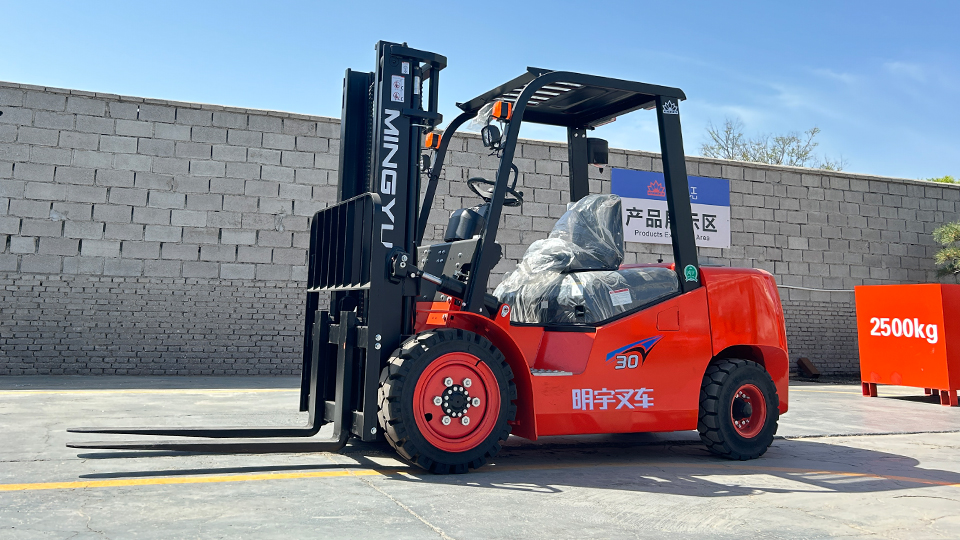
Unstable goods stacking is the primary internal cause of sliding. On the one hand, irregular stacking, such as uneven weight distribution, excessive stacking height, or inclined placement, destroys the center of gravity balance of the goods. During the starting, braking, or turning of the forklift, the inertial force will easily cause the goods to shift or slide. On the other hand, the physical characteristics of the goods themselves also affect stacking stability. For example, goods with smooth surfaces (such as plastic packages, metal parts), irregular shapes (such as non-standard components), or loose packaging (such as bulk materials) have poor friction and cohesion, making them prone to sliding even with slight external forces. In addition, overloading stacking beyond the bearing capacity of the pallet will lead to deformation or damage of the pallet, further reducing the stability of the goods.
1.2 Improper Forklift Operation
Human operational factors are the most direct trigger for goods sliding accidents. Many operators have irregular operating habits, such as sudden acceleration, emergency braking, or sharp turning during driving. These behaviors will generate large inertial forces, causing the goods to lose balance and slide off. In addition, improper fork operation is also a common problem. For example, the forks are not fully inserted into the pallet, the distance between the forks does not match the width of the goods, or the goods are lifted too high during transportation. These operations will make the goods in an unstable state. Moreover, some operators ignore the pre-operation inspection, failing to find potential safety hazards such as damaged pallets or insufficient friction of the fork surface, which lays hidden dangers for subsequent goods sliding.
1.3 Inadequate Auxiliary Fixing Measures
For special goods (such as large-volume, heavy-weight, or easy-to-slide goods), the lack of effective auxiliary fixing measures is an important reason for sliding. At present, many enterprises only rely on the bearing capacity of the pallet and the friction between the goods for positioning, without adopting additional fixing methods such as strapping, wrapping film, or anti-slip pads. In the process of forklift operation, especially in complex working environments such as ramps or uneven ground, the goods are likely to move relative to the pallet, eventually leading to sliding. In addition, the use of unqualified auxiliary tools, such as aging strapping belts or thin wrapping films, also reduces the fixing effect.
1.4 Environmental Interference Factors
The working environment also has a non-negligible impact on the stability of goods. In wet environments (such as cold storage, rainy days), the surface of the pallet and goods becomes slippery, and the friction coefficient decreases significantly, which greatly increases the risk of goods sliding. In high-temperature environments, some packaging materials (such as plastic) may soften and deform, reducing the cohesion between goods. In addition, uneven ground, potholes, or obstacles in the working area will cause the forklift to jolt during driving, and the vibration will be transmitted to the goods, leading to loose stacking and sliding. The interference of external factors such as wind in open-air working areas (such as ports, open-air warehouses) can also cause lightweight goods to slide.
2. Pre-Operation Prevention Measures: Laying the Foundation for Safe Transportation
Preventing goods from sliding off should start from the pre-operation stage, forming a closed-loop management of "goods inspection - equipment inspection - auxiliary preparation", eliminating potential safety hazards at the source. This stage is the foundation of safe operation and directly determines the risk level of subsequent goods transportation.
2.1 Standardize Goods Stacking and Inspection
First, it is necessary to formulate strict goods stacking standards. For regular goods, the "lower heavy and upper light, lower large and upper small" principle should be followed to ensure that the center of gravity of the goods is as low as possible. The stacking height should not exceed the limit specified by the enterprise (generally, the height of the goods should not be more than 3 times the width of the pallet), and the goods should be aligned horizontally and vertically without tilting or protruding. For irregular or easy-to-slide goods, separate stacking should be adopted, and the gap between goods should be filled with buffer materials (such as foam, cardboard) to enhance cohesion. Second, before forklift operation, the operator must inspect the goods and pallets. Check whether the goods packaging is intact, whether the stacking is stable, and whether there are loose or falling parts; check whether the pallet has cracks, deformation, or damage, and whether the bearing capacity meets the requirements of the goods. For unqualified pallets or improperly stacked goods, they should be rectified in time before transportation.
2.2 Conduct Comprehensive Forklift Inspection
The performance of the forklift directly affects the stability of goods transportation. Therefore, a comprehensive inspection of the forklift must be carried out before operation. First, check the fork part: confirm that the fork surface is free of oil stains, rust, or excessive wear, and if necessary, clean the fork surface or replace the fork to ensure sufficient friction between the fork and the pallet. Check whether the fork positioning pin is intact and whether the fork can be firmly fixed. Second, check the lifting system: test the hydraulic lifting mechanism to ensure that the lifting and lowering are smooth without jitter or sudden stop, and check whether the hydraulic system has leakage. Third, check the driving system: test the brakes, accelerator, and steering system to ensure that the braking is sensitive, the acceleration is stable, and the steering is accurate, avoiding sudden changes in speed or direction during operation. In addition, check the safety devices such as the reverse alarm and the overhead guard to ensure they are working normally.
2.3 Equip with Appropriate Auxiliary Fixing Tools
According to the characteristics of the goods, select and use appropriate auxiliary fixing tools to enhance the stability of the goods. For general goods, wrapping film can be used to wrap the goods and the pallet together, which not only can fix the goods but also prevent dust and moisture, improving the friction between the goods. For heavy or large-volume goods, high-strength strapping belts (such as polyester strapping belts) should be used for strapping. The strapping should be tight and uniform, and the number of strapping layers should be determined according to the weight of the goods (generally, at least 2-3 layers for heavy goods). For goods with smooth surfaces, anti-slip pads can be placed between the goods and the pallet. The anti-slip pads should be made of materials with high friction coefficient (such as rubber, non-woven fabric) to increase the friction between the goods and the pallet. It should be noted that the auxiliary fixing tools must be inspected before use to ensure they are not aging, damaged, or expired.
3. Operational Norms During Transportation: Controlling the Key Link of Stability
During the forklift operation, standardized driving and fork operation are the key to preventing goods from sliding off. Operators must strictly abide by operational norms, avoid dangerous behaviors, and maintain the stability of the goods throughout the transportation process.
3.1 Standardize Forklift Driving Behaviors
First, control the driving speed. The driving speed of the forklift in the workplace should not exceed 5 km/h, and in areas with dense personnel, intersections, or complex environments, the speed should be reduced to 2-3 km/h. When starting, it should be started slowly, and sudden acceleration should be avoided to prevent the goods from shifting due to inertial force. When braking, it should be braked gently, and emergency braking should be avoided unless necessary. When turning, it should slow down in advance, turn the steering wheel smoothly, and avoid sharp turns, so as to reduce the centrifugal force generated by the goods. Second, maintain a stable driving state. The forklift should drive along a predetermined route, avoid uneven ground or potholes as much as possible, and if it is unavoidable, it should slow down and pass slowly to reduce jolting. During transportation, the fork should be kept at a low position (10-20 cm above the ground) to lower the center of gravity of the goods. The mast should be tilted backward appropriately to make the goods lean against the mast, which can effectively prevent the goods from sliding forward.
3.2 Standardize Fork Operation
Fork operation is directly related to the stress state of the goods. When picking up goods, first adjust the distance between the forks according to the width of the pallet, ensuring that the distance between the forks is equal to the width of the pallet and the forks are aligned with the pallet slots. Then, slowly drive the forklift to the front of the pallet, and insert the forks fully into the pallet (the insertion depth should not be less than 2/3 of the length of the pallet). Do not insert the forks obliquely or partially, so as to avoid uneven stress on the pallet and goods. When lifting the goods, it should be lifted slowly and steadily, and the lifting speed should not be too fast. After the goods are lifted to a suitable height (10-20 cm above the ground), the mast should be tilted backward slightly to make the goods closely fit the mast. When unloading the goods, slowly drive the forklift to the unloading point, adjust the position of the forklift to make it aligned with the unloading platform, then slowly lower the fork, and pull out the fork after the goods are stably placed. It should be noted that during the entire process of picking up and unloading goods, the operator should observe the state of the goods at any time, and stop the operation immediately if any sign of sliding is found.
3.3 Strengthen Special Operation Management
For special working scenarios, additional preventive measures should be taken. When transporting goods on ramps, the forklift should drive forward when going uphill and reverse when going downhill, and coasting in neutral is strictly prohibited. The driving speed should be further reduced, and the distance between the forklift and other equipment or personnel should be increased. When transporting goods in cold storage or wet environments, the fork surface and pallet should be dried in advance, or anti-slip agents should be applied to increase the friction coefficient. For oversized or overweight goods, a dedicated person should be arranged to command the operation. The commander should use standard gestures or intercom to communicate with the operator to ensure that the operation is coordinated and smooth. In addition, when transporting goods in open-air areas, attention should be paid to the wind direction and wind speed. If the wind is too strong, the transportation should be suspended or windshields should be installed to reduce the impact of wind on the goods.
4. Equipment Upgrade and Technical Innovation: Improving Prevention Capability
In addition to standardized operations and management, equipment upgrade and technical innovation can also significantly improve the ability to prevent goods from sliding off. With the development of intelligent manufacturing technology, more and more advanced technologies and equipment are applied to forklift operation, providing new solutions for preventing goods sliding.
4.1 Upgrade Forklift Safety Configuration
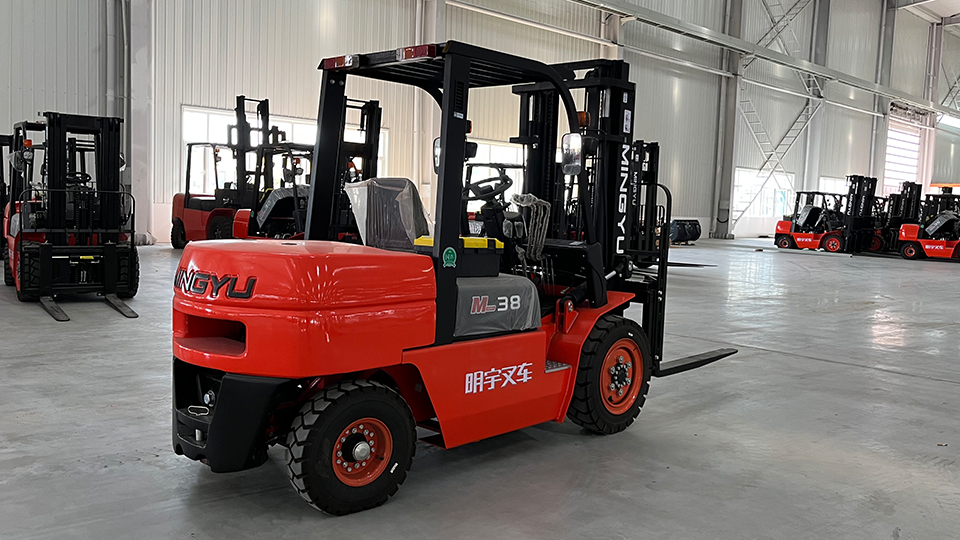
Enterprises can upgrade the safety configuration of forklifts to enhance the stability of goods transportation. For example, install anti-slip devices on the fork surface, such as anti-slip rubber pads or serrated anti-slip plates, which can significantly increase the friction between the fork and the pallet. Equip the forklift with a load sensor and a center of gravity monitoring system. The load sensor can remind the operator when overloading occurs, and the center of gravity monitoring system can real-time monitor the center of gravity position of the goods. If the center of gravity is deviated, an alarm will be issued in time. In addition, install a stable driving control system on the forklift, which can automatically limit the driving speed, avoid sudden acceleration and emergency braking, and ensure the stable operation of the forklift. For electric forklifts, the stability of the power system can be optimized to reduce jitter during operation.
4.2 Adopt Intelligent Forklift Technology
Intelligent forklifts (such as unmanned forklifts) equipped with advanced technologies such as laser SLAM navigation, visual recognition, and automatic control can effectively avoid human operational errors and improve the safety of goods transportation. The visual recognition system of intelligent forklifts can accurately identify the position and shape of the goods, automatically adjust the distance between the forks, and ensure that the forks are fully inserted into the pallet. The automatic control system can realize smooth starting, braking, and turning, avoiding sudden changes in speed or direction. In addition, intelligent forklifts can be connected to the warehouse management system (WMS), which can plan the optimal transportation route according to the distribution of goods and the working environment, avoiding uneven ground or complex areas, and reducing the risk of goods sliding. Some advanced intelligent forklifts are also equipped with automatic fixing devices, which can automatically wrap the goods with wrapping film or strap them during the transportation process, further enhancing the stability of the goods.
4.3 Optimize Auxiliary Fixing Technology
Continuous innovation of auxiliary fixing technology can also improve the effect of preventing goods from sliding off. For example, use high-strength and wear-resistant composite strapping belts, which have higher tensile strength and longer service life than traditional strapping belts. Adopt stretch wrapping film with high adhesion, which can tightly wrap the goods and the pallet together, improving the cohesion between the goods. Develop a reusable intelligent fixing device, which can adjust the fixing force according to the weight and characteristics of the goods, and can be recycled, reducing the cost of auxiliary materials. In addition, for goods with special shapes, customized fixing brackets can be used to make the goods fit the brackets closely, avoiding relative movement during transportation.
5. Management Mechanisms and Personnel Training: Establishing a Long-Term Prevention System
Preventing goods from sliding off during forklift operation is not only a technical issue but also a management issue. Enterprises need to establish a sound management mechanism and strengthen personnel training to form a long-term prevention system and ensure the continuity and effectiveness of prevention work.
5.1 Establish a Sound Safety Management System
Enterprises should formulate a detailed forklift operation safety management system, clearly defining the responsibilities and operating norms of operators, managers, and maintenance personnel. The system should include pre-operation inspection standards, operational norms, auxiliary fixing requirements, accident handling procedures, and other contents. Establish a regular inspection and supervision mechanism, arrange special safety supervisors to inspect the forklift operation site regularly, and promptly correct irregular operating behaviors. Establish an accident investigation and analysis mechanism. For goods sliding accidents that occur, conduct in-depth investigation and analysis to find out the root causes, formulate rectification measures, and prevent similar accidents from happening again. In addition, establish a reward and punishment system, reward operators who abide by operational norms and have no safety accidents, and punish those who violate operational norms and cause accidents, so as to stimulate the enthusiasm of operators to abide by safety regulations.
5.2 Strengthen Professional Training for Operators
Operators are the main body of forklift operation, and their professional quality and operational skills directly affect the safety of goods transportation. Therefore, enterprises must strengthen the professional training of operators. First, carry out pre-job training for new operators, including theoretical knowledge (such as forklift structure, operational principles, safety regulations) and practical operation training (such as fork operation, driving skills, emergency handling). Only those who pass the assessment can take up the job. Second, carry out regular in-service training for existing operators, update their safety knowledge and operational skills, and focus on training for special working scenarios and new equipment operation. Third, carry out accident case analysis training, organize operators to learn about typical goods sliding accident cases, analyze the causes and lessons of the accidents, and enhance their safety awareness. In addition, strengthen the education on safety responsibility, make operators realize the importance of standardized operation, and form a good habit of abiding by rules and regulations.
5.3 Strengthen the Management of Working Environment
Enterprises should strengthen the management of the forklift working environment to provide a safe and stable operation space. Regularly maintain the working ground, fill potholes, level uneven areas, and remove obstacles to ensure the smoothness of the transportation route. Install drainage facilities in wet areas (such as cold storage, washing areas) to keep the ground dry. Install ventilation and cooling equipment in high-temperature areas to avoid softening and deformation of goods packaging. In open-air working areas, set up windshields or windbreak nets to reduce the impact of wind on the goods. In addition, set up obvious safety signs in the workplace, such as speed limit signs, no-passing signs, and pedestrian warning signs, to standardize the order of the workplace.
6. Conclusion
Preventing goods from sliding off during forklift operation is a systematic project that requires the joint efforts of enterprises, operators, and technical personnel. It is necessary to start from the root causes of accidents, adopt a combination of pre-operation prevention, in-operation standardization, equipment upgrading, and management strengthening, and form a full-process, multi-dimensional prevention system. Enterprises should establish a sound safety management mechanism, strengthen personnel training, and continuously promote technical innovation and equipment upgrading. Operators should strictly abide by operational norms, enhance safety awareness, and improve operational skills. Only in this way can we effectively reduce the risk of goods sliding off, ensure the safety of personnel and property, and improve the efficiency and quality of logistics transportation.
In the context of the rapid development of the logistics industry, the requirements for forklift operation safety are getting higher and higher. Preventing goods from sliding off is not only a basic requirement for safe production but also an important guarantee for the sustainable development of enterprises. In the future, with the continuous advancement of intelligent technology, more advanced prevention technologies and equipment will be applied to forklift operation, which will further improve the level of preventing goods from sliding off and promote the healthy development of the forklift operation industry.
Name: selena
Mobile:+86-13176910558
Tel:+86-0535-2090977
Whatsapp:8613181602336
Email:vip@mingyuforklift.com
Add:Xiaqiu Town, Laizhou, Yantai City, Shandong Province, China