
vip@mingyuforklift.com
+86-0535-2090977

Introduction
The material handling industry stands at a critical crossroads. As warehouses, distribution centers, and manufacturing facilities face mounting pressure to reduce operating costs and carbon emissions, the question of forklift power source efficiency has moved from the back office to the boardroom. Diesel forklifts have long dominated outdoor and heavy-duty applications, prized for their raw power and rapid refueling. But in an era of advancing battery technology, stricter emissions regulations, and volatile fuel prices, the assumption that diesel represents the pinnacle of energy efficiency deserves rigorous scrutiny.
This article examines the thermodynamic, economic, and operational dimensions of forklift power sources to answer a fundamental question: Is diesel truly the most energy-efficient choice for material handling equipment? By analyzing energy conversion efficiency, total cost of ownership (TCO), real-world operational data, and emerging technologies, we will demonstrate that while diesel retains specific niche advantages, it is demonstrably not the most energy-efficient power source for the majority of forklift applications.
Understanding Energy Efficiency in Forklifts
Defining the Metric
Energy efficiency in material handling is not merely about fuel consumption per hour—it encompasses the entire energy pathway from source to mechanical work. The most scientifically rigorous framework is Well-to-Wheel (WtW) analysis, which accounts for energy losses during fuel extraction, refining, transportation, and final conversion to mechanical power at the forklift's wheels or hydraulic systems.
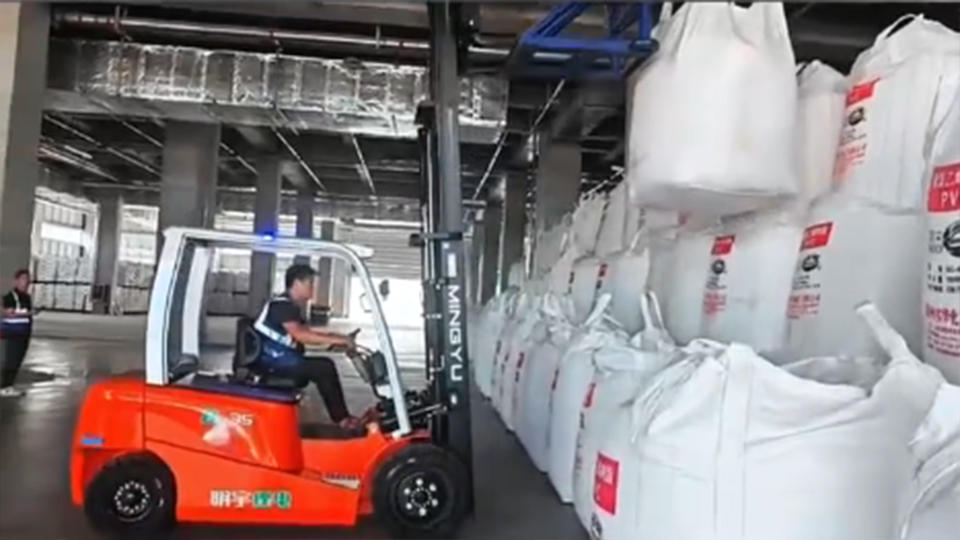
For diesel forklifts, the WtW chain includes crude oil extraction, refining to diesel fuel, transportation to the point of use, and finally combustion in an internal combustion engine (ICE). Each step introduces energy losses. Electric forklifts, conversely, trace their energy from power generation (which may involve fossil fuels, nuclear, or renewables), transmission through the electrical grid, charging and discharging of batteries, and finally conversion via electric motors.
Thermodynamic Fundamentals
The energy efficiency gap between diesel and electric powertrains is stark and well-documented. According to recent research comparing Euro V-compliant diesel forklifts with lithium iron phosphate (LiFePO4) battery-electric models, diesel engines convert only 25–28% of the fuel's chemical energy into useful mechanical work, while electric forklifts achieve 77–87% efficiency in travel operations and up to 87% in hydraulic lifting operations .
This nearly threefold difference in energy conversion efficiency is rooted in fundamental thermodynamics. Diesel engines lose energy through multiple mechanisms: heat rejection via the exhaust system, cooling system losses, friction in the engine and drivetrain, and idling consumption when the forklift is stationary but the engine remains running. Electric forklifts, by contrast, benefit from the inherent efficiency of electric motors, which can exceed 95% in converting electrical energy to mechanical rotation. The absence of a transmission in many electric designs further reduces mechanical losses.
The regenerative braking systems present in modern electric forklifts add another layer of efficiency. When an operator releases the accelerator, the motor acts as a generator, recovering kinetic energy that would otherwise be dissipated as heat in the brakes of a diesel forklift. In stop-and-go warehouse environments—where forklifts frequently accelerate, decelerate, and change direction—this energy recovery can significantly extend operational runtime.
Real-World Energy Consumption: The VDI 2198 Standard
Standardized Testing Protocol
To move beyond theoretical efficiency percentages and understand practical energy consumption, the material handling industry relies on the VDI 2198 standard, an internationally recognized test protocol that simulates realistic operational cycles. The standard requires forklifts to perform repeated sequences of loading, transporting, and unloading between defined points, maintaining average speeds sufficient to complete 60 cycles per hour.
A 2026 field study conducted in accordance with VDI 2198 compared a 3.5-ton LiFePO4 battery-electric forklift (BEF) against a Euro V diesel forklift (DF) of equivalent capacity. Over 30 standardized operational cycles, the diesel forklift consumed 3.175 liters of fuel, while the electric forklift utilized 16% of its battery capacity—equating to approximately 3.44 kWh of electrical energy .
Translating Consumption to Cost
When these consumption figures are translated into energy costs using current market prices, the disparity becomes even more pronounced. At a diesel price of €1.06 per liter and an industrial electricity rate of €0.10 per kWh, the diesel forklift incurred an energy cost of €6.72 per hour versus just €0.69 per hour for the electric model . This represents a 9.65-fold cost advantage for electric power on a per-cycle basis.
Expressed in energy terms rather than cost, the diesel forklift consumed the equivalent of 33.97 kWh of thermal energy per cycle (3.175 liters × 10.7 kWh/liter energy density of diesel), while the electric forklift required only 0.114 kWh of electrical energy to perform the identical work. Even accounting for power generation and transmission losses (typically 40–50% for fossil-fuel-generated electricity), the electric forklift's source-to-wheel efficiency remains substantially superior.
The Idling Penalty
A critical but often overlooked efficiency factor is idle consumption. Diesel engines must remain running during operational pauses to maintain hydraulic pressure and ensure immediate readiness. This continuous fuel burn during loading, unloading, and operator breaks accumulates significantly over a shift. Electric forklifts, by contrast, enter sleep modes during idle periods, drawing minimal power. The 2026 VDI study explicitly noted that diesel forklifts consume fuel and reduce maintenance life even when not actively moving loads, while electric models achieve zero idle consumption .
Total Cost of Ownership: Beyond Energy Efficiency
The Complete Economic Picture
While energy efficiency is a crucial component of forklift economics, businesses must evaluate the Total Cost of Ownership (TCO) over the equipment's operational lifespan. TCO encompasses initial purchase price, energy/fuel costs, maintenance, battery replacement (for electric models), and residual value.
The electric forklift typically commands a 30% higher upfront investment than its diesel equivalent. Market research indicates that a 3.5-ton capacity diesel forklift averages approximately €28,250, while an equivalent electric model costs around €36,500 . However, this initial premium is rapidly offset by operational savings.
Under high-intensity usage scenarios (6,000 hours annually), the battery-electric forklift generates annual savings of approximately €43,625 compared to diesel, enabling payback of the initial investment premium in less than one year . Even under low-intensity usage (2,000 hours annually), the electric model saves approximately €14,766 per year, amortizing the cost difference within seven months.
Maintenance Economics
Maintenance costs further amplify the electric advantage. Diesel forklifts require oil changes, filter replacements, fuel system servicing, exhaust after-treatment maintenance, and periodic engine overhauls every 500 to 1,000 operational hours . The 2026 comparative study documented diesel forklift maintenance costs of approximately €8,653 annually versus just €962 for electric models—an 89% reduction .
Electric forklifts have fewer moving parts, no engine oil, no exhaust system, and simplified drivetrains. Their maintenance cycles extend to 1,000 hours or more between services, consisting primarily of inspections, lubrication, and occasional fluid checks for hydraulic systems . The elimination of engine-related maintenance not only reduces direct costs but also minimizes downtime, improving fleet utilization and operational productivity.
Battery Lifecycle Considerations
A common concern regarding electric forklifts is battery replacement cost. Modern lithium-ion batteries, particularly LiFePO4 chemistry, typically deliver 4,000 charge cycles or approximately five years of service life under normal operating conditions . Opportunity charging capabilities—topping up the battery during short breaks rather than performing full discharge-recharge cycles—further extend battery longevity and eliminate the need for spare battery packs that were common with older lead-acid technology.
When battery replacement costs are factored into the TCO model, they represent a limited and predictable expense that does not offset the substantial savings in energy and maintenance. Monte Carlo simulations accounting for energy price volatility demonstrate a 99.98% probability that the battery-electric forklift maintains lower total cost of ownership over its lifespan .
Operational Performance: Speed vs. Efficiency
The Speed Trade-Off
Proponents of diesel forklifts often cite operational speed as a critical advantage. The VDI 2198 field tests confirmed that diesel forklifts complete standardized cycles approximately 13.3% faster than electric equivalents, primarily due to higher maximum travel speeds and the "free coasting" characteristic of internal combustion engines .
This speed advantage, however, must be contextualized. The difference translates to mere seconds per cycle in most applications—approximately 29.86 minutes versus 34.45 minutes for 30 cycles in the standardized test. For the vast majority of warehouse and manufacturing operations, this marginal time difference is inconsequential compared to the substantial economic and environmental advantages of electric power.
Furthermore, the slower acceleration of electric forklifts, sometimes perceived as a disadvantage, contributes to improved safety and reduced tire wear. Industry reports indicate that electric forklift tires last two to three times longer than those on diesel models, partially offsetting any productivity concerns .
Load Capacity and Application Suitability
Where diesel maintains undeniable advantages is in heavy-duty and specialized applications. Diesel forklifts are available with lifting capacities exceeding 40,000 pounds, while electric models typically range from 3,000 to 6,000 pounds for standard configurations . The higher torque output of diesel engines and their robust construction make them better suited for rough terrain, steep gradients, and continuous outdoor operation in adverse weather conditions.
For outdoor lumber yards, construction sites, shipping ports, and heavy manufacturing, diesel's power density and rapid refueling (minutes versus hours for charging) remain compelling operational requirements. However, these advantages relate to power delivery and operational flexibility, not energy efficiency. A diesel forklift moving a 40,000-pound load still converts only 25–28% of its fuel energy into useful work, while an appropriately sized electric alternative would accomplish the same task with significantly lower energy consumption.
Environmental and Sustainability Dimensions
Carbon Footprint Analysis
From a Well-to-Wheel perspective, the environmental case against diesel is compelling. The 2026 comparative study calculated that under high-intensity usage (6,048 hours annually), a diesel forklift produces approximately 102.1 tons of CO₂ per year, while the battery-electric equivalent generates just 19.4 tons under current grid conditions—an 81% reduction in operational carbon emissions .
As electrical grids increasingly incorporate renewable energy sources, the carbon intensity of electricity continues to decline, further improving the environmental profile of electric forklifts. Diesel, conversely, remains locked to the carbon content of petroleum fuel, with only marginal improvements possible through exhaust after-treatment systems.
Indoor Air Quality and Noise Pollution
Beyond carbon emissions, diesel forklifts release nitrogen oxides (NOx), particulate matter, and carbon monoxide—pollutants that pose serious health risks in enclosed or partially enclosed environments. This necessitates expensive ventilation infrastructure and limits diesel deployment in food processing, pharmaceutical manufacturing, and other clean-air-sensitive operations.
Electric forklifts operate with zero direct emissions and generate noise levels of approximately 60–70 decibels, compared to significantly higher levels from diesel engines . This acoustic advantage improves workplace safety and reduces noise-related fatigue for operators during extended shifts.
Emerging Technologies and Future Trajectories
Hydrogen Fuel Cells
Hydrogen fuel cell forklifts represent an emerging alternative that combines the rapid refueling of diesel with zero direct emissions. Fuel cell systems convert hydrogen to electricity with efficiencies of approximately 40–60%, higher than diesel combustion but lower than battery-electric systems when accounting for hydrogen production, compression, and distribution losses.
Current economic analyses indicate that fuel cell forklifts remain more expensive than both diesel and battery-electric alternatives over a 10-year lifecycle, though they offer particular advantages in multi-shift operations where battery charging infrastructure is impractical .
Advanced Battery Chemistries
The trajectory of battery technology strongly favors electrification. Solid-state batteries, currently in advanced development, promise energy densities 2–3 times higher than current lithium-ion systems with improved safety and faster charging capabilities. Sodium-ion batteries offer a potentially lower-cost alternative using abundant raw materials. These advancements will further extend the operational range, reduce charging times, and lower the upfront cost premium of electric forklifts.
Synthetic and Bio-Diesel
For applications where diesel remains necessary, synthetic diesel and biodiesel blends offer incremental environmental improvements. However, these alternatives do not address the fundamental thermodynamic limitations of internal combustion engines. Even with carbon-neutral fuel sources, the 25–28% energy conversion efficiency of diesel engines remains substantially inferior to electric drivetrains.
Conclusion
The evidence comprehensively demonstrates that diesel is not the most energy-efficient power source for forklifts. From a pure thermodynamic perspective, diesel engines convert only 25–28% of fuel energy into useful mechanical work, while electric forklifts achieve 77–87% efficiency in converting stored electrical energy to motion . Real-world standardized testing under VDI 2198 protocols confirms that electric forklifts consume approximately one-tenth the energy cost per operational cycle compared to diesel equivalents .
The economic analysis reinforces this technical superiority. Despite higher initial purchase prices, battery-electric forklifts deliver superior total cost of ownership through dramatically lower energy costs (€0.69/hour versus €6.72/hour), reduced maintenance expenses (89% lower), and extended equipment lifespan . Payback periods for the initial investment premium are typically measured in months rather than years.
However, this conclusion requires important qualification. Diesel retains specific operational advantages that ensure its continued relevance in niche applications: superior power-to-weight ratios for capacities exceeding 6,000 pounds, rapid refueling for continuous multi-shift outdoor operations, and robustness in extreme environmental conditions . For heavy construction, lumber yards, and shipping terminals, diesel's power density and operational flexibility may outweigh its energy inefficiency.
For the majority of material handling operations—warehouse distribution, manufacturing, retail logistics, and food processing—electric forklifts represent the most energy-efficient and economically rational choice. The convergence of advancing battery technology, declining renewable electricity costs, and increasingly stringent emissions regulations suggests that diesel's dominance will continue to erode, confined to an ever-narrowing band of specialized heavy-duty applications.
The question is no longer whether electric power can match diesel's efficiency—it demonstrably exceeds it by a substantial margin. The question is how quickly industries can adapt their infrastructure, training, and operational practices to capture these efficiency gains. For fleet managers and procurement professionals, the data points to a clear imperative: electrify where operationally feasible, and reserve diesel for applications where its unique power characteristics are genuinely indispensable.
Name: selena
Mobile:+86-13176910558
Tel:+86-0535-2090977
Whatsapp:8613181602336
Email:vip@mingyuforklift.com
Add:Xiaqiu Town, Laizhou, Yantai City, Shandong Province, China
