
vip@mingyuforklift.com
+86-0535-2090977

The material handling industry has undergone a significant transformation over the past decade, with electric forklifts now commanding approximately 67.73% of global forklift shipments as of 2025. While the shift toward electrification is often framed in terms of environmental compliance and indoor air quality, the fundamental driver behind this transition is thermodynamic: diesel-powered forklifts consume substantially more energy to accomplish the same material handling tasks as their electric counterparts. This article examines the technical reasons for this disparity, from the physics of energy conversion to the operational characteristics that amplify the efficiency gap in real-world warehouse environments.
The Thermodynamic Foundation: Energy Conversion Efficiency
The most significant factor determining why diesel forklifts consume more energy per task lies in the fundamentally different efficiency profiles of internal combustion engines versus electric drivetrains. According to research published in IEEE, electric forklifts achieve energy efficiency ratings of approximately 0.77 during travel operations and 0.87 during hydraulic lifting operations, whereas diesel models operate at efficiency levels of only 0.25 and 0.28 respectively. This represents a nearly three-fold difference in the ability to convert input energy into useful mechanical work.
The diesel engine's low efficiency stems from the inherent limitations of the Otto and Diesel thermodynamic cycles. In a typical diesel forklift engine, only 25-30% of the chemical energy contained in the fuel is converted into mechanical work at the crankshaft. The remaining 70-75% is lost through multiple pathways: approximately 35% is rejected as waste heat through the exhaust system, another 30% is dissipated through the engine cooling system (radiator, coolant, and oil), and the remainder is consumed by internal friction, pumping losses, and incomplete combustion. These losses are not engineering oversights but fundamental consequences of the second law of thermodynamics as applied to heat engines.
Electric motors, by contrast, operate on entirely different physical principles. Modern AC induction motors and permanent magnet synchronous motors used in forklifts routinely achieve efficiencies of 90-95% across their operating range. The energy conversion process in an electric motor involves direct electromagnetic interaction between the stator's rotating magnetic field and the rotor, with minimal intermediate energy transformations. Losses are limited primarily to resistive heating in the copper windings (I²R losses), core losses from magnetic hysteresis and eddy currents, and minor mechanical friction in bearings. Because there is no combustion process, there is no exhaust heat rejection, no cooling system thermal loss, and no thermodynamic cycle efficiency ceiling imposed by Carnot limitations.
The Energy Chain: From Source to Wheels
To fully appreciate the energy consumption disparity, one must examine the complete energy chain from primary energy source to the forklift's wheels and hydraulic system. For a diesel forklift, this chain includes fuel refining and distribution, onboard storage, combustion, mechanical power transmission, and finally the hydraulic pump or drivetrain. Each link introduces additional losses. Diesel fuel must be refined from crude oil (an energy-intensive process), transported to the point of use, stored on-site, pumped into the vehicle, and then combusted with the aforementioned thermodynamic losses. The mechanical powertrain adds further inefficiencies through the torque converter or clutch, transmission gears, differential, and final drive.
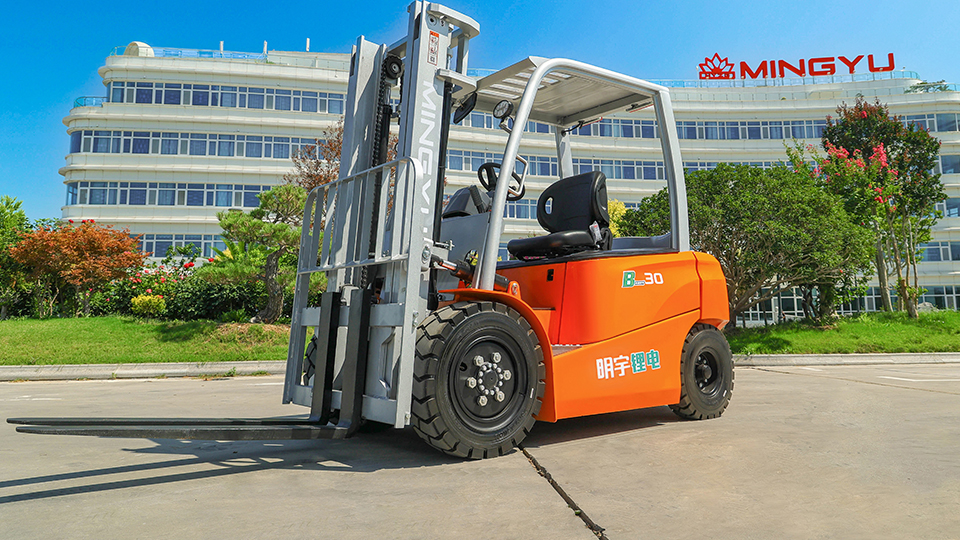
Electric forklifts benefit from a much shorter and more efficient energy chain. Grid electricity, even when generated from fossil fuels, is produced in large-scale power plants that achieve 40-60% thermal efficiency—significantly higher than the small diesel engines in forklifts. Modern lithium-ion battery systems charge with 90-95% efficiency, store energy with minimal self-discharge (typically less than 1% per day), and discharge through power electronics that achieve 95-98% efficiency. The electric motor then converts this electrical energy to mechanical energy at 90-95% efficiency. When all these factors are combined, the well-to-wheel efficiency of an electric forklift is substantially higher than that of a diesel equivalent.
Field measurements conducted under standardized VDI 2198 test conditions demonstrate this disparity quantitatively. In one comprehensive study comparing a 3.5-ton lithium iron phosphate battery-electric forklift against a Euro V-compliant diesel equivalent, researchers found that diesel forklifts consumed 9.92 times more energy per operational cycle than battery-electric models when measured in watt-hours. On a cost basis, the diesel forklift was 9.65 times more expensive per cycle to operate. The diesel model consumed 6.35 liters of fuel per hour of operation, while the electric model consumed only 6.88 kWh per hour—a striking difference when considering that one liter of diesel contains approximately 10.7 kWh of chemical energy.
Operational Characteristics and Duty Cycle Mismatches
Beyond the fundamental thermodynamic differences, the typical operational profile of a forklift amplifies the energy consumption gap between diesel and electric models. Forklifts in warehouse and distribution environments operate in highly intermittent duty cycles characterized by frequent acceleration, deceleration, lifting, lowering, and extended idle periods. These operational patterns expose the weaknesses of internal combustion engines while highlighting the strengths of electric drivetrains.
Diesel engines exhibit poor efficiency at partial load and during transient operations. The brake-specific fuel consumption of a diesel engine increases significantly when operating below its optimal load point, which in forklift applications occurs during the majority of the operating cycle. When a diesel forklift accelerates from a standstill, the engine operates at low RPM and high torque demand—a regime characterized by high fuel consumption and incomplete combustion. During the subsequent deceleration, all the kinetic energy invested in accelerating the vehicle is dissipated as heat through the service brakes, representing a complete energy loss. When the forklift is stationary but the engine is idling—common during loading/unloading operations, waiting for instructions, or operator breaks—fuel continues to be consumed at a rate of 0.5 to 1.5 liters per hour with zero productive output.
Electric forklifts address these operational inefficiencies through several mechanisms. Electric motors deliver maximum torque from zero RPM, eliminating the low-efficiency startup regime experienced by diesel engines. More importantly, modern electric forklifts employ regenerative braking systems that recover a significant portion of the kinetic energy during deceleration and return it to the battery. While the initial operator adaptation to regenerative braking may cause minor time losses in the first cycles, the energy recovery benefit is substantial over an entire shift. During idle periods, electric forklifts consume negligible energy—only the small amount required to power the control electronics and maintain system readiness. There is no "idling" consumption comparable to a running diesel engine.
The hydraulic systems further differentiate the two technologies. Diesel forklifts typically use engine-driven hydraulic pumps that operate continuously whenever the engine is running, regardless of whether lifting is occurring. This constant parasitic load consumes fuel even when the forks are stationary. Electric forklifts utilize on-demand electric hydraulic pumps that activate only when lifting or lowering is required, eliminating this parasitic energy consumption during non-lifting periods.
The Weight and Packaging Penalty
Energy consumption per task is also influenced by the mass that must be accelerated and moved. Diesel forklifts carry the additional weight of the engine, fuel tank, exhaust aftertreatment system, and cooling system. A typical diesel engine and its associated systems add 300-500 kg to the vehicle weight compared to an electric equivalent. This additional mass must be accelerated during every travel cycle and lifted during every grade traversal, increasing the energy required per task. The fuel itself represents a variable weight penalty—a full tank of 60-100 liters adds another 50-80 kg that decreases as the shift progresses but must be carried throughout the initial hours.
Electric forklifts, particularly those using lithium-ion batteries, benefit from more compact and lighter energy storage. While battery packs are still heavy, modern lithium iron phosphate (LiFePO4) systems offer favorable energy density and can be distributed low in the chassis, improving stability and reducing the energy required for maneuvers. The elimination of the engine block, transmission, and exhaust system allows for more compact designs with lower overall mass, further reducing the energy investment per acceleration event.
Maintenance-Related Energy Degradation
The energy consumption of diesel forklifts tends to increase over time due to engine wear and maintenance factors, whereas electric forklifts maintain more consistent efficiency throughout their service life. As diesel engines accumulate operating hours, cylinder bore wear increases blow-by losses, ring sealing degrades reducing compression efficiency, injector nozzle wear alters spray patterns affecting combustion quality, and turbocharger performance declines. These degradation mechanisms progressively reduce the already-low thermal efficiency of the engine, increasing fuel consumption per task over the vehicle's lifetime. Regular maintenance can mitigate but not eliminate this trend.
Electric motors, having no combustion process and minimal wear mechanisms, maintain their efficiency characteristics over hundreds of thousands of operating hours. The only significant degradation pathway is battery capacity fade, which reduces range but does not substantially affect the energy efficiency of the motor and drivetrain per task. Modern lithium-ion batteries for forklifts are designed to retain 80% of their original capacity after 3,000-5,000 full equivalent cycles, ensuring consistent performance over a 5-7 year service life.
Auxiliary Systems and Parasitic Loads
Diesel forklifts require numerous auxiliary systems that consume energy without contributing directly to material handling. The engine cooling system must circulate coolant and drive a radiator fan, typically consuming 2-5 kW of mechanical power. The alternator generates electrical power for lighting, controls, and accessories, imposing an additional load on the engine. Exhaust aftertreatment systems, including diesel oxidation catalysts and diesel particulate filters, create backpressure that increases pumping losses and fuel consumption. In cold environments, diesel engines may require extended warm-up periods or block heaters, further increasing energy consumption.
Electric forklifts simplify auxiliary power requirements. The battery directly supplies all electrical needs without the intermediate mechanical-to-electrical conversion. There is no engine cooling system, no exhaust aftertreatment, and no alternator load. Heating requirements for the operator compartment, if needed, can be provided through efficient electric resistance or heat pump systems rather than harvesting waste heat from an engine that must run continuously.
Quantifying the Real-World Impact
The cumulative effect of these technical factors produces dramatic differences in operational energy costs. A typical 2-ton diesel forklift operating in a warehouse environment consumes approximately 2-3 liters of diesel per hour. At 2026 fuel prices, this translates to energy costs of $3.60 to $9.00 per operating hour, depending on regional pricing. In contrast, an equivalent electric forklift consumes 3-5 kWh per hour, costing $0.30 to $1.00 per hour at typical industrial electricity rates.
Over a standard 2,000-hour annual operating schedule, the energy cost differential becomes substantial. A diesel forklift might incur $7,200 to $18,000 in annual fuel costs, while the electric equivalent would cost $600 to $2,000 in electricity—a difference of $6,000 to $16,000 per vehicle per year. For a fleet of twenty forklifts operating in a multi-shift distribution center, this represents annual energy savings of $120,000 to $320,000, excluding the additional maintenance cost reductions associated with electric operation.
The environmental implications parallel the economic ones. The diesel forklift in the VDI 2198 study produced 17.018 kg of CO₂ per operating hour, compared to 3.22 kg CO₂ for the electric model (based on Turkey's grid emission factor)—an 81% reduction in operational carbon emissions. As electrical grids continue to decarbonize through renewable energy expansion, the environmental advantage of electric forklifts will only increase, while diesel forklifts remain locked to the carbon intensity of liquid fossil fuels.
Conclusion
The higher energy consumption of diesel forklifts per task is not a consequence of poor engineering but rather an inevitable result of fundamental physics. The internal combustion engine's thermodynamic cycle imposes a hard ceiling on efficiency that no amount of engineering refinement can overcome. When combined with the operational characteristics of material handling—intermittent duty cycles, frequent starts and stops, and significant idle time—the diesel engine's inefficiencies are amplified. Electric drivetrains, free from Carnot limitations and benefiting from regenerative braking, on-demand hydraulics, and minimal idle losses, convert a much higher percentage of input energy into productive work.
For fleet managers and operations directors, the technical case for electrification is compelling. The 9.65-fold energy cost advantage demonstrated in standardized testing, combined with dramatically reduced maintenance requirements and zero direct emissions, positions electric forklifts as the superior technology for the majority of indoor and many outdoor material handling applications. As battery technology continues to advance and charging infrastructure becomes more ubiquitous, the already-substantial energy efficiency gap between diesel and electric forklifts will only widen, accelerating the industry's transition toward complete electrification.
Name: selena
Mobile:+86-13176910558
Tel:+86-0535-2090977
Whatsapp:8613181602336
Email:vip@mingyuforklift.com
Add:Xiaqiu Town, Laizhou, Yantai City, Shandong Province, China