
vip@mingyuforklift.com
+86-0535-2090977

Introduction
Containerized shipping has fundamentally transformed global trade, with approximately 90% of world cargo now moving in standardized intermodal containers. This standardization has created unprecedented efficiency in logistics networks but has simultaneously introduced unique operational challenges at the critical interface between container transport and inland distribution. Forklift operations within and around shipping containers represent one of the most technically demanding and safety-critical activities in modern material handling, combining confined spatial constraints, dynamic load management, variable surface conditions, and severe consequences of operational error.
The economic stakes of container handling operations are substantial. A single twenty-foot equivalent unit (TEU) container may carry cargo valued at hundreds of thousands of dollars, and operational delays can cascade through tightly synchronized supply chains with multiplier effects. Safety incidents in container handling result in disproportionately severe outcomes due to confined spaces, elevated working surfaces, and the kinetic energy of moving loads. This article provides a comprehensive technical analysis of precautions for forklift container loading and unloading operations, examining spatial engineering constraints, equipment selection and configuration, procedural controls, environmental risk factors, and strategic decision frameworks for optimizing safety and efficiency in these challenging environments.
Container Geometry and Spatial Engineering Constraints
Internal Dimensional Limitations
Standard dry cargo containers present internal dimensions that fundamentally constrain forklift operations. A twenty-foot container offers approximately 5.9 meters in length, 2.35 meters in width, and 2.39 meters in height, while forty-foot containers double the length while maintaining identical width and height constraints. These dimensions must accommodate both the forklift itself and the cargo being maneuvered, leaving minimal clearance for error.
The door aperture presents the initial spatial challenge. Standard container doors open to approximately 2.34 meters in width and 2.28 meters in height, creating a narrow portal through which forklifts must enter and exit. Forklift mast height in the lowered position, including overhead guard, must clear this opening with adequate safety margin. Standard counterbalance forklifts with duplex masts typically achieve lowered heights of 2.0 to 2.15 meters, providing minimal clearance that demands precise vertical alignment during passage.
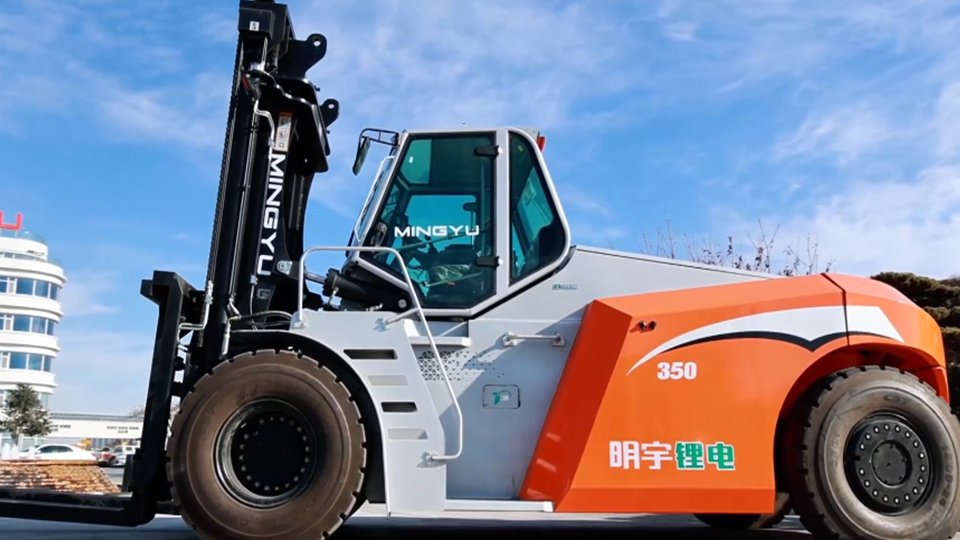
Internal maneuvering space is severely constrained. A standard counterbalance forklift with a 2.5-ton capacity typically requires a minimum aisle width of 3.5 to 4.0 meters for effective turning and load positioning. Container internal width of 2.35 meters necessitates specialized operational techniques, including multiple-point turns, reverse entry strategies, and careful load orientation planning. The container length determines the maximum penetration depth and influences whether forklifts must enter fully or can operate from the doorway with load extension.
Structural Load Considerations
Container floors are engineered to distribute concentrated loads across the underlying chassis structure, but their capacity is not unlimited. Standard container floors support maximum axle loads of approximately 5,460 kilograms, with distributed load limits of roughly 28 tons for a twenty-foot container. Forklift operations must account for both the unladen vehicle weight and the lifted cargo weight, ensuring that combined concentrated loads do not exceed floor capacity, particularly when multiple wheels track similar paths during repeated operations.
Floor construction varies by container type and age. Older containers may feature wooden flooring with reduced structural integrity due to moisture damage, wear, or pest infestation. Steel or bamboo composite floors in newer containers offer improved durability but present different friction characteristics affecting traction. Forklift operators must assess floor condition before operations, identifying soft spots, cracks, or contamination that could compromise stability.
The container floor is elevated approximately 1.5 meters above ground level, creating a significant working height that influences approach angles, visibility, and fall protection requirements. The gap between container floor and ground or trailer bed requires bridging through fixed ramps, mobile yard ramps, or integrated hydraulic lift systems, each introducing distinct operational considerations.
Equipment Selection and Configuration
Forklift Type Selection
The confined container environment strongly favors specific forklift configurations over standard warehouse equipment. Three-wheel electric forklifts offer superior maneuverability in tight spaces due to their tighter turning radius, though stability considerations limit their maximum capacity. Four-wheel counterbalance forklifts provide greater capacity and stability but require more space for turning and positioning.
Reach trucks and narrow aisle forklifts, while optimized for warehouse racking operations, generally prove unsuitable for container work due to outrigger requirements and limited gradeability. Stand-up counterbalance forklifts offer advantages in operator visibility and cabin entry/exit efficiency during high-frequency container operations, though seated configurations may be preferred for extended shifts.
Specialized container forklifts, including those with reduced overall dimensions, low-profile masts, and enhanced visibility designs, represent purpose-built solutions for intensive container handling. These configurations typically sacrifice some general-purpose versatility for optimized container performance, a trade-off that organizations must evaluate based on operational volume and fleet utilization patterns.
Mast and Attachment Configuration
Mast selection critically impacts container operability. Simplex masts offer minimal lowered height but limited lift height, generally insufficient for stacking within containers. Duplex masts balance lowered height and lift capability, representing the most common configuration for container work. Triplex and quad masts achieve greater lift heights but at the cost of increased lowered height and forward visibility obstruction, often precluding container entry.
Side shift attachments prove essential for container operations, allowing lateral adjustment of loads without repositioning the entire forklift. This capability significantly reduces the number of maneuvers required for precise load placement against container walls or adjacent cargo, directly improving efficiency and reducing collision risk.
Fork length selection must balance load support requirements against container depth constraints. Standard 1.2-meter forks adequately support most palletized loads but may limit reach for deep container placement. Extended forks improve reach but reduce maneuverability and increase the risk of floor or wall contact. Fork positioning systems that allow adjustable fork spacing accommodate variable load dimensions while maintaining operational flexibility.
Tire and Traction Systems
Container floor surfaces vary widely, from smooth painted steel to rough wooden planking, with frequent contamination from moisture, packaging debris, and spilled cargo residues. Pneumatic tires offer superior traction on uneven or contaminated surfaces but increase overall height and may be damaged by sharp debris. Solid pneumatic or cushion tires provide more consistent performance on smoother surfaces but transmit more vibration and offer reduced shock absorption.
Non-marking tire compounds are frequently required, particularly when handling food products, pharmaceuticals, or other contamination-sensitive cargo. These compounds typically sacrifice some traction performance, requiring operational adjustments in acceleration, braking, and turning aggressiveness.
Operational Procedures and Safety Controls
Pre-Operation Inspection and Setup
Comprehensive pre-operation inspection extends beyond standard forklift checks to encompass container-specific considerations. Container structural integrity must be verified, including wall straightness, floor condition, door operation, and ventilation adequacy for internal combustion equipment. Internal lighting assessment ensures adequate visibility for safe operations, with supplemental lighting frequently required.
Container positioning and stabilization represent critical setup steps. Containers on chassis trailers require wheel chocking and, ideally, landing gear deployment to prevent movement during loading operations. Ground-mounted containers must be verified as level, with particular attention to soft ground conditions that could cause settling or tipping during forklift transit.
Ramp or bridge plate installation demands careful attention to approach angle, load capacity, and secure attachment. Mobile yard ramps must be rated for combined forklift and cargo weights with appropriate safety factors. Approach surfaces must be clear of debris and contamination that could affect traction during the critical transition between ground and container floor levels.
Entry and Positioning Protocols
Container entry represents one of the highest-risk phases of container forklift operations. The operator must align precisely with the door opening, accounting for mast height, load height, and overhead guard clearance. Slight misalignment risks costly damage to container structure, door seals, or forklift overhead protection systems.
Forward entry with the load carried in the standard travel position offers the most intuitive approach but presents visibility challenges as the load obstructs forward sightlines during the critical passage through the doorway. Reverse entry, while requiring greater operator skill, often provides superior visibility and control, particularly for high or bulky loads. Many operations standardize reverse entry for loaded forklifts and forward entry for unladen vehicles to optimize safety and efficiency.
Once inside the container, positioning strategy must account for load plan requirements, weight distribution, and accessibility for subsequent unloading. Heavier items should generally be positioned toward the container center and low in the stack to optimize stability during transport. Load orientation must consider both container space utilization and the requirements of destination unloading operations.
Load Handling Within Confined Space
Internal container operations demand modified load handling techniques compared to open warehouse environments. Acceleration and deceleration must be moderated to prevent load shift on potentially uneven or contaminated floors. Turning radius is severely constrained, often requiring multi-point turns or shuttle-style operations rather than continuous arc turns.
Stacking height within containers is limited by both container roof height and stability considerations. Standard container internal height accommodates approximately 2.2 meters of stacked cargo beneath the forklift overhead guard and operational clearance. Dynamic stability during stacking operations is compromised by confined space limiting evasive options if loads begin to shift or tip.
Load placement against container walls or adjacent cargo requires precise control and frequently benefits from spotter assistance or camera systems. Contact with container walls can damage both cargo and container structure, with repair costs and potential cargo contamination consequences. Side shift attachments reduce but do not eliminate this risk, as final positioning still requires accurate approach alignment.
Exit Procedures and Transition Management
Exiting the container presents distinct challenges from entry, particularly for laden forklifts traveling forward. The transition from container floor to ramp or ground level involves a change in grade that affects load stability and traction. Forklifts must approach ramps squarely to prevent wheel drop-off and potential tipping.
Visibility during exit is frequently compromised by load obstruction and the brightness differential between container interior and external lighting conditions. Operators must allow adequate time for visual adaptation and should not rely solely on mirrors or camera systems during the critical exit transition.
Environmental and Situational Risk Factors
Weather and Surface Conditions
Outdoor container handling exposes operations to weather-related risks that confined warehouse operations avoid. Rain, snow, and ice reduce traction on ramps and container floors, increasing slip and slide incidents. Wind affects high or lightweight loads during open-air transit between container and warehouse. Extreme temperatures influence equipment performance, particularly battery capacity in electric forklifts and hydraulic fluid viscosity.
Lightning and severe weather protocols must establish clear criteria for suspending container operations, as metal containers and elevated working surfaces present significant electrical storm hazards. Operational continuity planning should address weather-related disruptions to container handling schedules.
Lighting and Visibility
Container interiors are inherently poorly lit, with natural light limited to the door opening and artificial lighting frequently inadequate or non-functional. Supplemental lighting systems, whether mounted on forklifts, container walls, or independent stands, are essential for safe operations. Lighting placement must avoid glare and shadow creation that could obscure hazards or load positioning references.
Night operations compound visibility challenges, with artificial yard lighting potentially creating harsh shadows and contrast zones. Container entry and exit points are particularly affected by lighting transitions, requiring operational speed adjustments and enhanced vigilance.
Cargo Characteristics and Hazards
Container contents vary enormously, from stable palletized goods to irregular loose cargo, hazardous materials, temperature-controlled products, and high-value sensitive equipment. Each cargo category imposes specific handling requirements that forklift operators must understand and implement.
Hazardous materials require compliance with international dangerous goods regulations, including proper segregation, documentation, and emergency response preparedness. Temperature-controlled containers demand rapid door opening and closing to maintain internal conditions, pressuring operational efficiency while maintaining product integrity. High-value or fragile cargo may require reduced travel speeds, enhanced cushioning, or specialized attachments.
Strategic Decision Framework
Make-Versus-Buy Operational Models
Organizations must evaluate whether to perform container handling operations with internal resources or to outsource to specialized third-party logistics providers. Internal operations offer maximum control over scheduling, cargo handling standards, and information flow but require capital investment in specialized equipment, training programs, and safety management systems.
Outsourcing transfers equipment and expertise requirements to providers with scale economies and specialized capabilities. However, outsourcing introduces coordination complexity, quality control challenges, and potential loss of operational visibility. The decision should evaluate operational volume consistency, strategic importance of container handling to core business functions, and comparative cost structures under varying demand scenarios.
Equipment Ownership and Fleet Strategy
Organizations conducting significant container handling volumes face decisions regarding equipment ownership versus rental, fleet standardization versus specialization, and technology investment levels. Specialized container handling equipment may achieve utilization rates that justify ownership, while variable or seasonal demand may favor rental flexibility.
Fleet standardization simplifies training, maintenance, and spare parts management but may result in suboptimal equipment for specific container handling scenarios. Mixed fleets with dedicated container handling units optimize performance for high-volume operations but increase operational complexity. Emerging technologies, including automation and telematics integration, offer potential efficiency and safety improvements but require significant investment and organizational change management.
Performance Measurement and Continuous Improvement
Effective container handling operations require robust performance measurement encompassing safety indicators, productivity metrics, equipment utilization, and cost efficiency. Safety metrics should track near-miss incidents, damage events, and injury rates with root cause analysis driving procedural and equipment improvements. Productivity measurement must account for cargo characteristics, operational constraints, and quality requirements to provide meaningful benchmarks.
Continuous improvement programs should incorporate operator feedback, technological evolution, and industry best practice development. Container handling operations benefit from structured observation and analysis, as the confined environment frequently reveals inefficiencies and hazards not apparent in standard warehouse operations.
Conclusion
Forklift container loading and unloading operations represent a specialized discipline within material handling, demanding technical expertise, rigorous procedural controls, and strategic equipment decisions. The confined spatial environment, structural constraints, variable surface conditions, and high economic stakes create a operational context where standard warehouse practices prove insufficient and potentially hazardous.
Success in container handling requires organizations to move beyond generic forklift operations toward purpose-designed equipment configurations, comprehensive training programs, and systematic risk management approaches. The precautions outlined in this analysis—spanning equipment selection, procedural controls, environmental management, and strategic planning—provide a foundation for safe and efficient operations, but they must be adapted to specific operational contexts and continuously refined based on experience and evolving best practices.
As global trade continues to expand and supply chain pressures intensify, the efficiency and safety of container handling operations will increasingly differentiate competitive logistics performance. Organizations that invest in developing superior container handling capabilities—through equipment, training, and operational discipline—will achieve sustainable advantages in cost, service quality, and risk management. The forklift operator at the container interface, equipped with appropriate tools, training, and organizational support, remains the critical determinant of success in this demanding operational environment.
Name: selena
Mobile:+86-13176910558
Tel:+86-0535-2090977
Whatsapp:8613181602336
Email:vip@mingyuforklift.com
Add:Xiaqiu Town, Laizhou, Yantai City, Shandong Province, China
