
vip@mingyuforklift.com
+86-0535-2090977

Introduction
Diesel forklifts remain indispensable in outdoor and heavy-duty material handling environments where their robust power output, extended runtime, and independence from electrical infrastructure make them the equipment of choice. For fleet managers, operations directors, and procurement professionals, understanding diesel consumption rates is not merely an academic exercise—it is a critical financial planning tool that directly impacts operating budgets, environmental compliance, and total cost of ownership calculations. The question of how much diesel a forklift consumes per hour, however, does not yield a single definitive answer. Fuel consumption varies dramatically based on capacity class, duty cycle intensity, load factors, terrain conditions, operator behavior, and maintenance standards. This article provides a comprehensive technical analysis of diesel forklift fuel consumption, converting industry-standard data into gallons per hour while examining the engineering and operational factors that drive these numbers.
Baseline Consumption Rates by Capacity Class
Industry data reveals that diesel forklift fuel consumption follows predictable patterns correlated with rated lifting capacity, though real-world figures often exceed manufacturer test-cycle specifications by 15 to 25 percent due to operational variables. Understanding these baseline ranges is essential for accurate budgeting and fleet planning.
Light-Duty Forklifts (2–3 Ton / 4,000–6,000 lb Capacity)
Light-duty diesel forklifts in the 2 to 3 ton class represent the entry point into diesel-powered material handling. These machines typically feature engines in the 30 to 50 horsepower range and are commonly deployed in light industrial applications, small warehouses with outdoor access, and distribution centers handling palletized goods of moderate weight. Under normal operating conditions—defined as mixed travel and lifting cycles with loads at approximately 60 to 70 percent of rated capacity on smooth, level surfaces—these forklifts consume between 0.5 and 1.0 gallons per hour (approximately 2 to 4 liters per hour). At the lower end of this range, a 40-liter fuel tank can comfortably sustain a full 8-hour shift with reserve capacity. However, when operating near maximum rated capacity or navigating uneven terrain, consumption can approach the upper boundary of this range or exceed it by 20 to 40 percent. The relatively modest fuel burn of light-duty units makes them economical for intermittent use scenarios where the higher capital cost of electric alternatives cannot be justified.
Medium-Duty Forklifts (3–5 Ton / 6,000–10,000 lb Capacity)
Medium-duty diesel forklifts constitute the workhorse category of the material handling industry, serving as the standard counterbalance trucks in mixed indoor-outdoor environments, loading docks, manufacturing facilities, and lumber yards. These machines, typically rated between 3 and 5 tons, are equipped with engines producing 50 to 75 horsepower and represent the most commonly referenced benchmark when discussing forklift fuel consumption. Industry data indicates that a standard 3-ton diesel forklift consumes approximately 1.0 to 1.6 gallons per hour (4 to 6 liters per hour) under normal operating conditions. A frequently cited reference point is the 2.5-ton (5,000 lb) class, which averages 1.0 to 1.5 gallons per hour (3.8 to 5.7 liters per hour). This consumption rate translates to roughly 16 to 24 liters of diesel per 8-hour shift, meaning a 60-liter tank typically provides 1.5 to 2 shifts under light duty or approximately one shift under more demanding conditions. For fleet budgeting purposes, medium-duty trucks operating at 5 liters per hour over 2,000 annual hours will consume approximately 10,000 liters (2,640 gallons) of diesel per year—a figure that, at prevailing fuel prices, represents a major component of total operating cost.
Heavy-Duty Forklifts (5+ Ton / 10,000+ lb Capacity)
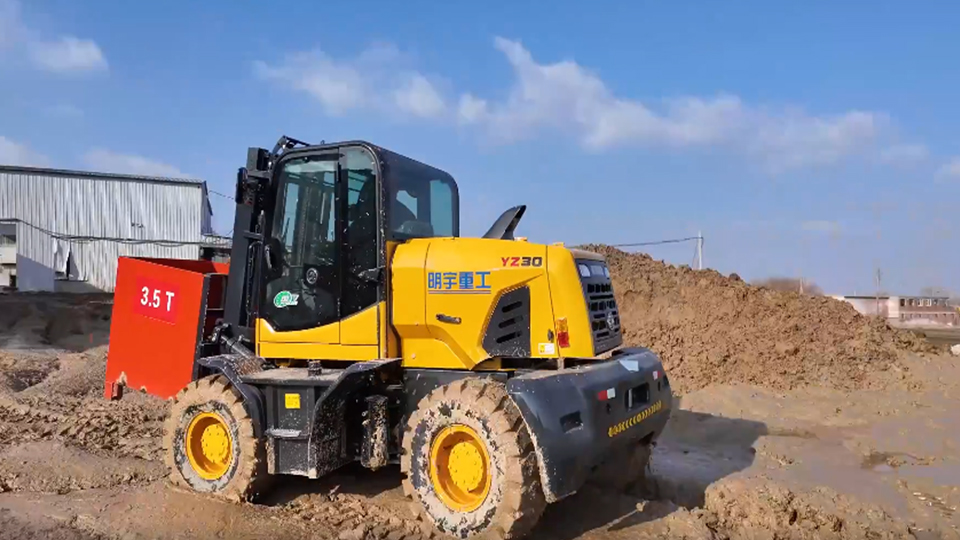
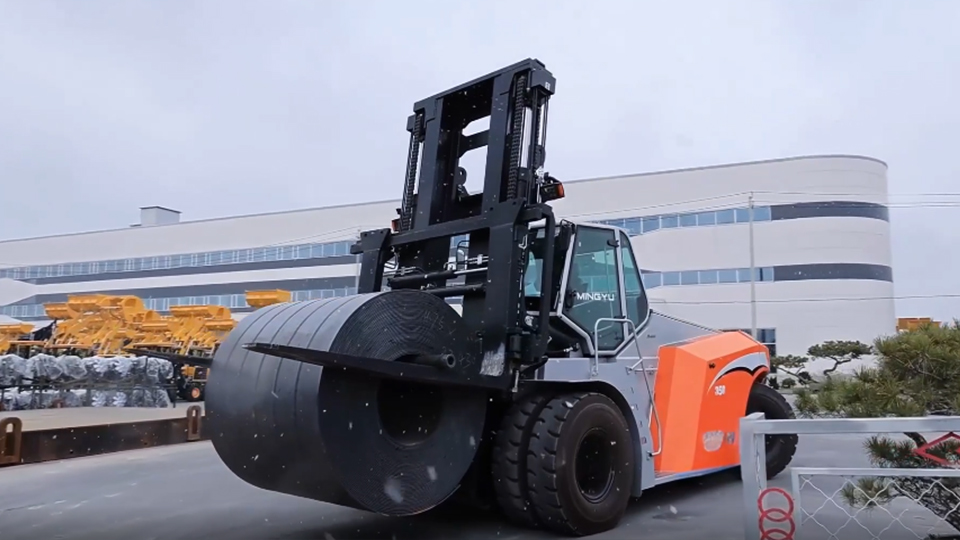
Heavy-duty diesel forklifts, rated at 5 tons and above, are engineered for the most demanding applications: steel mills, timber processing, port operations, container handling, and heavy manufacturing. These machines feature engines exceeding 75 horsepower, with some specialized models reaching well over 100 horsepower. Fuel consumption in this category escalates significantly, with typical rates ranging from 1.6 to 2.6 gallons per hour (6 to 10 liters per hour) under normal conditions, and potentially exceeding 3.0 gallons per hour (11.4+ liters per hour) in severe-duty applications. A 20-gallon (76-liter) fuel tank on a heavy-duty unit may deliver only 6 to 8 hours of runtime in intensive operations, making fuel logistics a critical operational consideration. At the upper extremes—very heavy forklifts in the 10-ton class operating in port environments—consumption can reach 2.5 to 4.0+ gallons per hour (9.5 to 15.1+ liters per hour). In these applications, fuel cost often dominates the total cost of ownership, and even marginal improvements in fuel efficiency yield substantial annual savings.
Summary of Capacity-Based Consumption Ranges
Capacity Class Typical Fuel Consumption (gal/h) Liters per Hour Operational Context
1–1.5 ton compact 0.8–1.5 3.0–5.7 Light warehouse work, partial loads
2–3 ton light-duty 0.5–1.0 2–4 Standard warehouse, moderate duty
3–5 ton medium-duty 1.0–1.6 4–6 Mixed loading, docks, outdoor yards
5+ ton heavy-duty 1.6–2.6+ 6–10+ Steel, timber, port work
8,000+ lb heavy 2.5–4.0+ 9.5–15.1+ Severe duty, near-capacity operation
Engineering Factors Driving Fuel Consumption
Understanding why diesel forklifts consume fuel at their observed rates requires examining the engineering principles governing energy conversion, mechanical work, and system losses within these machines.
Thermodynamic Efficiency of Diesel Engines
Diesel engines in forklifts operate on the compression-ignition principle, where air is compressed to high pressure and temperature before fuel injection initiates combustion. The theoretical thermal efficiency of modern diesel engines approaches 45 percent, meaning that roughly 45 percent of the chemical energy in diesel fuel is converted into useful mechanical work at the crankshaft. Diesel fuel contains approximately 36 megajoules per liter (about 130,000 BTU per gallon), yielding approximately 4,455 watt-hours of usable mechanical energy per liter burned. The remaining 55 percent of energy is lost primarily as heat through the exhaust, cooling system, and radiation. This fundamental thermodynamic limitation means that even a perfectly optimized diesel forklift cannot achieve fuel consumption below certain physical thresholds dictated by the work it must perform.
Load Factor and Hydraulic Demand
The most significant variable affecting hourly fuel consumption is the load factor—the ratio of actual load weight to rated capacity. When a forklift operates near its rated capacity, the engine must deliver peak torque more frequently, the hydraulic pump must generate higher pressures, and the overall duty cycle intensity increases. Industry studies demonstrate that running at near-capacity loads can increase fuel consumption by 20 to 40 percent compared to light-load operation. The hydraulic system, which powers lifting, tilting, and auxiliary functions, represents a major parasitic load on the engine. During continuous lifting cycles—common in high-throughput distribution centers—the hydraulic pump draws substantial power, elevating fuel burn even when the forklift travels minimal distances. Conversely, during extended travel with minimal lifting, the engine operates more efficiently at steady-state conditions, though air resistance and rolling resistance still consume energy.
Terrain and Environmental Conditions
Operating environment profoundly influences fuel consumption. Smooth, level concrete floors offer minimal rolling resistance and allow efficient power transmission. In contrast, rough outdoor yards with gravel, mud, or broken concrete increase rolling resistance by 30 to 50 percent, directly translating to higher fuel burn. Ramps and inclines present an even more dramatic challenge: lifting the combined mass of the forklift and its load against gravity requires the engine to operate at higher throttle settings for extended periods. A 5 to 10 percent grade can increase fuel consumption by 30 to 50 percent during ascent. Ambient temperature also plays a role—cold weather increases fuel density and requires additional energy for fuel vaporization and engine warm-up, while hot weather increases cooling demands and reduces air density, marginally affecting combustion efficiency.
Duty Cycle Characteristics
The pattern of forklift usage—the duty cycle—significantly impacts average fuel consumption. Stop-and-start operations with frequent direction changes, short shuttle runs, and repeated acceleration cycles waste energy through inertia changes and heat dissipation in the torque converter and brakes. In contrast, steady, moderate-speed travel with consistent load handling allows the engine to operate in its most efficient torque band. Field data consistently shows that two identical forklifts on the same site can differ by 15 to 25 percent in fuel consumption, with the primary differentiator being idle time and operator driving style rather than equipment specification. Continuous heavy lifting, long travel distances between pick and deposit points, and congested layouts all push consumption toward the upper limits of each capacity class.
Operator Behavior and Idle Time Impact
Perhaps the most controllable factor in diesel forklift fuel consumption is operator behavior. The human element in forklift operation introduces variability that often exceeds the differences between equipment models.
Driving Style and Acceleration Patterns
Aggressive acceleration from standstill, harsh braking, and excessive travel speed all increase fuel consumption without improving productivity. Full-throttle starts waste fuel as heat in the torque converter and transmission, while sudden stops dissipate kinetic energy as brake heat rather than recovering it. Smooth, gradual acceleration and anticipatory braking—techniques easily taught through operator training programs—can reduce fuel consumption by 10 to 20 percent in stop-start environments. Maintaining steady speeds during travel and planning routes to minimize backtracking and deadheading further optimize fuel efficiency.
Idle Time Management
Engine idling represents pure fuel consumption with zero productive output. A diesel forklift engine at idle can consume approximately 0.1 to 0.15 gallons per hour (0.4 to 0.6 liters per hour)—a figure that seems modest until aggregated across a fleet and over time. In many operations, forklifts idle for 15 to 35 percent of key-on hours while operators wait for paperwork, loading dock clearance, or instructions. Eliminating unnecessary idling by shutting down engines during waits exceeding a few minutes, or implementing automatic idle shutdown systems, can reduce fleet-wide fuel consumption by 10 to 20 percent. Telematics systems that monitor and report idle percentage by operator and shift make this waste visible and actionable, often delivering return on investment within the first year through fuel savings alone.
Maintenance and Mechanical Condition
The mechanical condition of a diesel forklift directly affects its fuel efficiency. A poorly maintained machine can consume 10 to 20 percent more fuel than a well-maintained equivalent performing identical work.
Air Filtration and Intake System
Clogged air filters restrict airflow to the engine, forcing the fuel injection system to enrich the air-fuel mixture to maintain power output. This enrichment reduces combustion efficiency and increases fuel consumption. Regular air filter inspection and replacement—more frequently in dusty environments—maintains optimal airflow and fuel economy.
Fuel System and Injection Components
Worn fuel injectors, degraded injection pump timing, and contaminated fuel all degrade combustion quality. Modern diesel engines with electronic common-rail injection systems achieve precise fuel metering, but injector wear over time leads to poor atomization, incomplete combustion, and increased fuel consumption. Maintaining clean fuel through proper filtration and water separation prevents injector damage and preserves efficiency.
Tire Condition and Rolling Resistance
Underinflated or worn tires increase rolling resistance, requiring the engine to deliver more torque for equivalent travel speed. Solid pneumatic and cushion tires, common on forklifts, have specific inflation pressure requirements that must be maintained. Tire selection also matters—cushion tires on smooth concrete offer lower rolling resistance than pneumatic tires, which should be reserved for rough outdoor applications where their shock absorption benefits justify the efficiency penalty.
Hydraulic System Integrity
Leaking hydraulic cylinders, worn pump components, and degraded hydraulic oil increase parasitic losses in the lifting system. Internal leakage in control valves allows fluid to bypass intended flow paths, requiring the pump to work harder to maintain pressure. Regular hydraulic system maintenance, including oil analysis, filter changes, and seal inspection, preserves system efficiency and prevents unnecessary fuel burn.
Transmission and Driveline Efficiency
The method by which engine power reaches the drive wheels significantly affects overall fuel efficiency. Diesel forklifts typically employ one of three transmission types: manual mechanical, powershift, or hydrostatic.
Mechanical Transmissions
Manual or powershift mechanical transmissions offer the highest theoretical efficiency, with minimal power loss between engine and wheels. However, they require operator skill to maintain optimal gear selection and can be less efficient if operated in incorrect gears. Powershift transmissions, which allow clutchless gear changes under load, improve operator productivity but introduce some efficiency losses through torque converter slippage.
Hydrostatic Transmissions
Hydrostatic transmissions, widely used in modern forklifts for their smooth operation and precise control, transmit power through hydraulic fluid rather than mechanical gears. While offering excellent maneuverability and reduced operator fatigue, hydrostatic drives can be less fuel-efficient than mechanical transmissions in certain applications due to hydraulic pump and motor losses. The trade-off between operational benefits and fuel efficiency must be evaluated based on specific application requirements.
Calculating and Budgeting Fuel Costs
Translating gallons-per-hour consumption figures into actionable financial data requires systematic calculation methodology.
Hourly Fuel Cost Formula
The basic formula for hourly fuel cost is straightforward:
Hourly Fuel Cost (/hour)=FuelConsumption(gal/h)×DieselPrice( /gal)
For example, a 3-ton forklift consuming 1.2 gallons per hour with diesel priced at $4.00 per gallon incurs an hourly fuel cost of $4.80. Over a 2,000-hour annual operating schedule, this translates to $9,600 in fuel expenditure per truck per year.
Annual Fuel Budget Calculation
To project annual fuel budgets:
Annual Fuel Cost = Fuel Consumption (gal/h) × Operating Hours per Day × Working Days per Year × Diesel Price ($/gal)
Using a medium-duty forklift at 1.3 gallons per hour, operating 8 hours per day, 250 days per year, at $4.00 per gallon:
1.3 gal/h × 8 h/day × 250 days/year × $4.00/gal = $10,400 per year
Fleet managers should apply a 15 to 25 percent buffer over calculated estimates to account for operational variability, price fluctuations, and unexpected increases in duty cycle intensity.
Comparative Context: Diesel vs. Electric Forklifts
Understanding diesel consumption rates gains additional relevance when compared against electric forklift operating costs. While diesel forklifts incur direct fuel expenses, electric forklifts consume electricity measured in kilowatt-hours per hour of operation. A typical 3-ton electric forklift consumes approximately 5 to 7 kWh per hour of operation. At an industrial electricity rate of $0.12 per kWh, the hourly energy cost ranges from $0.60 to $0.84—substantially lower than the $4.80 to $6.40 hourly fuel cost of an equivalent diesel forklift at $4.00 per gallon. However, this comparison must account for battery replacement costs, charging infrastructure investment, and the operational constraints of electric forklifts (indoor use, charging downtime, battery management). For operations with high annual hours and stable duty cycles, the energy cost differential often justifies the higher capital investment in electric equipment. For intermittent outdoor use or applications requiring continuous runtime without charging breaks, diesel remains economically competitive despite higher per-hour fuel costs.
Strategies for Optimizing Diesel Forklift Fuel Efficiency
Reducing diesel consumption without sacrificing productivity requires a multi-faceted approach addressing equipment selection, maintenance practices, operator training, and operational design.
Right-Sizing Equipment
Matching forklift capacity to actual workload prevents the fuel penalty of oversizing. A 2.5-ton forklift operating at 80 percent capacity is more fuel-efficient than a 4-ton forklift performing the same work at 50 percent capacity, as the larger machine carries excess counterweight and engine displacement. Maintaining a fleet with appropriate capacity distribution—perhaps one heavy-duty unit for occasional peak loads and smaller units for routine work—optimizes fleet-wide fuel economy.
Telematics and Data-Driven Management
Modern telematics systems provide granular visibility into fuel consumption, idle time, travel patterns, and operator behavior. By analyzing this data, fleet managers can identify high-consumption trucks, inefficient operators, and suboptimal route patterns. Benchmarking "liters per pallet moved" rather than merely "liters per hour" shifts focus from time-based to productivity-based fuel efficiency metrics, revealing opportunities for operational improvement that pure hourly measurements obscure.
Preventive Maintenance Programs
Strict adherence to manufacturer-recommended maintenance intervals preserves engine efficiency. Scheduled oil changes, filter replacements, valve adjustments, and injection system servicing prevent the gradual degradation that increases fuel consumption over time. Tire pressure monitoring, hydraulic leak detection, and cooling system maintenance complete the preventive maintenance picture.
Operator Training and Incentives
Comprehensive operator training programs emphasizing fuel-efficient driving techniques—smooth acceleration, minimal idling, optimal travel routes, and proper gear selection—deliver measurable fuel savings. Incentive programs that reward operators or shifts achieving below-target fuel consumption rates, normalized for workload, encourage behavioral change without compromising safety or productivity.
Conclusion
The average diesel consumption for a forklift ranges from approximately 0.5 gallons per hour for light-duty compact models to over 3.0 gallons per hour for heavy-duty machines in severe applications, with the industry-standard medium-duty 3 to 5 ton class typically consuming 1.0 to 1.6 gallons per hour under normal operating conditions. However, these figures represent planning guidelines rather than guarantees. Real-world consumption varies significantly based on load factors, terrain, duty cycle intensity, operator behavior, and maintenance standards. The most successful fleet managers treat fuel consumption as a controllable engineering parameter rather than an immutable specification. Through right-sized equipment selection, rigorous preventive maintenance, data-driven telematics monitoring, and comprehensive operator training, organizations can push their diesel forklifts toward the lower boundaries of their capacity-class fuel consumption bands. In an era of volatile fuel prices and increasing environmental scrutiny, optimizing diesel forklift fuel efficiency is not merely a cost-cutting exercise—it is a strategic imperative that enhances competitiveness, reduces emissions, and extends equipment service life.
Name: selena
Mobile:+86-13176910558
Tel:+86-0535-2090977
Whatsapp:8613181602336
Email:vip@mingyuforklift.com
Add:Xiaqiu Town, Laizhou, Yantai City, Shandong Province, China
