
vip@mingyuforklift.com
+86-0535-2090977

Introduction
Electric forklifts have revolutionized material handling operations across warehouses, manufacturing facilities, and distribution centers worldwide. Unlike their internal combustion counterparts that rely on fossil fuels, electric forklifts utilize sophisticated electromechanical systems to deliver clean, efficient, and precise load handling capabilities. Understanding the intricate working principles behind these machines is essential for operators, maintenance personnel, and facility managers seeking to optimize performance, ensure safety, and extend equipment lifespan. This technical analysis examines the core systems and operational mechanisms that power modern electric forklifts, from energy storage and power distribution to hydraulic actuation and electronic control architectures .
The Power Source: Battery Systems and Energy Storage
At the foundation of every electric forklift lies its battery system, which serves dual critical functions as both the energy source and a structural counterweight. The majority of electric forklifts employ lead-acid battery technology, though lithium-ion systems are rapidly gaining market share due to superior performance characteristics .
Lead-Acid Battery Architecture
Traditional lead-acid batteries consist of multiple individual cells connected in series configurations to achieve operating voltages ranging from 24 volts for compact pedestrian models to 80 volts for heavy-duty counterbalance trucks. Each cell contains lead plates immersed in sulfuric acid electrolyte, generating electrical potential through reversible electrochemical reactions. During discharge, lead dioxide at the positive plate and sponge lead at the negative plate react with sulfuric acid to produce lead sulfate, water, and electrical energy. The charging process reverses these reactions, restoring the battery to its original chemical state .
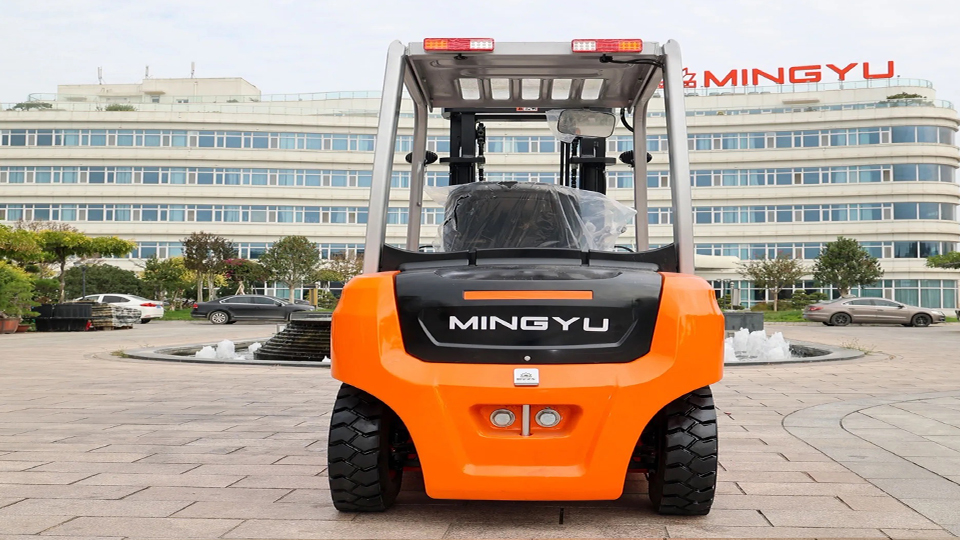
The battery's physical placement within the forklift chassis is strategically engineered to optimize stability. Positioned low in the vehicle frame, typically beneath the operator compartment or rear counterweight section, the battery mass contributes significantly to the forklift's center of gravity. This low mounting position enhances resistance to tip-over forces when handling elevated loads, a critical safety consideration in material handling operations .
Lithium-Ion Battery Integration
Modern electric forklifts increasingly incorporate lithium-ion battery technology, particularly lithium iron phosphate (LiFePO4) chemistries. These systems offer substantial advantages including faster charging capabilities—often achieving 80% capacity in 1-2 hours versus 7-8 hours for conventional lead-acid systems—longer cycle life, and elimination of maintenance requirements such as electrolyte replenishment .
Lithium-ion installations incorporate sophisticated Battery Management Systems (BMS) that monitor individual cell voltages, temperatures, and state-of-charge in real-time. The BMS ensures balanced charging across all cells, prevents over-discharge conditions that could damage the battery, and communicates critical status information to the forklift's main electronic control unit .
Electric Drive Systems: Motors and Power Transmission
The electric drive system represents the heart of the forklift's propulsion capability, converting stored electrical energy into mechanical motion with high efficiency and precise controllability.
Motor Technologies and Configurations
Electric forklifts utilize either direct current (DC) or alternating current (AC) motor technologies, each offering distinct operational characteristics. Traditional DC series-wound motors have historically dominated the market due to their excellent starting torque characteristics and simple control requirements. These motors produce torque proportional to armature current, delivering the high tractive effort necessary for moving heavy loads from standstill .
However, modern electric forklifts increasingly adopt three-phase AC induction motors or permanent magnet synchronous motors. AC systems offer superior energy efficiency, reduced maintenance requirements due to the absence of commutators and brushes, and enhanced thermal performance. Variable Frequency Drives (VFDs) control AC motor speed by varying both voltage and frequency, enabling smooth acceleration profiles and precise speed regulation across the entire operational range .
The motor's output shaft connects to the drive axle through a reduction gearbox or direct-drive configuration. The reduction mechanism multiplies motor torque while reducing rotational speed to levels appropriate for vehicle propulsion. Differential gearing within the drive axle distributes power between the two drive wheels while permitting speed differentiation during turning maneuvers, preventing tire scrub and reducing mechanical stress .
Electronic Motor Control Systems
The motor controller functions as the intelligent intermediary between the battery and drive motor, regulating power flow with precision measured in milliseconds. Modern controllers employ Pulse Width Modulation (PWM) technology, rapidly switching power transistors on and off to create variable voltage waveforms that control motor speed and torque .
When the operator depresses the accelerator pedal, position sensors transmit input signals to the controller's microprocessor. The controller calculates required power output based on pedal position, vehicle speed, battery voltage, and thermal conditions, then modulates power delivery accordingly. Advanced controllers implement closed-loop feedback systems, continuously monitoring motor current, temperature, and rotational speed to optimize performance while preventing damaging overload conditions .
Controller specifications vary by application, with continuous current ratings ranging from 100 amperes for light-duty equipment to over 650 amperes for heavy industrial models. Operating voltage ranges typically span 24-96 volts DC, with protection features including undervoltage lockout, overcurrent shutdown, and thermal derating to prevent component damage .
Hydraulic Systems: Lifting and Load Handling
While electric motors provide propulsion, hydraulic systems deliver the immense force necessary for lifting and manipulating heavy loads. Electric forklifts integrate hydraulic power generation seamlessly with the electrical drive system.
Hydraulic Power Generation
An electric motor dedicated to hydraulic functions drives a positive-displacement gear pump, converting mechanical energy into fluid pressure. This hydraulic motor operates independently from the traction drive motor, enabling simultaneous driving and lifting operations while optimizing energy efficiency .
The gear pump draws hydraulic fluid from a reservoir and delivers it at high pressure—typically 10-20 megapascals (1,450-2,900 psi)—to a multi-function control valve assembly. Flow rate and pressure correlate directly with pump rotational speed, which the controller regulates based on operator commands and system demands .
Mast and Fork Mechanisms
The forklift's mast assembly constitutes a multi-stage telescoping structure comprising inner and outer channels, lift cylinders, chains, and roller assemblies. When pressurized hydraulic fluid enters the main lift cylinder, the piston rod extends, raising the inner mast section along the outer mast's vertical tracks .
A mechanical chain-and-sprocket arrangement provides mechanical advantage, multiplying the cylinder's stroke to achieve greater lift heights. One end of the lifting chain anchors to the outer mast base, routes over a sprocket mounted on the inner mast crossbeam, and attaches to the fork carriage. As the inner mast rises at velocity (v), the chain configuration propels the fork carriage upward at velocity (2v), effectively doubling the lifting speed relative to cylinder extension rate. When the inner mast reaches full extension, the fork carriage continues rising along the inner mast tracks until reaching maximum lift height .
Tilt cylinders control forward and backward mast inclination, typically providing 5-10 degrees forward tilt for load engagement and 10-15 degrees backward tilt for load retention during transport. Side-shift mechanisms, available on many models, enable lateral fork adjustment without repositioning the entire forklift, improving operational efficiency in confined spaces .
Steering and Maneuverability Systems
Electric forklifts employ specialized steering configurations optimized for tight-quarters operation. The predominant rear-wheel steering arrangement provides exceptional maneuverability, enabling tight turning circles essential for narrow-aisle warehouse applications .
Electric Power Steering (EPS)
Modern electric forklifts incorporate Electric Power Steering (EPS) systems that reduce operator effort while improving precision. The EPS architecture includes a steering torque sensor, electronic control unit, electric assist motor, and mechanical reduction gear .
When the operator rotates the steering wheel, the torque sensor detects applied force and transmits data to the control unit. The controller calculates required assist torque based on vehicle speed, steering angle, and driver input, then drives the electric motor to provide supplemental steering force. At low speeds or when stationary, the system provides maximum assistance for effortless maneuvering. During high-speed travel, assist levels decrease to ensure stable, predictable handling .
This electro-mechanical approach eliminates hydraulic power steering pumps, hoses, and fluid reservoirs, reducing component count and maintenance requirements while improving energy efficiency by approximately 80% compared to conventional hydraulic systems .
Electronic Control Architecture and Safety Systems
Contemporary electric forklifts integrate sophisticated electronic networks that coordinate all vehicle functions while providing comprehensive safety monitoring and diagnostic capabilities.
Controller Area Network (CAN) Bus Communication
Modern forklifts employ Controller Area Network (CAN) bus architecture to enable high-speed data exchange between distributed electronic modules. The CAN bus connects the main vehicle controller, motor controllers, battery management system, hydraulic valve controllers, and operator display into a unified network .
This communication infrastructure enables real-time monitoring of critical parameters including battery state-of-charge, motor temperatures, hydraulic pressures, and fault conditions. Diagnostic trouble codes generated by any system component transmit instantly to the operator display, enabling rapid troubleshooting and reducing downtime .
Regenerative Braking and Energy Recovery
Advanced electric forklifts implement regenerative braking systems that capture kinetic energy during deceleration and return it to the battery. When the operator releases the accelerator pedal or applies brakes, the motor controller reverses the drive motor's function, operating it as a generator. The resulting electrical current flows back to the battery, partially replenishing the charge while providing controlled deceleration .
Energy recovery rates typically achieve 15-20% of braking energy, extending operational runtime between charges and reducing mechanical brake wear. The controller precisely manages regeneration levels to ensure smooth deceleration without compromising stability or load security .
Integrated Safety Functions
Electronic control systems implement multiple safety features including automatic speed reduction when the mast is elevated beyond specified heights, load weight monitoring with overload protection, and anti-rollback functions on inclines. The controller continuously monitors battery voltage, preventing deep discharge conditions that could damage the battery pack or leave the vehicle stranded .
Charging Systems and Infrastructure
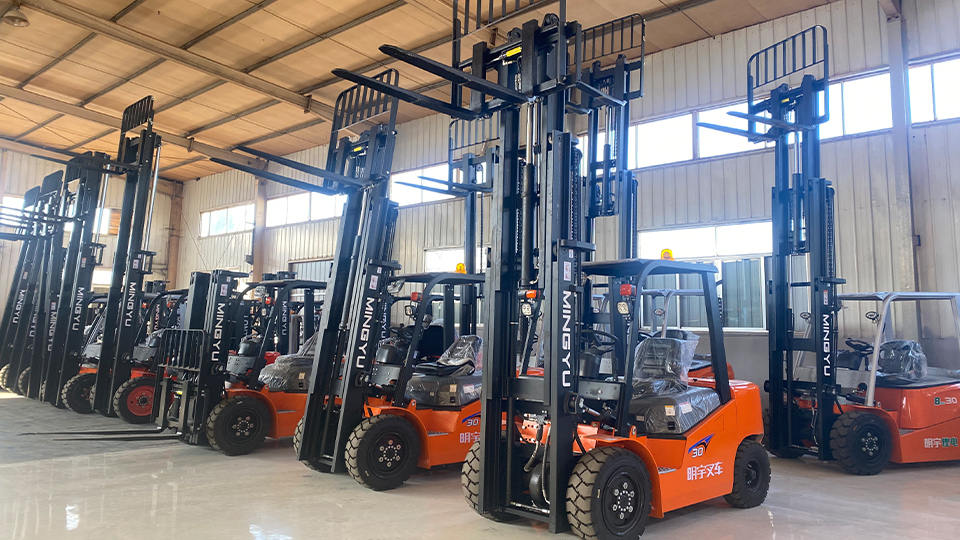
Electric forklift operation requires supporting charging infrastructure designed to restore battery energy efficiently and safely. Forklift chargers convert alternating current (AC) facility power to direct current (DC) suitable for battery charging, with charging power levels ranging from 60 amperes for overnight charging to 200+ amperes for opportunity fast-charging applications .
Modern chargers incorporate multi-stage charging algorithms including bulk charging at maximum current, absorption charging at constant voltage to complete the charge, and float charging to maintain full capacity without overcharging. Intelligent chargers communicate with battery management systems to optimize charging parameters based on battery temperature, age, and usage patterns, maximizing battery service life .
Conclusion
Electric forklifts represent sophisticated electromechanical systems integrating energy storage, power electronics, hydraulic actuation, and intelligent control technologies. Understanding these systems' operational principles enables organizations to maximize equipment productivity, minimize operational costs, and ensure safe material handling operations. As battery technology continues advancing and electronic control capabilities expand, electric forklifts will further solidify their position as the preferred solution for indoor material handling and increasingly challenge internal combustion equipment in outdoor applications. Proper training, maintenance, and operational practices remain essential for realizing the full benefits these advanced machines offer.
Name: selena
Mobile:+86-13176910558
Tel:+86-0535-2090977
Whatsapp:8613181602336
Email:vip@mingyuforklift.com
Add:Xiaqiu Town, Laizhou, Yantai City, Shandong Province, China
