
vip@mingyuforklift.com
+86-0535-2090977

Introduction
The question of whether electric forklifts can operate safely in rainy conditions represents one of the most common concerns among warehouse managers, logistics coordinators, and safety professionals. As electric forklifts increasingly dominate material handling operations due to their zero emissions, reduced noise levels, and lower total cost of ownership, understanding their operational limitations in wet weather becomes critical for operational planning and risk management. This technical analysis examines the waterproofing capabilities, potential risks, safety protocols, and best practices for operating electric forklifts in wet weather conditions without compromising equipment integrity or personnel safety .
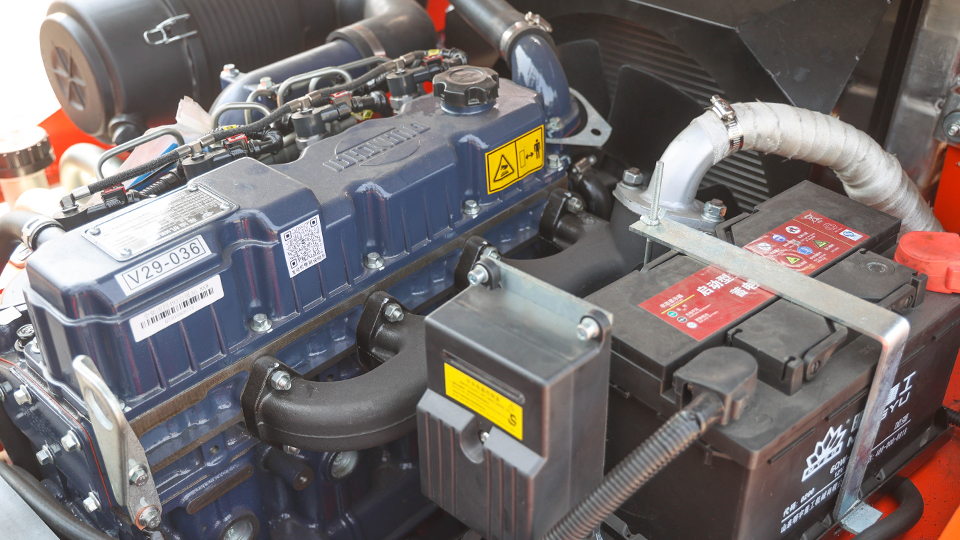
Understanding Ingress Protection (IP) Ratings and Weather Resistance
The fundamental determinant of an electric forklift's suitability for wet weather operation lies in its Ingress Protection (IP) rating—a standardized classification system defined by international standards that quantifies protection levels against solids and liquids. The IP code consists of two digits: the first indicating protection against solid particles (0-6 scale), and the second indicating liquid protection (0-8 scale) .
IP Rating Requirements for Wet Weather Operation
For electric forklifts to operate safely in rainy conditions, manufacturers must design systems achieving minimum IPX4 ratings or higher. An IPX4 designation indicates resistance to water splashing from any direction, sufficient for light to moderate rainfall exposure. More robust outdoor-specific models may achieve IPX5 (resistance to low-pressure water jets) or IPX6 (resistance to high-pressure water jets) ratings, enabling operation during heavy precipitation and even high-pressure washdown procedures .
The highest practical ratings for industrial equipment, IPX7 and IPX8, indicate protection against temporary immersion (1 meter for 30 minutes) and continuous submersion beyond 1 meter, respectively. While theoretically ideal, these ratings are rarely necessary for standard material handling applications and command significant cost premiums .
Standard indoor electric forklifts typically carry IP20 to IP43 ratings, offering minimal protection against water ingress. These models feature basic enclosures preventing finger contact with live components but lack sealing adequate for outdoor moisture exposure. Operating such equipment in rainy conditions risks electrical short circuits, corrosion, and permanent component damage .
Component-Level Waterproofing Architecture
Modern electric forklifts designed for outdoor or mixed-use applications incorporate multi-layered protection strategies across critical subsystems to enable safe wet weather operation.
Battery System Protection
The battery pack represents both the most valuable and most vulnerable component in wet weather scenarios. Lead-acid battery installations typically reside in sealed steel compartments with gasketed covers and rubber seals preventing rainwater intrusion. However, terminal connections remain susceptible to moisture ingress, potentially causing electrolyte leakage, terminal corrosion, or short circuit conditions .
Lithium-ion battery systems offer inherently superior moisture resistance due to sealed cell configurations and integrated Battery Management Systems (BMS) with environmental monitoring capabilities. These systems typically achieve IP67 ratings, providing complete dust protection and resistance to temporary immersion—significantly exceeding the protection levels of traditional lead-acid installations .
Battery compartment ventilation systems present particular design challenges for waterproofing. While batteries require airflow for thermal management during charging and discharging, ventilation openings must incorporate water-shedding designs or temporary sealing mechanisms for wet weather operation .
Electrical Control Systems
Motor controllers, contactors, and electronic control units (ECUs) reside within sealed enclosures rated for environmental protection. These housings utilize gasketed lids, sealed cable entry points, and conformal-coated circuit boards to prevent moisture-induced failures. The controller enclosure typically achieves IP65 or higher ratings, ensuring complete dust-tightness and protection against low-pressure water jets from any direction .
Drive motors, particularly three-phase AC induction motors employed in modern electric forklifts, inherently feature high IP ratings due to their enclosed construction and absence of brush-commutator assemblies that create entry points for moisture. These motors routinely achieve IP55 ratings or higher, enabling reliable operation in damp environments .
Operator Compartment and Controls
Outdoor-capable electric forklifts incorporate weatherized operator compartments featuring enclosed cabs with sealed doors, windshield wipers, and defrosting systems. Control interfaces utilize weatherproof switches, sealed connectors, and moisture-resistant potentiometers to maintain functionality despite exposure to precipitation. These design elements prove essential for maintaining operator safety and equipment control during adverse weather conditions .
Operational Risks in Wet Weather Conditions
Even with adequate IP ratings and protective designs, operating electric forklifts in rainy conditions introduces multiple risk factors requiring careful management.
Electrical System Hazards
Moisture infiltration into electrical systems can trigger short circuits, ground faults, or insulation failures. Water ingress into control boxes or junction boxes may cause erratic operation, unexpected system shutdowns, or activation of automatic protection systems that disable the vehicle. In severe cases, moisture penetration can damage electronic components beyond repair, necessitating costly replacements .
The risk of electrical shock, while minimal in properly designed systems, increases when insulation degrades or sealing components fail. Operators should never attempt to service electrical components during precipitation or when standing in water .
Traction and Stability Concerns
Wet operating surfaces dramatically reduce tire traction, increasing stopping distances by 20-50% compared to dry conditions. Smooth concrete surfaces become particularly hazardous when wet, while painted floor markings, metal dock plates, and accumulated debris create additional slip hazards .
Rear-wheel steering configurations common to counterbalance forklifts become less predictable on wet surfaces, particularly during high-speed cornering or abrupt directional changes. The combination of reduced traction and altered steering dynamics significantly increases tip-over risks, especially when handling elevated loads .
Visibility Limitations
Rainwater accumulation on windshields, operator helmets, and overhead guards restricts visibility, complicating load placement, pedestrian detection, and obstacle avoidance. Reduced ambient light during storm conditions further degrades visual acuity, requiring enhanced lighting systems and reduced operating speeds .
Safe Operating Protocols for Wet Weather
Organizations can implement electric forklifts in wet weather applications safely by adhering to established protocols and best practices.
Pre-Operational Inspection Requirements
Prior to wet weather operation, conduct comprehensive inspections focusing on weatherproofing integrity:
Verify battery compartment seals are intact and free from deterioration
Confirm electrical enclosure gaskets are properly seated and undamaged
Inspect cable connections for tightness and absence of exposed conductors
Check tire tread depth and condition—worn tires exhibit severely degraded wet-weather performance
Test all lighting systems including headlights, taillights, and warning beacons
Verify windshield wiper functionality and washer fluid levels
Operational Modifications
Adjust operating practices to accommodate reduced traction and visibility:
Reduce travel speeds by 25-50% compared to dry conditions
Increase following distances from other vehicles and pedestrians
Avoid abrupt acceleration, braking, or steering inputs that could induce skidding
Prohibit operation on grades exceeding manufacturer specifications for wet conditions
Eliminate sharp turns, particularly with elevated loads
Use low-range or creep-speed modes when maneuvering in confined areas
Environmental Limitations
Establish clear criteria for suspending operations when conditions exceed equipment capabilities:
Prohibit operation during electrical storms due to lightning hazards
Suspend activities when standing water exceeds 10 centimeters (4 inches) depth to prevent chassis submersion
Avoid operation in heavy rainfall exceeding moderate intensity
Restrict use to paved surfaces—unpaved areas become impassable and damage undercarriage components
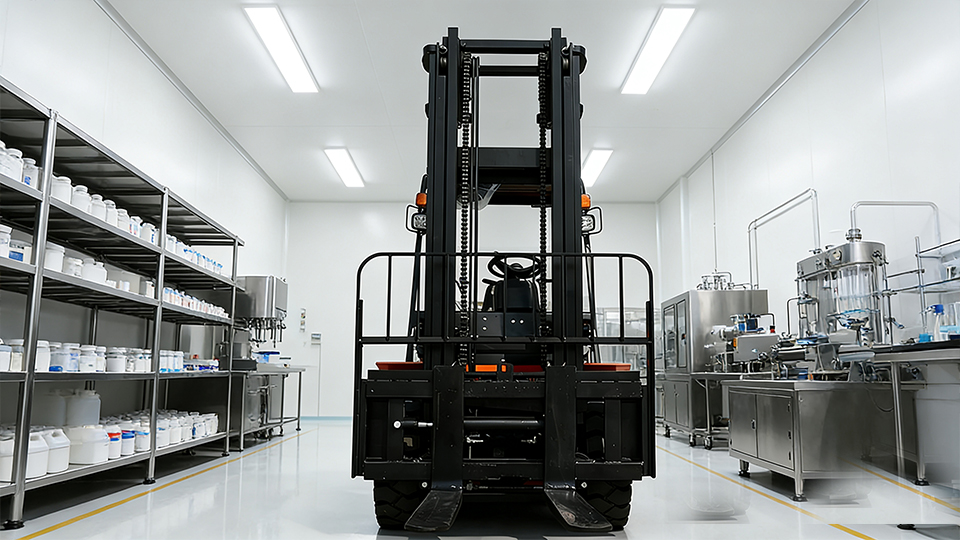
Equipment Selection for Wet Weather Applications
Organizations anticipating regular wet weather operation should select equipment specifically designed for outdoor environments rather than adapting indoor models.
Outdoor-Specific Design Features
Purpose-built outdoor electric forklifts incorporate:
Pneumatic or solid pneumatic tires providing superior traction on wet surfaces compared to cushion tires
Increased ground clearance (typically 150-200mm versus 100mm for indoor models) preventing undercarriage damage
Enclosed cabs with weatherstripping, windshield wipers, and climate control
Enhanced IP ratings (IP54 or higher) across all electrical systems
Corrosion-resistant coatings and materials for extended outdoor service life
Tire Considerations
Tire selection critically influences wet-weather performance. Pneumatic tires with aggressive tread patterns provide optimal traction on wet paved surfaces, while solid pneumatic tires offer puncture resistance with similar grip characteristics. Specialized siped or grooved tire designs channel water away from the contact patch, reducing hydroplaning risks .
Post-Operation Maintenance Protocols
Following wet weather operation, implement specific maintenance procedures to prevent long-term damage:
Dry exterior surfaces using clean cloths to prevent water spotting and corrosion
Inspect battery terminals and electrical connections for moisture accumulation
Check brake systems for water contamination that could reduce effectiveness
Lubricate pivot points and linkages that may have experienced water washout of lubricants
Store equipment in covered areas when not in use to minimize ongoing moisture exposure
Schedule more frequent inspection intervals for equipment regularly exposed to wet conditions, paying particular attention to corrosion development in structural components and electrical system integrity.
Regulatory and Manufacturer Guidance
Occupational Safety and Health Administration (OSHA) regulations do not explicitly prohibit electric forklift operation in rainy conditions but require employers to provide safe working environments and properly maintained equipment. Employers must ensure forklifts are operated according to manufacturer specifications, which typically define environmental limitations and required protection levels .
Manufacturer warranties may specifically exclude coverage for damage resulting from operation beyond specified environmental parameters. Organizations should consult equipment documentation and dealer representatives to confirm operational limitations and warranty implications before deploying electric forklifts in wet weather applications .
Conclusion
Electric forklifts can indeed operate safely in wet weather conditions without sustaining damage, provided the equipment carries appropriate IP ratings, incorporates outdoor-specific design features, and operators adhere to modified safety protocols. The critical factor lies not in the electric propulsion system itself—modern electrical systems offer excellent moisture resistance when properly designed—but in selecting equipment matched to anticipated environmental conditions.
Organizations should evaluate operational requirements carefully, investing in outdoor-rated electric forklifts with IPX4 or higher protection levels when wet weather use is anticipated. Indoor-only models should never be exposed to precipitation, as the risk of equipment damage and operational hazards outweighs any convenience benefits. Through proper equipment selection, operator training, and adherence to safety protocols, electric forklifts can deliver reliable, efficient performance across diverse environmental conditions while maintaining the environmental and economic advantages that drive their adoption.
Name: selena
Mobile:+86-13176910558
Tel:+86-0535-2090977
Whatsapp:8613181602336
Email:vip@mingyuforklift.com
Add:Xiaqiu Town, Laizhou, Yantai City, Shandong Province, China
