
vip@mingyuforklift.com
+86-0535-2090977

Introduction
Lifting heavy diesel engines using forklifts equipped with chain slings is a common yet potentially hazardous operation in automotive repair facilities, manufacturing plants, and heavy equipment maintenance shops. When executed properly, this method provides efficient material handling capabilities. However, improper rigging techniques can result in catastrophic equipment damage, facility destruction, and severe personnel injuries or fatalities. This technical article provides comprehensive guidance on the correct procedures for forklift-based diesel engine lifting operations, incorporating current Occupational Safety and Health Administration (OSHA) regulations and industry best practices established by the American Society of Mechanical Engineers (ASME) B30.9 standards .
Pre-Operational Planning and Risk Assessment
Load Calculation and Center of Gravity Determination
Before initiating any lifting operation, accurate determination of the diesel engine's weight is essential. Diesel engines vary significantly in mass—from small industrial units weighing 500 pounds to massive marine or locomotive engines exceeding 30,000 pounds. Consult manufacturer specifications, service manuals, or engineering documentation to establish precise weight data. Additionally, identify the engine's center of gravity, which typically lies near the crankshaft centerline but varies based on auxiliary components such as turbochargers, flywheels, and cooling systems mounted on the engine block.
Calculate the total load including all rigging hardware. Chain slings, hooks, and attachment hardware contribute significantly to overall weight—often adding 50 to 200 pounds depending on configuration. The combined weight must not exceed the forklift's rated capacity at the specific load center distance and lifting height required for the operation.
Forklift Capability Verification
Verify that the forklift's rated capacity exceeds the total calculated load by a substantial safety margin. Forklift capacity decreases as the load center moves forward from the standard 24-inch position and as lifting height increases. Consult the forklift's load capacity chart to ensure safe operation at the required lift height and reach. Never exceed manufacturer-specified capacity limits, as this compromises stability and increases tip-over risk.
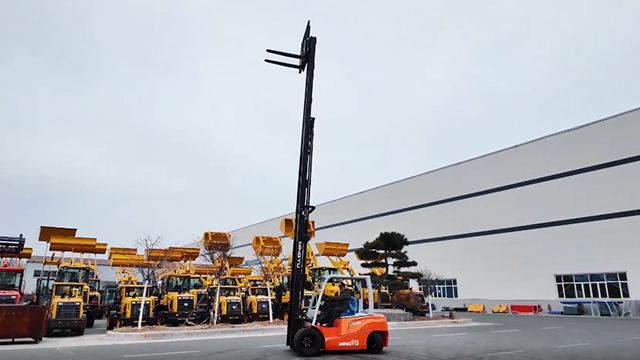
Ensure the forklift features appropriate attachments for lifting operations. While standard forks can support chain slings using certified lifting beams or attachments, dedicated forklift-mounted booms or crane attachments provide superior control for engine lifting operations. Verify that all attachments bear proper capacity ratings and identification markings as required by OSHA regulations .
Chain Sling Selection and Inspection
Chain Grade and Working Load Limit Specifications
Select chain slings manufactured from high-grade alloy steel specifically engineered for overhead lifting applications. OSHA mandates that only Grade 80, Grade 100, or Grade 120 alloy steel chains be used for overhead lifting operations . These grades offer superior strength-to-weight ratios and undergo rigorous testing protocols.
The Working Load Limit (WLL) represents the maximum safe working load permitted for the sling assembly. For Grade 80 chain, a 3/8-inch diameter chain provides a WLL of 7,100 pounds, while Grade 100 chain of identical diameter offers 8,800 pounds capacity. Grade 120 chain delivers 10,600 pounds WLL—representing a 50% capacity increase over Grade 80 . Always select chain slings with WLL ratings substantially exceeding the calculated load, incorporating appropriate safety factors for dynamic loading conditions.
Pre-Use Inspection Protocols
OSHA requires that all chain slings undergo inspection by a competent person designated by the employer before each day's use . This inspection must include:
Link Examination: Inspect each chain link for cracks, gouges, nicks, or deformation. Measure link dimensions using precision instruments—remove chains from service when wear reduces any link dimension below manufacturer-specified minimums .
Component Assessment: Examine hooks, master links, coupling links, and terminal fittings for distortion, cracks, or excessive wear. Ensure hook latches function properly and retain loads securely.
Identification Verification: Confirm that permanently affixed identification tags remain legible and intact. Tags must display manufacturer information, chain grade, nominal size, number of legs, reach length, and rated capacities for various hitch configurations . OSHA prohibits use of slings lacking proper identification markings .
Length Verification: Measure sling reach to ensure it matches tagged specifications. Elongation exceeding 5% indicates overloading and mandates immediate removal from service .
Document all inspections in accordance with OSHA record-keeping requirements. Maintain inspection logs containing dates, inspector identification, sling serial numbers, and findings .
Rigging Configuration and Attachment Procedures
Lifting Point Identification
Diesel engines incorporate specific lifting points designed by manufacturers for safe hoisting operations. These points typically include:
Cast-in Lifting Eyes: Many engine blocks feature machined lifting eyes or pads cast directly into the block structure at strategic locations balancing the engine's center of gravity.
Exhaust Manifold Bosses: Some designs utilize reinforced bosses on exhaust manifolds as secondary lifting points.
Accessory Mounting Points: Certain engines permit attachment at generator, compressor, or pump mounting locations, provided these structures possess adequate structural integrity.
Never attach chains to oil pan flanges, sheet metal covers, plastic components, or other non-structural elements incapable of supporting the full engine weight. Consult manufacturer service documentation to identify approved lifting points and recommended sling configurations.
Sling Configuration Selection
Select appropriate sling configuration based on engine geometry and weight distribution:
Single-Leg Configuration: Suitable only for engines with single, centrally located lifting points positioned directly above the center of gravity. Rarely appropriate for complete diesel engines due to asymmetric weight distribution.
Two-Leg (Bridle) Configuration: Most common for inline diesel engines. Attach legs to lifting points positioned equidistant from the center of gravity, typically at front and rear lifting eyes. Maintain leg angles between 30 and 60 degrees from horizontal—angles below 30 degrees create excessive horizontal forces and reduce effective capacity .
Four-Leg Configuration: Required for large V-configuration engines or units with complex geometries. Provides superior stability and load distribution. Ensure all four legs share load equally—unequal leg loading can overload individual components despite total weight remaining within aggregate WLL.
Connection and Tensioning Procedures
Attach chain slings using certified shackles or hooks matched to the chain grade and WLL. Shackles must bear permanently affixed identification markings indicating rated capacity . Never use mismatched components—chain slings must not be loaded beyond the rated capacity of the weakest component in the assembly .
Position attachment points to ensure the engine remains level when suspended. For engines with offset centers of gravity, adjust leg lengths or utilize unequal leg configurations to achieve horizontal orientation. Engines suspended at angles create control difficulties and increase collision risks during transport.
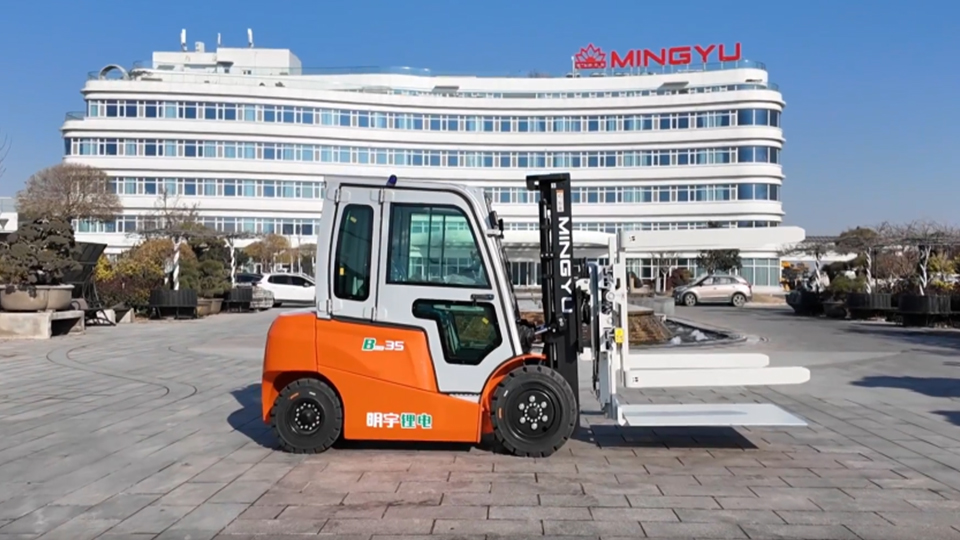
Apply initial tension gradually. Position personnel clear of the load path, then slowly apply lifting force while monitoring chain alignment and load distribution. Verify that all hooks seat properly in lifting eyes and that latches engage completely. Confirm that chains remain free of twists, kinks, or contact with sharp edges.
Lifting Operations and Load Management
Pre-Lift Verification
Before commencing the full lift, verify:
All personnel are positioned clear of the suspended load path
Overhead obstacles and obstructions are identified and avoided
Travel path is clear and rated for forklift operation
Load remains properly balanced and secured
Chain angles remain within acceptable parameters
No evidence of sling damage or component failure exists
Conduct a preliminary lift raising the engine 6-12 inches above the supporting surface. Pause to verify stability, proper sling loading, and secure attachment. Lower the load immediately if any anomalies are detected—do not attempt to transport loads exhibiting instability or improper rigging .
Transport and Placement Procedures
Move the forklift smoothly and deliberately, avoiding sudden starts, stops, or directional changes that create shock loading. Shock loading can generate forces substantially exceeding static weight, potentially overloading chain components despite nominal capacity adequacy . Maintain minimal travel speeds—typically below 3 miles per hour—particularly when negotiating turns or uneven surfaces.
Keep suspended loads as close to the ground as practicable while maintaining adequate ground clearance. Lower center of gravity enhances stability and reduces potential drop distances should failures occur. Never elevate loads to maximum height except when absolutely necessary for placement clearance.
Maintain visual contact with the load throughout transport. Use spotters when traveling in reverse or through areas with limited visibility. Ensure all personnel remain clear of the load path—OSHA mandates that no personnel stand or pass beneath suspended loads under any circumstances .
Load Placement and Sling Removal
Position the engine over the designated placement location, verifying alignment before lowering. Descend slowly and smoothly, maintaining load stability throughout the operation. Confirm that the receiving structure can support the full engine weight before releasing sling tension.
Allow the engine to settle completely onto supporting structures before attempting sling removal. Never pull slings from beneath resting loads—this practice damages slings and creates pinch hazards . Detach slings methodically, verifying that the engine remains stable as each attachment point is released.
Post-Operational Procedures
Sling Inspection and Storage
Following use, inspect chain slings for damage incurred during the lifting operation. Clean slings to remove oil, grease, or contaminants that accelerate corrosion. Store chain slings in designated areas protected from environmental exposure, chemical contamination, and mechanical damage. Hang slings vertically or coil loosely—never store under heavy objects or in conditions promoting kinking or distortion .
Documentation and Maintenance
Maintain comprehensive records of all lifting operations, including:
Engine identification and weight
Sling serial numbers and configurations used
Inspection dates and findings
Operator and rigger identification
Any anomalies or incidents occurring during operation
Schedule periodic inspections by qualified personnel at intervals commensurate with service severity—quarterly for severe service applications, annually for normal service . Remove damaged or suspect slings from service immediately and destroy or repair in accordance with manufacturer specifications.
Conclusion
Forklift-based diesel engine lifting with chain slings demands meticulous attention to safety protocols, equipment specifications, and operational procedures. Success requires thorough pre-operational planning, rigorous equipment inspection, proper rigging configuration, and disciplined execution throughout the lifting cycle. Adherence to OSHA regulations and ASME standards ensures not only regulatory compliance but, more importantly, protection of personnel and equipment from the severe consequences of lifting failures. Organizations must invest in comprehensive training programs, establish formal inspection protocols, and foster cultures prioritizing safety over operational convenience. When executed with proper care and attention to detail, forklift-based engine lifting operations provide efficient, reliable material handling capabilities essential to modern industrial operations.
Name: selena
Mobile:+86-13176910558
Tel:+86-0535-2090977
Whatsapp:8613181602336
Email:vip@mingyuforklift.com
Add:Xiaqiu Town, Laizhou, Yantai City, Shandong Province, China
