
vip@mingyuforklift.com
+86-0535-2090977

In the rapidly evolving landscape of global commerce, the "last mile" and the "inner warehouse" have become the most critical junctions of the supply chain. While software engineers build the digital storefronts and data scientists optimize shipping routes, the physical movement of goods remains the heartbeat of the global economy. At the center of this movement is the forklift.
Learning to operate a forklift—formally known as a Powered Industrial Truck (PIT)—is often dismissed as a simple "blue-collar" skill. However, a technical analysis of the role reveals it to be a high-stakes discipline involving physics, spatial engineering, and advanced logistics integration.
Here is a comprehensive look at why mastering the forklift is a powerful strategic move for your career.
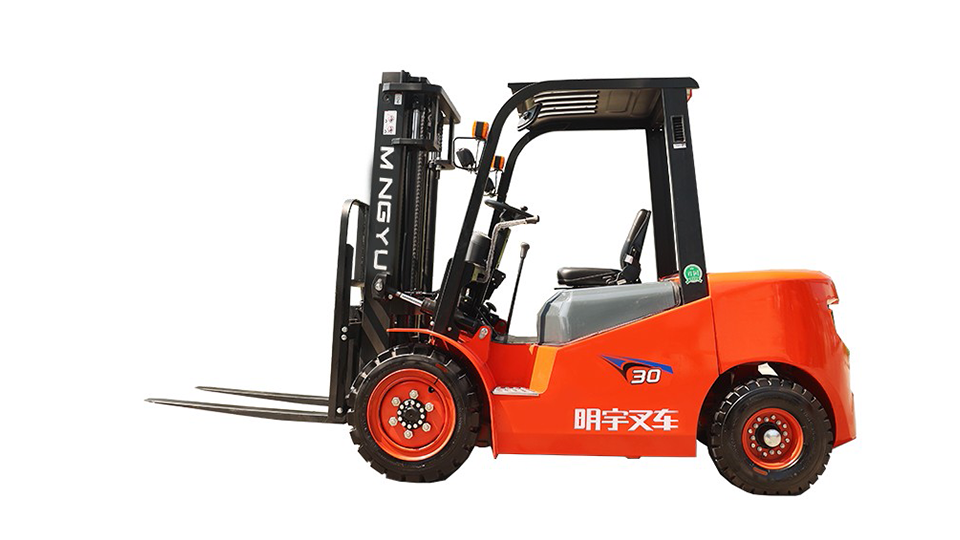
1. The Physics of the Load: Understanding the Science
Operating a forklift isn't just "driving"; it is the real-time application of mechanical physics. Unlike a car, where the weight is distributed relatively evenly across four wheels, a forklift operates on the Stability Triangle principle.
The Stability Triangle and Center of Gravity
A forklift’s suspension system is supported at three points: the two front drive wheels and the center of the steer axle.1 As long as the Center of Gravity (CG) of both the truck and the load stays within this triangle, the vehicle remains upright.2
When you learn to operate a forklift, you gain a deep technical understanding of:
The Fulcrum Point: The front wheels act as the axis.3
Load Center: The distance from the face of the forks to the load's center of gravity.4
Momentum and Inertia: How centrifugal force shifts the CG during turns, necessitating precise speed control.
Mastering these concepts makes you a safer, more efficient operator and provides a foundational understanding of mechanical engineering principles used across various industrial sectors.
2. High Demand and Economic Resilience
The "Amazon Effect" has fundamentally altered consumer expectations.5 Rapid delivery requires massive, high-velocity distribution centers. Consequently, the demand for skilled PIT operators has reached an all-time high.
Market Data & Job Security
The E-commerce Surge: As retail shifts online, the need for warehousing space—and the people to manage it—continues to grow.6
Recession Resistance: Logistics is a "foundational" industry.7 Even during economic downturns, the movement of food, medical supplies, and essential consumer goods does not stop.
Career Longevity: Forklift certification is a "portable" credential.8 Whether you are in New York, Berlin, or Tokyo, the mechanical standards for lifting a pallet are nearly universal.
3. The Gateway to Supply Chain Management
Many people view forklift operation as an end-point, but in reality, it is a foundational tier for higher-level management.
From the Floor to the Office
Understanding how a warehouse functions at the floor level is invaluable for future leaders. Operators gain firsthand experience with:
WMS (Warehouse Management Systems): Most modern forklifts are equipped with tablets and RF scanners that interface with complex inventory databases.
Lean Six Sigma Principles: You learn to identify "waste" in movement and how to optimize "pick paths" for maximum efficiency.
Safety Compliance (OSHA/HSE): Learning the rigorous safety standards required for heavy machinery prepares you for roles in Occupational Health and Safety.
4. Technical Versatility: Not All Forklifts Are Created Equal
Learning "the forklift" actually means learning a suite of specialized industrial vehicles. Each requires a different technical approach and provides a different service to the supply chain.
|
Forklift Type |
Primary Environment |
Technical Highlight |
|
Counterbalance |
General Warehousing |
The "standard" truck using a rear weight to balance loads. |
|
Reach Truck |
High-density Storage |
Designed for narrow aisles with forks that extend forward. |
|
Order Picker |
Retail Distribution |
Elevates the operator to the rack level for manual picking. |
|
Telehandler |
Construction Sites |
Features a telescopic boom for multi-story lifting. |
By mastering these different machines, you become a "multilingual" asset in the industrial world, capable of pivoting between construction, shipping, and manufacturing.
5. Safety and Risk Management Skills
A forklift is a multi-ton piece of machinery. Learning to operate one builds a "Safety First" mindset that is highly transferable. You will learn:
Pre-Shift Inspections: Identifying hydraulic leaks, mast chain tension issues, and tire wear.9
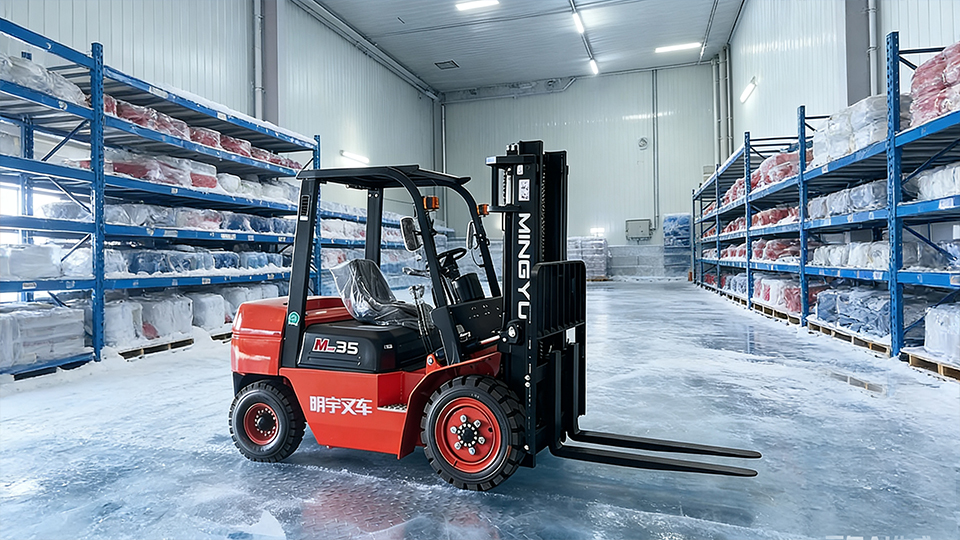
Environmental Awareness: Navigating "blind spots," managing pedestrian interfaces, and understanding floor load limits.10
Emergency Protocols: How to react to a tip-over or a mechanical failure.
These skills demonstrate to employers that you are disciplined, detail-oriented, and capable of handling high-value assets and human lives with care.
6. Competitive Compensation and Growth
While entry-level roles offer a solid living wage, specialized forklift operators (such as those handling hazardous materials or oversized port containers) can earn significantly higher salaries.11 Furthermore, becoming a Certified Forklift Trainer allows you to move into educational and consultative roles, often with a significant bump in pay.
Conclusion: Driving Your Future
Learning to operate a forklift is more than just a job skill; it’s an entry point into the global engine of commerce. It combines the physical precision of an athlete with the technical mind of an engineer. In an era of increasing automation, the human element—the ability to navigate complex, changing environments with heavy loads—remains an irreplaceable asset.
Name: selena
Mobile:+86-13176910558
Tel:+86-0535-2090977
Whatsapp:8613181602336
Email:vip@mingyuforklift.com
Add:Xiaqiu Town, Laizhou, Yantai City, Shandong Province, China
