
vip@mingyuforklift.com
+86-0535-2090977

The operation of Powered Industrial Trucks (PITs), commonly known as forklifts or lift trucks, represents a high-hazard activity in industrial, warehousing, and logistics environments. Accidents involving these machines, such as tip-overs, collisions, and pedestrians being struck, routinely result in severe injury and fatalities. The technical mandate for safety in this domain is dictated by regulatory bodies like OSHA (Occupational Safety and Health Administration), which outlines comprehensive standards designed to mitigate risk at every phase of operation, from pre-shift inspection to parking and maintenance.
This article delves into the specific, detailed safety operating procedures (SOPs) required to ensure the safe, efficient, and compliant use of forklifts, establishing a non-negotiable protocol for all authorized personnel.
I. Pre-Operation and Readiness Protocols
The foundation of safe forklift operation is the systematic identification and correction of defects before the vehicle is ever placed into service. OSHA mandates a daily inspection—or an inspection after every shift for round-the-clock operations—to verify the machine's safety status.
A. The Comprehensive Pre-Shift Inspection
The inspection is generally divided into two parts: a visual check with the engine off, followed by an operational check with the engine running.
1. Visual Inspection (Engine Off)
The operator must perform a 360-degree walk-around inspection:
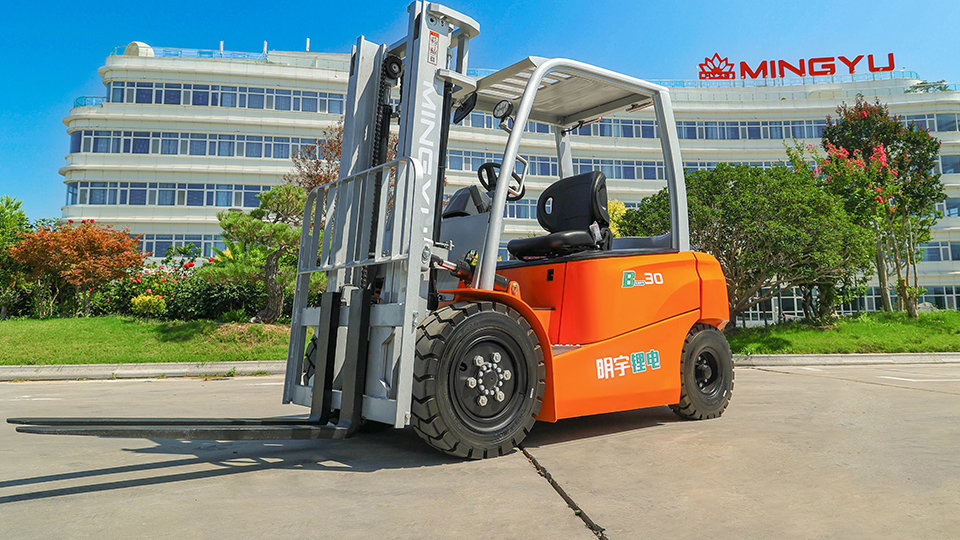
Fluid and Leak Check: Verify levels for engine oil, coolant, hydraulic fluid, and brake fluid. Inspect the ground and components for any signs of leaks, which could indicate a severe mechanical failure risk or create a slip hazard.
Tires and Wheels: Examine tires for correct pressure (if pneumatic), cuts, gouges, or excessive wear (e.g., chunking on solid tires). Check wheel nuts and mounting for tightness and damage.
Forks, Mast, and Carriage: The critical load-handling components must be meticulously checked.
Forks: Inspect the blades for cracks, bends, or wear, particularly at the heel (the inner angle where the vertical and horizontal parts meet). The fork retaining pin/latch must be secure and functional.
Mast Chains: Look for broken links, stretched chains, or anchor pin wear. Crucially, the operator must never place hands inside the mast for inspection; a non-conductive tool must be used to check tension.
Load Backrest and Overhead Guard: Ensure the load backrest is securely mounted and the overhead guard is free of damage that could compromise the operator’s protection from falling objects.
Operator Restraints and Compartment: The seatbelt must be functional, undamaged, and securely anchored. The operator compartment must be clear of debris, oil, or grease that could cause slips or interfere with controls.
Warning Decals and Data Plate: All safety decals and the mandatory data plate (which specifies the truck’s capacity, model, and serial number) must be present and legible.
Fuel/Battery System Specifics:
LPG: The tank must be mounted securely with the pressure relief valve oriented correctly (upward). Hoses and connectors must be free of leaks, cracks, or dents.
Electric: Check battery restraints, cable/connector condition (no fraying or exposed wires), and electrolyte levels (using appropriate PPE).
2. Operational Inspection (Engine Running)
Once the visual check is complete, the operator must test the functionality of dynamic and safety systems:
Brakes: Test the service (foot) brake for smooth, firm stopping, and the parking brake to ensure it holds the truck against slight acceleration.
Steering: Check for smooth, responsive steering without excessive play or binding.
Controls: Test the lift, lower, and tilt mechanisms for smooth operation without unusual noises or jerky movements.
Warning Devices: Verify the horn, lights (headlights, brake lights, and warning beacons), and the audible backup alarm are fully operational and loud enough for the working environment.
Gauges: Ensure all gauges (fuel, temperature, hour meter) are functioning correctly.
Mandatory Action: If any component is found to be defective or unsafe, the forklift must be immediately tagged out of service and reported to the supervisor. Only authorized and qualified maintenance personnel may perform repairs.
II. Safe Traveling and Maneuvering Procedures
Forklift accidents often occur during movement due to operator error, speed, or obscured vision. Safe operation is governed by the principles of stability, clear sightlines, and controlled movement.
A. Stability Principles and Load Management
The stability of a counterbalanced forklift is governed by the Stability Triangle—the three points of contact between the vehicle and the ground. Since forklifts steer with the rear wheels, the rear axle acts as the pivot point, causing the rear end to swing out widely during turns.
Rated Capacity Adherence: The load must never exceed the capacity listed on the data plate. This capacity is specific to the weight, load center, and maximum lift height. The use of non-factory attachments requires re-rating the forklift's capacity.
Load Securement and Centering: The load must be securely stacked, centered on the forks, and pressed firmly against the carriage/load backrest. Unstable loads must be banded, wrapped, or secured before lifting.
Travel Position: When traveling with a load, the forks must be tilted back (to stabilize the load) and the load lowered to the lowest possible position—typically 4 to 6 inches (10–15 cm) above the floor—to improve stability and visibility.
B. Controlled Movement and Right-of-Way
Speed Control: The operator must adhere to posted facility speed limits, which must not exceed a safe, controlled speed—often equated to a fast walking pace. Speed must be further reduced when making turns, traveling over uneven surfaces, or navigating congested areas.
Clear View Protocol: The operator must always look in the direction of travel. If the load obscures forward vision (a load that is high or wide), the operator is mandated to travel in reverse (with the load trailing). Using mirrors alone is not a substitute for direct vision.
Intersections and Corners: Slow down and sound the horn when approaching blind corners, doorways, or intersections to warn pedestrians and other vehicles.
Separation Distance: Maintain a safe distance, generally three truck lengths, from the forklift traveling ahead to allow adequate braking distance, particularly considering the forward weight shift during braking.
Pedestrian Safety: Forklifts always yield the right-of-way to pedestrians. Operators must be vigilant, ensure eye contact where possible, and never drive toward a person standing in front of a fixed object.
C. Specific Environment Protocols
Ramps and Grades: When traveling on ramps or sloped surfaces:
Loaded Truck: The load must always be on the uphill side (driving forward uphill, driving reverse downhill) to maintain longitudinal stability.
Unloaded Truck: The heaviest part of the truck (the counterweight) should be on the uphill side (driving reverse uphill, driving forward downhill).
Turning on Grades is strictly prohibited as it significantly increases the risk of lateral tip-over.
Loading Docks and Trailers: Before entering a trailer or railcar:
Ensure the truck or car brakes are set.
Wheel chocks must be placed securely.
The dock plate/bridge plate must be properly secured and inspected for adequate capacity and smooth transition.
Clearance: The operator must verify adequate overhead and lateral clearance, particularly when entering or exiting trailers, through low doorways, or near overhead utilities/pipes.
III. Load Manipulation and Stacking Procedures
The core function of the forklift—lifting, lowering, and placing loads—requires precision and adherence to strict stability guidelines.
Approach: Approach the load straight-on and squarely. Ensure the mast is vertical (not tilted forward) before engaging the load.
Engagement: Insert the forks fully under the load until the heel of the forks is against the load backrest or the pallet stringer.
Lifting: Lift the load smoothly, using continuous, measured movement. Once the load is clear of the stack or ground, immediately tilt the mast fully back to nest the load securely against the backrest.
Lowering: Lower the load slowly and smoothly. Do not lower or raise the load while the vehicle is in motion (traveling).
Stacking and Unstacking: When stacking, use only enough tilt to set the load securely. When unstacking, lift only enough to clear the stack, tilt back, and then slowly reverse from the stack area.
Prohibition: No personnel shall ever be allowed to stand or pass underneath a raised load or the elevated forks.
IV. Post-Operation and Securing Procedures
A significant percentage of forklift accidents involve unchaperoned or improperly secured vehicles. The final steps of operation are critical to prevent unauthorized use or roll-away incidents.
A. Parking and Shut Down
When the operator dismounts, the forklift must be fully secured:
Lower Forks: Fully lower the forks or attachment until they are flat on the floor surface.
Neutral Controls: Place the gear selector or direction control in the neutral position.
Parking Brake: Fully engage the parking brake.
Power Off: Turn the key/ignition switch to the “OFF” position.
Remove Key: The key or power disconnect must be removed to prevent unauthorized operation.
Incline Blocking: If the forklift must be parked on an incline, the wheels must be blocked in addition to setting the parking brake.
B. Fueling and Battery Charging
These activities pose unique fire, explosion, and chemical hazards:
Designated Areas: Fueling (LPG, gas, diesel) and battery charging must only occur in approved, designated areas equipped with appropriate ventilation and fire suppression equipment.
Ignition Off: The engine or power source must be off during refueling/recharging.
Battery PPE: When working with or checking lead-acid batteries and electrolyte, the operator must wear mandatory Personal Protective Equipment (PPE), including an acid-resistant face shield, rubber gloves, and apron.
Fire Safety: Open flames, sparks, and smoking are strictly prohibited in these areas.
V. Operator Requirements and Contingencies
The safety protocols are ineffective without proper operator qualifications and emergency knowledge.
Training and Certification: Only personnel who are at least 18 years of age and have been formally trained, certified, and successfully evaluated by the employer are permitted to operate a forklift. This training must be refreshed at least every three years, or immediately following an accident, a near-miss, a change in assigned truck type, or evidence of unsafe operation.
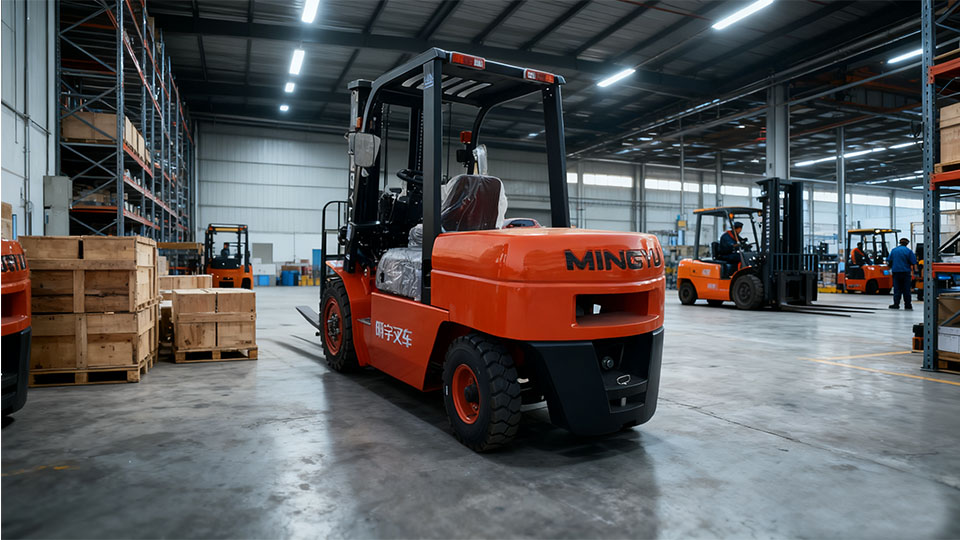
Tip-Over Procedure (Sit-Down Counterbalanced Trucks): The single most critical emergency protocol is for an operator facing a lateral or longitudinal tip-over to remain inside the operator compartment. The operator must:
Grip the steering wheel firmly.
Brace their feet.
Lean away from the point of impact/roll.
Remain within the protective confines of the overhead guard. Jumping from a tipping truck is the leading cause of crushing fatalities.
In conclusion, the safe operation of a forklift is not a matter of discretion but a rigorous, multi-stage process governed by established technical standards. Compliance with pre-operation inspections, dynamic traveling rules, load manipulation best practices, and secure shut-down procedures is paramount to protecting personnel and assets within any industrial environment.
Name: selena
Mobile:+86-13176910558
Tel:+86-0535-2090977
Whatsapp:8613181602336
Email:vip@mingyuforklift.com
Add:Xiaqiu Town, Laizhou, Yantai City, Shandong Province, China
