
vip@mingyuforklift.com
+86-0535-2090977

In the hyper-competitive world of 2026 logistics, the "last foot" of the warehouse—the vertical reach between the floor and the ceiling—has become the most critical frontier for efficiency. As global e-commerce volumes surge and urban real estate prices skyrocket, warehouses are growing taller, not wider. This shift has rendered traditional ladders and manual retrieval methods obsolete.
Intelligent Aerial Work Platforms (IAWPs) have emerged as the cornerstone of the modern high-density warehouse. Far more than mere lifting devices, these platforms are now integrated, sensor-rich nodes within the Warehouse Management System (WMS), specifically designed to optimize the high-speed movement of goods.
1. Bridging the Vertical Gap: The Rise of High-Bay Storage
Modern distribution centers now frequently feature ceiling heights exceeding 30 to 40 feet. While Automated Storage and Retrieval Systems (AS/RS) handle bulk pallet movement, many operations require human precision for "each" picking, inventory audits, and high-level maintenance.
The Limitation of Traditional Equipment
Traditional forklifts, while powerful, often lack the platform stability and "point-of-work" control required for detailed inventory tasks. Ladders, on the other hand, are the leading cause of workplace falls and are physically exhausting for staff. IAWPs provide a middle ground: the lifting power of a machine with the dexterity of a human workspace.
2. Technical Innovations Driving Logistics Efficiency
The 2026 generation of warehouse-specific AWPs incorporates several technical breakthroughs that directly impact throughput:
A. Compact Footprint and Zero-Turn Radius
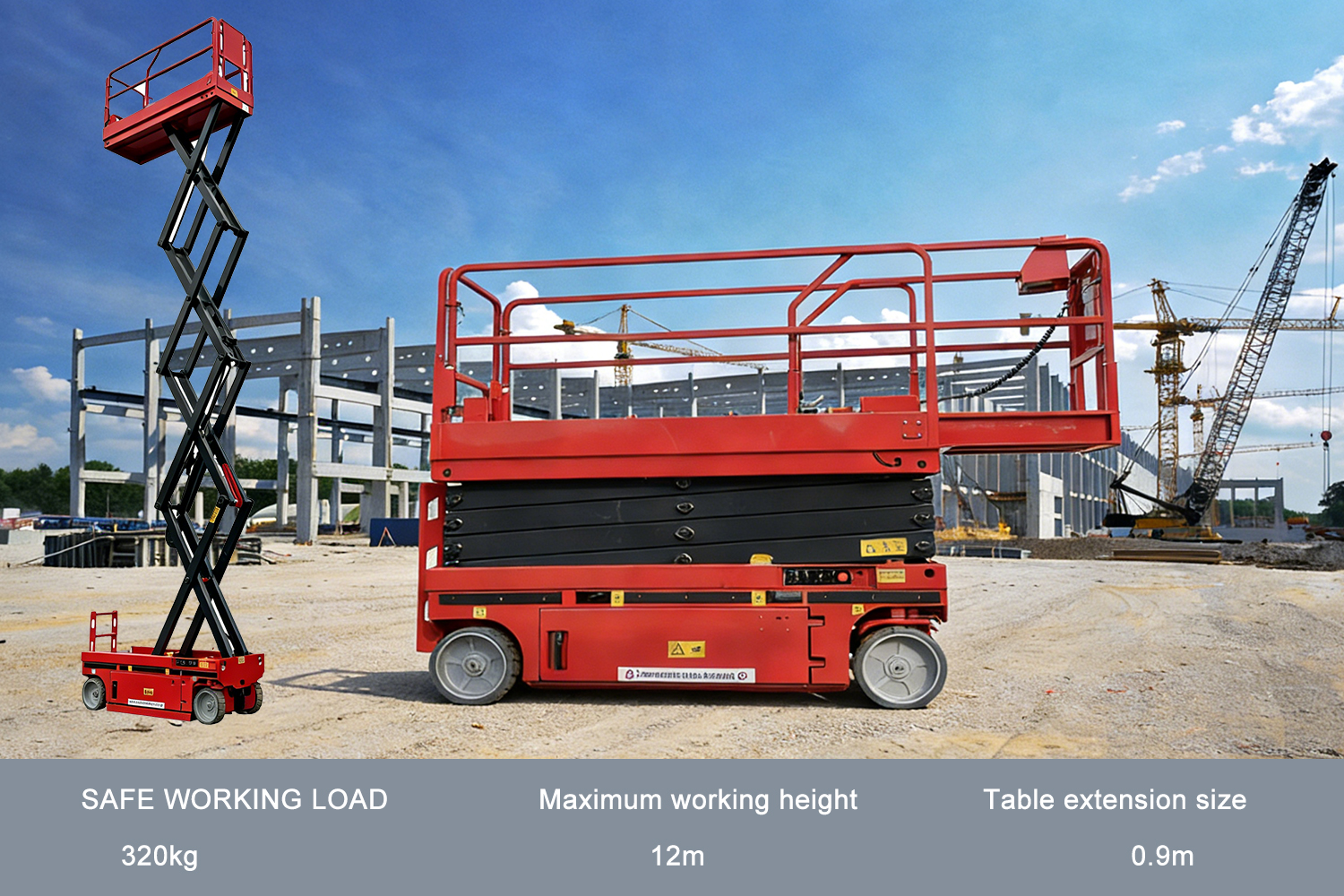
In high-density warehouses, aisle space is a luxury. Modern electric scissor lifts and vertical mast lifts are designed with a "zero-tail swing" and ultra-compact chassis. This allows them to navigate narrow aisles (often less than 3 feet wide) that would be impassable for standard material handling equipment.
B. Proportional Control and Precision Positioning
Retrieving a single SKU from a crowded high-level bin requires millimeter precision. Intelligent platforms now use proportional joystick controls, allowing for smooth, gradual movements rather than jerky "all-or-nothing" hydraulic bursts. This prevents damage to fragile inventory and reduces the risk of the platform bumping into racking systems.
C. Extension Decks and Lateral Reach
Many warehouse IAWPs feature slide-out extension decks. This allows an operator to drive the base into an aisle and then "reach" over a conveyor belt or another shelf to access deep-stored goods without needing to reposition the entire machine.
3. Enhancing Goods Retrieval and Inventory Accuracy
The integration of IAWPs into the digital warehouse ecosystem has transformed them into mobile workstations.
Integrated Scanning Hubs: Many platforms are now factory-fitted with RFID readers and high-speed barcode scanners. As a worker rises to retrieve an item, the machine automatically logs the SKU and updates the WMS in real-time.
Cycle Counting at Speed: A study of high-bay distribution centers showed that using mobile vertical lifts for inventory audits reduced "count time" by 40% compared to traditional methods, while improving accuracy by 22%.
Pick-to-Light Synergy: Advanced platforms can be synced with the warehouse’s "pick-to-light" system. The machine’s onboard display directs the operator to the exact height and shelf location, minimizing "search time" and human error.
4. The Impact on Safety and Labor Economics
In 2026, labor remains the largest variable cost in logistics. IAWPs tackle this from two angles: safety and ergonomics.
Reducing Physical Strain
Manually retrieving goods from height is a primary cause of musculoskeletal injuries. IAWPs eliminate the need for climbing and "reaching up," keeping the worker in a neutral ergonomic position. This reduces worker fatigue, allowing for consistent productivity levels throughout an 8-hour or 12-hour shift.
Safety Through "Secondary Guarding"
Intelligent platforms are equipped with over-head sensors (often ultrasonic or LiDAR) that detect if a worker is at risk of being pressed against a ceiling beam or sprinkler pipe. The machine will automatically stop before a "crush" incident can occur, a feature that has contributed to a 70% reduction in height-related warehouse accidents over the last decade.
5. Warehouse Performance: A Direct Comparison
|
Metric |
Manual/Ladder Method |
Intelligent AWP |
|
Max Reach Height |
Limited (10–12 ft) |
High (40+ ft) |
|
Retrieval Speed |
Low (Climb/Descend) |
High (Powered Lift) |
|
Data Integration |
Manual Entry |
Real-time WMS Sync |
|
Worker Fatigue |
High (High Turnover) |
Low (Higher Retention) |
|
Space Utilization |
Limited to low racks |
Enables high-bay storage |
6. Future Outlook: The Autonomous Connection
As we look toward the end of the decade, the line between "Aerial Work Platform" and "Robot" is blurring. We are seeing the first deployments of Semi-Autonomous AWPs that can:
Navigate to a specific aisle autonomously using SLAM (Simultaneous Localization and Mapping).
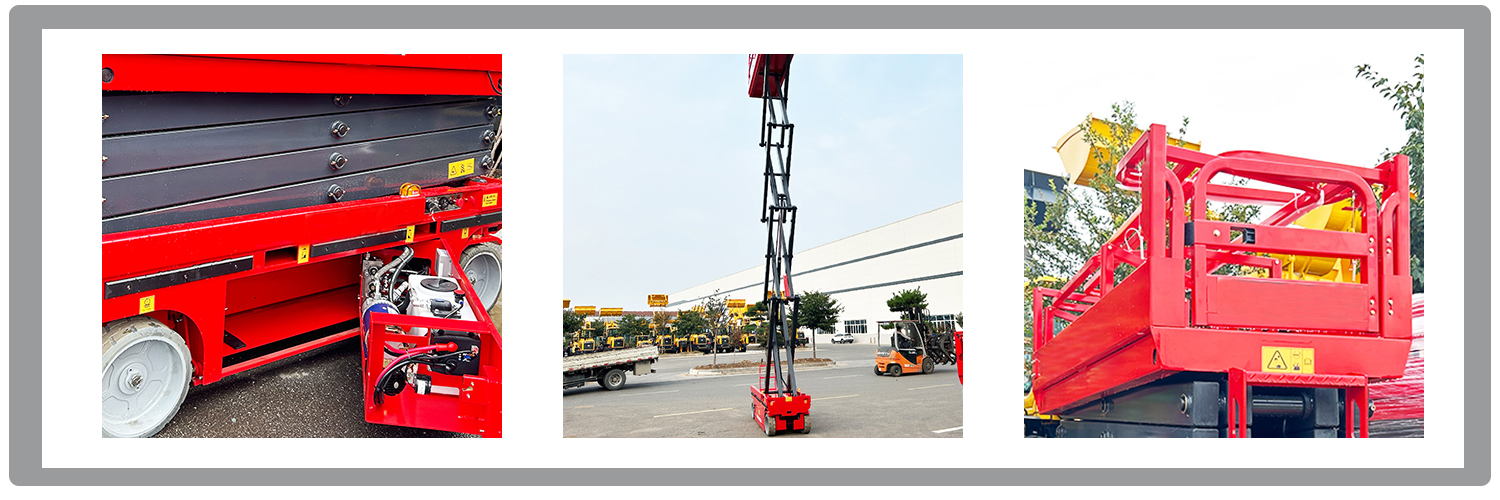
Automatically rise to the correct shelf height based on a digital pick-list.
Operate in "dark warehouses" alongside Autonomous Mobile Robots (AMRs) to perform maintenance without human intervention.
Conclusion
The evolution of aerial work platforms from simple lifting tools to intelligent logistics assets is a response to the "higher and faster" demands of modern commerce. By maximizing vertical space, ensuring 99.9% inventory accuracy, and protecting the warehouse’s most valuable asset—its people—IAWPs have become indispensable. To "say goodbye to scaffolding" in the warehouse is to say hello to a more profitable, safer, and infinitely more scalable logistics future.
Name: selena
Mobile:+86-13176910558
Tel:+86-0535-2090977
Whatsapp:8613181602336
Email:vip@mingyuforklift.com
Add:Xiaqiu Town, Laizhou, Yantai City, Shandong Province, China
