
vip@mingyuforklift.com
+86-0535-2090977

The Hidden Costs of Scaffolding
While the upfront rental of steel tubes and planks might seem economical, the "hidden" costs of scaffolding often bloat project budgets:
Time Inefficiency: It can take days, or even weeks, to erect and dismantle complex scaffolding for a high-rise project. This is "dead time" where no actual painting, welding, or glazing is occurring.
Labor Intensity: Scaffolding requires a specialized crew for assembly. In a market facing a skilled labor shortage, this adds a significant overhead.
The "Fixed" Problem: Once scaffolding is up, it is static. If a worker needs to be six inches further to the left, they are often limited by the reach of the platform or must resort to unsafe stretching.
Logistical Footprint: Scaffolding clogs sidewalks and restricts movement around the base of a building, often requiring expensive street closure permits.
What Makes an Aerial Platform "Intelligent"?
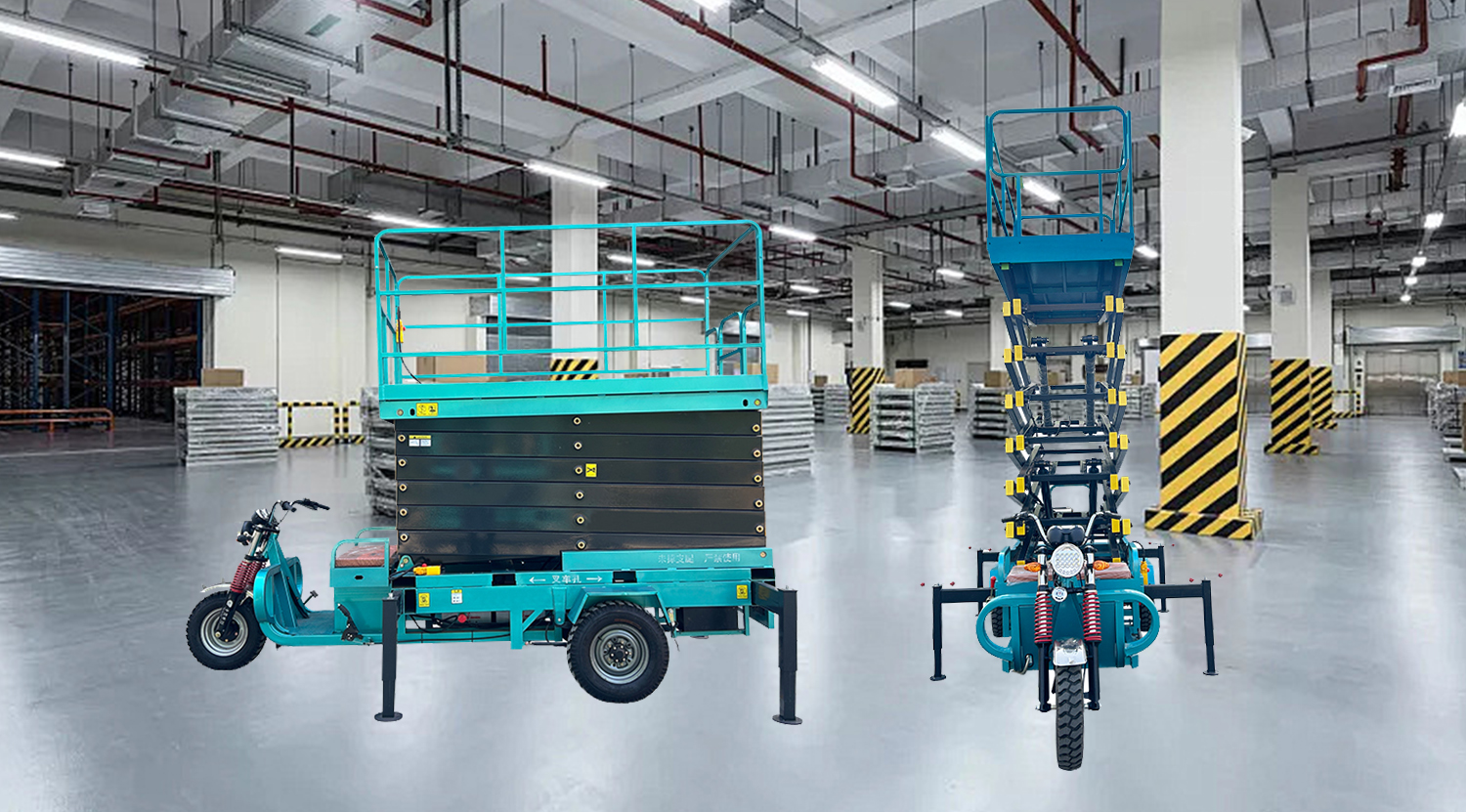
Modern IAWPs integrate Industry 4.0 technologies to solve the problems mentioned above. Unlike traditional hydraulic lifts, intelligent platforms utilize a suite of advanced systems:
1. Precision Control and Positioning
Advanced platforms now feature GPS and GNSS integration, allowing them to navigate complex jobsites with centimeter-level accuracy. With automated leveling systems, the machine can adjust its chassis in real-time to compensate for uneven terrain, ensuring the basket remains perfectly level.
2. Enhanced Sensor Suites (LiDAR and Ultrasonic)
Safety is the primary driver of intelligence. IAWPs are now equipped with LiDAR (Light Detection and Ranging) and ultrasonic sensors that create a 360-degree "safety bubble" around the machine.
These sensors detect:
Overhead obstructions: Preventing "crush" accidents against ceilings or beams.
Potholes and drop-offs: Automatically braking the drive system if the wheels approach a dangerous edge.
Proximity to power lines: Alerting operators to high-voltage risks before they enter a danger zone.
3. Load Sensing and Stability Algorithms
Traditional lifts rely on manual checks of weight limits. Intelligent platforms use strain gauges and load cells connected to a central processing unit. If the platform exceeds its safe working load (SWL), the system prevents further upward movement, eliminating the risk of a tip-over due to overloading.
Comparing Efficiency: Scaffolding vs. IAWPs
To understand the shift, we must look at the operational lifecycle of a typical facade maintenance project.
|
Feature |
Traditional Scaffolding |
Intelligent AWP |
|
Setup Time |
High (Days/Weeks) |
Low (Minutes) |
|
Mobility |
Zero (Static) |
High (Self-propelled) |
|
Safety Risk |
High (Fall from heights) |
Low (Enclosed basket + Sensors) |
|
Labor Requirement |
Large assembly crew |
Single operator |
|
Site Impact |
Large footprint |
Compact / Mobile |
The Power of "Point-to-Point" Movement
In a traditional setup, if a technician finishes a task on the north face and needs to move to the south face, they must climb down, and the scaffolding must be moved or a new section built. An IAWP allows the worker to simply drive the unit to the next location. This fluidity of movement can reduce project timelines by as much as 40%.
Safety: The Ultimate Argument
According to OSHA, falls remain the leading cause of death in construction. Scaffolding accounts for a staggering percentage of these incidents, often due to improper planking or lack of guardrails during the assembly phase.
Intelligent platforms mitigate these risks through:
Automated Secondary Guarding: Systems that stop the machine instantly if the operator is pressed against the controls (preventing entrapment).
Telematics: Managers can monitor machine health and operator behavior remotely. If a machine is operated unsafely, it can be flagged or even locked out from a central office.
Self-Diagnostics: The machine performs a digital "pre-start" check. If the hydraulic pressure is low or a sensor is malfunctioning, it simply won't start, preventing mechanical failure at height.
The Economic Impact
While the daily rental or purchase price of an intelligent boom lift is higher than a pile of scaffolding pipes, the Total Cost of Ownership (TCO) favors the machine.
Reduced Insurance Premiums: Many insurers offer lower rates for sites that utilize automated safety equipment over manual scaffolding.
Minimized Downtime: Because IAWPs can be deployed instantly, they are ideal for "just-in-time" maintenance, preventing small issues (like a leaking pipe) from becoming catastrophic failures while waiting for scaffolding to be built.
The Path Forward: Autonomous Heights
The "Intelligent" in IAWP is moving toward "Autonomous." We are already seeing the emergence of:
BIM Integration: Syncing the lift with Building Information Modeling (BIM) data so the platform automatically knows exactly where to position itself for a specific weld or bolt.
Remote Operation: Using 5G technology, an expert operator can control a machine from a different city, providing precision work in hazardous environments without ever putting a human in the basket.
Conclusion
The transition from scaffolding to Intelligent Aerial Work Platforms is not just a change in equipment; it is a change in the philosophy of construction. It prioritizes the safety of the human and the efficiency of the process over the traditions of the past. As sensors become cheaper and AI becomes more integrated, the sight of towering, static scaffolding may soon become a relic of architectural history.
Name: selena
Mobile:+86-13176910558
Tel:+86-0535-2090977
Whatsapp:8613181602336
Email:vip@mingyuforklift.com
Add:Xiaqiu Town, Laizhou, Yantai City, Shandong Province, China