
vip@mingyuforklift.com
+86-0535-2090977

Industrial lift trucks, commonly known as forklifts, are the cornerstone of efficiency in logistics, manufacturing, and warehousing.1 Their relentless operation, often across multiple shifts, subjects them to immense mechanical stress, heat, and corrosive environments. Unlike passenger vehicles, which operate under relatively predictable conditions, a forklift's maintenance schedule must be rigorous, systematic, and tailored to its specific duty cycle.
The question of "What is the recommended service interval?" does not have a single, universal answer. It is a critical operational parameter defined by a confluence of factors: the manufacturer’s specifications, the type of power source (Electric, LPG, Diesel), the intensity of the operating environment (Duty Cycle), and regulatory requirements.
This technical article provides a comprehensive analysis of the recommended service intervals for the major classes of industrial lift trucks, focusing on the engineering rationale behind these schedules and best practices for developing a robust Preventive Maintenance (PM) program.
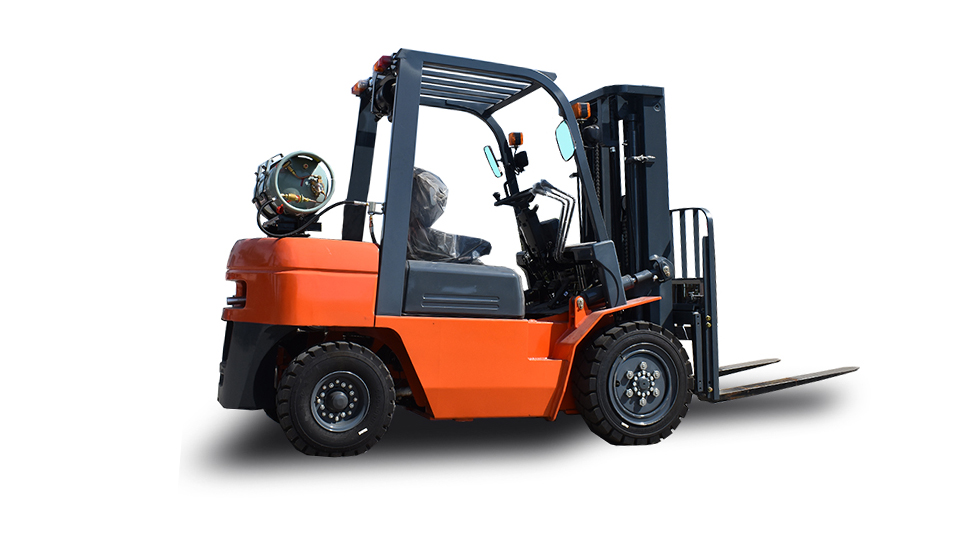
1. The Foundation of Maintenance: The Hour Meter
The primary determinant of a forklift's service interval is not time (months) but operating hours, as tracked by the hour meter. This metric accurately reflects the actual mechanical wear and tear the machine has endured.
Service Tiers
Most manufacturers (e.g., Toyota, Hyster-Yale, Crown, Komatsu) categorize PM into three or four tiers, typically based on increments of operating hours:
|
Service Tier |
Typical Hours |
General Scope of Work |
|
A-Check (Minor) |
$200$ to $250$ Hours |
Basic safety and operational check; fluid level top-offs; visual inspection. |
|
B-Check (Intermediate) |
$500$ to $600$ Hours |
Comprehensive inspection; filter replacement (oil, fuel, air); lubrication; minor adjustments. |
|
C-Check (Major) |
$1,000$ to $1,200$ Hours |
Extensive replacement of filters and fluids; spark plug or injector replacement; full hydraulic system and chain inspection; detailed brake and mast component check. |
|
Overhaul/Major Component |
$6,000$ to $10,000$ Hours |
Replacement of major wear items (clutch, transmission, engine/motor overhaul). |
Note on Time-Based Intervals: While hours are paramount, for forklifts used intermittently (low hours), a time-based interval (e.g., $\text{A-Check every 3 months}$ or $\text{C-Check every 12 months}$) may supersede the hour count to prevent degradation from dormancy, such as fluid breakdown or tire dry rot.
2. Power Source-Specific Maintenance Schedules
The maintenance demands of a lift truck are heavily influenced by its power system, which determines the complexity of its engine, fuel, and electrical components.
2.1. Internal Combustion (IC) Forklifts (LPG and Diesel)
IC engine maintenance is driven by the need to manage combustion byproducts, heat, and friction. Both Diesel and LPG schedules are rigorous due to their mechanical complexity.
A. Engine Oil and Filters
Recommendation: $\mathbf{200 \text{ to } 250 \text{ operating hours}}$.
Rationale: Engine oil is the lifeblood of the motor. It degrades due to thermal cycling and contamination from combustion byproducts (soot, acids, water vapor). For Diesel engines, oil change frequency is particularly critical due to the higher soot content; failure to change the oil promptly leads to accelerated wear on cylinder walls and bearings.2
B. Air and Fuel Filters
Recommendation: $\mathbf{500 \text{ to } 600 \text{ operating hours}}$.
Rationale: Clean fuel and air are essential for efficient combustion and engine longevity.
Air Filters: Must be replaced more frequently in dusty environments (e.g., lumber, cement, textiles).3 A restricted filter increases fuel consumption and can cause engine overheating.4
Fuel Filters (Diesel): Critical for protecting high-pressure fuel injectors from abrasive particulates and water contamination, which is particularly damaging to modern common rail injection systems.5
C. Spark Plugs and Ignition (LPG)
Recommendation: $\mathbf{1,000 \text{ to } 1,200 \text{ operating hours}}$.
Rationale: Spark plugs in LPG engines wear down, widening the electrode gap and requiring higher ignition voltage. Replacement ensures consistent ignition, efficiency, and lower emissions.
D. Diesel Exhaust After-Treatment Systems
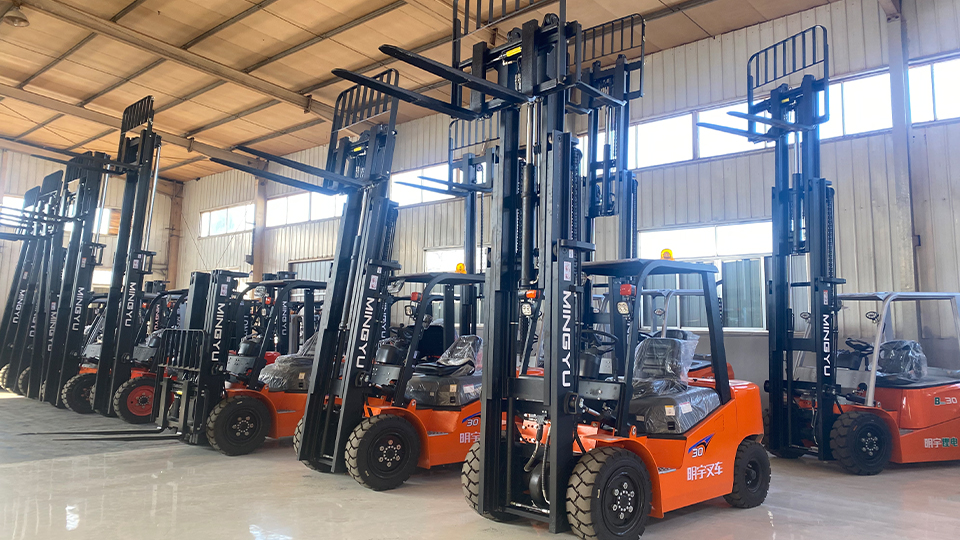
Modern diesel trucks (Tier 4 Final) require additional attention:
Diesel Particulate Filter (DPF) Regeneration: This process, which burns off trapped soot, may be automatic or require manual initiation based on pressure sensors.6 Neglect can lead to DPF clogging, requiring costly forced regeneration or replacement.
Diesel Exhaust Fluid (DEF) Top-up: The SCR system requires DEF, which must be refilled as needed (often daily in high-use applications) to maintain compliance with emission standards ($NO_x$ reduction).
2.2. Battery-Electric Forklifts (Lead-Acid and Lithium-Ion)
Electric forklifts eliminate the complexities of internal combustion, shifting maintenance focus to the battery, electrical components, and hydraulics.
A. Traditional Lead-Acid Battery Maintenance
Daily: Check electrolyte levels and add distilled water after charging.
Weekly/Monthly (A-Check): Visually inspect cables, connectors, and cell terminals for corrosion or damage. Check the Specific Gravity of the electrolyte to ensure cells are balanced and healthy.
Annually (C-Check): Full battery wash/neutralization to prevent surface corrosion and tracking, which can lead to rapid discharge.7
Rationale: The battery is the single most expensive component. Proper hydration and cleanliness are vital to prevent sulfation, overheating, and premature failure.8
B. Lithium-Ion (Li-ion) Battery Maintenance
Interval: Virtually maintenance-free concerning the power source.
Work Scope: Maintenance shifts to the Battery Management System (BMS) software, requiring periodic software checks and firmware updates via a diagnostic tool to ensure optimal charging, discharging, and cell balancing.
Rationale: Li-ion batteries are sealed units with no water requirement. The advanced BMS actively manages the battery's health, eliminating the need for manual checks.
C. Electric Motor and Control Systems
Interval: $\mathbf{1,000 \text{ to } 2,000 \text{ operating hours}}$ (Major Check).
Work Scope: Inspect AC motors for debris and proper cooling. Check carbon brushes on older DC motors (modern AC motors are brushless).9 Inspect power contactors, wiring harnesses, and control boards for corrosion or loose connections.
Rationale: Electrical components do not require friction-based servicing but are susceptible to heat, vibration, and moisture damage.10
2.3. Hydrogen Fuel Cell (FC) Forklifts
These vehicles are the cleanest, yet their power system is the most technically advanced.
Interval: PM is heavily dictated by the Fuel Cell Stack manufacturer, typically requiring annual or $\mathbf{2,000 \text{ hour}}$ specialized maintenance.
Work Scope: Focuses on the fuel cell system's air intake, humidification system, and cooling loop. Checks involve verifying the integrity of the high-pressure hydrogen tanks, lines, and pressure regulators, and performing software diagnostics on the power management system.
Rationale: This technology demands specialized, certified technicians and emphasizes system integrity checks over routine fluid/filter changes.
3. Universal Service Points (Chassis, Hydraulics, and Safety)
Regardless of the power source, all forklifts share mechanical components that require identical, rigorous servicing to ensure safety and operational performance. These checks are typically integrated into the A, B, and C-Checks.
3.1. Hydraulic System
The hydraulic system lifts the load and steers the truck.11
Hydraulic Fluid/Filter:
Filter Replacement: $\mathbf{500 \text{ to } 1,000 \text{ hours}}$.
Fluid Replacement: $\mathbf{2,000 \text{ to } 4,000 \text{ hours}}$ or based on fluid analysis.
Rationale: Hydraulic fluid degrades due to heat and introduces micro-particulate contamination from pump and valve wear.12 Clean fluid and filters prevent premature failure of pumps and expensive cylinder seals.13
3.2. Braking System
Inspection (A-Check): Check fluid levels (if applicable) and pedal free play.
Adjustment/Wear Check (B/C-Check): Inspect brake shoes/pads and drums/rotors for wear, adjusting them to ensure full braking capability.
Rationale: Brakes on a forklift, especially those constantly inching, wear far faster than on road vehicles. Consistent adjustment is a paramount safety requirement.
3.3. Mast and Chain Assembly
Lubrication (A-Check): Thoroughly grease all mast slide bearings (rollers) and pivot points.
Chain Inspection/Lubrication (B-Check): The lift chains carry the entire load. They must be cleaned, checked for stretched links, cracks, or corrosion, and re-lubricated with a specialized chain lubricant.
Technical Note: A chain with greater than 3% stretch is deemed unsafe and must be replaced.14
3.4. Transmission and Differential
Fluid Change (C-Check): $\mathbf{1,000 \text{ to } 1,200 \text{ hours}}$.
Rationale: Transmission fluid breaks down and can no longer effectively cool and lubricate the gears and clutches, leading to overheating and sluggish shifting.15
4. The Impact of the Duty Cycle and Environment
The stated manufacturer's intervals (e.g., 250 hours) are typically based on a standard duty cycle. However, actual operational stress often mandates a more aggressive schedule.
|
Duty Cycle Profile |
Description |
Impact on Service Interval |
|
Heavy Duty |
Multi-shift (24/7), constant full capacity lifts, high-speed travel, rough surfaces, cold/freezing environments. |
Reduce interval by $15\%-25\%$. E.g., $\text{250-hour}$ check becomes a $\text{200-hour}$ check. |
|
Normal Duty |
Single shift, indoor use, smooth floors, intermittent lifting, moderate travel speeds. |
Maintain manufacturer's recommended interval ($\text{250 hours}$). |
|
Light Duty |
Less than 4 hours per day, low load, infrequent use (e.g., small parts handling). |
Increase time interval (e.g., $\text{6-month}$ check instead of $\text{3-month}$ check) but maintain hour-based intervals for actual wear. |
|
Hostile Environment |
Dusty, corrosive (e.g., chemical storage, salt), high heat. |
Aggressively shorten all intervals. Focus on air filters, engine cooling system, and protective coatings/seals. |
Condition Monitoring and Predictive Maintenance
For large, technologically advanced fleets, a shift from fixed intervals to Condition Monitoring (CM) is the trend. This involves:
Telematics: Using on-board sensors and GPS to track actual usage, acceleration, hard braking events, and operational data.16
Oil Sampling: Periodically drawing engine and hydraulic fluid samples for laboratory analysis. The lab identifies high concentrations of wear metals (e.g., iron, copper, chromium) and acid/water content, indicating premature component failure before it occurs. This allows a shift to Predictive Maintenance (PdM), servicing the unit only when the data indicates it is necessary, thus optimizing resource allocation.
5. Compliance and The Daily Operator Check
While PM schedules cover major mechanical and safety systems, the backbone of immediate operational safety is the Daily Operator Pre-Shift Check (OSHA Requirement).
Requirement: All forklift operators must complete a physical and visual inspection checklist before the start of every shift.17
Scope: Includes checking tire pressure, horn and warning lights, brake function, parking brake, fluid leaks, lift/tilt controls, and mast chain slack.
Integration: Any discrepancy found during the daily check immediately trumps the PM schedule, requiring the truck to be taken out of service ("Red Tagged") until repairs are completed.
Conclusion: Investment in Longevity and Safety
The recommended service interval for industrial lift trucks is not a static number but a dynamic, calculated parameter derived from a machine's operating hours, its power source, and its working environment. Adherence to a structured Preventive Maintenance (PM) program—defined by the manufacturer's 18$\mathbf{200 \text{ to } 1,200 \text{ hour}}$ tiers—is a critical investment, not a cost.19
Robust PM:
Maximizes Uptime: Reduces catastrophic, unscheduled breakdowns that halt operations.20
Ensures Safety: Guarantees that vital components like brakes, masts, and steering are fully functional.
Optimizes Capital: Extends the useful life of the asset, deferring the multi-year expense of fleet replacement.
For operations managers, the technical imperative is clear: develop a maintenance schedule that is at least as frequent as the manufacturer's guidelines, adjusting the frequency downward (more often) to compensate for severe duty cycles or hostile environments, and increasingly leveraging telematics and fluid analysis to transition from reactive servicing to predictive maintenance.
Name: selena
Mobile:+86-13176910558
Tel:+86-0535-2090977
Whatsapp:8613181602336
Email:vip@mingyuforklift.com
Add:Xiaqiu Town, Laizhou, Yantai City, Shandong Province, China
