vip@mingyuforklift.com
+86-0535-2090977

Published: 2026-11-10 (Asia/Shanghai)
HTML Meta Description: Lift-platform access planning for refrigeration sensors, network cabinets and manual recovery during cold-chain cybersecurity hardening.
Keywords: cold-chain cybersecurity, lift platform access, refrigeration sensors, industrial controller maintenance, cold-storage monitoring, OT network isolation, work at height safety, ZGFORKLIFT, MYZG, refrigeration recovery plan
The immediate signal is urgent calls to reduce internet exposure, strengthen authentication, patch firmware and restrict authorized access to cold-chain operational technology. For elevated refrigeration sensors, network cabinets, controller wiring and white-panel cold-storage corridors, that signal affects the order in which loads move, the evidence required before release and the fallback available when data or physical conditions disagree. ZGFORKLIFT and MYZG recommend treating the news as an operational trigger, not as permission to bypass the equipment manual or local risk assessment.
Shandong Zhuogong Machinery equipment Co.,Ltd begins an application review with the real load, route, height, surface, shift and recovery plan. A nominal capacity or model label cannot confirm residual capacity, floor loading, visibility, attachment effects, charging, fuel, emissions or access. Those details belong in the technical offer and on the delivered machine documentation.
The key exposure is that cyber hardening may require physical access above live cold areas, yet the platform route, isolation point, rescue method and manual operating fallback are often planned separately. Put this failure into the daily briefing in plain language. Operators should know which physical sign overrides a digital instruction and who has authority to stop, quarantine, reroute or release the work.
One relevant comparison is the ZG-QB16 articulating boom lift. Use the page to frame questions, then verify rated load, actual load center, residual capacity, dimensions, tires, mast or platform, attachment, energy source and destination requirements for the exact quoted configuration.
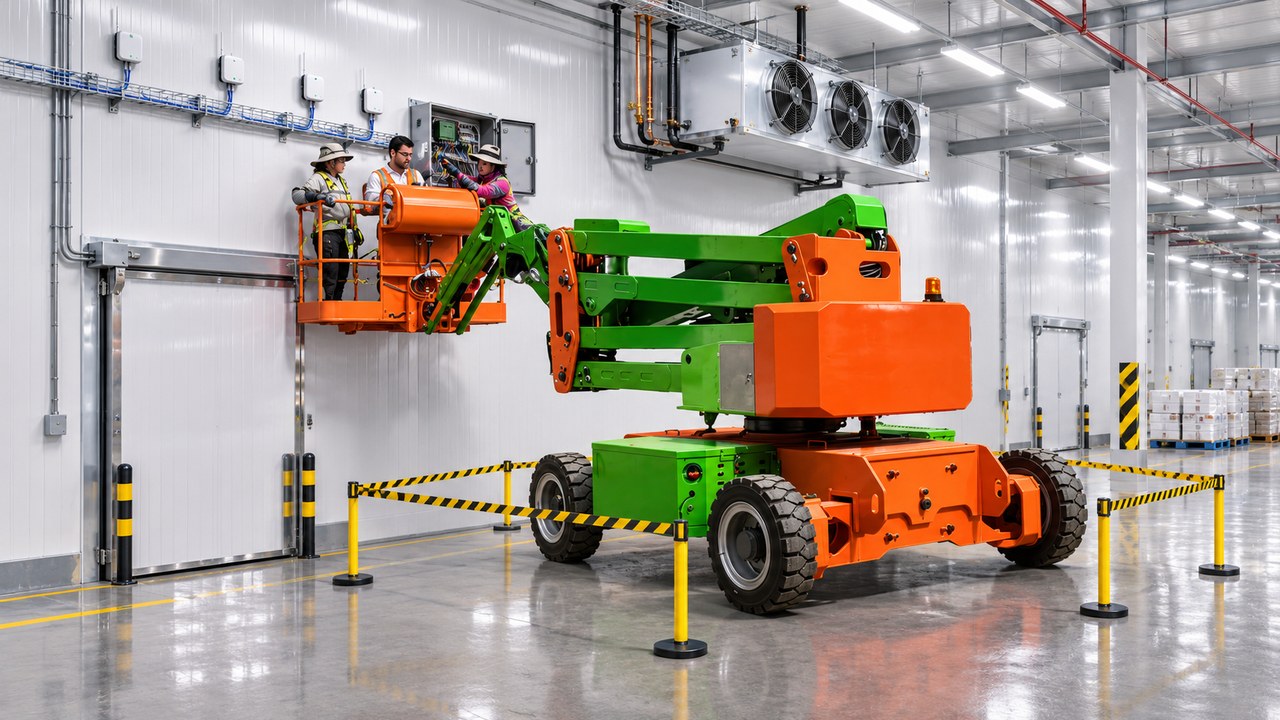
The proposed control sequence is to identify every elevated device; verify floor and doorway limits; isolate energy and network as approved; establish the exclusion zone; test emergency lowering; document the device state before reopening. Each action needs an owner, a timestamp and a stop condition. If a seal, pallet, controller, route, temperature, fuel component or access point does not match the approved record, the task returns to quarantine or planning rather than continuing on assumption.
Rehearse the recovery method under a realistic load. Include communication loss, a blocked aisle, an unavailable dock, an isolated network device or an equipment defect as appropriate. A plan is not complete until people can restore the load and machine to a stable state without entering an exclusion zone or creating a second hazard.
Track devices reached, isolation duration, access repositioning, permit extensions, emergency-lowering tests and unresolved controller alarms. Review the measures at the busiest interval, not only as a daily average. A stable result has consistent handling time, few overrides and clear reasons for every rejected move. A fast result with missing evidence is an unresolved risk that will reappear in the next shift.
A second internal reference is the ZG-ZX14 lift operation platform. Compare productive hours, travel distance, route width, lift or working height, gradients, overhead restrictions, load dimensions and maintenance access. If an attachment or option changes the center of gravity or machine mass, request updated capacity and transport information.
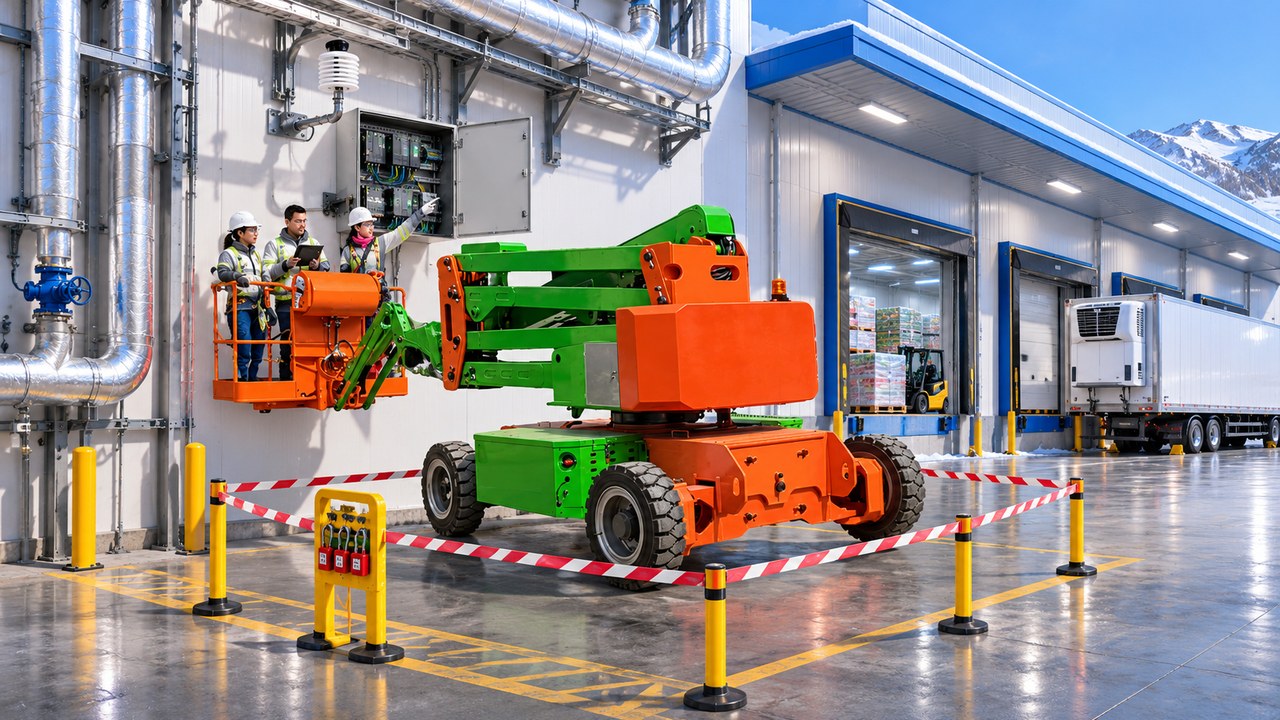
Before use, inspect the parts identified by the manual and site procedure. Common checks include forks or platform, mast or boom, chains, hoses, wheels, tires, steering, brakes, guards, warning devices, controls, battery or fuel system, visible leaks, structural damage and the data plate. Remove equipment from service when a fault affects stability, control, containment or safe access.
Separate pedestrians and adjacent automation with a visible boundary. Human oversight remains necessary when software recommends a move, grades a return, reports a temperature, allocates a slot or clears a handoff. The accountable person should have access to the physical label, task record and emergency method and should be able to reject a recommendation without production pressure.
Ask the supplier to confirm the selected model, standard and optional equipment, rated and residual capacity, power or engine configuration, charger or fuel interface, dimensions, service weight, shipping plan, manuals, parts list, inspection records, warranty and destination documentation. CE, EPA, battery transport, cylinder and workplace requirements depend on the actual configuration and market.
The third product reference is the ZG-DZ-06CD aluminum lift. Three relevant pages make a useful comparison set, but the purchase decision should rely on an order-specific quotation and data sheet. Never assume that every photograph represents the same mast, tire, battery, engine, attachment or approved working envelope.
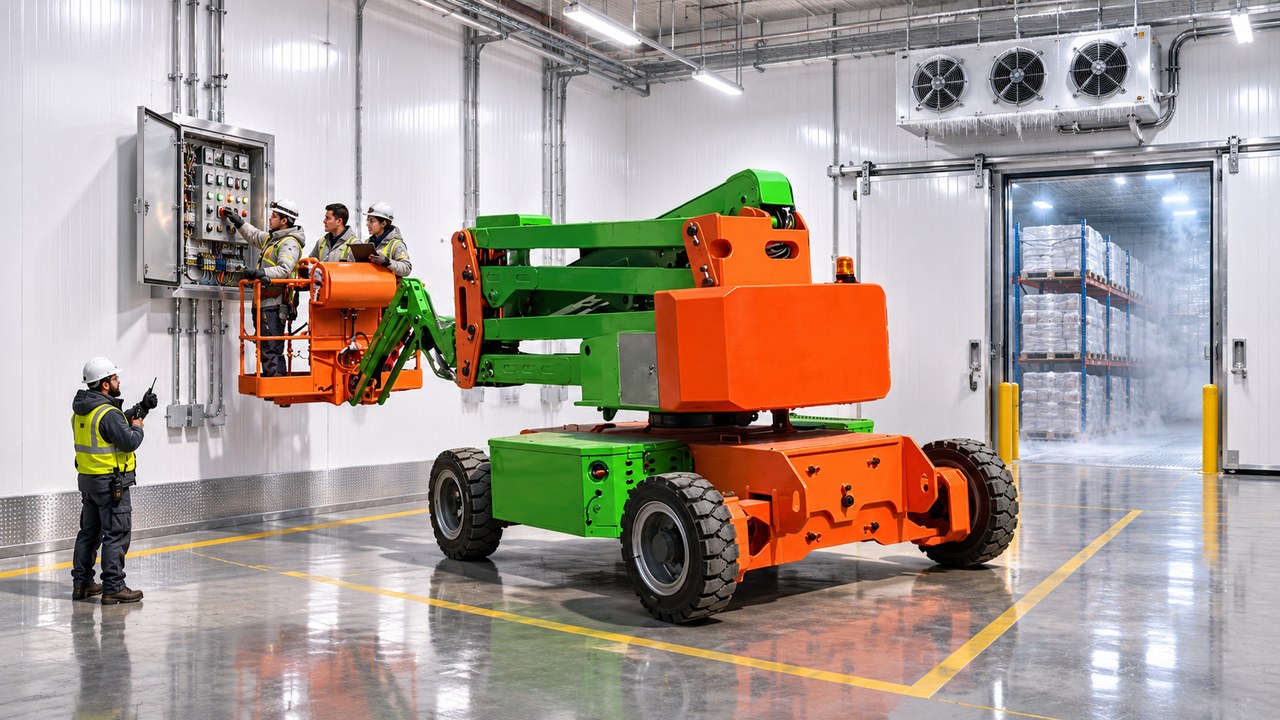
Start with an empty-route trial, then a representative load, then the expected peak. Introduce one exception and verify the stop and recovery behavior. Record observations from operators, maintenance and the area owner. Approve routine production only when the route, equipment condition, evidence and escalation process remain consistent across the full cycle.
Revalidate after layout changes, new software, a different pallet, weather shifts, revised packaging, a battery or cylinder change, a new attachment or a change in service provider. The goal is not simply motion; it is a repeatable transfer whose physical and digital records tell the same story.
ZGFORKLIFT and MYZG are associated with Shandong Zhuogong Machinery equipment Co.,Ltd. Send the destination, application, load, route, operating hours and service expectations for a configuration review.
Contact Information:
Email: vip@mingyuforklift.com
Tel: +86-0535-2090977
WhatsApp: +86 131 8160 2336
Address: Xiaqiu Town, Laizhou, Yantai City, Shandong Province, China
Name: selena
Mobile:+86-13176910558
Tel:+86-0535-2090977
Whatsapp:8613181602336
Email:vip@mingyuforklift.com
Add:Xiaqiu Town, Laizhou, Yantai City, Shandong Province, China