
vip@mingyuforklift.com
+86-0535-2090977

Forklift tires influence far more than replacement cost. They affect traction, braking, steering response, ride quality, ground clearance, load stability and the amount of vibration transmitted to the truck and operator. In 2026, tire selection is receiving renewed attention as warehouses combine indoor and outdoor routes, extend operating hours and look for practical ways to reduce avoidable downtime.
Shandong Zhuogong Machinery Equipment Co.,Ltd supplies material-handling equipment under the ZGLOADER and MYZG brands. The company recommends selecting tires as part of the complete forklift application. The approved tire size, construction, load rating and wheel configuration must match the forklift manufacturer's technical requirements; a tire should never be chosen by appearance or price alone.
The best starting point is the route the truck actually travels. Smooth sealed concrete, rough asphalt, gravel, compacted soil, ramps, dock plates and debris-heavy yards place different demands on a tire. A mixed route should be assessed by its most demanding sections rather than by the surface covering the greatest distance.
Floor defects also matter. Cracks, potholes, loose wrapping material and broken pallet wood can reduce traction or damage tires. Selecting a more durable tire does not remove the facility's responsibility to maintain safe travel paths. Surface repair, housekeeping and suitable speed control remain essential.
Air-filled pneumatic tires use compressed air to support the load. Their cushioning and tread can be useful on uneven outdoor surfaces when the forklift is designed for them. Correct inflation pressure is critical. Underinflation can create heat, excessive sidewall flex and poor handling, while overinflation can reduce the contact characteristics and increase impact transmission.
Pressure should be checked using the approved procedure and equipment, normally when the tire is cold. Split rims, lock rings and industrial tire assemblies can store dangerous energy. Inflation, mounting and repair must be performed only by trained personnel using appropriate restraints and tools. Operators should never attempt an improvised repair.
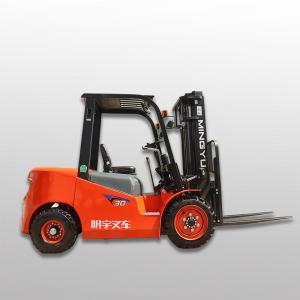
Solid resilient tires contain no pressurized air and therefore cannot suffer a conventional puncture-related flat. They are often considered where nails, metal fragments or broken pallets make punctures a frequent source of downtime. Their construction can provide long service life in a correctly matched application.
Solid does not mean maintenance-free. Cuts, chunking, separation, flat spots, heat damage and wear still require inspection. A firmer ride may transmit more shock on rough surfaces, affecting components, loads and operator comfort. The approved tire compound and duty cycle should be checked, especially for long travel distances or high-speed operation that can generate heat.
Cushion tires are generally pressed onto a steel band and are associated with forklifts designed for smooth indoor floors and compact maneuvering. They are not simply interchangeable with pneumatic-style tires because wheel, axle and chassis configurations may differ. A buyer should confirm the exact forklift class and wheel system before ordering.
Indoor facilities may also consider non-marking compounds where black tire marks or product contamination are concerns. Non-marking tires still need application review because compound choice can influence traction, heat and wear. Clean-operation requirements should be discussed with the forklift and tire supplier.
The term “solid pneumatic” can be confusing. It commonly refers to a solid resilient tire shaped to fit a pneumatic-style rim, rather than an air-filled tire. A cushion tire is a different construction mounted to a different wheel type. Specifications should identify the exact size, rim and construction instead of relying on informal terminology.
Changing from one tire family to another may be restricted or mechanically impossible. Any proposed conversion must be approved for the specific forklift model. Tire outside diameter and deflection can affect ground clearance, steering geometry, mast angle and capacity-related behavior.
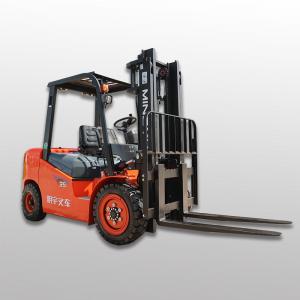
Tread pattern, rubber compound, surface material, moisture, dust, oil and temperature all influence traction. A deep tread may suit loose outdoor surfaces but does not guarantee safe braking on every floor. Smooth warehouse tires can provide a large contact area on clean concrete yet perform poorly on unsuitable outdoor ground.
Operators should reduce speed before turns, ramps, dock edges and wet areas. If a route is regularly contaminated, the source should be corrected rather than expecting the tire to compensate. Braking and steering performance should be evaluated with representative loads under controlled conditions.
Forklifts rely on all tires working together as part of a stable system. Uneven wear, mismatched diameters or damaged tires can change how the truck sits and responds. Tires on the same axle should meet manufacturer requirements for type, size and condition. Mixing constructions without written approval can create unpredictable handling.
Load stability also depends on correct capacity, load center, mast position and driving technique. New tires do not make overloading safe. Operators must follow the data plate, keep loads in the approved travel position and avoid sudden turning or braking.
Long travel, heavy loads, high speed, frequent direction changes and warm environments can increase tire temperature. Excessive heat may accelerate wear or damage the tire structure. Multi-shift warehouses should provide accurate information about daily operating hours and travel distance when selecting a tire compound.
A recurring heat problem should trigger an application review. The truck may be overloaded, the route may be too long for the selected tire, inflation may be wrong, or the operating speed may be unsuitable. Replacing damaged tires without correcting the cause can lead to repeated failure.
Diesel forklifts are often used in yards, factories, construction-material operations and loading areas where surfaces can vary. Buyers can review the ZGLOADER and MYZG diesel forklift range. Tire configuration should be confirmed for the customer's actual surface, grade, load and operating environment.
Examples include the CPC30 diesel forklift, CPC35K diesel forklift and CPC40 diesel forklift. These links provide product references; available tire options and final suitability must be confirmed in the current technical proposal.
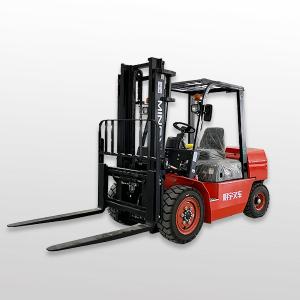
Before each shift, the operator should walk around the forklift and check every tire. Air-filled tires should be assessed for visible pressure loss, cuts, bulges and embedded objects without placing hands near a suspected failure. Solid and cushion tires should be checked for cuts, missing chunks, separation, flat spots and wear indicators.
Wheel fasteners, rims and lock-ring areas should also receive attention according to the operating manual. Any unusual vibration, pulling, steering change or contact between the tire and truck should be reported. A damaged assembly must be isolated from service until inspected by qualified personnel.
Replacement criteria vary by tire construction and manufacturer. Some solid tires include a wear line; pneumatic tires may be assessed using tread, casing condition, age and damage limits. A local specialist should apply the manufacturer's criteria. Waiting until rubber is completely worn away can reduce ground clearance, increase vibration and expose the wheel to damage.
Maintenance records can reveal whether one position wears faster or whether failures concentrate on a particular route. Repeated one-sided wear may indicate alignment, steering, axle or operating issues. Data should be used to correct the root cause, not only to schedule another tire change.
A tire change can alter truck height, clearance, stability and handling. The replacement must meet the specified load rating and dimensions, and the wheel assembly must be compatible. Owners should consult the forklift supplier before changing construction, size or compound.
Technicians also need correct lifting points and support equipment when removing wheels. A forklift should never be supported by improvised blocks or left in a condition where it can roll or fall. Local occupational safety rules and the service manual govern this work.
Shandong Zhuogong Machinery Equipment Co.,Ltd works with international customers to match equipment to real operating conditions. Useful information includes load weight, lift height, surface photographs, ramp gradient, aisle width, travel distance, shift pattern, temperature and debris risks.
Providing complete details helps the ZGLOADER and MYZG team identify a suitable forklift configuration. Product specifications and options vary by model and market, so customers should rely on the latest written proposal rather than assuming that a particular tire shown in a photograph is standard.
For forklift selection, tire-configuration information and international cooperation, please contact Shandong Zhuogong Machinery Equipment Co.,Ltd.
Shandong Zhuogong Machinery Equipment Co.,Ltd
Address: Xiaqiu Town, Laizhou, Yantai City, Shandong Province, China
Mobile: +86-13176910558
Email: vip@mingyuforklift.com
Website: https://www.vavforklift.com/
In 2026, the right forklift tire is the one approved for the truck and matched to the real workplace. By combining suitable ZGLOADER or MYZG equipment with disciplined inspection, surface maintenance and trained operation, businesses can protect traction, stability, comfort and uptime.
Name: selena
Mobile:+86-13176910558
Tel:+86-0535-2090977
Whatsapp:8613181602336
Email:vip@mingyuforklift.com
Add:Xiaqiu Town, Laizhou, Yantai City, Shandong Province, China