
vip@mingyuforklift.com
+86-0535-2090977

Forklift attachments can transform one truck into a more specialized material-handling tool. A carton clamp can move unit loads without pallets, a roll clamp can handle paper rolls, and a fork positioner can reduce manual fork adjustment. However, every attachment also changes the forklift system. Its own weight, thickness and center of gravity can reduce the truck's available capacity and alter visibility, stability and operating clearance.
In 2026, warehouse safety and application-specific equipment selection remain important material-handling trends. Shandong Zhuogong Machinery Equipment Co.,Ltd, supplier of ZGLOADER and MYZG equipment, recommends treating the forklift, attachment and load as one engineered combination. Buyers should never assume that the capacity printed on the original forklift nameplate remains available after an attachment is installed.
Rated capacity describes the maximum load a forklift is designed to lift under specified conditions, including a stated load-center distance and lift height. Residual capacity is the capacity that remains for a particular configuration after factors such as mast height, attachment weight, attachment offset and load center are considered. It may be lower than the headline capacity of the base truck.
The exact residual capacity must be established by the forklift manufacturer or another qualified party using approved technical data. A simple online formula may be useful for early planning, but it is not a replacement for the official capacity calculation and an updated data plate. Local regulations and manufacturer instructions must always be followed.
It is tempting to subtract the attachment's mass from the forklift's rated capacity. That approach is incomplete. The attachment may move the load farther forward from the fork face, increasing the effective load moment. A relatively light but deep attachment can therefore have a significant effect on capacity.
The load itself must also be understood. A long crate, large paper roll or irregular machine part may place its center of gravity farther forward than a standard pallet. If the real load center exceeds the value shown on the data plate, the allowable load is reduced. Operators should not estimate the center of gravity by appearance alone when reliable dimensions and weight information can be obtained.
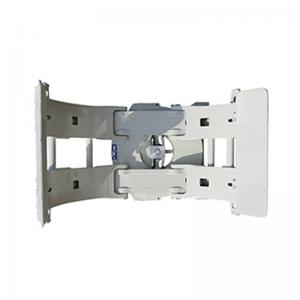
Forklift stability is influenced by the moment created by the load: broadly, weight multiplied by its horizontal distance from the truck's reference point. Adding an attachment can increase this distance and add its own moment. Higher lift heights, mast configuration and forward tilt can further affect the approved capacity.
This is why two attachments with a similar weight may not have the same effect. Their center of gravity, mounting class, thickness and operating geometry can differ. The truck supplier needs the complete attachment specification, not just a product name. The final combination should be documented before the equipment enters service.
Carton clamps apply controlled pressure to the sides of loads such as appliances, boxed products or baled goods. They can reduce dependence on pallets in suitable operations, but the required clamping force depends on the load surface, weight, packaging strength and friction. Too little force can allow the load to slip; excessive force can damage products.
Customers can view the ZGLOADER and MYZG carton clamp product page as an example of a specialized attachment. Selection should include load testing under controlled conditions and confirmation of hydraulic requirements, mounting compatibility, opening range and residual forklift capacity.
Roll clamps are used for cylindrical materials such as paper rolls. Roll diameter, width, weight, core condition and surface sensitivity influence the correct clamp design. The operator must understand the approved gripping and rotation procedure because a rotating load can change the center-of-gravity position during the handling cycle.
The MYZG roll clamp page provides a reference for buyers exploring this category. Final suitability must be confirmed for the intended roll and forklift. Warehouses should also plan safe clearances around racks, doorways and nearby personnel during rotation.
A load stabilizer can help secure appropriate loads during handling. Its purpose is not to make an unstable, poorly stacked or overloaded pallet acceptable. Pallet condition, packaging, weight distribution and stack height must first meet the site's requirements. The stabilizer adds weight and may affect overhead clearance and visibility.
Operators need training on correct pressure and positioning. Contact with fragile goods, unsupported packages or people must be prevented. Inspection should cover pads, pivot points, hydraulic hoses, fasteners and any signs of deformation or leakage.
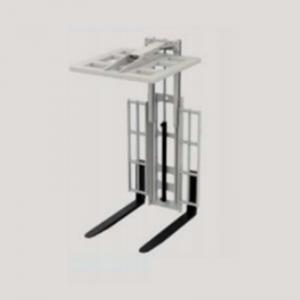
A fork positioner allows the operator to adjust fork spacing hydraulically from the seat within the approved range. This can improve efficiency when a warehouse handles several pallet sizes and can reduce the need for manual fork repositioning. It does not permit the forks to be placed arbitrarily or used outside the manufacturer's limits.
The operator must center the forks correctly for the load, keep them evenly spaced and verify that locking and hydraulic functions operate normally. The fork positioner product page shows another attachment option available through ZGLOADER and MYZG. Compatibility with the carriage, hydraulic system and load must be confirmed.
An attachment can obstruct the view of the fork tips, load edges or travel path. It may also increase the overall length, width or height of the truck. Before production use, the combination should be evaluated in the real aisle, rack, trailer and doorway environment. Mirrors, cameras or warning systems may provide support where approved, but they do not replace direct observation and safe operating procedures.
When a load blocks the forward view, the operator should follow site rules and the forklift instructions, which may require traveling with the load trailing when it is safe to do so. Pedestrian separation, controlled intersections, adequate lighting and suitable speed remain essential.
Powered attachments depend on the forklift's hydraulic system. Required oil flow, pressure, number of functions, hose routing and connector arrangement should be checked before installation. Incorrect settings can make the attachment move too quickly, respond poorly or operate outside its intended force range.
Hoses must be routed to avoid pinching, abrasion and interference with the mast. Installation and adjustment should be completed by qualified personnel. After installation, the system should be tested without a load and then with an approved test load under controlled conditions.
The truck should display capacity information that corresponds to the installed mast and attachment combination. Operators need to know how to read the plate, including capacity at the relevant lift height and load center. If the attachment is removed or exchanged, the displayed information must still match the actual configuration.
A warehouse should not operate a modified combination while waiting for documentation. Procurement schedules should allow time for compatibility review, installation, testing, labeling and training. These steps protect both the operator and the investment in equipment.
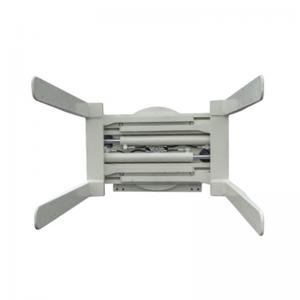
Attachment inspection should become part of the forklift's pre-shift check. Depending on the product, operators may need to inspect hooks, locking devices, forks, arms, pads, cylinders, hoses, fasteners and welds. Any crack, deformation, loose component, leak or abnormal movement should be reported and assessed before use.
Maintenance intervals depend on usage and environment. Dust, corrosive material, cold storage, outdoor work and multi-shift operation may require closer attention. Only approved replacement parts and procedures should be used, and safety devices must never be bypassed to keep production moving.
An operator authorized for a standard forklift still needs instruction and practice for a new attachment. Training should cover the changed capacity, dimensions, visibility, controls, load-engagement method, travel position and emergency procedures. Supervisors should observe real work cycles and correct unsafe shortcuts.
Loads should be handled smoothly and kept in the approved travel position. Sudden steering, braking or attachment movement can shift the load and reduce stability. No attachment makes it acceptable to exceed the data plate, carry people or handle an unknown load.
Shandong Zhuogong Machinery Equipment Co.,Ltd can review customer requirements for forklifts and compatible material-handling solutions. Buyers should provide clear load drawings or photographs, dimensions, weight, center-of-gravity information, lift height, site layout, duty cycle and local compliance requirements.
Browse the forklift attachment range to understand available categories. Specifications and options can vary by application and market, so the current technical proposal should be confirmed before purchase. Final installation, capacity certification and workplace risk assessment must follow manufacturer guidance and applicable local rules.
For forklift attachment selection, technical information and international cooperation, please contact Shandong Zhuogong Machinery Equipment Co.,Ltd.
Shandong Zhuogong Machinery Equipment Co.,Ltd
Address: Xiaqiu Town, Laizhou, Yantai City, Shandong Province, China
Mobile: +86-13176910558
Email: vip@mingyuforklift.com
Website: https://www.vavforklift.com/
In 2026, attachment productivity should always be supported by correct engineering. When the truck, attachment and load are evaluated as one system, ZGLOADER and MYZG customers can improve handling efficiency while protecting stability, product quality and workplace safety.
Name: selena
Mobile:+86-13176910558
Tel:+86-0535-2090977
Whatsapp:8613181602336
Email:vip@mingyuforklift.com
Add:Xiaqiu Town, Laizhou, Yantai City, Shandong Province, China